
Affiliate disclosure: this article contains affiliate links. As an Amazon Associate, UsefulVitamins.com earns from qualifying purchases at no extra cost to you.
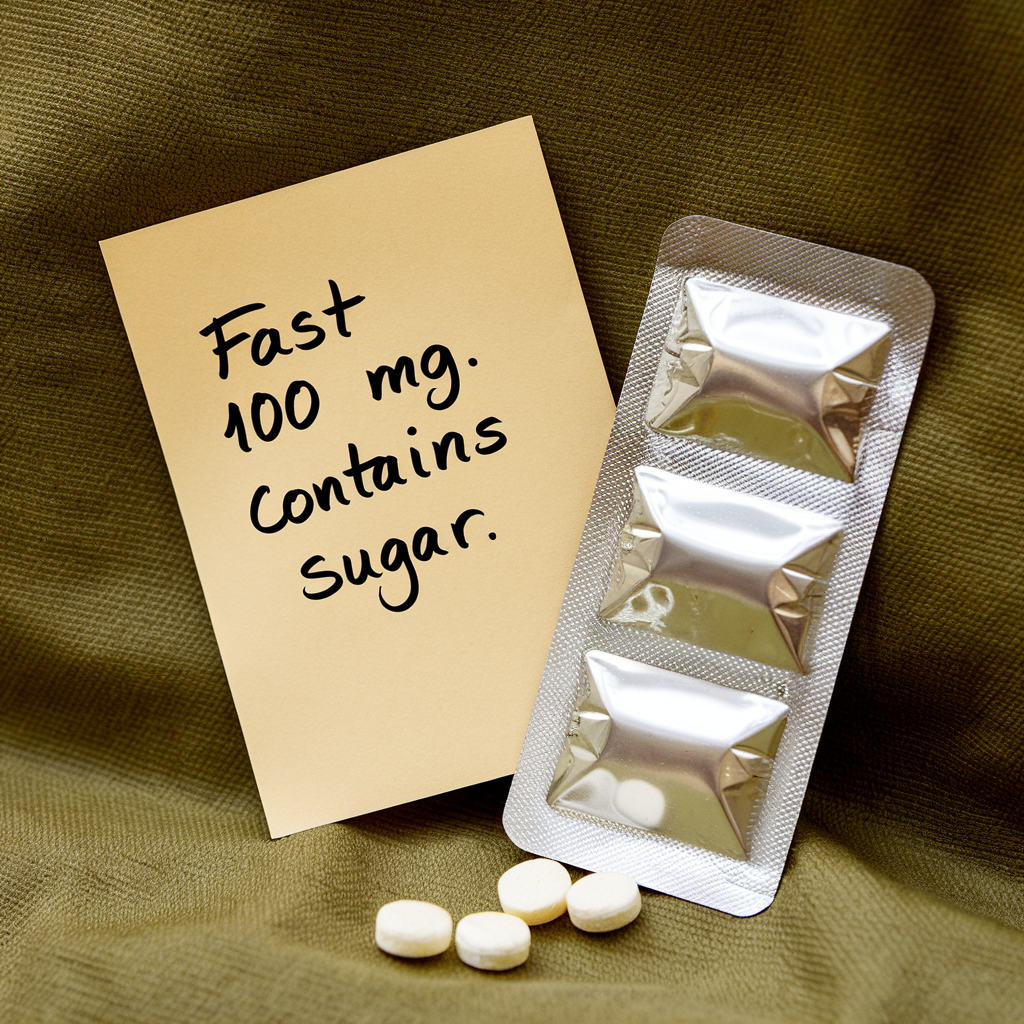
Military Energy Gum is a caffeinated chewing gum made by Ford Gum of Akron, New York, with 100 mg of caffeine in every piece, sold in five-piece packs and used in United States military rations for about two decades. We pulled the ingredient list from the maker's site, opened eight caffeine-gum trials, priced the Amazon listing in September 2026, and checked the openFDA enforcement database. We have no relationship with Ford Gum or any other gum brand named here. The picks at the bottom are the ones we would keep in our own family's glovebox for long night drives, which is a narrower endorsement than the marketing suggests.
Before you decide

Skip this gum if you are pregnant or breastfeeding, under 18, or living with a heart rhythm problem, uncontrolled high blood pressure, or an anxiety disorder. The FDA's caffeine guidance puts 400 mg a day as the amount not generally associated with negative effects for most adults, with wide variation in sensitivity. Four pieces is that whole daily allowance, and fast absorption makes it easier to overshoot than with coffee.
Ask a pharmacist first if you take medications that interact with caffeine: some antibiotics, certain antidepressants, asthma medicines containing theophylline, and any stimulant prescribed for ADHD. The same goes for a history of stomach ulcers. This is general information rather than medical advice, and your doctor or pharmacist outranks any website, including this one.
The page is for healthy adults who already use caffeine and want a faster, more precise way to take it on a night shift, a long drive, or an early start. The military's own Operation Supplement Safety caffeine page advises up to 200 mg at one time, no more than 600 mg a day, and a trial run on a normal day before you rely on it. We hold the gum to that standard, not to the brand's slogans.
What Military Energy Gum actually is
Military Energy Gum, often shortened to MEG and sold for years as Stay Alert, is a coated gum pellet carrying 100 mg of caffeine. According to the brand's ingredient page, each flavor (Arctic Mint, Spearmint, Cinnamon) lists sugar first, then dextrose, gum base, flavors, caffeine, corn syrup and glycerine, with under 2 percent sucralose, maltodextrin, acesulfame-K, soy lecithin, confectioner's glaze and carnauba wax. It is sugar gum with two artificial sweeteners on top, which most reviews of "military caffeine gum" never mention. The certification page lists 5 calories per piece.
The maker is Ford Gum, which lists Military Energy Gum among its brands on its corporate site. The brand's history page says the gum entered a military fatigue research program in 1998; we found no independent document on the original funding, so we report that date as the company's claim.
Two things are independently documented. An NSF press release dated March 31, 2026 confirms it is the first gum to earn NSF Certified for Sport, a program that tests for over 295 banned substances and checks label accuracy. The same release notes that the Committee on Military Nutrition Research recommended caffeinated gum in 2001. The certification is real and recent; it says the label is honest, not that one piece does what the trials did.
What you get per piece
All figures below are from the brand's ingredient page and the Amazon listings we opened, checked on 24 September 2026. The 90-piece box listed at $28.99 that day; Amazon prices move, so the figure you see may differ by a dollar or two. The two comparison rows are other caffeine gums sold on Amazon, priced from their own brand pages and listings; where we did not open a label, the cell says so.
| Product | Caffeine per piece | Other actives | Sugar or sweetener | Pieces per pack | Price per piece | Price per 100 mg |
|---|---|---|---|---|---|---|
| Military Energy Gum, 90-piece box (18 packs) | 100 mg | none | sugar, dextrose, corn syrup; sucralose and acesulfame-K under 2 percent | 5 per pack, 90 per box | about $0.32 | about $0.32 |
| Military Energy Gum, 60-piece box (12 packs) | 100 mg | none | same formula | 5 per pack, 60 per box | about $0.40 | about $0.40 |
| Sugar-free 100 mg nootropic gum, 90 pieces (comparison) | 100 mg | 60 mg L-theanine, B6, B12 | sugar free (sugar alcohols, sucralose, stevia) | 90 pieces | about $0.41 | about $0.41 |
| Bulk 125 mg energy gum, 125-piece bag (comparison) | 125 mg | not checked | not checked | 125 per bag | about $0.25 | about $0.20 |
The sugar-free 100 mg competitor costs about 28 percent more per milligram, which is the fair price of avoiding sugar. Among the widely reviewed brands it is the cheapest per milligram; smaller bulk-bag brands exist, but we could not verify their prices, so we do not rank them.
The cost, stated honestly
At about $29 for 90 pieces, one piece is $0.32, and because a piece is exactly 100 mg, the price per 100 mg is the same number. That is an advantage over gums dosed at 40 or 50 mg, where two or three pieces buy the same caffeine. Buy the 90-piece box, not the 60: the smaller boxes cost more per piece for the same gum on every listing we opened.
At realistic use the monthly bill is small: one piece on each of 22 working days is about $7, and two pieces every day is 60 pieces and about $19, at which point you are also chewing 60 sugar-coated pellets, the part of the arithmetic the brand does not print.
Against brewed coffee, the gum wins on speed and loses on money. The FDA describes 400 mg as roughly two to three 12-ounce cups, so one piece is about half a mug to a small cup, and a home pot costs less per milligram than any gum. You buy the gum because a piece fits in a pocket, needs no water, and starts working before a cup would have cooled. To place a piece against your other caffeine for the day, our caffeine dose calculator does the adding.
What the trials actually measured
The brand's research page claims more than 30 studies and lists nine of them. We opened eight caffeine-gum trials from military and defence labs that reported numbers we could check. The short version: the speed claim holds, the vigilance claims hold at 200 mg per dose, and the chronic-use story is worse than the marketing.
Speed first. A 2002 pharmacokinetic study in the International Journal of Pharmaceutics gave 84 men gum or capsules at 50, 100 or 200 mg. Blood caffeine peaked at 44 to 80 minutes for gum against 84 to 120 minutes for capsules, and about 85 percent of the caffeine left the gum during chewing. Gum peaks roughly 40 minutes sooner than a swallowed dose; the brand's "5 to 10 minutes" is when you may first feel it, not when the level peaks. Relative bioavailability at 100 mg was 74 percent, so a piece delivers something like 75 to 85 mg of usable caffeine.
Then vigilance across a night awake. In a 2005 Walter Reed trial, 48 adults stayed awake 29 hours and chewed gum at 03:00, 05:00 and 07:00 delivering placebo, 50, 100 or 200 mg each time. Reaction-time lapses fell in proportion to dose, and only the 200 mg group held its rested baseline through the night. Sleepiness ratings did not differ, so people felt just as tired while performing better. The dose that worked was two pieces every two hours, not the one piece the retail pack implies.
Out of the lab, a 55-hour field exercise with 30 soldiers used 600 mg across four overnight doses; marksmanship vigilance stayed at 85 percent on caffeine while the placebo group fell to 61 percent. A later Special Forces study of 20 soldiers pushed to four 200 mg doses per night, 800 mg, over three nights with four-hour afternoon sleeps; reaction speed, event detection and reasoning held up, and live-fire marksmanship did not change either way. These are small trials of young, fit men, so treat the effect sizes as best case.
Does more help? A 2019 crossover study of 12 adults compared 200 and 300 mg gum doses every 12 hours across 48 hours awake: both approached a two-fold performance improvement over placebo right after the nighttime doses, with no substantive difference between doses, and neither restored rested performance. Three pieces are not better than two, and even two do not make you well rested.
The part the brand does not lead with. A 2017 Walter Reed study restricted 48 good sleepers to five hours in bed for five nights with 200 mg gum at 08:00 and noon. Caffeine held alertness for three days, the effect was no longer evident by day four, and the caffeine group returned to baseline more slowly during recovery sleep. On a week of short nights the gum stops helping mid-week and may cost you something on the way back. A 2021 Australian defence study, self-described as small-sample, adds a warning from the other direction: four 200 mg doses cut drowsiness only modestly while lifting task performance a lot. People can feel as sleepy as they are while performing as if they were not, which matters behind a wheel.
One result does favor the single piece. A 2013 crossover in 15 adults gave one 100 mg pellet on abrupt awakening at 01:00 and 06:00, and reaction speed beat placebo at 12 and 18 minutes after the 01:00 wake-up. If your use case is "I just woke from a nap and need to function," one piece is the trial-tested dose.
Who it is worth it for
Shift workers and night drivers who need caffeine to arrive on a schedule. The military dosing protocol on the OPSS caffeinated gum page is specific: chew one piece for five minutes, chew a second if you are not alert within 15 minutes, and never exceed two pieces in three hours or eight in 24 hours. That protocol reproduces the 200 mg every-two-to-three-hours pattern from the trials while staying within the 800 mg sustained-operations ceiling. The brand site prints no warning panel we could read, so those OPSS limits are the reference. Our guide to supplements for shift workers covers when to stop so the next sleep is not wrecked.
People who want an exact dose without a drink. A piece is 100 mg every time, NSF now verifies that claim, and a pocket pack beats a thermos on a long drive or on a ward. Drug-tested athletes get one more reason: the Certified for Sport mark is the one recognized by several professional leagues and anti-doping bodies. If you are not tested, the mark tells you the label is accurate and nothing more.
Who should skip it
Anyone avoiding sugar for dental, metabolic or dietary reasons. One piece is 5 calories, but the gum is built on sugar, dextrose and corn syrup, and six to eight pieces a day is a lot of sugar on your teeth. A sugar-free 100 mg gum costs about $0.09 more per piece, a premium worth paying for a daily chewer; our Neuro Gum review covers the best-known brand, whose extra-strength version is the 100 mg one.
Anyone using the gum to survive a run of short nights. The five-day restriction trial says the benefit fades by day four with a recovery cost afterward. If short sleep is the underlying problem, our sleep supplement protocol is the page to read first; the gum is at best a bridge.
Anyone whose fatigue is not a caffeine problem. Persistent tiredness on adequate sleep is a reason to see a doctor, not to raise the dose; our guide to supplements for energy and fatigue covers which deficiencies to test for first.
Anyone with the conditions in the first section. Fast absorption is the reason the gum works and the reason it punishes mistakes faster than coffee does.
What to look for when buying
Buy the 90-piece box and check the pack count on arrival. Retail packs are five pieces; a listing that quotes 40 or 60 pieces is the same gum in a smaller multipack at a higher per-piece price.
Check for the certification mark on the box, not just the listing. The NSF certification dates from March 2026, so older stock will not carry it even though the formula is the same; that matters only to tested athletes. Reviews from August 2026 also describe an off-white pellet and a milder mint than earlier batches, so if you buy for taste, buy one pack first.
Do not stack it. The gum has no L-theanine, no B vitamins and no second stimulant, which we count in its favor. A piece still adds cleanly to whatever else you drink, so count coffee, energy drinks and pre-workout together against the 400 mg line. Our functional gum vs gummies vs pills comparison lays out the format trade-offs, and our best caffeine gum roundup ranks this gum against the alternatives. Our review method explains how we price and verify products.

As an Amazon Associate, UsefulVitamins.com earns from qualifying purchases at no extra cost to you. We only recommend products supported by published research or third-party testing.
FAQ
What is military energy gum, and is it the same gum that comes in MREs?
It is a 100 mg caffeine gum made by Ford Gum and supplied to US military rations for about two decades, per the March 2026 NSF release. The OPSS ration gum page describes the same 100 mg per piece; retail packaging and flavors differ.
Does MRE gum have caffeine, and how much?
Yes. The Department of Defense's OPSS page states that caffeinated gum in US military rations contains 100 mg of caffeine per piece, while commercial caffeine gums range from 10 to 100 mg. Ration gum without a caffeine label is plain gum.
What is the military energy gum warning on the pack about?
The use limits. The military's published protocol is one piece chewed for five minutes, a second only if you are not alert after 15 minutes, and no more than two pieces in three hours or eight in 24 hours. Eight pieces is 800 mg, the OPSS ceiling for sustained operations, double the 400 mg the FDA cites for everyday use.
Can I take military energy gum with ADHD medication or antidepressants?
Ask your prescriber first. Stimulant ADHD medications add to caffeine's effect on heart rate and blood pressure, and some antidepressants and antibiotics slow caffeine clearance, so a 100 mg piece behaves like a larger dose. The OPSS caffeine page also warns against combining caffeine with other stimulants, since such combinations are poorly studied.
How fast does military grade caffeine gum work compared with coffee?
Blood caffeine peaked 44 to 80 minutes after gum against 84 to 120 minutes after capsules in a 2002 study of 84 men. The brand's "5 to 10 minutes" is the first noticeable effect from mouth absorption, not the peak, and about a quarter of the caffeine in a piece never reaches your blood.
Is there sugar in military energy gum?
Yes. Sugar is the first ingredient, then dextrose, with corn syrup further down and sucralose and acesulfame-K under 2 percent, per the brand's ingredient list. Each piece is listed at 5 calories, so the issue is dental exposure and taste, not energy intake.
The verdict
Military Energy Gum is worth it for one job: putting an exact 100 mg of caffeine into a tired adult faster than any drink can, for about $0.32 a piece. The speed claim rests on a pharmacokinetic study and the overnight vigilance claims on Army trials at 200 mg per dose; the March 2026 NSF certification means the label is independently verified. That is a stronger evidence base than any other caffeine gum we have reviewed.
It is not worth it as a daily habit. It is sugar gum, the trials that impressed everyone used two pieces at a time on a strict schedule, and the one trial covering a week of short nights found the benefit gone by day four with a slower recovery afterward. Buy the 90-piece box and keep to the military's limits of two pieces per three hours and eight per day. If you reach for it every afternoon, the problem is sleep, and no gum fixes that.
