
Affiliate disclosure: this article contains affiliate links. As an Amazon Associate, UsefulVitamins.com earns from qualifying purchases at no extra cost to you.
If you have felt bloated, foggy, or itchy after meals and you are tired of guessing, an at-home food sensitivity kit looks like an easy answer. The uncomfortable truth is that these kits do not diagnose anything — they measure IgG antibodies that largely track what you eat, not what is hurting you. We compared the two Everlywell blood-spot panels (96 versus 204 foods) against a budget hair-based option, and the three kits linked at the bottom are the ones we would actually hand a family member who wanted a structured place to begin an elimination diet.
Before you decide
Never use one of these kits to rule a food in or out for a real allergy. If you have ever had hives, lip or throat swelling, vomiting, or trouble breathing after eating, that points to a possible IgE-mediated allergy that belongs with a board-certified allergist. The NIH-sponsored expert panel guidelines for diagnosing food allergy rely on clinical history, IgE testing, and supervised oral food challenges — none of which a mail-in kit performs.
Before you spend $50 to $300, do the free thing first and keep a two-week food-and-symptom diary. If a clear pattern jumps out, such as dairy or onions reliably preceding symptoms, you may not need a test at all. And if you suspect a specific, validated problem like celiac disease, ask your doctor for the actual diagnostic workup rather than a broad sensitivity panel.
Skip these kits entirely if you are pregnant, feeding a child, underweight, or have any history of disordered eating. A long “avoid” list generated by an unvalidated test can nudge you toward unnecessary, restrictive dieting, and nutritional gaps are a bigger real-world risk than most of the sensitivities these panels claim to find.
Food sensitivity vs. intolerance vs. allergy: what these kits measure
These three words get used interchangeably in marketing, but they mean very different things. A food allergy is a fast, IgE-driven immune reaction that can range from hives to anaphylaxis, and it is the only one of the three that home “sensitivity” kits do not even attempt to test.
A true food intolerance is a digestive or enzymatic problem, not an immune one. Lactose intolerance, for example, comes from low lactase enzyme activity and is confirmed with a hydrogen breath test described by the NIDDK, not by antibody levels in a blood spot.
What the popular kits actually measure is food-specific IgG (sometimes IgG4) antibodies, a marker of exposure and often of tolerance. Your body makes IgG to foods you eat regularly, so a “high reactivity” score for eggs frequently just means you eat a lot of eggs. That is the core reason a bigger panel does not automatically mean a more useful result.
The science: why allergists say IgG results are not a diagnosis
This is the part most roundups quietly skip, and it is the single most important thing to understand before you buy. Major allergy societies specifically advise against using food-specific IgG testing to diagnose allergy or intolerance. The American Academy of Allergy, Asthma & Immunology explains that IgG food testing is not recommended because a positive result is a normal immune response to food, not evidence of disease.
That position is not fringe or American-only. A European Academy of Allergy and Clinical Immunology task force report concluded that IgG4 testing against foods should not be used as a diagnostic tool, noting that IgG4 more likely reflects tolerance than intolerance. In other words, the antibody these kits measure may be a sign your body has made peace with a food, not that it is fighting it.
Canadian allergists reached the same verdict. The CSACI position statement on food-specific IgG testing warns that the tests can lead to unnecessary and potentially harmful dietary restriction. When three independent specialty bodies on two continents all say the same thing, that consensus should shape how you read your results — as a hypothesis list, never as a lab-confirmed diagnosis.
96 vs 204 foods: does a bigger panel actually help?
The headline spec war in this category is panel size, and it is mostly marketing. Because the underlying IgG signal is not diagnostic, testing 204 foods instead of 96 does not make any single result more meaningful — it just gives you a longer list of foods you already eat. The two Everlywell kits use the same CLIA-certified lab method; the comprehensive version simply extends the roster to more herbs, spices, and less-common proteins.
The 5Strands option is a different animal entirely and deserves an honest label. It analyzes a hair sample using bioresonance rather than measuring blood antibodies, so despite its huge 658-item list it is the least scientifically supported approach of the three and should be read purely as a low-cost curiosity screen.
| Kit | Foods / items | Sample & method | Price | Best for |
|---|---|---|---|---|
| Everlywell Comprehensive | 204 foods | Finger-prick blood spot, CLIA lab (IgG) | ~$299 | Widest validated-method panel |
| Everlywell Food Sensitivity | 96 foods | Finger-prick blood spot, CLIA lab (IgG) | ~$199 | Common trigger foods for less |
| 5Strands Food Intolerance | 658 items | Hair sample, bioresonance (not IgG/blood) | ~$55 | Cheapest, widest starting screen |
Our contrarian-but-defensible verdict: for most people the 96-food Everlywell kit is the smarter buy, because it already covers the foods you actually eat and costs a third less than the comprehensive panel. Save the $100 difference for a session with a registered dietitian, which will do more for your symptoms than 108 extra IgG data points.
How to use a food sensitivity kit the right way
A kit is only as good as what you do next, and the value lives entirely in a disciplined elimination-and-reintroduction protocol. Pick the two or three highest-reactivity foods from your report and remove only those for three to four weeks, rather than cutting every flagged food at once and shrinking your diet to rice and chicken.
Then reintroduce each food one at a time over several days while you track symptoms. Your own body’s response on reintroduction is the real test — the paper report is just the starting hypothesis. If removing and re-adding a food changes nothing, keep eating it, whatever the score said.
Do not treat a low-reactivity score as permission and a high one as a life sentence. Foods you rarely eat can score low simply because you have not built up antibodies to them, which is another reason the numbers cannot stand in for how a food actually makes you feel.
What to look for when buying a kit
If you have decided a structured starting point is worth it, a few features separate a defensible purchase from a waste of money. Favor kits processed in a CLIA-certified lab, which sets baseline quality standards for the blood analysis, over hair or “energy” methods with no external validation.
Check that the kit includes plain-language guidance on reintroduction, not just a color-coded results chart. A report that pushes a long permanent avoidance list without a reintroduction plan is a red flag, because indefinite restriction is exactly the harm allergists warn about.
Finally, match the panel to your diet and budget rather than chasing the biggest number. A 96-food blood panel you actually act on beats a 658-item hair list you ignore, and neither replaces the validated workups your doctor can order for suspected celiac disease or lactose intolerance.
Our top at-home food sensitivity test kit picks
These are the three kits we would choose today, framed by how you plan to use the results. Every one is a starting point for a self-guided elimination diet, not a diagnostic device — and the one we reach for first is the mid-priced 96-food panel.
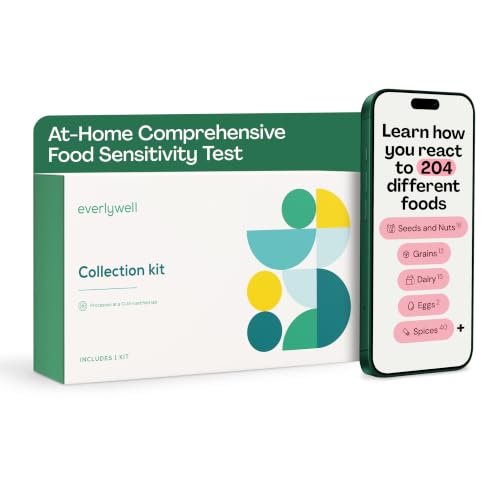
Everlywell Food Sensitivity Comprehensive Test (204 Foods)
The widest CLIA-lab IgG panel here, testing 204 foods from a finger-prick blood spot. Worth it only if you eat an unusually varied diet and want the longest possible starting list.
- Largest blood-based panel (204 foods)
- CLIA-certified lab processing
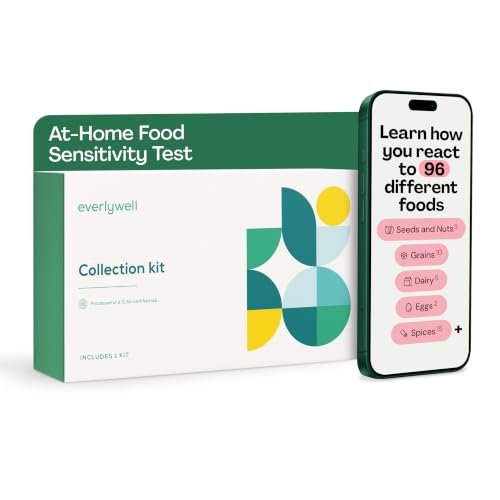
Everlywell Food Sensitivity Test (96 Foods)
The same CLIA-lab IgG method as the comprehensive kit, covering the 96 foods most people actually eat for about a third less. Our default recommendation as an elimination-diet starting point.
- Covers common trigger foods
- Meaningfully cheaper than the 204-food version
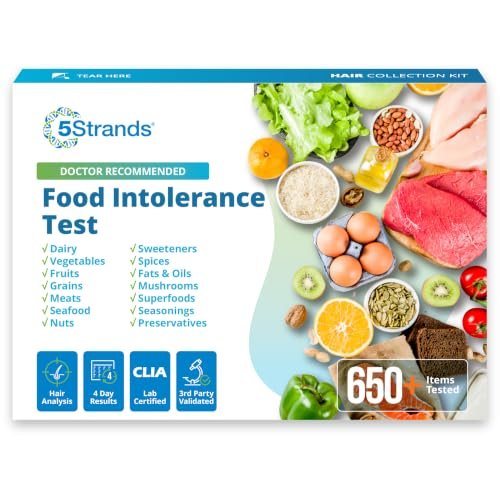
5Strands Food Intolerance Test (658 Items, Hair Analysis)
The cheapest and widest option, using a hair sample and bioresonance rather than blood antibodies. It is the least validated method here, so read it as a low-cost curiosity list, not a lab result.
- Lowest price and fast turnaround
- Huge 658-item screening list
Frequently asked questions
Are at-home food sensitivity tests accurate?
They reliably measure IgG antibodies, but those antibodies do not accurately identify a food problem. Allergy specialists consider a positive IgG result a normal response to eating a food, so the test is repeatable yet not clinically meaningful as a diagnosis.
What is the difference between a food allergy and a food sensitivity?
A food allergy is a defined IgE immune reaction that can be life-threatening, while “sensitivity” is a loose term with no validated test. Allergy is diagnosed by an allergist through history and IgE workups; sensitivity kits measure a different antibody entirely and cannot detect allergy.
Is the 204-food kit worth double the 96-food kit?
For most people, no. Because panel size does not make any single IgG result more diagnostic, the 96-food kit covers the foods you likely eat while leaving budget for a dietitian, who will help more than the extra entries.
Can these kits detect celiac disease or lactose intolerance?
No — both have specific, validated tests that a sensitivity panel cannot replace. Celiac disease is confirmed with the blood tests and biopsy outlined by the NIDDK guidance on celiac disease, and lactose intolerance is confirmed with a hydrogen breath test.
How do I use my results without harming my diet?
Eliminate only two or three flagged foods for three to four weeks, then reintroduce them one at a time. Keep any food that causes no change on reintroduction, and involve a registered dietitian before cutting out entire food groups.
The bottom line on at-home food sensitivity test kits
At-home food sensitivity kits are not diagnostic tests, and the honest framing is what makes them useful: they hand you a structured, somewhat arbitrary starting list for a self-guided elimination diet, and nothing more. The IgG antibodies they measure reflect exposure and often tolerance, which is exactly why three major allergy societies advise against reading them as evidence of a food problem. If you want that starting point, the 96-food Everlywell panel is the sensible default, the 204-food version suits unusually varied diets, and the 5Strands hair screen is a budget curiosity rather than a lab result.
Next steps:
- Keep a two-week food-and-symptom diary before you spend anything.
- Run a disciplined eliminate-then-reintroduce protocol on only your top flagged foods.
- See our other evidence-based supplement and testing guides and talk to a clinician before making lasting diet changes.
This article is for education and is not medical advice; talk to a licensed clinician or registered dietitian before changing your diet based on any test. Written and reviewed by the UsefulVitamins Editorial Team.
As an Amazon Associate, I earn from qualifying purchases.
