
Affiliate disclosure: this article contains affiliate links. As an Amazon Associate, UsefulVitamins.com earns from qualifying purchases at no extra cost to you.
Mastic gum is the dried resin of Pistacia lentiscus, a Mediterranean shrub that is farmed for its resin almost entirely on the Greek island of Chios. We read the European Medicines Agency's traditional-use monograph and its 2024 review, opened every trial we cite, pulled a current capsule label from the NIH database and ran the price per day. We have no relationship with any brand named here. The capsules at the end of this page are the kind of thing we would keep in our own family's kitchen drawer for a bad stomach week, with the two-week limit written on the lid.
Before you decide
Some readers should not start at all. The EU herbal monograph on mastic states that safety in pregnancy and breastfeeding has not been established and that use under 18 is not recommended for lack of data. If you have ever reacted to a surgical skin adhesive or to fragrance, treat mastic as a suspect ingredient: in a 2021 patch-test series in Dermatitis, 13 of 18 patients allergic to a mastic-containing adhesive were positive to gum mastic itself.
If you have tested positive for Helicobacter pylori, mastic is not a substitute for the eradication course your doctor prescribes. In the only randomized pilot that tested mastic on its own, it cleared the infection in 4 of 13 and 5 of 13 patients, against 10 of 13 on standard triple therapy; a 2026 randomized pilot that added mastic to bismuth quadruple therapy raised eradication from 67 to 85 percent without reaching statistical significance. If you take any daily medication, note that there is not a single clinical interaction study for mastic; the interactions section below explains what that absence means.
This is general information, not medical advice; your doctor or pharmacist outranks any website, including this one. The page is for adults with occasional indigestion who want to know whether a short course is reasonable, and for people who saw the cholesterol claims and want the actual numbers. In the United States mastic is sold as a dietary supplement, and the FDA is not authorized to approve supplements for safety and effectiveness before they are marketed, so label claims carry no regulatory weight.
What mastic gum actually is
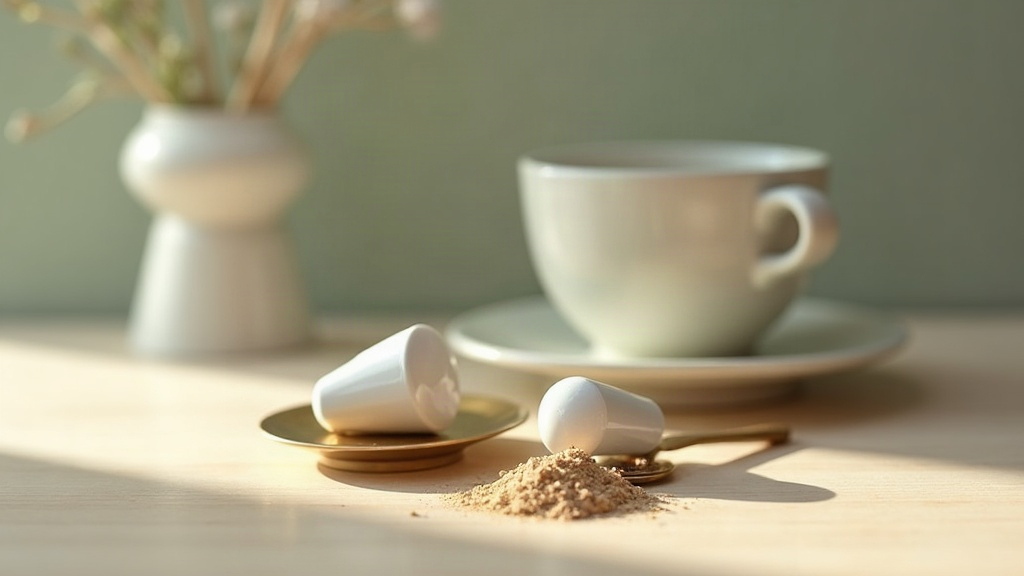
Mastic is a resin, not a gum in the chewing-gum sense. Farmers score the bark in summer, the sap runs, and it hardens into pale yellow droplets the trade calls tears. The name Chios mastic is legally protected: Commission Regulation (EC) No 123/97 of 23 January 1997 registered Masticha Chiou, the chewing gum Tsikla Chiou and Chios mastic oil as protected designations of origin, so only resin from the island can carry those names.
Chemically the resin is a mix of triterpenic acids and neutral triterpenes, a natural polymer that makes up roughly a fifth to a third of its weight, and a small essential-oil fraction rich in alpha-pinene and beta-myrcene. Those acids are absorbed: a 2025 rat study in Toxicology Reports found them in plasma and bone marrow after oral dosing. The form you buy matters: in the 2016 cholesterol trial below, whole crude resin moved the numbers while a polymer-free preparation at the same 1 g dose did not.
The regulatory picture is split by geography. In the EU, mastic is a traditional herbal medicinal product with a monograph adopted on 2 February 2016, which the EMA's herbal committee reviewed again in July 2024 and left unchanged. In the US it is a dietary supplement carrying structure-function wording, such as "supports stomach and duodenal health" on the NIH DSLD label for a 1000 mg capsule product, followed by the standard disclaimer that the statement has not been evaluated by the FDA.
Three products share the name in shops. Raw tears are chewed, usually for the taste and the jaw workout, which we cover in our piece on whether mastic gum works for the jawline. Powdered resin in capsules, typically 500 mg each, is the form the monograph and the swallowing trials refer to. Mastic essential oil in 200 mg capsules is a separate product with its own trial, and the EMA's reviewers say its results do not transfer to the resin.
What the trials measured
All figures below come from the published abstracts on PubMed, checked in September 2026, and the table lists what each trial measured rather than what the marketing claims.
| Trial | What was given | What was measured | Result |
|---|---|---|---|
| Functional dyspepsia, 2010, 148 patients, 3 weeks | 350 mg Chios mastic three times a day or placebo | Hong Kong dyspepsia index and patient global assessment | Score 14.78 on mastic versus 19.96 on placebo; marked improvement in 77 percent versus 40 percent |
| H. pylori eradication, 2010 pilot, 52 patients, 14 days | 350 mg or 1.05 g pure mastic three times a day, or mastic plus a PPI, or triple therapy | Urea breath test 5 weeks after treatment | 4 of 13 and 5 of 13 cleared on mastic alone, 0 of 13 with PPI plus mastic, 10 of 13 on triple therapy; mastic arms not statistically significant |
| Cholesterol and glucose, 2016, 156 completers, 8 weeks | 1 g a day crude resin (330 mg three times), 1 g polymer-free resin, 2 g powder, or placebo | Total cholesterol, fasting glucose, LDL, HDL, triglycerides, uric acid, CRP | Crude resin group: total cholesterol down 11.5 mg/dl, fasting glucose down 4.5 mg/dl; no change in LDL, HDL or triglycerides; other two mastic groups no significant change |
| Fatty liver (NAFLD), 2021, 98 patients, 6 months | Mastic capsules or placebo; daily dose not stated in the abstract | MRI liver inflammation and fibrosis scores (cT1, LIF), microbiota, metabolites | Not superior to placebo in the whole group; improvement only in the subgroup with BMI over 35 |
| Metabolic syndrome, 2023, 94 patients, 3 months | 200 mg a day mastic essential oil, not resin, added to usual treatment | Lipids, blood pressure, weight, body fat, quality of life | Triglycerides and LDL improved versus control; EMA reviewers say the result does not apply to the resin monograph |
The dyspepsia trial is the one that matches the monograph indication. A 2010 double-blind trial in the Journal of Ethnopharmacology randomized 148 people with functional dyspepsia to 350 mg of Chios mastic three times a day or placebo for three weeks. The symptom score fell to 14.78 on mastic against 19.96 on placebo, and 77 percent reported marked improvement against 40 percent. It is one trial from one hospital on Chios; the only later randomized trial, a 2025 crossover study in Athens, compared 1.4 g a day of capsules with a no-treatment period rather than placebo, so the placebo-controlled result has not been repeated.
The H. pylori story is weaker than the internet suggests. The 2010 randomized pilot in Phytomedicine gave 52 infected patients 350 mg or 1.05 g of pure mastic three times a day for two weeks, mastic plus pantoprazole, or triple therapy. Breath tests five weeks later were negative in 4 of 13 and 5 of 13 on mastic alone, in none of the 13 on mastic plus the acid blocker, and in 10 of 13 on antibiotics. The mastic effect did not reach statistical significance.
One pilot carries the whole cholesterol claim. The 2016 randomized, placebo-controlled trial in the European Journal of Preventive Cardiology enrolled volunteers with total cholesterol above 200 mg/dl and analysed 156 after eight weeks. Only the group on 1 g a day of crude resin moved: total cholesterol fell 11.5 mg/dl and fasting glucose 4.5 mg/dl, adjusted for age, sex and BMI. LDL, HDL, triglycerides, uric acid and CRP did not change in any group, and the polymer-free and 2 g powder groups showed nothing significant. The placebo group held only 23 people.
The liver trial came back null. The MAST4HEALTH trial in Molecular Nutrition and Food Research followed 98 people with non-alcoholic fatty liver disease for six months across three countries and scored liver inflammation and fibrosis on MRI. Mastic was not superior to placebo across the whole group; only the subgroup with a BMI above 35 improved. One co-author lists an affiliation with the Chios Mastic Gum Growers Association, which is worth knowing when you read the positive framing of the microbiota findings elsewhere.
The 2023 result quoted for blood pressure and weight used a different product. The trial in Pharmacological Research gave 94 metabolically unhealthy adults 200 mg a day of Chios mastic essential oil for three months on top of usual treatment and reported lower triglycerides and LDL versus control; the consumables came from an industry research center. The EMA's 2024 review names this trial and states that it does not comply with the resin monograph because it studied the oil only, so a capsule of powdered resin cannot borrow those numbers.
Doses and how to take it

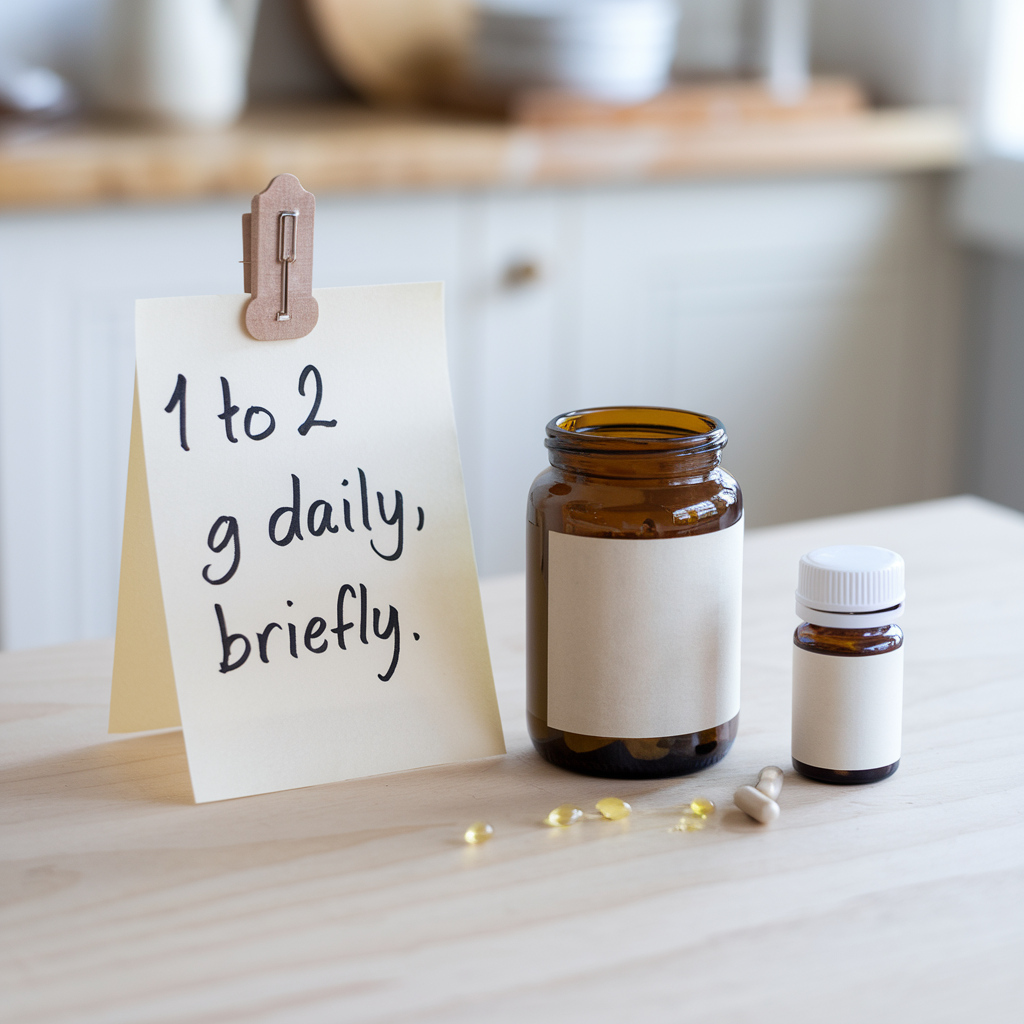
The only regulator-set dose is the EMA's. For mild dyspeptic disorders the monograph gives adults and the elderly a single dose of 0.5 to 1 g of powdered resin twice a day, so 1 to 2 g daily, by mouth. If symptoms persist beyond two weeks while you are taking it, the monograph says to see a doctor, and that two-week ceiling is the number most supplement pages leave out. For skin, the monograph allows a semi-solid preparation with 9 to 11 percent powdered resin applied up to three times a day, not under age 12.
The trial doses sit inside that range: 350 mg three times a day (1.05 g) in the dyspepsia trial, and 1 g a day as three 330 mg capsules in the cholesterol trial, whose 2 g powder arm did nothing measurable. There is no evidence that more is better, and no human study compares morning with evening dosing or fed with fasted, so timing advice on packaging is convention rather than data.
Here is how one capsule label reads. The DSLD label for one widely sold product lists 1000 mg of Pistacia lentiscus resin per two-capsule serving, taken once a day with water or juice before breakfast, 60 vegetarian capsules per bottle. The older label for the same product, DSLD entry 264901, is flagged off market since 4 January 2024, so we used the current one. The brand's own product page lists the 60-count bottle at about $34.99 and the 120-count at about $59.99 as of September 2026; the same 60-count bottle was listed at about $26.99 on Amazon as of September 2026, so the per-day figures below are the ceiling.
Run the math on both doses. At the label dose of 1 g a day, a 60-capsule bottle lasts 30 days and costs about $1.17 a day; at the EMA's upper dose of 2 g a day it lasts 15 days at about $2.33 a day. The 120-count bottle brings the 1 g day down to about $1.00. A two-week course therefore costs $16 to $33, the realistic budget for trying it, since the monograph does not envisage a month-long habit; we weigh that spend in our verdict on whether mastic gum is worth it.
Chewing raw tears is a different act from swallowing a capsule. An unknown fraction of chewed resin is swallowed and the rest is spat out, so you cannot know whether you reached 1 g. Capsules give a measured dose; tears give a jaw workout and a pine-like taste. Our comparison of gum, gummies and pills as delivery formats explains why dose accuracy usually beats novelty.

As an Amazon Associate, UsefulVitamins.com earns from qualifying purchases at no extra cost to you. We only recommend products supported by published research or third-party testing.
Side effects, allergy and who should not use it
The formal safety file is short and mostly empty. That is good news, with a caveat: the monograph lists undesirable effects as "none known", overdose as "no case reported", and one contraindication: hypersensitivity to the resin. The EMA's 2024 addendum found no case report in EudraVigilance at all, and only two reports in the WHO's VigiBase since 2009, both in women taking multi-ingredient mixtures that included a dozen other ingredients, which the reviewers judged uninformative.
Trial tolerance matches that picture. The 2016 cholesterol trial recorded no gastrointestinal, liver or kidney adverse events over eight weeks at 1 to 2 g a day, the H. pylori pilot reported no serious adverse events, and the 2023 essential oil trial none at all. Small trials run over weeks rule out common problems, not rare ones.
Animal data set the ceiling. A 13-week feeding study in F344 rats tested mastic at 0.22, 0.67 and 2 percent of the diet and set the no-observed-adverse-effect level at 0.67 percent; the 2 percent group had lower body weight and higher liver weight without any tissue changes under the microscope. The 2025 micronucleus study found no genotoxic effect on bone marrow at a single limit dose of 2000 mg per kilogram for three days. Neither study describes a human dose, but both put ordinary capsule use far below any threshold that troubled the animals.
Contact allergy is the one documented adverse pattern, and it comes through the skin. In the 2021 Dermatitis series, 72 percent of patients allergic to a mastic-containing surgical adhesive were patch-test positive to gum mastic, with frequent co-reactions to fragrance materials, benzoin and propolis, possibly through the resin's linalool. Among 250 patients without a post-surgical dermatitis history, 1 (0.4 percent) reacted. Whether a skin-sensitised person reacts to swallowed resin has not been studied, so the cautious reading is to avoid both routes.
Who should not use it, in plain terms: anyone pregnant or breastfeeding, anyone under 18, anyone with a known reaction to mastic, surgical adhesives or fragrance mixes, and anyone whose indigestion comes with weight loss, black stools, vomiting or trouble swallowing, which call for a doctor. Pistacia is the pistachio genus and a cousin of cashew; cross-reactivity with tree nut allergy is not documented either way, so nut-allergic readers should ask an allergist. If your real complaint is reflux, our guide to supplements for GERD is the better start, and our piece on licorice root and cortisol covers the other traditional stomach herb, one that carries a measurable side effect.
Interactions with medications
No clinical drug interaction study of mastic gum exists. The EMA monograph's interactions section reads "none reported", which means nobody has reported one, not that anyone has looked. We ran a PubMed search in September 2026 for mastic, mastiha or Pistacia lentiscus combined with drug interaction, herb-drug or pharmacokinetic terms and read every hit. Not one is a human interaction study; the closest are two animal studies: a 2014 rat study in PLoS One in which a Chios mastic extract at the recommended dose did not induce the liver enzymes CYP1A1 and CYP1A2, and a 2014 mouse study of Pistacia lentiscus oil, a different product from the resin, that inhibited several cytochrome P450 enzymes including CYP3A4.
That absence has consequences. If you take medication for diabetes, the 4.5 mg/dl fall in fasting glucose from the 2016 trial is trivially small for a healthy person but is a reason to mention mastic to whoever manages your insulin or sulfonylurea. If you are on a proton pump inhibitor, one data point is the H. pylori pilot where pantoprazole plus mastic cleared 0 of 13 patients, which says nothing about safety, only that the pairing did not help eradication. Blood thinners, statins, thyroid medication and antidepressants have no data at all, and no data is not a green light.
The safe habit takes two minutes. Our drug and supplement interaction checker will tell you whether the specific medication you take has any recorded issue with resin-based botanicals, and our broader guide to drug and supplement interactions explains how absorption and liver enzyme interactions work so you know what to ask your pharmacist. Bring the label, name the daily dose, and ask whether the two-week course fits your prescription list. If the answer is uncertain, the monograph's own logic applies: a short trial, then stop, then reassess.
FAQ
What is mastic gum used for?
In the EU it is a registered traditional herbal medicine for mild dyspeptic disorders and for minor skin inflammation and wounds, per the EMA monograph. The one placebo-controlled dyspepsia trial of 148 people supports that use; cholesterol, H. pylori and liver claims rest on single small trials with mixed or null results.
Does mastic gum break a fast?
There is no trial on this. A 1 g capsule dose is one gram of sugar-free resin, so it is unlikely to matter for a fast defined by calories. If your fast is strict, chewing the tears adds flavour stimulation some protocols exclude, so take the capsule with the meal that ends the fast.
What is the best time to take mastic gum?
No human study compares timing. The capsule label we checked says two capsules once a day before breakfast; the trials split the dose into three across the day. Either pattern sits within the monograph's 1 to 2 g daily range, so pick the one you will remember for a two-week course.
Does mastic gum interfere with medications?
Nobody knows, because no interaction study has been done; the monograph lists interactions as "none reported" and our September 2026 PubMed search found no human study. Treat that as unstudied rather than safe, especially with diabetes drugs, since the 2016 trial lowered fasting glucose by 4.5 mg/dl, and check your prescription with a pharmacist first.
Is mastic gum safe to take every day?
For adults, the safety record over weeks is clean: no adverse events in the 2016 trial, no cases in the EU pharmacovigilance database, and a rat NOAEL of 0.67 percent of the diet in a 13-week study. The monograph still frames it as a short course, with a doctor visit if symptoms outlast two weeks.
How long does mastic gum take to work?
The dyspepsia trial measured symptoms after three weeks at 350 mg three times a day, and the cholesterol trial after eight weeks; nothing shorter has been measured against placebo. If mild indigestion has not eased within two weeks, the monograph's own advice is to stop guessing and see a doctor.
The bottom line
Mastic gum earns a narrow recommendation. For mild indigestion in an adult who is not pregnant, a course of 0.5 to 1 g of powdered resin twice a day for up to two weeks matches both the EU monograph and the one placebo-controlled dyspepsia trial, and costs about $16 to $33 for the fortnight at the brand's own capsule price, less on Amazon. Stop at two weeks if nothing has changed, and see a doctor rather than buying a second bottle.
Do not buy it for cholesterol, H. pylori or fatty liver on the strength of the evidence. The cholesterol change was 11.5 mg/dl in one pilot with a 23-person placebo group and no effect on LDL; the H. pylori pilot cleared 4 or 5 of 13; the liver trial was null across the whole group; and the blood pressure and weight results belong to an essential oil the regulator calls a different product. The safety file is reassuring for short adult use, the contact-allergy signal is real, and the interaction file is empty because nobody has looked. If you take daily medication, run it through the checker and ask your pharmacist first. How we approach these calls is laid out in how we review supplements.
