
Bloating can feel random and stubborn, but the right probiotic can make it noticeably easier to manage. The best probiotics for bloating are not “one-size-fits-all” products – they’re specific strains (or well-studied blends) that have been tested for symptoms like abdominal distension, gas, and IBS-related discomfort. This article breaks down which strains have the strongest human evidence, how to match them to your symptoms (IBS-D, constipation, post-antibiotics, lactose issues), and how to choose a supplement that’s actually likely to work in real life.
Affiliate disclosure: this article contains affiliate links. As an Amazon Associate, UsefulVitamins.com earns from qualifying purchases at no extra cost to you.
Summary / Quick Answer
The best probiotics for bloating are typically strain-specific Lactobacillus and Bifidobacterium options – and in some cases, targeted multi-strain blends – that have shown symptom improvements in clinical trials (especially in IBS).
Most evidence-supported probiotic options for bloating include:
- Lactobacillus plantarum strains (including 299v) for bloating and gas scores
- Bifidobacterium bifidum MIMBb75 for bloating symptom relief in IBS
- Bifidobacterium lactis + Lactobacillus rhamnosus combinations for bloating score reductions
- Multi-strain blends (including formulas studied in IBS trials) for broader symptom coverage
- Bacillus coagulans strains for bloating plus abdominal pain and stool issues in some IBS subtypes
How to use them: take a clinically dosed product daily for 4-8 weeks, start low if you’re sensitive, and reassess based on your main trigger (constipation, IBS-D, food intolerance, or antibiotics).
Why probiotics can help bloating (and when they won’t)
Bloating is not just “too much gas.” For many people, it’s a mix of gut motility, visceral sensitivity (how strongly your gut feels stretching), fermentation of carbs, constipation, and shifts in the gut microbiome. That’s why probiotics sometimes help – and sometimes do nothing.
In IBS specifically, the research is more encouraging. A large systematic review in the World Journal of Gastroenterology (PMC full text) found moderate evidence that certain probiotics can improve bloating and distension in some IBS patients, although results vary by strain and study design. A more recent network meta-analysis in Frontiers in Microbiology (PMC full text) compared many strains and blends head-to-head (indirectly) and identified several probiotic options linked with meaningful bloating score improvements versus placebo.
The key idea is strain specificity. “Probiotic” is like saying “painkiller.” It’s a category, not a guarantee.
When probiotics are most likely to help
Probiotics may be worth prioritizing if you relate to any of these:
- Bloating with IBS symptoms (pain, stool changes, urgency, constipation)
- Bloating after a course of antibiotics (often with stool changes)
- Bloating linked with constipation (slow transit increases fermentation time)
- Bloating triggered by certain carbs (FODMAP-type patterns)
When probiotics may not be the main answer
Consider other causes first if you have:
- Rapid onset bloating with severe pain, fever, vomiting, weight loss, or blood in stool
- Persistent bloating that worsens steadily over weeks
- Known conditions like celiac disease, IBD, or ovarian concerns (needs clinician evaluation)
Actionable takeaway: If your bloating comes with IBS-type patterns, probiotics have the best chance of helping – but only if you choose a studied strain and give it enough time.
Visual: “Bloating” is often multiple problems at once
| What it feels like | Common driver | What a probiotic might do |
|---|---|---|
| Tight, distended belly by evening | Fermentation + sensitivity | Shift microbial activity, reduce gas byproducts |
| Bloating with constipation | Slow transit | Support stool regularity in some people |
| Bloating with diarrhea/urgency | IBS-D patterns | Help symptom scores depending on strain |
| Bloating after antibiotics | Microbiome disruption | Support recovery and reduce diarrhea risk |
If bloating started after antibiotics, also see Probiotics Antibiotic Timing for practical timing and spacing tips.
Best probiotics for bloating: strains with the strongest human evidence

Garden of Life Dr. Formulated Probiotics Once Daily Women’s, 30 Capsules
Garden of Life Dr. Formulated Probiotics Once Daily Women’s earns a strong 4.6/5 rating from over 12,400 Amazon reviews, praised for its 50 billion CFU of 16 women-specific strains that effectively support gut, vaginal, and immune health without needing refrigeration. While some users mention difficulty swallowing the large capsules or initial bloating, Reddit communities like r/supplements largely endorse it as a reliable, high-quality option for daily probiotic needs, making it a solid affiliate recommendation at around $25.
Most people shopping for a probiotic see CFUs, “50 billion,” and long lists of species. The uncomfortable truth is that bloating relief depends more on the strain and the clinical evidence than the CFU number alone.
In the network meta-analysis published in Frontiers in Microbiology (PMC full text), several strains and combinations stood out for improving bloating scores compared with placebo, including:
- Bifidobacterium lactis + Lactobacillus rhamnosus (combination)
- Lactobacillus plantarum strains, including L. plantarum 299v
- Bifidobacterium bifidum MIMBb75
- Certain multi-strain mixtures used in IBS studies
Other clinical and clinician-facing summaries also highlight strain-specific options used in practice, including Lactobacillus rhamnosus GG (LGG) and targeted Bifidobacterium species for gas and IBS patterns, as discussed in a Canadian Digestive Health Foundation pharmacist guide and a patient-friendly evidence overview from Medical News Today.
What “best” means here (and what it doesn’t)
This article uses “best” to mean: most supported by human trials for bloating-related outcomes, especially in IBS. It does not mean:
- the highest CFU
- the most strains on the label
- guaranteed results for everyone
A practical short list to look for on labels
When scanning a supplement, prioritize products that list full strain IDs, not just the species.
Examples of label-friendly strain IDs that show up in the evidence base:
- Lactobacillus plantarum 299v
- Bifidobacterium bifidum MIMBb75
- Lactobacillus rhamnosus GG
- Bacillus coagulans (strain ID varies by product; look for one tied to human studies)
Actionable takeaway: If the label does not include strain IDs (letters and numbers), it’s hard to connect that product to any specific bloating research.
Visual: Evidence-backed strain “menu” by symptom pattern
| Your main pattern | Strains/blends often studied for symptom scores | What to watch for |
|---|---|---|
| IBS with bloating | L. plantarum strains, B. bifidum MIMBb75, multi-strain IBS blends | Give it 4-8 weeks |
| Bloating + pain | B. coagulans strains in IBS research | Track pain + stool changes |
| Gas after certain foods | Bifidobacterium-focused formulas | Pair with diet adjustments |
| Post-antibiotic gut upset | Yeast-based or targeted strains used for diarrhea prevention | Timing matters with antibiotics |
For more IBS-specific options (and how to match them to IBS-C vs IBS-D), see Best Probiotics for IBS.
How to choose a probiotic supplement that’s actually worth trying
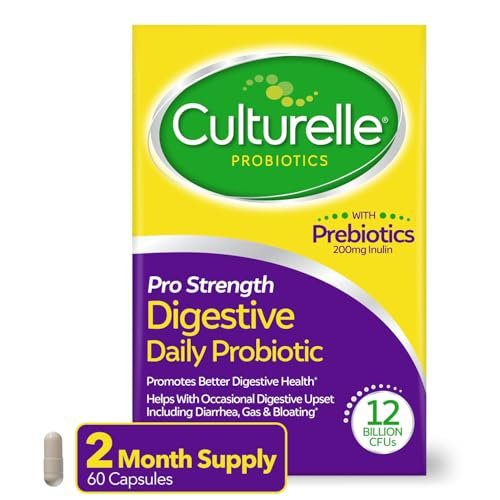
Culturelle Daily Probiotic Capsules For Men & Women, Most Clinically Studied Probiotic Strain, Digestive & Gut Health, Supports Occasional Diarrhea, Gas & Bloating, 1 Month Supply, 30 CT
Culturelle Daily Probiotic Capsules for Men & Women contain the most clinically studied probiotic strain, Lactobacillus rhamnosus GG, in a 1 month supply of 30 capsules to support digestive and gut health while helping with occasional diarrhea, gas, and bloating. This daily supplement delivers 10 billion CFUs that survive stomach acid to reach the intestines, backed by extensive clinical research on the strain’s effectiveness. It requires no refrigeration and is suitable for consistent use by adults.
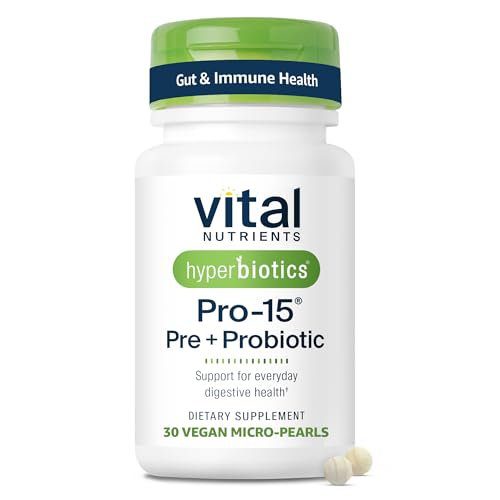
Hyperbiotics Vital Nutrients Pro-15 Prebiotics and Probiotics for Women and Men | 15 Science Backed Strains | Supports Occasional Constipation, Diarrhea, Gas & Bloating | 30 Vegan Time Release Pearls
Hyperbiotics PRO-15 stands out with its 15 diverse, time-release strains designed to survive stomach acid, earning a solid 4.4-star rating from over 15,000 Amazon reviews for effectively reducing bloating and improving gut health. While pricier at around $26, its patented pearl technology and refrigeration-free convenience make it a strong affiliate recommendation for those seeking a premium, shelf-stable probiotic backed by consistent user satisfaction.
Even a well-studied strain can fail in the real world if the product is poorly made, underdosed, or stored incorrectly. Think of probiotics like live seedlings – the “type” matters, but so does whether they survive the trip.
Here’s what tends to matter most for bloating relief.
1) Strain ID and clinical relevance
Choose a product that lists:
- Genus + species + strain (example: L. plantarum 299v)
- A clear intended use (IBS support, gas, regularity)
If the label only says “Lactobacillus blend,” you can’t verify whether it matches any of the strains shown to improve bloating scores in human trials.
2) Dose: aim for a realistic, studied range
Many effective products land somewhere in the billions of CFU per day, but more is not automatically better. Some studies use lower doses, others higher, and results depend on the strain.
A practical starting range many clinicians use for common Lactobacillus and Bifidobacterium strains is often 10-20 billion CFU/day for a trial period, then adjust based on response and tolerance. For some people, starting lower reduces early gas.
3) Delivery and survivability
Look for signals that the probiotic can survive stomach acid and reach the intestines, such as:
- delayed-release capsules
- documented shelf stability
- clear storage instructions that match the product form
The Canadian Digestive Health Foundation pharmacist guide discusses why strain selection and product quality matter more than flashy marketing.
4) Third-party testing and transparency
Prefer brands that provide:
- third-party testing (identity, potency, contaminants)
- expiration-date potency (not just “at time of manufacture”)
Visual: Probiotic label checklist (save this)
| Label feature | Why it matters for bloating | What “good” looks like |
|---|---|---|
| Strain IDs | Links product to studies | “L. plantarum 299v” not just “L. plantarum” |
| CFU per serving | Helps match studied doses | Clear CFU at expiration |
| Storage guidance | Protects viability | “Shelf-stable” or “refrigerate” with reason |
| Testing | Trust and consistency | Third-party verified potency |
Actionable takeaway: If you can’t identify the strain and the dose, you’re guessing – and bloating is too frustrating for guesswork.
If you want a step-by-step routine (including how to stack fiber, magnesium, and timing), follow the Gut Health Supplement Protocol.
How to take probiotics for bloating (timeline, side effects, and what to track)
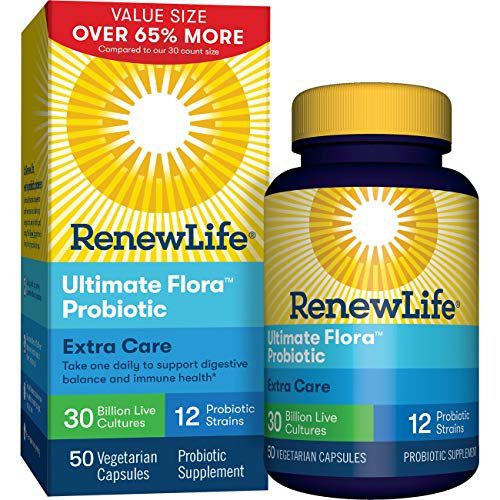
Renew Life Extra Care Ultimate Flora Probiotic Supplement, 30 Billion, 50 Vegetarian Capsules
Renew Life Extra Care Ultimate Flora Probiotic delivers 30 billion CFU across 12 probiotic strains in a once-daily delayed-release vegan capsule, designed to support digestive balance and maintain healthy gut flora. The 50-capsule supply provides a month of targeted intestinal delivery without refrigeration.
Most people quit probiotics too early or change products too quickly. That makes it hard to know what’s working.
In IBS research, improvements in bloating scores often show up after several weeks, not several days. Many trials run 4-8 weeks, which is a reasonable at-home testing window if you’re otherwise healthy and symptoms are mild to moderate.
A simple 4-step “trial” plan
- Pick one product with strain IDs and a clear dose.
- Take it daily for 4 weeks (8 weeks if you see partial improvement).
- Keep everything else steady if possible (major diet changes can confuse results).
- Track 3 markers:
- bloating severity (0-10)
- abdominal pain (0-10)
- stool pattern (frequency + form)
What about initial gas or worse bloating?
A short adjustment phase can happen, especially if:
- you start with a high dose
- you add a prebiotic at the same time
- you have constipation and slow transit
To reduce the chance of early discomfort:
- start with half a dose for 3-7 days
- take with food (unless the product says otherwise)
- avoid adding new fermentable fibers in the same week
When to stop and reassess
Stop the trial and talk with a clinician if you develop:
- fever, severe abdominal pain, persistent vomiting
- blood in stool
- signs of dehydration
- symptoms that rapidly worsen
For antibiotic-associated diarrhea prevention (which can indirectly reduce bloating and gut upset), an evidence summary in American Family Physician reports probiotics can reduce risk in certain settings, though the best approach depends on your antibiotic and health status.
Visual: What results usually look like over time
| Week | What you might notice | What to do |
|---|---|---|
| 1 | No change or mild extra gas | Stay consistent, consider lowering dose |
| 2-3 | Subtle reduction in tightness after meals | Keep tracking symptoms |
| 4 | Clearer trend (better, same, or worse) | Decide: continue, switch strain, or stop |
| 6-8 | Best read on effectiveness | If improved, consider maintenance plan |
Actionable takeaway: A probiotic is a “trial,” not a lifetime commitment. Run it long enough to get a real signal.
If constipation is part of your bloating pattern, magnesium may be a better first lever than swapping probiotics repeatedly. See Best Magnesium for Constipation.

Common misconceptions that keep people bloated
Probiotics are popular partly because they sound simple. But a few myths cause most of the frustration.
Misconception 1: “Any probiotic will help bloating”
Research doesn’t support that. The IBS review in the World Journal of Gastroenterology (PMC full text) shows benefits tend to be strain-specific and outcomes vary across trials. Some people improve, some don’t, and some strains help certain symptoms more than others.
Do this instead: choose a product with strain IDs that have human data for bloating or IBS symptoms.
Misconception 2: “More CFUs always works better”
Higher CFU counts can be useful, but they’re not a shortcut. A high-dose product with unstudied strains can underperform a lower-dose product with the right strain.
Do this instead: match the strain to your symptom pattern first, then aim for a reasonable studied dose.
Misconception 3: “Multi-strain is always superior”
Some multi-strain blends perform well in comparative analyses, including in the Frontiers in Microbiology network meta-analysis (PMC full text). But “more strains” can also mean less clarity on what’s doing what, and quality varies widely.
Do this instead: use multi-strain blends when they’re tied to clinical outcomes, not just marketing.
Misconception 4: “If it causes gas at first, it’s detoxing”
There’s no need to frame discomfort as “detox.” Early gas can be a normal adjustment, but it can also mean the product isn’t a fit for you right now.
Do this instead: lower the dose, give it a week, and stop if symptoms escalate.
Visual: Myth vs reality (quick reset)
| Myth | Reality | Better move |
|---|---|---|
| Any probiotic works | Strains matter | Look for strain IDs |
| Highest CFU wins | Dose is secondary to strain | Choose evidence first |
| Multi-strain is best | Depends on the blend | Prefer studied formulas |
| Worse first = good sign | Could be mismatch | Start low, track trends |
If you want non-probiotic options that often work faster for occasional bloating, see Best Supplements for Bloating.
Taking this alongside other products? StackMyMed (our companion app) logs your full stack, finds the optimal timing for each dose, and flags interactions, so you are not tracking it all by hand.
Conclusion
The best results with the best probiotics for bloating come from treating probiotics like targeted tools, not generic gut pills. Research suggests certain strains – especially specific Lactobacillus and Bifidobacterium options and some studied multi-strain blends – can reduce bloating scores for many people with IBS-type symptoms. The practical difference-maker is choosing a product with strain IDs, taking it consistently for 4-8 weeks, and tracking outcomes that actually matter: bloating severity, pain, and stool pattern.
Next step: if bloating is tied to IBS symptoms, compare options in Best Probiotics for IBS. If your bloating is more occasional or food-related, start with the broader toolkit in Best Supplements for Bloating.
As an Amazon Associate, I earn from qualifying purchases. Product recommendations are based on real reviews and independent research.
