
Type "peptides for IBS" into any search engine and you will find forums full of people reporting dramatic results from BPC-157, along with a handful of wellness sites citing "gut-healing research" as justification. The biological story sounds plausible — BPC-157 demonstrably reduces intestinal inflammation in rat models, and IBS involves gut dysfunction, so the implied connection feels logical. The problem is that plausible mechanism and proven clinical efficacy are not the same thing. There is currently no published randomized controlled trial testing any peptide against IBS in humans. What the evidence actually supports, and what gastroenterology guidelines actually recommend, looks very different from what peptide vendors describe.
Summary / Quick Answer: Should IBS Sufferers Try Peptides?
Short answer: No, not as a primary or replacement strategy. IBS is a Rome IV-defined functional gastrointestinal disorder affecting an estimated 10-15% of the global population. Its first-line treatments — including a low-FODMAP diet, soluble fiber, antispasmodics, rifaximin (for IBS-D), and gut-directed psychotherapy — are backed by human trial data and endorsed by the 2021 American College of Gastroenterology clinical guideline (PMID 33315591). BPC-157, the most-discussed peptide in this space, is NOT FDA-approved, has no completed human IBS trials, and its evidence base is entirely animal-derived.
Best for: Readers who want to understand the gap between peptide marketing and gastroenterology evidence before deciding on a treatment path.
Not ideal for: Anyone hoping to bypass a formal IBS diagnosis and evidence-based management in favor of research peptides sold online.
Decision shortcut: If you suspect IBS, the first step is a gastroenterologist visit for proper diagnosis — self-diagnosing IBS is unreliable and can delay detection of inflammatory bowel disease, celiac disease, or colorectal conditions with overlapping symptoms.
What IBS Actually Is: Rome IV Criteria and Subtypes
IBS is not simply "a sensitive stomach." It is a specific functional disorder defined by the Rome IV diagnostic criteria, updated in 2016. To meet Rome IV, a patient must experience recurrent abdominal pain averaging at least one day per week over the last three months, with symptom onset at least six months before diagnosis, and at least two of the following: pain related to defecation, pain associated with a change in stool frequency, or pain associated with a change in stool form or appearance. The Rome IV revision tightened the older Rome III definition, which helps explain why studies comparing the two frameworks find Rome IV identifies roughly half as many cases — those with more severe, consistent symptom patterns (PMID 27862281).
IBS is classified into four subtypes based on predominant stool pattern:
- IBS-D (diarrhea-predominant): more than 25% of bowel movements are loose or watery, less than 25% are hard or lumpy
- IBS-C (constipation-predominant): more than 25% hard or lumpy, less than 25% loose or watery
- IBS-M (mixed): more than 25% of bowel movements fall into both hard and loose categories
- IBS-U (unclassified): does not fit neatly into the other three categories
Subtype matters clinically because treatments differ. Rifaximin and eluxadoline are indicated for IBS-D; chloride channel activators (lubiprostone) and guanylate cyclase activators (linaclotide, plecanatide) are indicated for IBS-C. A blanket peptide supplement does not account for any of this specificity.
Importantly, IBS has no structural abnormality visible on colonoscopy or biopsy. It is diagnosed clinically — which is exactly why the Rome IV criteria exist: to give clinicians a validated, reproducible framework rather than relying on symptom intuition alone. A gastroenterologist diagnosis is essential because the symptoms of IBS overlap with IBD (Crohn's disease, ulcerative colitis), celiac disease, and other conditions that require fundamentally different treatments.
Why Peptides Keep Coming Up in IBS Discussions
The connection between peptides and IBS is not entirely invented. There are several biologically coherent reasons why peptide researchers have looked at gut inflammation:
The gut is peptide-rich. Your gastrointestinal tract uses peptides extensively in its normal function — cholecystokinin (CCK) regulates digestion, vasoactive intestinal peptide (VIP) modulates motility and immune response, and substance P is involved in pain signaling. The enteric nervous system, sometimes called the "second brain," is dense with neuropeptide signaling. So the idea that exogenous peptides might influence gut function is not farfetched as a hypothesis.
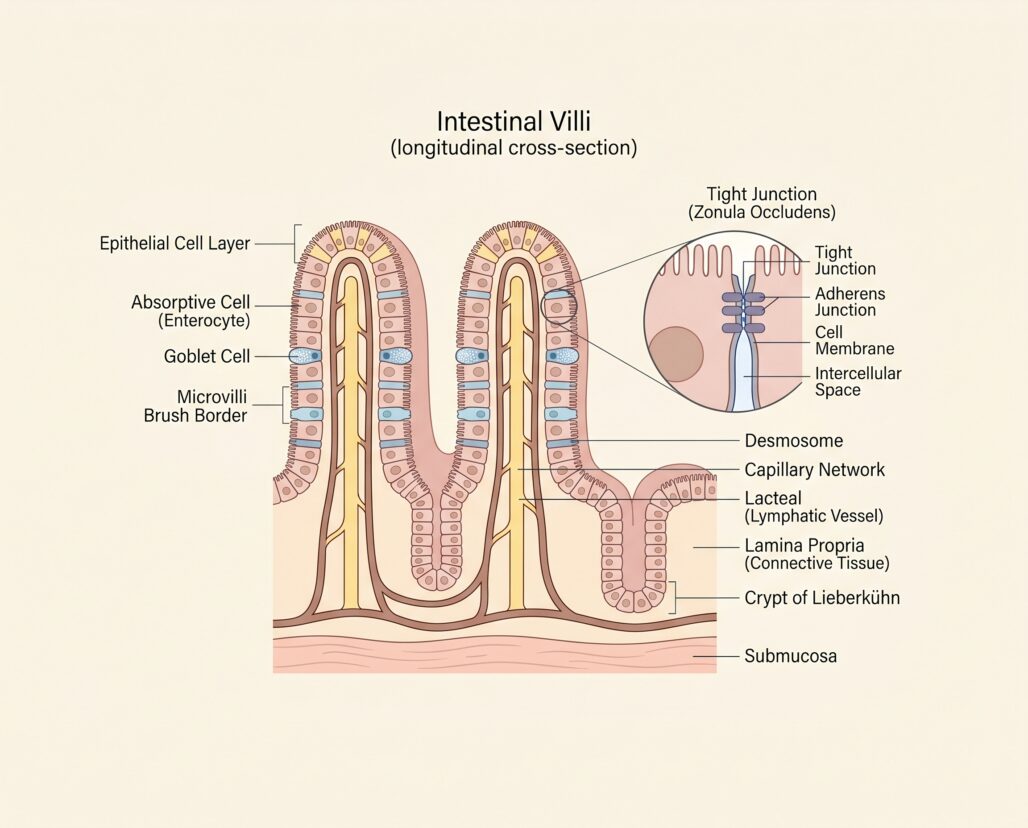
IBS involves low-grade mucosal inflammation in some patients. Research in the last decade has increasingly documented that a subset of IBS patients — particularly post-infectious IBS-D — show increased mucosal immune activity, mast cell infiltration, and slightly elevated intestinal permeability. If a peptide could normalize these changes, it could theoretically address at least part of the symptom burden. This is the logical thread that peptide-for-gut-health investigations have followed, though the target condition in animal models is usually colitis or mucosal injury, not IBS specifically.
Supplement marketing does not separate conditions. Online vendors and wellness influencers often use "gut issues," "gut inflammation," "IBS," and "leaky gut" interchangeably. A study showing BPC-157 reduces inflammation in an acetic acid-induced rat colitis model gets described as evidence it "helps IBS." The gap between experimentally induced colitis in rodents and Rome IV-defined functional bowel disorder in humans is substantial and consistently glossed over.
BPC-157 and IBS: What the Research Actually Shows
BPC-157 is a synthetic 15-amino-acid peptide derived from a protein found in human gastric juice. It is the peptide most aggressively marketed for gut conditions, and its animal data is genuinely interesting — which makes clear-eyed evaluation all the more important.
The animal evidence. A 2020 review published in Current Pharmaceutical Design (PMID 32445447) summarized BPC-157's protective effects against NSAID-induced gastrointestinal damage in animal models. The compound appears to stabilize intestinal permeability, support epithelial integrity, and reduce lesion formation in rat gut tissue after injury. A 2017 review (PMID 28228068) extended the picture to ulcerative colitis animal models, stress-induced gut-brain axis disruption, wounds, and fistulas. The proposed mechanisms — nitric oxide pathway modulation, VEGF-driven angiogenesis, cytoprotective gene expression — are biologically coherent and consistently replicated across rodent laboratories.
The human evidence for IBS: there is none. As of the date of this article's publication, there are no completed randomized controlled trials testing BPC-157 in human IBS patients. There are no phase 2 or phase 3 trials. The one human-trial context in which BPC-157 moved toward clinical testing — an ulcerative colitis study conducted in Croatia under the brand name Bepectin — has not produced peer-reviewed phase 3 data at the scale required for regulatory approval. IBS is a different condition from IBD, and even the IBD human data remains incomplete.
The regulatory reality is unambiguous. BPC-157 is NOT FDA-approved for any indication — not for IBS, not for ulcerative colitis, not for gut healing. In the United States, it is not a legally marketed dietary supplement or pharmaceutical. Vendors sell it under "research chemical" or "for research use only" labeling to sidestep regulatory classification, but that does not change the legal or safety reality for the person taking it. You can read the full breakdown of BPC-157's status and evidence in our dedicated article. The critical point for IBS sufferers is simple: there is no human trial data, and no regulatory body has evaluated its safety or efficacy for your condition.
KPV and Other Peptides Studied in Gut Inflammation
BPC-157 is not the only peptide that gets mentioned in gut-health discussions. KPV — a tripeptide fragment of alpha-melanocyte-stimulating hormone (alpha-MSH) — has attracted research attention for its anti-inflammatory properties in mucosal tissue.
What KPV research actually shows. A 2024 study published in ACS Applied Materials and Interfaces (PMID 38289234) incorporated KPV tripeptide into a hydrogel delivery system and tested it in murine colitis models. The formulation significantly inhibited pro-inflammatory cytokines including IL-1beta, IL-6, and TNF-alpha, and upregulated tight junction proteins Zonula-1 and Claudin-5. Earlier research into alpha-MSH neuropeptides (PMID 11268348) documented anti-inflammatory and host-defense properties in barrier organs including the gut going back to early 2000s literature. The biological plausibility is reasonable.
The same limitation applies. KPV has no completed human IBS trials. Its murine colitis data is genuinely promising, but colitis is not IBS, murine models do not fully replicate the human enteric environment, and the formulation tested in the 2024 study was an experimental hydrogel — not an oral supplement or injectable available on the market. The fact that KPV is now sold by peptide vendors as a "gut peptide" reflects the same gap between preclinical evidence and marketing language that surrounds BPC-157.
A note on compounded peptides. Compounding pharmacies in the U.S. can prepare certain peptides with a valid prescription for individual patients under specific circumstances. If you encounter advertising for "compounded BPC-157" or "compounded KPV" for IBS, treat this with significant caution. The FDA has taken enforcement action in this space, and compounded preparations for IBS specifically have no clinical trial validation for safety or dosing. Consult a physician before considering any compounded peptide, and be explicit about your IBS diagnosis.
What ACG Guidelines Actually Recommend for IBS
The 2021 American College of Gastroenterology Clinical Guideline for IBS (PMID 33315591) used rigorous GRADE methodology — the same evidence-grading framework used by most major medical organizations — to evaluate 16 therapeutic questions. Here is what the evidence supports:
Strong recommendations (the evidence is sufficient to recommend for most patients):
- Low-FODMAP diet: A limited trial of a low-fermentable oligosaccharides, disaccharides, monosaccharides, and polyols diet is recommended to improve global IBS symptoms. This is a dietary intervention with multiple human RCTs behind it, not a supplement.
- Rifaximin (IBS-D): The non-absorbable antibiotic rifaximin is recommended for global IBS-D symptoms. It targets gut microbiota without systemic antibiotic exposure.
- Chloride channel activators and guanylate cyclase activators (IBS-C): Lubiprostone, linaclotide, and plecanatide are FDA-approved and recommended for IBS-C.
Suggested (conditional) recommendations:
- Gut-directed psychotherapy: Cognitive behavioral therapy, hypnotherapy, and mindfulness-based approaches have human trial evidence and are suggested for global IBS symptom reduction.
- Tricyclic antidepressants: Agents like amitriptyline and nortriptyline have evidence for abdominal pain reduction in IBS, though side effect profiles require clinical management.
- Antispasmodics: Hyoscyamine and dicyclomine are used for abdominal cramping; evidence is moderate but these remain a practical option in clinical practice.
- Eluxadoline (IBS-D): A mixed opioid receptor agonist/antagonist with specific labeling for IBS-D.
None of these interventions are peptide supplements. All require clinical management — a licensed prescriber for the pharmaceutical options, and ideally a registered dietitian familiar with low-FODMAP protocols for the dietary intervention.
Pregnancy note. Several of the pharmacological options — including antispasmodics, rifaximin, and eluxadoline — have not been established as safe in pregnancy. Drug selection for pregnant patients with IBS should be managed exclusively by the treating obstetric and gastroenterology team. The low-FODMAP dietary approach, under dietitian supervision, is generally considered lower risk, though it also requires professional guidance during pregnancy.

FAQ
Can BPC-157 help with IBS symptoms?
There is no human trial evidence that BPC-157 helps with IBS. Its animal data covers gut injury and colitis models, not functional bowel disorder. Extrapolating from rat intestinal healing studies to human IBS management is not scientifically supported.
Is low-FODMAP diet better than peptides for IBS?
Yes, based on the available evidence. Low-FODMAP is the only dietary intervention with multiple human RCTs confirming symptom reduction in IBS and is explicitly recommended in the ACG 2021 guideline. No peptide has completed a comparable human trial for IBS.
What peptides have been tested in humans for gut conditions?
Some peptide-based pharmaceuticals exist for gut conditions — vapreotide and octreotide for certain secretory diarrheas, for example — but these are FDA-approved medications for specific diagnoses, not supplements. No research-stage peptide like BPC-157 or KPV has completed a phase 3 human IBS trial.
Is IBS an inflammatory condition that peptides could target?
IBS is a functional disorder, not a purely inflammatory one. Some patients — particularly post-infectious IBS — show mild mucosal immune activation, but IBS does not involve the transmural or structural inflammation seen in IBD. Anti-inflammatory peptides targeting the inflammatory cascade are more mechanistically relevant to IBD than to IBS in most patients.
Does the gut-health peptide research cover IBS specifically?
Rarely. Most peptide gut research studies experimentally induced colitis or NSAID-induced mucosal injury in animals. These are different from IBS. Our broader peptides-for-gut-health overview covers the full gut-health peptide landscape including conditions more closely studied in the animal literature.
Can I combine peptides with my IBS medications?
No peptide interaction data exists for the prescription medications used in IBS management — rifaximin, eluxadoline, linaclotide. You should disclose any supplement or peptide use to the prescribing physician. The peptides and medications article covers the general principles of peptide-drug interaction reporting.
Conclusion: The Evidence Gap Is Real, and It Matters
The marketing logic for peptides in IBS follows a specific pattern: cite real animal data on gut inflammation, invoke "leaky gut" or "gut healing" broadly, and let the implied connection to your diagnosed condition do the work. The biological building blocks are not invented — BPC-157 does reduce intestinal injury in rats, KPV does suppress mucosal cytokines in mice. The problem is the missing middle step: a human trial in IBS patients, conducted under controlled conditions, measuring actual outcomes like abdominal pain frequency, stool consistency, and quality of life.
That trial does not exist yet. And in its absence, taking unregulated compounded peptides as a primary or adjunct IBS strategy means accepting unknown risks without established benefit — while established options with real human trial data sit underused.
The ACG 2021 guideline represents the most rigorous synthesis of human evidence in IBS management available. If you have not worked through a low-FODMAP trial with a dietitian, discussed rifaximin with a gastroenterologist if your pattern is IBS-D, or explored gut-directed cognitive behavioral therapy, those interventions have a meaningful evidence record that no current peptide for IBS can match.
If you want to understand the broader landscape of what peptides can and cannot do for gut health — beyond IBS specifically — the peptides for gut health overview covers the full animal and human literature. And if you are specifically curious about BPC-157's complete evidence profile across all studied conditions, the BPC-157 deep dive walks through that in full detail.
For IBS, the most evidence-backed next step is a conversation with a gastroenterologist — not a peptide vendor.
This article is for informational purposes only and does not constitute medical advice, diagnosis, or treatment. IBS is a clinically diagnosed condition; self-diagnosis is not reliable and may delay detection of other gastrointestinal diseases. Do not start, stop, or alter any treatment — including dietary protocols, prescription medications, or supplements — without consulting a licensed healthcare provider. The author and publisher are not responsible for actions taken based on the information presented here.
