
Lion's mane supplements are popular because they may support memory, focus, and mood by helping the brain maintain healthy nerve signaling. But the label can be misleading – two products with the same milligrams can perform very differently depending on whether they use fruiting bodies or mycelium, how they’re extracted, and whether they’re tested for contaminants. This article breaks down what to look for, what the research actually suggests, and how to compare top options by potency, transparency, and value so you can choose a product that fits your goals and budget.
Summary / Quick Answer
If you want the best lion's mane supplements, prioritize fruiting body extracts, beta-glucan transparency, and third-party testing. Most people who notice benefits report changes in 2 to 8 weeks with consistent use.
Here’s the quickest way to choose:
- Best overall quality signals: fruiting body, hot-water (or dual) extraction, beta-glucans listed (often 30%+), third-party test results available
- Best value for higher daily dose: an organic capsule option around 1,500 to 2,100 mg/day
- Best for “stack” users: a formula that pairs lion’s mane with evidence-backed nootropics (citicoline, bacopa) or stress-support herbs (ashwagandha, rhodiola)
- Typical daily range used: 500 to 2,000 mg/day, adjusted by extract concentration and your sensitivity
Lion's Mane Supplements: What They Are (and Why the Form Matters)
Lion’s mane (Hericium erinaceus) is a functional mushroom used in food and traditional wellness practices, and it’s now a staple in modern “brain” routines. The reason form matters is simple: lion’s mane is not one single ingredient. Different parts of the organism and different manufacturing choices can change what you’re actually taking.
Most lion’s mane supplements come from either:
- Fruiting bodies (the mushroom you’d recognize as the “pom-pom” growth)
- Mycelium (the root-like network, often grown on grain)
Many experienced reviewers and brands position fruiting body extracts as the better choice for people seeking higher concentrations of beneficial compounds. Mycelium products can be legitimate, but they are more likely to include grain substrate, which may dilute mushroom-specific compounds if not carefully produced and tested.
The key compounds people are chasing
Lion’s mane is studied mainly for two categories of compounds:
- Beta-glucans (a type of polysaccharide found in mushrooms)
- Erinacines and hericenones (compounds associated with nerve growth factor pathways in preclinical research)
Human research is still developing, but lion’s mane is often discussed in the same conversation as other nootropic mushrooms because of its potential role in cognitive performance and mood.
Quick visual: Fruiting body vs mycelium checklist
| Feature | Fruiting body extract | Mycelium on grain (common form) |
|---|---|---|
| What it is | Mature mushroom | Mycelium grown on substrate |
| Label clarity | Often lists extract ratio + beta-glucans | Sometimes lists “mycelium” without substrate details |
| Best for | People prioritizing potency metrics | People prioritizing cost or specific brands |
| Main caution | Quality varies by extraction/testing | Can be diluted by grain if not controlled |
Actionable takeaway: If a label doesn’t clearly state fruiting body (or doesn’t provide any beta-glucan testing), treat it as a “maybe,” not a “best.”
How Lion’s Mane May Support Brain Health (What Research Suggests)
Host Defense Lion’s Mane Mushroom Capsules, 120 Count
No Amazon.com product page or ASIN found in search results for Host Defense Lion’s Mane Mushroom Capsules, 120 Count; product available on Walmart (4.7 stars from 99 reviews, $47.21), Host Defense site, Walgreens, and Smallflower with claims of supporting mental clarity, focus, memory, nervous system, and immune health from organic mycelium, but lacks Amazon-specific ratings, reviews, pricing, or third-party testing data.
The main reason people try lion’s mane is cognitive health – memory, clarity, focus, and mood. Mechanistically, lion’s mane is often described as supporting nerve growth factor (NGF) activity, which is involved in neuron maintenance and signaling. That said, mechanism is not the same as outcome. The important question is: what do human studies and high-quality summaries suggest?
Human evidence is promising but limited. Some small trials have reported improvements in cognitive measures in certain populations, while others show mixed results. That “mixed” pattern is common with nutrition and botanicals because outcomes depend on baseline status, dose, extract type, and how long people take it.
For a practical view of what users commonly experience, many product roundups and review-based summaries report noticeable changes in 7 to 60 days, especially in perceived clarity and mood. That timeline makes sense because many mushroom compounds are not stimulants – they tend to be used consistently, like a daily nutrition habit.
If you’re comparing lion’s mane to other brain supplements, it’s often stacked with ingredients like citicoline or bacopa in multi-ingredient formulas. Some brands highlight supportive human research on their specific stacks, which can be helpful context when you’re choosing between standalone capsules and blends.
Visual: What people use it for vs what evidence can support
| Goal | What people report | What research can reasonably say |
|---|---|---|
| Focus/mental clarity | “Less fog,” steadier attention | May support cognitive function in some users |
| Mood/stress resilience | “Calmer,” more even mood | Early evidence suggests mood support is plausible |
| Memory | “Easier recall” over weeks | Small studies suggest possible benefit in some groups |
| Neuroprotection | Long-term brain support | Mostly preclinical; human data still emerging |
For readers exploring specific use cases, the nuance matters. For example, if you’re looking at attention challenges, see the dedicated guide on Lion's Mane for ADHD for a more targeted discussion of expectations and evidence limits.
Actionable takeaway: Expect lion’s mane to feel more like a “steady-build” supplement than a quick hit. If you feel nothing after 8 weeks at a solid dose, reassess product quality or try a different format.
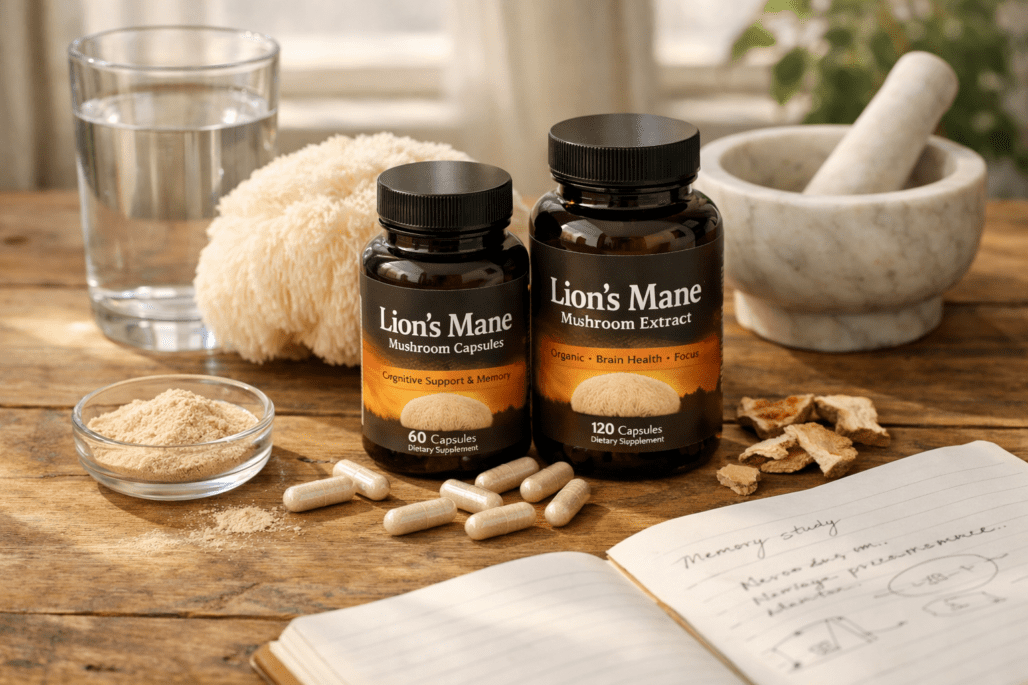
How to Choose the Best Lion’s Mane Supplement (Label Red Flags + Quality Signals)
Real Mushrooms Lion’s Mane Mushroom Extract Powder, 100g
This product is a fruiting body extract in powder form, ideal for those looking to mix it into drinks or recipes for cognitive support.
This is where most people get tripped up: they compare milligrams and stop there. But with mushrooms, extraction and testing often matter more than raw weight.
1) Look for fruiting body and a real extraction method
A strong label often includes:
- “Fruiting body” (not just “mycelium”)
- “Extract” and sometimes an extract ratio (example: 8:1, 16:1)
- Hot-water extraction (commonly used for mushroom polysaccharides)
Why this matters: many beneficial mushroom compounds are not equally accessible without extraction. A concentrated extract can outperform a larger milligram dose of unextracted powder.
2) Beta-glucans: the number that’s harder to fake
Many reputable products list beta-glucans, sometimes up to 30% to 50% in concentrated extracts. Be cautious with labels that only list “polysaccharides” without specifying beta-glucans. Polysaccharides can include starches from grain.
3) Third-party testing is not optional with mushrooms
Mushrooms can accumulate heavy metals depending on growing conditions. Look for:
- Third-party testing badges (for example, Informed Choice for sport)
- A posted Certificate of Analysis (COA), or clear contaminant screening statements
Visual: Quick “buy or pass” label checklist
| If you see this… | It usually means… | Decision |
|---|---|---|
| Fruiting body + extract + beta-glucans listed | Transparent potency markers | Strong buy signal |
| “Mycelium” with no substrate details | Could be grain-heavy | Caution |
| No testing info at all | Purity unknown | Usually pass |
| Huge mg dose but no extract info | Might be low potency | Caution |
If you’re building a mushroom routine beyond lion’s mane, it helps to compare across categories using a guide like best mushroom nootropics and the broader overview of functional mushrooms.
Actionable takeaway: Choose transparency over hype. A smaller dose of a tested, beta-glucan-standardized extract often beats a giant scoop of mystery powder.
Comparing Top Lion’s Mane Supplement Types (Standalone vs Blends)
Nootropics Depot Lion’s Mane Mushroom Extract, 30g
Search results do not include the specific Amazon product page for Nootropics Depot Lion’s Mane Mushroom Extract 30g, so no ASIN, ratings, reviews, price, or third-party testing data could be verified; Nootropics Depot’s own site highlights potential cognitive, memory, nerve support, and neuroprotective benefits from their Lion’s Mane extracts, but Amazon-specific affiliate recommendation not possible without product page data[1][2][3][4].
Once you’ve filtered for quality, your next decision is format. Lion’s mane supplements generally fall into two buckets: standalone lion’s mane, or blends/stacks that combine lion’s mane with other nootropics or adaptogens.
Standalone products are easier for:
- People who want to test lion’s mane “cleanly”
- Those who already take other supplements and want to avoid overlap
- Anyone sensitive to multi-ingredient formulas
Blends can be a better fit if your goal is broader cognitive support. Common add-ons include:
- Ashwagandha (often 250 to 500 mg in studies for stress support)
- Rhodiola for fatigue and stress perception
- Citicoline and bacopa for attention and memory pathways
Some well-known stacks position lion’s mane as one part of a multi-ingredient formula. That can be useful, but it also makes it harder to know what’s doing what.
Visual: Which format fits you?
| Your situation | Better choice |
|---|---|
| You want to see if lion’s mane works for you | Standalone lion’s mane |
| You want a “one-and-done” brain formula | Blend/stack |
| You’re an athlete subject to testing | Third-party tested option |
| You want the simplest ingredient list | Single-ingredient capsule/powder |
A practical comparison of commonly cited options
Based on common 2026-style market standouts mentioned in expert roundups, you’ll often see products positioned like this:
- High-potency extract + adaptogens (for stress + cognition routines)
- Third-party tested mushroom stack (for purity verification)
- High-dose organic capsules (for value and simplicity)
- Premium nootropic stack including lion’s mane (for broad cognitive support)
For additional context on how brands and reviewers evaluate these categories, see independent comparisons like the Garage Gym Reviews supplement roundup and brand-compiled analysis such as the Mind Lab Pro lion’s mane guide. Use these as starting points, then verify label specifics (fruiting body, beta-glucans, testing) yourself.
Actionable takeaway: If you’re new, start with a standalone fruiting body extract for 6 to 8 weeks. If it helps, you can decide later whether a stack is worth the added complexity.

Dosage, Timing, and What to Expect (Without Guesswork)
Most lion’s mane supplements land somewhere between 250 mg and 2,100 mg per serving, but that range is misleading without context. A 500 mg concentrated extract may deliver more active compounds than 2,000 mg of non-extracted powder.
A sensible starting plan
For most healthy adults, a conservative approach looks like this:
- Start low: 500 to 1,000 mg/day (or the equivalent in extract strength)
- Hold steady for 2 weeks: track focus, mood, sleep quality, and digestion
- Adjust: move toward 1,500 to 2,000 mg/day if tolerated and if your product is not highly concentrated
Many people take lion’s mane in the morning or early afternoon. If you notice vivid dreams or sleep changes, shift it earlier in the day.
What “working” can look like
Lion’s mane is rarely described as a dramatic, immediate feeling. More realistic signs include:
- Less afternoon mental slump
- Easier task switching
- More stable mood under stress
- Gradual improvement in perceived “clarity”
If you’re stacking, keep changes minimal. Add one variable at a time so you can interpret results.
Visual: 8-week expectation timeline
| Timeframe | What to watch for |
|---|---|
| Days 1 to 7 | Tolerance (GI comfort, headache, sleep changes) |
| Weeks 2 to 4 | Subtle clarity or mood steadiness |
| Weeks 5 to 8 | More noticeable cognitive “smoothness,” if it works for you |
| After 8 weeks | Decide: continue, change product, or stop |
Safety notes and common side effects
Lion’s mane is generally well-tolerated, but side effects can happen. The most common complaints are digestive upset, headache, or skin reactions in sensitive individuals. For a detailed safety breakdown, including who should be cautious (allergies, medications, pregnancy), read Lion's Mane side effects.
For a higher-level safety perspective on supplements, it’s reasonable to cross-check with a medical database like the NIH Office of Dietary Supplements and evidence summaries in resources such as PubMed.
Actionable takeaway: Give it time, track outcomes, and don’t chase the highest milligram number. Consistency plus product quality is what usually determines results.
Conclusion
Lion’s mane supplements can be a smart addition to a cognitive health routine, but only if you choose a product with the right fundamentals: fruiting body sourcing, meaningful extraction, beta-glucan transparency, and third-party testing. Most benefits, when they happen, build gradually over weeks rather than hours.
If you’re deciding what to do next, start with a clean, tested standalone product for 6 to 8 weeks, then consider whether you want to move into a broader stack. For more context on how lion’s mane fits into the bigger mushroom category, explore nootropic mushrooms and the broader guide to functional mushrooms.
As an Amazon Associate, I earn from qualifying purchases. Product recommendations are based on real reviews and independent research.
