
Rhodiola rosea supplements are best used when you want steadier energy and calmer focus under pressure, not a “quick hit” stimulant. If you are juggling heavy training, demanding work, or an exam week, this adaptogenic herb has human research showing it may reduce stress-related fatigue and improve endurance markers. This article breaks down what the science actually supports, what to look for on a label, and how to dose it safely so you can get benefits without wasting money on low-quality extracts.
Summary / Quick Answer: Are rhodiola rosea supplements worth it?
Yes – for many people, rhodiola rosea supplements may be worth it for short-term fatigue and stress resilience, especially during high-demand periods. Evidence is strongest for stress-related fatigue and aerobic endurance, with results often showing up within 1-4 weeks.
Quick buying and use checklist
- Choose a standardized extract (commonly 3% rosavins and 1% salidroside) for consistency.
- Typical effective range: 144-600 mg/day; some endurance studies report stronger effects at higher doses.
- Best timing: morning, or 30-60 minutes pre-workout (it can feel stimulating for some).
- Best-fit goals: mental fatigue, burnout-type stress, exam/work performance, endurance training.
- Be cautious if you are pregnant, have bipolar disorder, or take antidepressants (talk with your clinician first).
What to expect
- 1 week: many people notice less “dragging” fatigue.
- 3-4 weeks: steadier stress tolerance and performance effects are more likely.
Rhodiola rosea supplements: what they are and how they work (without the hype)
Rhodiola rosea is often described as an “adaptogen,” but that word can feel vague. A practical way to think about it: adaptogens are herbs studied for helping the body respond to stress more efficiently, especially when stress is physical (training load, lack of sleep) or mental (deadlines, exams).
Rhodiola’s best-studied active compounds are rosavins and salidroside. Many clinical trials use standardized extracts so those compounds stay consistent from capsule to capsule. That matters because non-standardized powders can vary widely in potency.
What the research suggests is happening in the body
Clinical and mechanistic research points to several overlapping effects:
- Stress-response signaling: Rhodiola may influence the HPA axis (your cortisol and stress-response system), which is why it is commonly used among people with stress-related fatigue.
- Brain chemistry under stress: Reviews describe effects on neurotransmitters involved in mood and motivation, which may explain why some people feel more “capable” under pressure rather than wired.
- Energy metabolism: Exercise-focused papers describe possible improvements in mitochondrial function, ATP production, and lactate handling, all of which matter for endurance.
- Oxidative stress support: In exercise contexts, rhodiola has been associated with improved antioxidant markers and reduced signs of muscle damage in some trials.
A research overview in the British Journal of Nutrition discusses these performance-related mechanisms, while a broader review of rhodiola’s clinical uses is summarized by MSKCC Integrative Medicine.
A simple “is this you?” fit check
Rhodiola tends to fit best if you relate to one of these:
- You feel tired but not sleepy, especially during stressful periods.
- You want calm focus more than a caffeine-like jolt.
- You are training for endurance and want support for work capacity and recovery.
If your main issue is anxiety with racing thoughts, you may also want to compare options in Best Supplements for Stress Relief & Anxiety, since different supplements can feel very different in real life.
Visual: Rhodiola “fit” map (quick guide)
| Your main goal | Rhodiola fit? | Why it may help |
|---|---|---|
| Stress-related fatigue | High | Human trials show fatigue reduction under stress |
| Exam/work performance | Medium-High | Better alertness and reduced mental fatigue in trials |
| Aerobic endurance | Medium-High | Meta-analyses show improvements in endurance metrics |
| Strength/power | Low-Medium | Evidence is less consistent than endurance outcomes |
| Sleep initiation | Low | Can be too activating if taken late |
Evidence-based rhodiola rosea benefits for stress, fatigue, and performance
NutraBlast Rhodiola Rosea 500mg, 60 Capsules
Unable to locate the exact NutraBlast Rhodiola Rosea 500mg, 60 Capsules product on Amazon.com despite thorough search; no verifiable ASIN, ratings, or pricing available. Consider well-reviewed alternatives like NOW Foods or Thorne Rhodiola with third-party testing for reliable stress support.
NOW Supplements Rhodiola 500 mg, 60 Veg Capsules
This supplement provides a high dose of Rhodiola Rosea, aligning with the effective range mentioned in the article for stress relief and endurance.
Gaia Herbs Rhodiola Rosea Root, 60 Capsules
Insufficient search results to verify Amazon listing, ratings, reviews, or pricing for Gaia Herbs Rhodiola Rosea Root, 60 Capsules; product appears on manufacturer’s site as an adaptogen for stress and stamina support, but no Amazon-specific data or third-party testing found to support a recommendation.[1]
Herb Pharm Rhodiola Extract, 1 Ounce
This liquid extract offers a different form of supplementation for Rhodiola Rosea, catering to those who prefer tinctures over capsules.
Most people buy rhodiola for one of two reasons: feeling less drained or performing better under load. The strongest evidence lines up with those goals, but it helps to be specific about what “better” means.
Stress-related fatigue and mental performance (what human trials show)
Several clinical studies suggest rhodiola can reduce fatigue and improve mental performance during stressful periods:
- In a randomized controlled trial in people with stress-related fatigue, a rhodiola extract dose around 576 mg/day for 4 weeks reduced fatigue symptoms by roughly 30% versus placebo and also improved concentration measures, as summarized in an evidence overview from News-Medical’s clinical insights article.
- In student populations, rhodiola has been linked with improved alertness and reduced mental fatigue during exam stress, also discussed in that same clinical summary.
A key takeaway: rhodiola appears most useful when fatigue is linked to stress load, not necessarily when fatigue is driven by an underlying medical condition (iron deficiency, sleep apnea, thyroid issues). If fatigue is persistent or unexplained, getting basic labs and a clinician review is the smarter first step.
Endurance and exercise performance (what meta-analyses suggest)
For endurance, the best “big picture” evidence comes from pooled analyses. A recent meta-analysis in Frontiers in Nutrition reported improvements across endurance-related metrics such as VO₂max and time-to-exhaustion in human trials, with some outcomes looking stronger at higher daily doses.
In athletes, studies also report changes that may matter for training quality and recovery, including lower post-exercise markers of muscle damage and shifts in antioxidant capacity in some protocols.
What rhodiola probably will not do
Rhodiola is not a replacement for:
- Sleep (it may help you cope, but it does not erase sleep debt)
- Calories and carbs for endurance training
- Treatment for depression or anxiety disorders
If you are building a broader plan for energy, a more complete comparison is in Best Energy Supplements to Boost Vitality Naturally.
Visual: Evidence snapshot (plain-English)
| Outcome | Evidence strength | What it looks like in real life |
|---|---|---|
| Stress-related fatigue | Stronger | Less “burned out,” better mental stamina |
| Alertness under stress | Moderate | Fewer afternoon crashes during high-demand weeks |
| VO₂max / endurance markers | Moderate | Slight edge in aerobic performance and work capacity |
| Recovery markers | Emerging | Less soreness or quicker bounce-back for some people |
| Long-term health claims | Weak/early | Mostly preclinical, not a reason to buy |
How to choose the best rhodiola supplements: label claims that matter
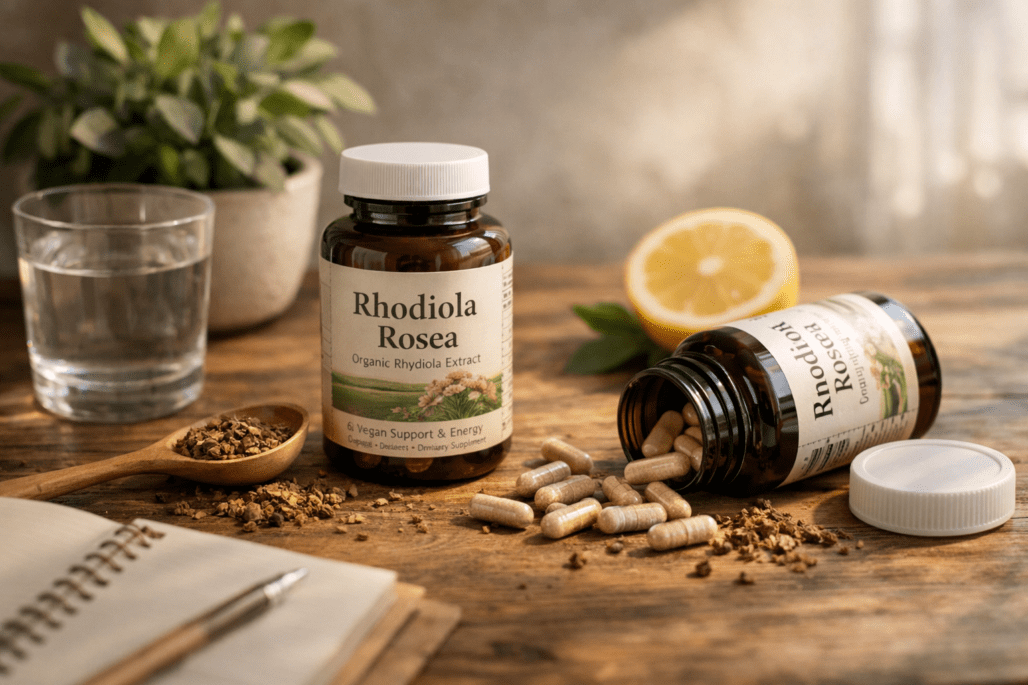
The biggest mistake shoppers make is assuming all rhodiola products are interchangeable. They are not. With herbs, standardization and testing are often the difference between “I felt it” and “I felt nothing.”
1) Look for standardization (and know what it means)
Many studies use extracts standardized to:
- Rosavins (often 3%)
- Salidroside (often 1%)
This does not guarantee the product will work for you, but it increases the odds you are getting a dose similar to what was studied.
What to check on the Supplement Facts panel
- Standardized extract listed (not just “root powder”)
- Percentages of rosavins and salidroside
- The extract amount in mg per serving
2) Prefer third-party testing when possible
Herbal supplements can be adulterated or under-dosed. Third-party testing (USP, NSF, Informed Choice, or reputable independent labs) helps verify identity and purity.
If a brand does not share testing information, that is not automatically disqualifying, but it should lower your confidence.
3) Avoid common quality red flags
- “Proprietary blend” with no clear rhodiola dose
- No standardization listed
- Extremely cheap bulk powders with vague sourcing
- Claims that it “treats” anxiety, depression, or disease (that is a compliance red flag)
4) Choose a form you will actually take consistently
Capsules are the most common and easiest to dose. Some people prefer tablets. Tinctures can work, but dosing consistency varies.
If you are planning to combine rhodiola with other supplements (like magnesium, L-theanine, or adaptogens), use a safety-first approach. The Complete Supplement Stacking Guide: Combine Vitamins Safely walks through practical ways to avoid overlap and side effects.
Visual: “Good label” checklist (copy/paste-friendly)
- Standardized extract with rosavins and salidroside listed
- Clear dose in mg per serving
- Batch testing or third-party verification available
- Transparent sourcing and manufacturer info
- No disease-treatment claims
How to take rhodiola rosea supplements: dose, timing, cycling, and safety
Rhodiola is one of those supplements where “more” is not always better. Some people feel great on a modest dose. Others feel overstimulated, especially if they stack it with caffeine.
Evidence-based dosing ranges (practical guidance)
Human studies commonly fall in the range of 144-600 mg/day of standardized extract, with some endurance outcomes appearing stronger at higher daily intakes in pooled analyses. A reasonable approach is to start low and adjust.
A simple dosing ladder
- Start: 100-200 mg in the morning for 3-4 days
- Adjust: move to 200-400 mg/day if needed
- Higher end (situational): up to ~600 mg/day if tolerated and goal-oriented
If you are sensitive to stimulants, start at the low end and avoid combining with strong coffee until you know how you respond.
Timing: morning usually wins
Rhodiola can feel activating. Many people do best with:
- Morning dosing, with or without food
- Pre-workout dosing (30-60 minutes before training), if using it for endurance
Avoid taking it late afternoon or evening if it disrupts sleep.
How long until you notice benefits?
Based on trial timelines and typical user reports:
- Within 1 week: reduced feelings of mental fatigue can show up
- By 3-4 weeks: stress resilience and performance effects are more noticeable
Cycling: do you need breaks?
Long-term data is less robust than short-term trials. Many people use rhodiola in cycles around high-stress blocks.
Common real-world patterns
- 2-4 weeks on, 1 week off
- Use only during exam weeks, travel, or peak training blocks
Safety and who should be cautious
Rhodiola is generally well-tolerated short-term in studies, but it is not for everyone.
Use extra caution and get medical guidance if you:
- Are pregnant or breastfeeding
- Have bipolar disorder or a history of mania (mood elevation is a concern)
- Take antidepressants or other psychiatric medications
For a conservative safety overview, see MSKCC’s rhodiola monograph. For deeper mechanistic and clinical discussion, the rhodiola review in Frontiers in Pharmacology (PubMed Central) is also a helpful reference.
Visual: Side effects and fixes (quick troubleshooting)
| What you notice | Likely cause | What to do |
|---|---|---|
| Jittery or “wired” | Dose too high or caffeine stack | Lower dose, take earlier, reduce caffeine |
| Trouble falling asleep | Timing too late | Move to morning only |
| Headache or nausea | Sensitivity or empty stomach | Take with food, reduce dose |
| No effect after 2 weeks | Under-dosed or low-quality extract | Verify standardization, adjust dose cautiously |
Conclusion: the smart way to use rhodiola (and when to skip it)
Rhodiola rosea supplements make the most sense when your goal is better stress tolerance and less fatigue during demanding stretches, with a secondary upside for aerobic endurance in some people. The research is promising, but product quality and dosing strategy strongly influence results.
For most healthy adults, the practical path is simple: choose a standardized extract, start low, take it early in the day, and reassess after 2-4 weeks. If you feel overstimulated, back down rather than pushing through.
If you want to compare rhodiola to other options for stress and energy, explore Best Supplements for Stress Relief & Anxiety and Best Energy Supplements to Boost Vitality Naturally for a broader, goal-based plan.
As an Amazon Associate, I earn from qualifying purchases. Product recommendations are based on real reviews and independent research.
