
Affiliate disclosure: this article contains affiliate links. As an Amazon Associate, UsefulVitamins.com earns from qualifying purchases at no extra cost to you.
Before you buy
Here is the part the brand pages bury. Creatine monohydrate is one of the most-studied supplements on the shelf, and the molecule does not change between brands. Thorne and Optimum Nutrition both sell micronized creatine monohydrate at 5 grams per serving. The white powder is functionally the same.
So this comparison is not really about which creatine works better. They both work. It is about what you are paying extra for, and whether that thing matters to you.
The honest split: Thorne carries NSF Certified for Sport, the certification that drug-tested athletes are told to look for. Optimum Nutrition is cheaper, sells in bigger tubs, and carries its own banned-substance certification. If you have never had to pee in a cup for a sport, the second one is almost certainly the smarter buy.
If you are still deciding whether creatine monohydrate is even the right form for you, our breakdown of creatine HCl versus monohydrate covers that question first. This piece assumes you have already landed on monohydrate.
What is actually in each tub
Both products are single-ingredient. No proprietary blends, no stimulants, no filler stack to decode.
Thorne Creatine is micronized creatine monohydrate, unflavored, sold in a 90-serving tub with 5 grams per scoop. Micronized just means the particles are ground finer so the powder mixes more easily in water. That is the entire formula.
Optimum Nutrition Micronized Creatine is also micronized creatine monohydrate, unflavored, at 5 grams per serving. ON sells it in several tub sizes, from roughly 60 servings up to 240, plus a Blueberry Lemonade flavored version.
One claim worth flagging: you will see articles say ON uses Creapure, the German-made branded monohydrate. ON's own product page does not state that, and we could not confirm it from the company. Treat the Creapure claim as unverified for ON – the powder is still standard creatine monohydrate either way, which is what matters.
The practical takeaway is simple. The active ingredient is the same molecule at the same 5g dose in both. That is why the rest of this comes down to certification and price.
| Dimension | Thorne Creatine | Optimum Nutrition Micronized |
|---|---|---|
| Form | Micronized monohydrate | Micronized monohydrate |
| Dose per serving | 5 g | 5 g |
| Servings per tub | 90 | 60 to 240 (size options) |
| Sport certification | NSF Certified for Sport | Informed Choice certified |
| Flavors | Unflavored only | Unflavored, Blueberry Lemonade |
| Price per 5g serving | ~$0.40 to $0.49 | ~$0.20 to $0.33 |
Prices are approximate as of writing – check the current price before buying.
The testing difference, explained without the hype
This is the one place the two brands genuinely diverge, so it is worth getting right.
Thorne Creatine is NSF Certified for Sport. We confirmed the product on the NSF Certified for Sport official listing. That program tests each certified lot against a long list of banned substances and verifies the label matches the contents. It is the certification most major sports leagues and the military point athletes toward.
Optimum Nutrition's creatine is Informed Choice certified. ON's own support page confirms that its Creatine, alongside a few other products, is Informed Choice certified. Informed Choice is run by the anti-doping lab LGC and also screens for banned substances. It is a real, respected program.
So both are third-party screened for banned substances. The difference is which certification body, not whether testing happens.
Why does NSF Certified for Sport get singled out? It is the name written into many drug-tested-athlete policies, so for those athletes it is the safe default to point to. For a recreational lifter, Informed Choice covers the same banned-substance risk. If your sport's governing body names a specific program, follow that. If no one is testing your urine, this distinction does not change your results.
For context on why purity testing matters across supplements in general, the NIH Office of Dietary Supplements exercise and performance fact sheet is a solid primer on creatine's evidence and safety.
Cost per 5g serving – the part that decides it
For a supplement you take every single day, cost per serving is the number that actually matters over a year.
Thorne runs around $36 to $44 for its 90-serving tub. That works out to roughly $0.40 to $0.49 per 5g serving. Over a year of daily use, that is about $145 to $180.
Optimum Nutrition is consistently cheaper. The small 60-serving tub sits near $19.99 (about $0.33 each), and the price per serving drops as you size up – the larger tubs can land closer to $0.20 per serving. A year of ON in a big tub can run under $100.
Put bluntly: ON is roughly half the price per dose for the same 5 grams of monohydrate. That gap is the whole decision for most buyers.
For a daily creatine habit, the International Society of Sports Nutrition position stand on creatine confirms 3 to 5 grams per day is the effective maintenance dose, with no need for fancy forms. You are buying a commodity; price per gram is the rational tiebreaker unless certification forces your hand.
Mixing, taste, and daily use
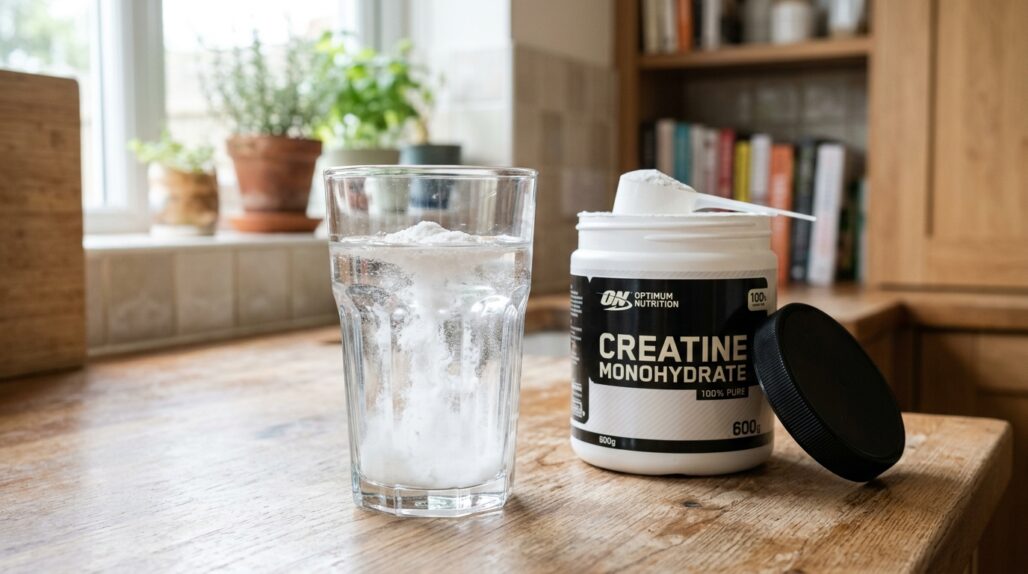
Both are micronized and unflavored, so expect similar behavior in a glass.
Neither dissolves completely in cold water. Micronized powder mixes better than coarse creatine, but you will still see a little grit settle if you let it sit. Stir or shake and drink – that is normal for any monohydrate and not a quality flaw.
Unflavored means slightly chalky but basically tasteless. Most people dump it into coffee, a protein shake, or juice and never notice it. ON also sells a Blueberry Lemonade version if you want a standalone flavored drink; Thorne is unflavored only.
A small honest note: fine micronized powder can clump if your scoop or container gets damp. Keep the scoop dry and the lid sealed. This is true for both.
There is no meaningful "Thorne mixes better" story here. The mixability is a wash. Anyone claiming a dramatic difference between two micronized monohydrates is selling something.
Who should buy which
Here is the clean decision tree.
- Buy Thorne if you are a drug-tested athlete whose program names NSF Certified for Sport, or you simply want the strictest sport certification and do not mind paying for it. The premium buys certification and a trusted brand name, not stronger creatine.
- Buy Optimum Nutrition if you are a recreational lifter, a beginner, or anyone optimizing for price. You get the same 5g monohydrate, real banned-substance certification, and roughly half the cost per serving.
- Buy a plain generic monohydrate if you want to go even cheaper and you are not tested at all – many unbranded tubs are fine, though they carry no sport certification.
If adherence is your real problem and you keep forgetting the powder, gummies are an option, but they get expensive and dosing gets fiddly – see our look at creatine gummies that actually contain creatine before you pay up for that format.


As an Amazon Associate, UsefulVitamins.com earns from qualifying purchases at no extra cost to you.
UsefulVitamins may earn a commission from purchases made through the links above, at no extra cost to you. This never changes our verdicts.
One more safety note worth your time: creatine is well tolerated, but if you take prescription medication, especially anything affecting the kidneys, skim our guide to drug and supplement interactions first. And if you want a head-to-head of two premium Creapure options, our Thorne versus Momentous creatine comparison covers that tier.
FAQ
Is Thorne creatine better than Optimum Nutrition creatine? Not in any way that affects your results. Both are micronized creatine monohydrate at 5 grams per serving. Thorne’s advantage is NSF Certified for Sport, which only matters if you are drug-tested.
Does Optimum Nutrition creatine use Creapure? ON’s official product page does not state that it uses Creapure, and we could not confirm the claim from the company. Treat any Creapure claim for ON as unverified. The product is still standard creatine monohydrate.
Is the cheaper Optimum Nutrition creatine lower quality? No. ON is Informed Choice certified for banned substances and uses the same monohydrate at the same 5g dose. The lower price reflects scale and tub size, not a weaker product.
Do I need NSF Certified for Sport creatine? Only if you compete in a sport that drug-tests and names that certification, or you simply want the strictest screening. Recreational lifters get the same banned-substance coverage from ON’s Informed Choice certification.
How much creatine should I take per day? Most healthy adults do well on 3 to 5 grams daily, which is the standard scoop in both products. A loading phase is optional and not required, per the NIH Office of Dietary Supplements. Ask your doctor if you have kidney concerns.
Will either one make me hold water? Some people notice a small early gain in scale weight from water drawn into muscle cells. This is normal, mild, and the same for both brands since the creatine is identical.
The verdict
Strip away the branding and you are looking at two tubs of the same micronized creatine monohydrate at 5 grams a scoop. The powder is not the differentiator – the certification and the price are.
If you are drug-tested or want the certification most sport programs name, buy Thorne for its NSF Certified for Sport status and accept that you are paying roughly twice as much per dose for that label. That is a fair trade only for people the certification actually protects.
For everyone else, buy Optimum Nutrition. You get the same proven 5g monohydrate, genuine Informed Choice banned-substance testing, and about half the cost per serving. Over a year, that is real money saved on an identical result.
Next step: pick your tub size, set a daily reminder, and take it consistently – consistency beats brand every time with creatine.
This article is for general information and is not medical advice. Supplements can interact with medications and health conditions; talk to your doctor or pharmacist before starting creatine, especially if you have kidney issues or take prescription drugs.
Reviewed by the UsefulVitamins Editorial Team.
