
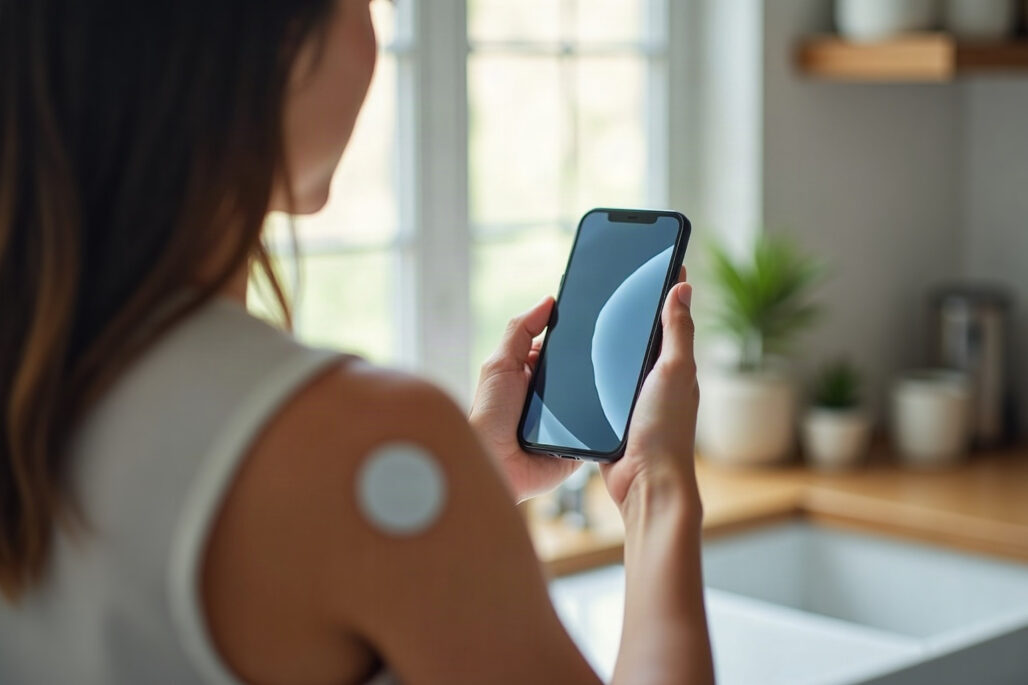
Stelo by Dexcom was the first glucose biosensor cleared for over-the-counter sale in the United States, and it arrived with a promise that is easy to misread: see your glucose without a prescription, without fingersticks, without a diagnosis. The device does what it says. Whether it is worth $1,068 a year depends entirely on what you expect to learn, and most of the people buying it have not answered that question first.
What you actually get
One Stelo pack contains two sensors. Each is meant to run 15 days, with a 12-hour grace period, so a pack is designed to cover a month.
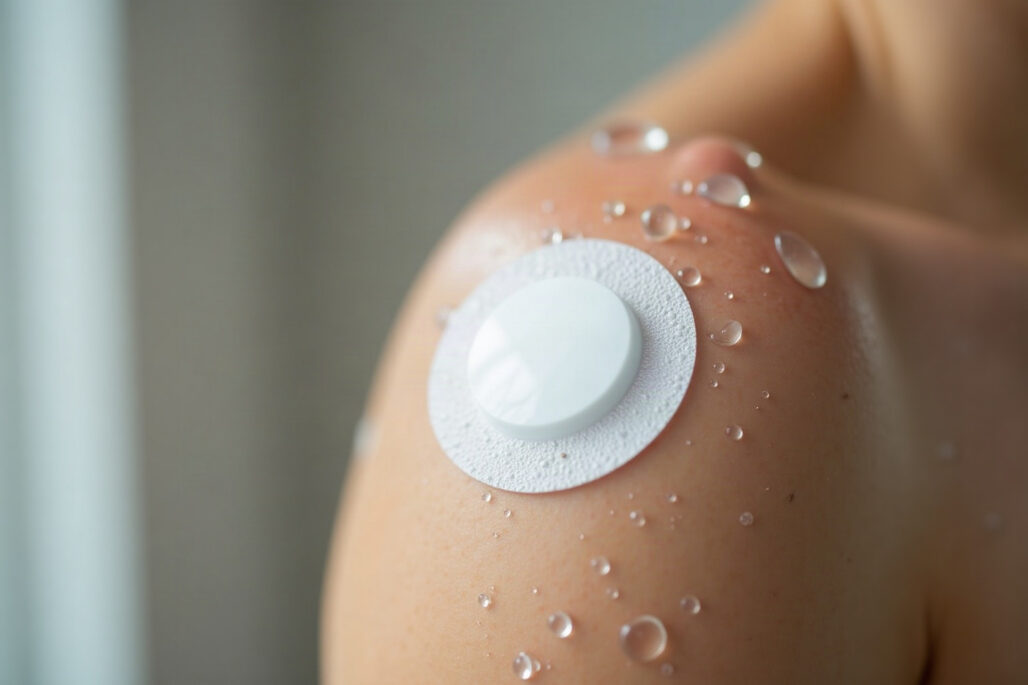
The sensor goes on the back of the upper arm, takes 30 minutes to warm up, and then reads glucose every five minutes, pushing an update to the app every fifteen. It is waterproof to eight feet for 24 hours, so showers and swimming are not a problem.
Its reported accuracy is 8.3% MARD, meaning the average gap between the sensor and a lab blood measurement is a little over eight percent. That figure is manufacturer-reported, measured under Dexcom’s own protocol.
No prescription, no fingersticks, and it is HSA/FSA eligible, which for some buyers takes a third off the effective price.
The cost, stated honestly
Marketing prices CGMs by the month. Buyers experience them by the year.
| How you buy | Price | Days covered | Cost per day | Cost per year |
|---|---|---|---|---|
| Subscription, 2 sensors | $89/month | 30 | $2.97 | $1,068 |
| One-time, 2 sensors | $99 | 30 | $3.30 | $1,188 |
| 3-month subscription | 15% off | 90 | lower | lower |
A thousand dollars a year is the number to react to. For that money you could run an at-home A1C test every quarter for a decade and still have change.
The comparison is not quite fair, because they measure different things. A1C gives you a three-month average; a CGM gives you the shape of individual days. But if what you want is a single number that tells you whether your glucose control is drifting, the cheap test answers it and the expensive one does not answer it better.
Who it is genuinely worth it for
You have a fasting glucose in the prediabetes range. A single fasting number tells you where you start. Two weeks of curves tell you which of your habitual meals are responsible. That is actionable in a way a lab slip is not, and our guide to fasting glucose in the prediabetes range covers what to do with what you find.
You are starting or adjusting a GLP-1. Appetite, meal size and timing all change at once, and a sensor makes the change visible rather than theoretical.
You want a bounded experiment. Buy one pack, wear it for a month, learn your patterns, cancel. This is the use case Stelo is best at and the one its subscription pricing quietly discourages.
You are a data person who will actually look. Some people genuinely enjoy the feedback loop and change what they eat because of it. If that is you, the money buys a behaviour change, which is worth more than the data.

Who should not buy it
Anyone taking insulin. Stelo is for adults 18 and over who are not on insulin. This is not a soft recommendation; it is what the device is licensed for. If you use insulin, you need a prescription CGM chosen with your clinician.
Anyone wanting a diagnosis. These devices show patterns. Diagnosis uses fasting glucose, A1C, or an oral glucose tolerance test ordered by a doctor.
Anyone planning to test supplements with it. This is the most common reason people give for buying, and it is the one that does not work. A glucose curve after you take a supplement is one person, one day, one meal, and a dozen variables you did not control. We set out what a CGM can and cannot tell you about a supplement in detail, because the claim is everywhere and it does not hold.
Anyone who will find it stressful. Watching a number rise after every meal is not neutral for everyone. If food already carries anxiety for you, a continuous readout can make that worse rather than better.
The one-in-five caveat
This deserves its own heading because it is not in the marketing and it comes from Dexcom, not from a reviewer.
Stelo’s own site states that approximately 20% of sensors may not last the full 15 days. One sensor in five falls short. On a two-sensor pack meant to cover a month, that means a reasonable chance of a gap, or of paying for a replacement.
It does not make the device bad. It does mean the honest cost per day is a little higher than the arithmetic above, and it is the sort of thing worth knowing before rather than after.
Questions people ask
Do I need a prescription?
No. Stelo was the first glucose biosensor cleared for over-the-counter sale in the US, in August 2024.
Can I wear it with insulin?
No. It is intended for adults 18 and older who are not on insulin.
Will it diagnose diabetes?
No. It shows patterns, not diagnoses. Bring what you find to a clinician rather than drawing conclusions from it yourself.
Is 8.3% MARD good?
It is competitive among consumer sensors. It also means a reading of 100 mg/dL could reasonably sit anywhere from about 92 to 108. Treat individual numbers as approximate and trends as meaningful.
Can I use HSA or FSA money?
Stelo lists itself as HSA/FSA eligible. Confirm with your plan administrator, since rules differ by plan.
Is it better than Lingo?
For most first-time buyers, yes, on wear time, warm-up and cost per day. The full comparison is in Stelo vs Lingo.
The verdict
Buy one pack, not a subscription. Wear it for a month with a question you wrote down in advance, learn what your own meals do, and then decide whether a second month would teach you anything the first did not.
Most people find that it would not. That is not a criticism of the device. It is what a good diagnostic looks like: it answers the question and then stops being necessary.
