
A CBD drink may not cause a THC-like high, but that does not answer the medication question. Check it with a pharmacist, especially if small changes in your medicine's exposure can cause problems.
The strongest interaction information comes from prescription cannabidiol, controlled experiments and a smaller body of case reports. Consumer drinks differ in formulation and amounts. The sections below distinguish measured interactions from signals that still need more study.
Ask a pharmacist or prescriber about the exact product before adding CBD to regular medication. Do not stop or adjust prescribed treatment yourself. If you already use prescription cannabidiol, changes belong with the clinician managing it.
Which interactions have human evidence
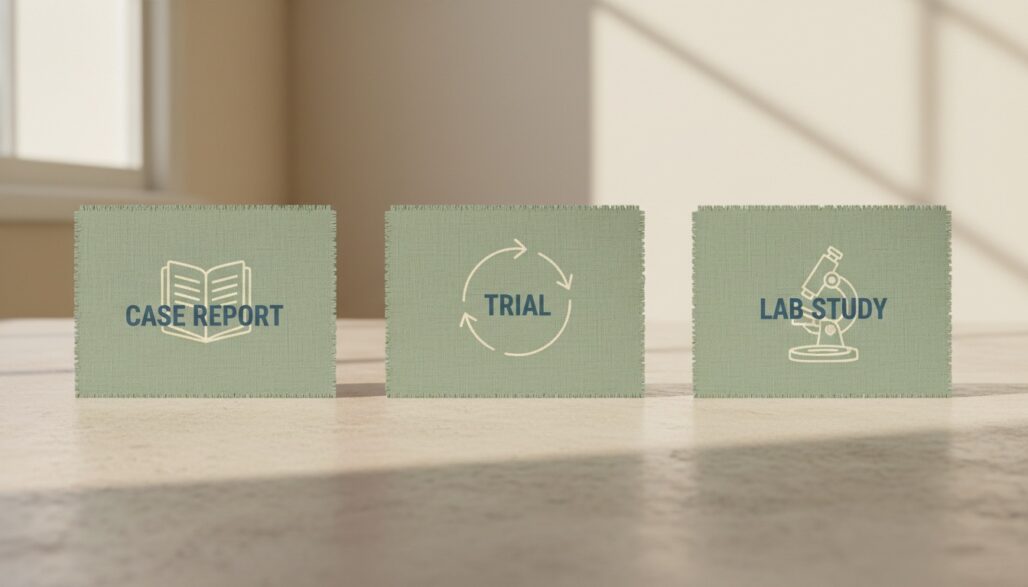
An online interaction list can make different levels of evidence look equally certain. A measured change in a clinical study is different from a single patient report, and both differ from an enzyme effect observed only in a laboratory.
| Combination | What the reviewed evidence shows | How to interpret it |
|---|---|---|
| Prescription CBD and clobazam | Increased exposure to clobazam's active metabolite in interaction studies | A demonstrated interaction, not just a theoretical enzyme concern |
| Prescription CBD and valproate | Greater risk of liver enzyme elevations with the combination | A safety signal that is not explained simply by increased valproate levels |
| CBD and warfarin | A published patient report describes rising INR during pharmaceutical CBD titration | Clinically important signal; one case does not quantify everyone's risk |
| High-dose CBD plus THC and probe medicines | A controlled study found inhibition of several metabolic pathways | Human mechanistic evidence, with specific experimental conditions |
| An unspecified CBD drink plus an unspecified medicine | No precise risk estimate follows from the category names | Requires product and medicine details |
The current Epidiolex prescribing information is the primary source for the first two rows. It concerns a prescription oral cannabidiol solution. It does not make a supermarket drink an approved substitute.
Clobazam: a metabolite matters
A drug interaction does not always appear as an increase in the parent medicine. In the Epidiolex interaction data, exposure to N-desmethylclobazam, clobazam's active metabolite, increased about threefold, while parent clobazam levels were not changed in the same way.
“CBD raises all drug levels” would miss that distinction. The identity of the substance that changes matters. The prescribing information also addresses somnolence and sedation, including the role of clobazam.
Someone taking clobazam should discuss any added CBD product with the prescribing team. This article does not supply a clobazam adjustment or a CBD amount considered compatible. Those decisions depend on the actual treatment and monitoring plan.
Valproate: liver risk is a separate issue
The Epidiolex label reports a greater incidence of liver enzyme elevations with concomitant valproate. It also reports that CBD did not produce a clinically relevant increase in valproate exposure in the described interaction work. It would be misleading to describe the concern simply as a rise in valproate concentration.
For readers, the distinction matters because a normal-looking medication dose does not exclude a combination-related problem. Clinical monitoring is not something a beverage label can replace.
The FDA's consumer discussion of CBD in foods identifies drug interactions and liver injury among its concerns. The same effect has not been established for every low-amount beverage, so the prescription findings need that limit attached.
Warfarin: take a case report seriously without overstating it
A published case report by Grayson and colleagues described a person whose INR increased as pharmaceutical cannabidiol was introduced and increased. His clinicians adjusted warfarin during follow-up. The PubMed record, PMID 29387536, identifies it explicitly as a case report.
The case gives clinicians a reason to watch for the problem. It cannot tell us the frequency of the interaction in all users, identify a universally safe CBD amount or predict a particular beverage's effect. The patient used pharmaceutical CBD under clinical supervision, not an unspecified drink.
Our focused article on CBD, warfarin and INR fluctuations covers this combination in more detail. If you use warfarin, tell the anticoagulation team about starting, stopping or changing cannabinoid products. Do not alter warfarin in anticipation of an interaction on your own.
Why a beverage is not prescription CBD
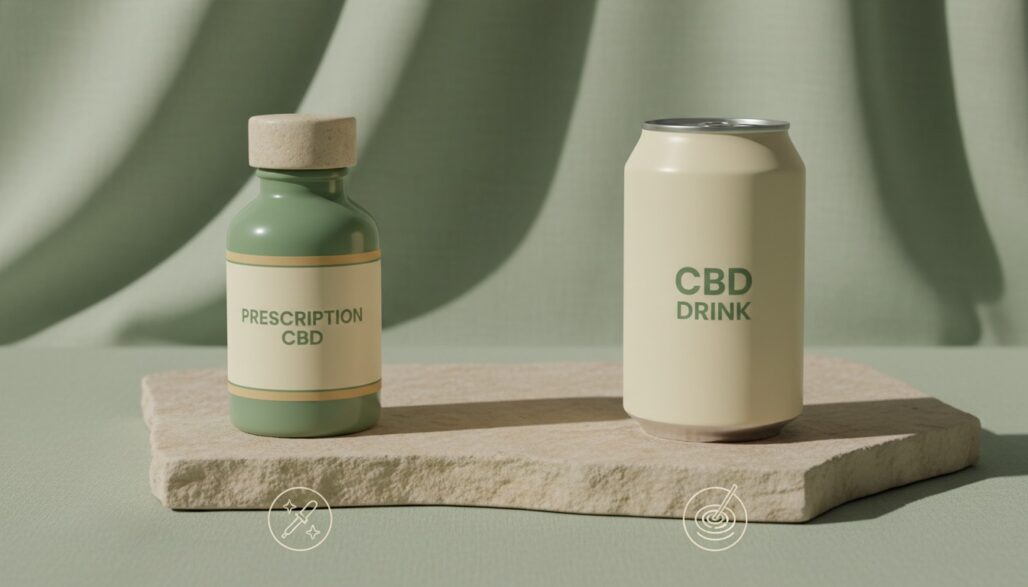
Prescription cannabidiol has a defined formulation and a clinical labeling framework. A consumer drink may have a different amount, different ingredients and a different pattern of use. A statement on the front of the can does not show that it has the same exposure or quality controls as the prescription product.
The NCCIH cannabis and cannabinoid overview separates cannabinoid medicines from other cannabis products. That distinction prevents two opposite errors: assuming a consumer beverage shares a medicine's demonstrated benefit, or assuming it is free of interaction risk because its presentation is casual.
A “CBD-only” description should also be checked against the complete cannabinoid panel. If THC is present, there are additional impairment questions. If a laboratory report is offered, match it to the specific product and lot rather than a general brand certificate.
No universal safe beverage amount can be derived from the studies discussed here. Differences in amount may change relevance, but they do not supply a validated threshold below which every medication combination is safe.
What the controlled interaction experiment adds
In a randomized crossover experiment in healthy adults, researchers compared a placebo, THC alone and a high-CBD preparation containing THC, then administered probe medicines. The CBD-plus-THC condition affected several tested metabolic pathways; the THC-only condition did not show the same inhibition under those conditions.
The study used 640 mg CBD with 20 mg THC. These are experimental exposures, not consumer instructions. Its DOI, 10.1002/cpt.2973, links to the published report.
This helps explain why the full cannabinoid composition matters. It does not provide a table of compatible drinks, establish the effect of chronic low-level use or replace a check of a person's actual medicines. The probe drugs were chosen to examine pathways, not to represent every possible prescription.
Make the medication review specific
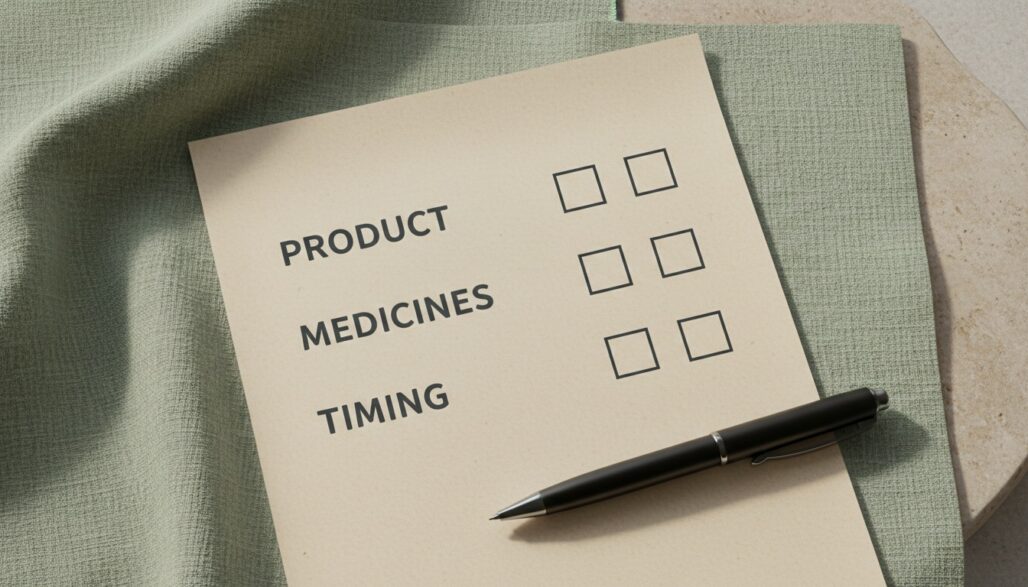
Bring the product label and a complete medicine list. Include nonprescription sleep and allergy products, supplements, alcohol and products used only occasionally. State how often you use CBD and whether the formula or frequency has recently changed.
Ask directly: “Does this product, with these stated ingredients, affect this medication or its monitoring?” Asking only whether “CBD is safe” leaves out most of the information needed to answer.
Do not rely on the grapefruit warning as a complete screening tool. It may prompt a useful conversation about metabolism, but absence of that warning is not a clearance for CBD. Different interactions can involve sedation, metabolites or liver effects rather than the same pathway.
Nor should a two-hour spacing rule be assumed to solve the problem. The reviewed evidence does not establish a universal separation interval. A pharmacist may need to consider sustained effects and regular use, not just the time between a pill and a drink.
If you already combined them
Contact your pharmacist or prescriber for advice about the actual combination. Do not make a compensating medication change based on this article. If symptoms are severe or the person is difficult to wake or has trouble breathing, seek emergency help.
For suspected poisoning in the United States, Poison Control guidance linked by the CDC is available at 1-800-222-1222; call 911 for an emergency. Keep the packaging and medicine details available.
FAQ
Can CBD interact with medication if it does not make me high?
Yes. Intoxication and drug interaction are different questions. Human evidence identifies interactions involving prescription cannabidiol.
Does a clobazam interaction mean every medicine is affected the same way?
No. The demonstrated increase involves an active clobazam metabolite. Other medicines require their own evidence and assessment.
Are prescription CBD study results directly transferable to drinks?
No. They establish important interaction concerns, but differences in formulation, exposure and use prevent a precise prediction for every consumer beverage.
Should I stop my medicine if I have already used CBD?
Do not change prescribed treatment yourself. Contact a pharmacist or prescriber with the product and medication details; seek emergency help for severe symptoms.
No CBD or THC products are recommended for purchase here. Images are AI-generated educational illustrations. Sources were reviewed September 25, 2026.
