
Affiliate disclosure: this article contains affiliate links. As an Amazon Associate, UsefulVitamins.com earns from qualifying purchases at no extra cost to you.
What "prediabetes" actually means on your lab report
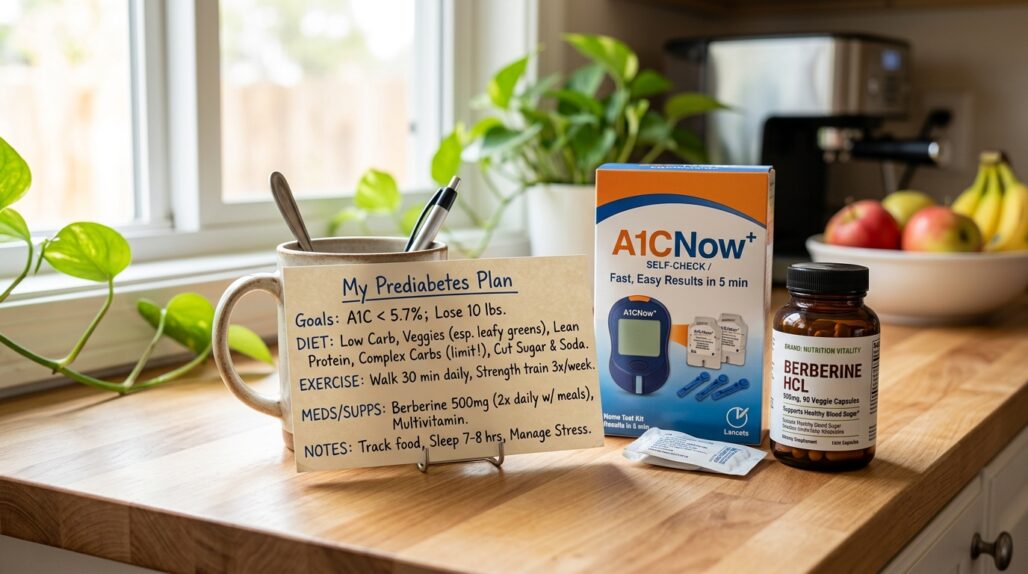
Prediabetes is a label for blood sugar that sits above normal but below the diabetes threshold. It is a warning light, not a diagnosis of diabetes, and the number can move in either direction.
Three tests put you in the range. According to the Cleveland Clinic, a healthy fasting glucose is roughly 70 to 99 mg/dL, and prediabetes is typically 100 to 125 mg/dL. The CDC sets the A1C bands at below 5.7% for normal, 5.7% to 6.4% for prediabetes, and 6.5% or higher for diabetes.
One thing worth knowing up front: A1C measures the percentage of your red blood cells that carry sugar-coated hemoglobin, which works out to about a three-month average. A single fasting number is a snapshot. A1C is the slower, steadier picture.
So a fasting glucose of, say, 108 mg/dL is a nudge, not a verdict. It tells you the system is under a little strain. The useful question is what you do next.
This page is education, not a diagnosis. A fasting reading should be confirmed by a doctor, usually with a repeat test, before you build a long-term plan around it. Below is the realistic test, act, and re-test loop, with the free levers first and the supplements graded honestly.
One more caveat on numbers. The clinical ranges above (fasting under 100 mg/dL, A1C under 5.7%) are the standard cutoffs used by the CDC and Cleveland Clinic. You will also see "optimal" targets online, for example a fasting glucose nearer 85 mg/dL or an A1C around 5.2 to 5.4%. Those tighter "optimal" figures are functional-medicine opinion, not clinical consensus, and should sit beside the standard range rather than replace it. The standard cutoffs are not wrong, and chasing a lower personal target is a conversation to have with your doctor, not a reason to over-treat a normal number.
The free levers come first (and they win the data)
If you read only one section, read this one. The supplement aisle is not where the strongest evidence lives.
The clearest proof comes from the Diabetes Prevention Program, a large trial run by the NIH. Participants who lost 5 to 7% of their body weight and did about 150 minutes a week of brisk activity cut their risk of progressing to type 2 diabetes by 58% over about three years, compared with placebo. That is a bigger effect than any pill or powder in this article.
You do not have to do all of it at once. The levers, in rough order of payoff:
- Lose a modest amount of weight if you carry extra. The target in the trial was 7%. For a 200-pound person that is about 14 pounds, not a dramatic transformation.
- Walk after you eat. A short walk right after a meal blunts the glucose spike. A systematic review with meta-analysis found that light walking soon after eating lowered the post-meal glucose rise more than the same activity done before the meal or skipped. Even 2 to 10 minutes helps. Timing matters more than distance.
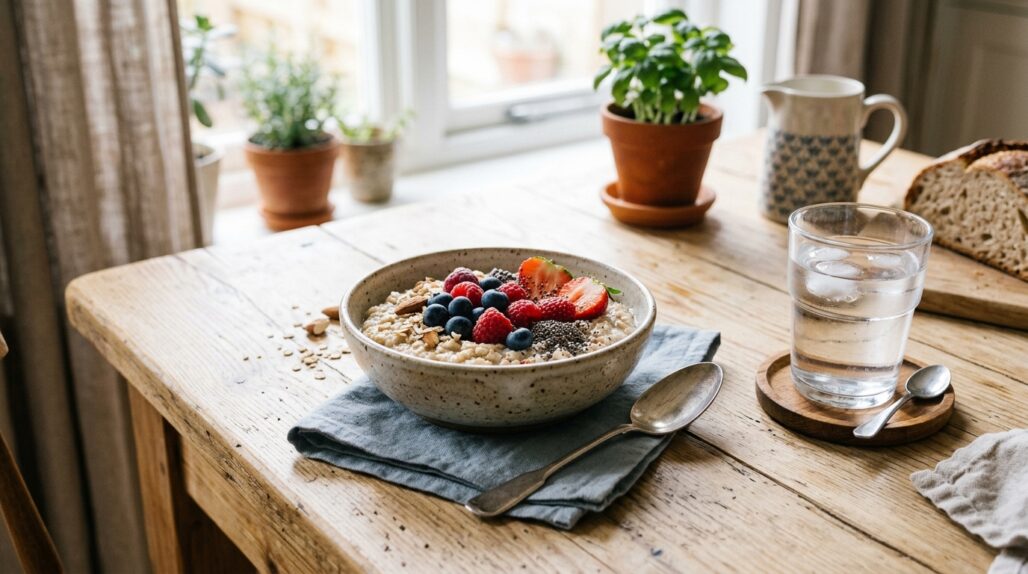
- Build meals around fiber and protein, not refined carbs. Vegetables, beans, whole grains, and intact fruit slow the rise. Sugary drinks do the opposite, fast.
- Protect your sleep. Short and broken sleep worsens insulin sensitivity. This is unglamorous and real.
None of this costs anything beyond effort, and the effect size beats the supplements below. Start here. If you want a structured place to begin, our guide to supplements for insulin resistance opens with the same point: food and movement first.
Then the supplements, graded honestly
Once the free levers are in motion, a couple of supplements have real but modest human evidence. "Modest" is the operative word.
Berberine. This is the one people ask about, usually after seeing it called "nature's Ozempic" online. A 2022 meta-analysis pooled 37 randomized trials and 3,048 patients and found berberine lowered HbA1c by about 0.63% and fasting glucose by roughly 0.82 mmol/L (about 15 mg/dL). That is a genuine signal. The honest caveats: most of those trials were of moderate quality, the majority were conducted in China, and they studied people with diagnosed type 2 diabetes, not prediabetes specifically. The common dose was 0.9 to 1.5 g/day in three divided doses with meals. We unpack the hype-versus-reality gap in our piece on whether berberine is really "nature's Ozempic", and the short version is no, the effect is far smaller than the drug it gets compared to. If you do try it, our berberine dose calculator and our roundup of berberine supplements walk through forms and timing. Grade: moderate human evidence, modest effect.
Psyllium fiber. Less hyped, arguably better value. A meta-analysis of 35 randomized trials found that psyllium taken before meals improved fasting glucose and HbA1c, with the benefit larger in people who started with worse control. It is cheap, it doubles as a way to hit your fiber target, and the main downsides are bloating and the need to take it with plenty of water. Grade: solid human evidence for glycemic response, also helps fiber intake.
A note on what does not earn a spot: cinnamon, chromium, and most "blood sugar support" blends have weak or inconsistent trial data, and a single high-quality lever (a daily walk) will out-perform them.
The plan, and where the test kits and supplements come in
Here is the test, act, and re-test plan in one place. The first move is a baseline number you can re-check later.


As an Amazon Associate, UsefulVitamins.com earns from qualifying purchases at no extra cost to you.
Some links on this page are affiliate links. If you buy through them we may earn a small commission, at no extra cost to you. It does not change our picks or what we tell you about the evidence.
| Step | What to do (dose) | Re-test checkpoint |
|---|---|---|
| 1. Baseline | Confirm with your doctor; log your fasting glucose and A1C as your starting line | Day 0 |
| 2. Free levers | 10-min walk after meals, 5-7% weight loss if needed, ~150 min/week activity, more soluble fiber, better sleep | Ongoing from day 1 |
| 3. Psyllium | ~5-10 g before larger meals, with a full glass of water | Weeks 2-12 |
| 4. Berberine (optional) | ~1,000-1,500 mg/day split across 2-3 doses, with meals; clear it with your doctor first | Weeks 2-12 |
| 5. Re-test A1C | Repeat A1C and fasting glucose; compare to baseline | ~3 months |
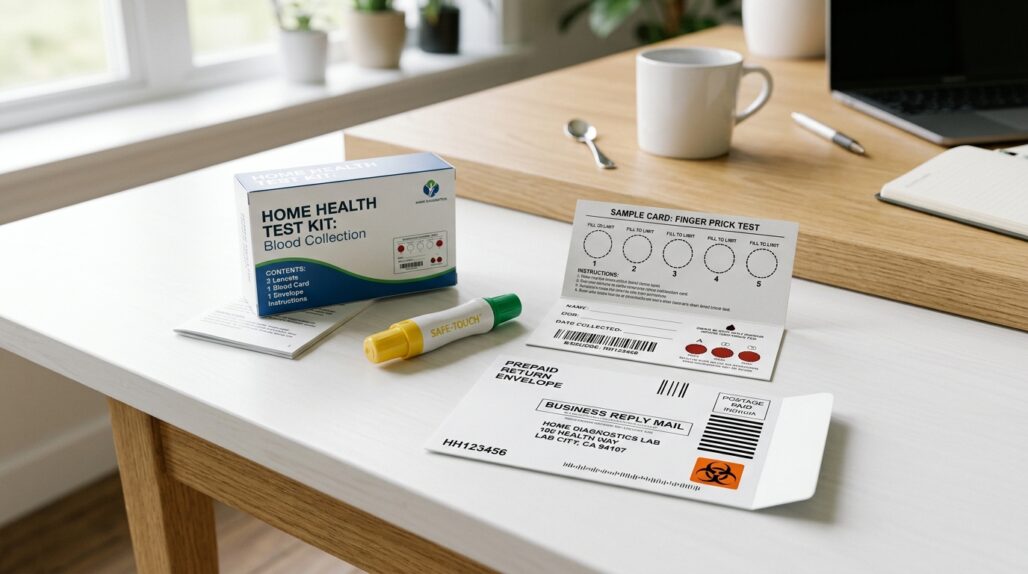
The at-home A1C kit in the cards is a tracking aid for the gaps between doctor visits, not a diagnosis. It uses a finger-prick sample. These kits are screening and tracking tools, not clinical lab tests, and any result that changes a real decision should be confirmed by a doctor-ordered lab. They are most useful for watching a trend over months, not for chasing a single reading.
The re-test checkpoint: why 3 months, not 3 weeks
This is the step people skip, and skipping it is how supplement money gets wasted.
Because A1C reflects roughly a three-month average of your blood sugar, a re-test before about 12 weeks will not fairly show whether anything moved. The CDC notes that after a prediabetes result a doctor will often re-check at a 1 to 2 year cadence, but if you are actively running a plan, a 3-month checkpoint is reasonable to see early progress. Confirm the timing with your own doctor.
Two numbers to compare at the checkpoint: your fasting glucose (the quick snapshot) and your A1C (the slow average). If A1C drifted from, say, 6.0% toward 5.7%, the plan is working and you keep going. If it did not budge, that is real information too: maybe the walking slipped, maybe the diet needs another look, maybe it is time to bring your doctor deeper into the plan.
To keep the loop honest, write down your starting number with the date and the exact supplement and dose, then set a re-test reminder for about three months out. You can do that in StackMyMed (our own free app), which lets you log the result and ping you when it is time to re-check so you can actually see whether the supplement moved the number, or you can do the same thing with a note in your phone and a calendar reminder. The tool matters less than the habit. Either way, take any medical decision to your doctor, not the app.
When to see a doctor (not a supplement)
Some situations are not DIY. Treat the following as reasons to call a clinician rather than reach for another bottle:
- A fasting glucose above 125 mg/dL or an A1C of 6.5% or higher. That crosses into the diabetes range and needs a clinical work-up, not a self-built plan.
- Classic symptoms: a lot of extra thirst, frequent urination, blurry vision, or unexplained weight loss. Get seen promptly.
- You already take a glucose-lowering medication. Berberine can inhibit the CYP liver enzymes (including CYP2D6, CYP2C9, and CYP3A4) that metabolize many drugs, as shown in a human pharmacokinetic study, so stacking it on metformin or other medicines without supervision can cause lows or interactions. Do not start or stop any prescription on your own.
- You are pregnant or trying to conceive. Glucose targets and safe options differ in pregnancy. This is a doctor conversation, not a supplement one.
Prediabetes should be confirmed and monitored by a doctor. Supplements are an add-on to prescribed metabolic care, never a replacement for it.
FAQ
Can prediabetes really be reversed? For many people, yes. The Diabetes Prevention Program showed that modest weight loss and regular activity cut progression to type 2 diabetes by 58% over about three years. Reversal is not guaranteed, and it depends on your starting point, but the odds shift meaningfully in your favor with the free levers.
Is berberine as good as Ozempic? No. Berberine has real but modest effects on glucose, lowering HbA1c by roughly half a percent in trials, while GLP-1 drugs work through a different mechanism and at a much larger scale. The “nature’s Ozempic” framing oversells it. It can be a useful add-on, not a swap.
How often should I re-test? Because A1C is a three-month average, re-testing every three months is a reasonable cadence while you are actively changing things, then less often once stable. A single fasting reading can be re-checked sooner, but it is noisier. Ask your doctor what fits your situation.
Are at-home A1C kits accurate enough to act on? They are useful for tracking a trend between doctor visits, and the finger-prick method is convenient. They are screening aids, not clinical diagnoses, and collection technique affects the result. Confirm anything that would change a real decision with a doctor-ordered lab.
What about cinnamon or chromium? The trial data for both is weak and inconsistent, especially next to a daily post-meal walk. We would not build a plan around them. Put your effort into the levers that the evidence actually supports.
Do I need to fast before an A1C test? No. A1C does not require fasting, which is one reason it is convenient. A fasting glucose test does require not eating for about 8 hours beforehand. Follow the instructions on whichever test you use.
The bottom line
A fasting glucose of 100 to 125 mg/dL is a signal worth taking seriously, and for a lot of people it is reversible. Spend your energy on the levers with the strongest evidence first: a little weight loss if you need it, a short walk after meals, more fiber, better sleep. Psyllium has solid human data and berberine has moderate, modest-effect data, so treat them as helpers, not the main event. Then re-test your A1C at about three months to see whether the number actually moved, and bring your doctor into the loop the whole way. The point is not to chase a perfect reading. It is to test, understand, act, and re-check.
This article is educational and is not medical advice or a diagnosis. At-home tests are screening aids, not a substitute for clinical testing. Always confirm results and any treatment decisions with a qualified healthcare professional.
Reviewed by the UsefulVitamins Editorial Team.
