
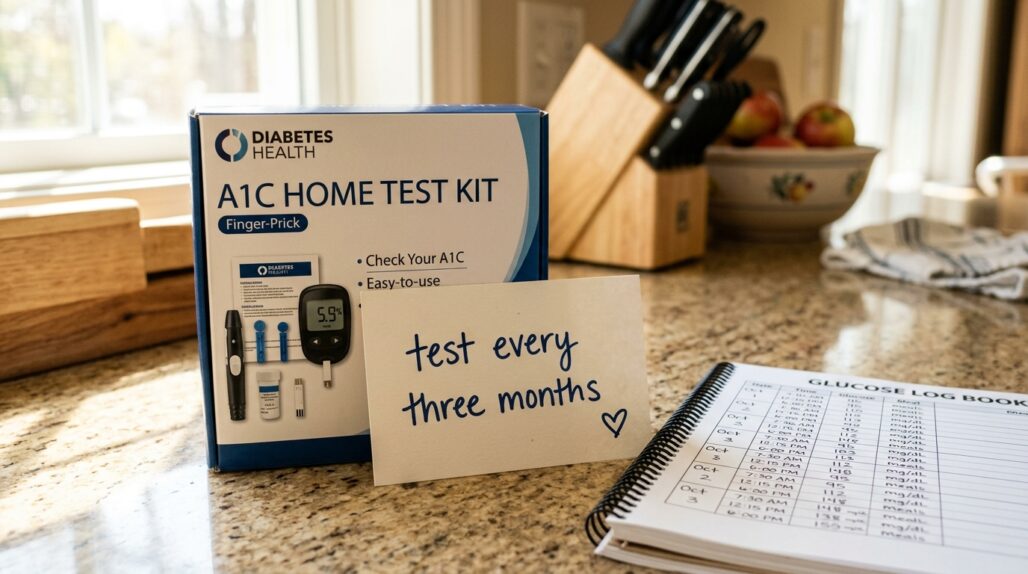
Affiliate disclosure: this article contains affiliate links. As an Amazon Associate, UsefulVitamins.com earns from qualifying purchases at no extra cost to you.
What an at-home A1C test actually tells you
HbA1c measures the share of your hemoglobin that has glucose stuck to it. Because red blood cells live about three months, that percentage reflects your average blood sugar over roughly the past 90 days, per the NIDDK. A single morning glucose reading bounces around with what you ate and how you slept. A1C smooths all of that into one trend number.
The CDC uses three bands: below 5.7% is normal, 5.7% to 6.4% is prediabetes, and 6.5% or above is in the diabetes range. Those cutoffs are why people reach for a home kit – they want to know which band they sit in, or whether a lifestyle change or a new medication is moving the needle.
Here is the honest framing this whole page rests on. An at-home A1C is good for watching your own trend over time. It is not the tool for getting diagnosed. The American Diabetes Association recommends that A1C for diagnosis be run in an accredited laboratory, and that a single high reading be confirmed. So treat your kit as a logbook, not a verdict.
Why between-visit tracking is genuinely useful right now
Most people only see their A1C once or twice a year. If you have started a GLP-1 medication (semaglutide, tirzepatide and the like), changed your diet, or begun walking after meals, that gap is a long time to wonder whether anything is working.
The ADA Standards of Care suggest re-checking A1C about every three months when therapy has changed or glucose control is not yet stable, and roughly twice a year once things are steady. That three-month cadence is not arbitrary. It matches red-cell turnover, so checking sooner than about twelve weeks mostly re-reads the same averaged window.
A home test lets you fill the in-between checkpoint without booking an extra appointment. You confirm your direction of travel, bring the numbers to your next visit, and let your clinician make the medical calls. If you want a sense of where to point your effort while you wait for the next draw, our guide to supplements for insulin resistance walks through what the evidence actually supports and what it does not.
If you are titrating a GLP-1 and tracking dose alongside your numbers, our GLP-1 dose escalation tracker keeps the two in one place so the picture stays readable at your appointment.
The two kinds of home A1C test, and how accurate each is
There are two designs on the shelf, and they fail differently.
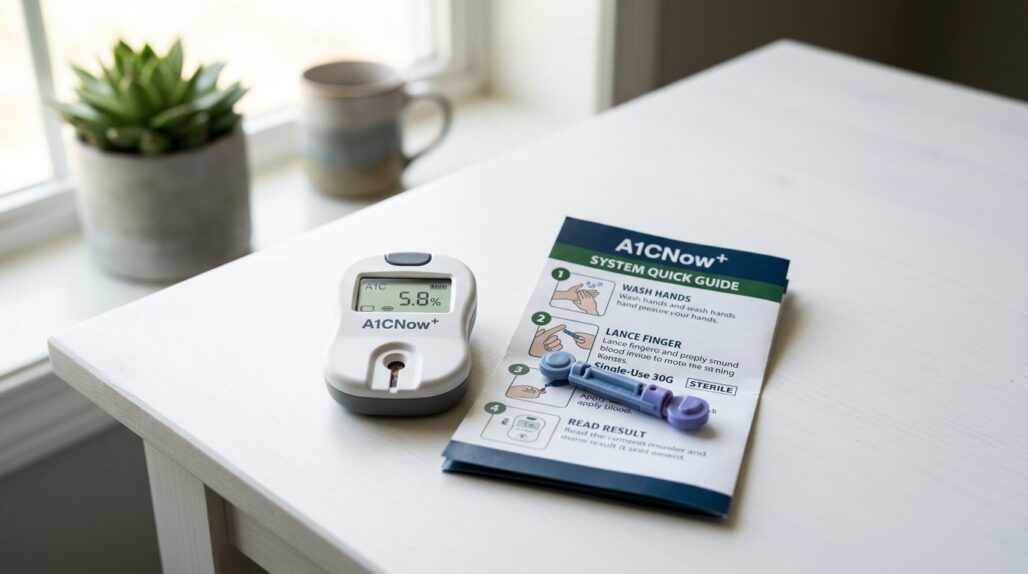
Fingerstick analyzers (like A1CNow Self Check) give you a number in about five minutes at your kitchen table. Convenient, but point-of-care devices run more variably than a lab. A 2017 review summarized in Diabetes Care found the tested devices carried a mean bias from roughly -0.96% to +0.67% against laboratory methods, and imprecision was often above a 2% coefficient of variation at lower A1C levels. Useful for spotting your own trend; not the tool for splitting hairs around a cutoff.
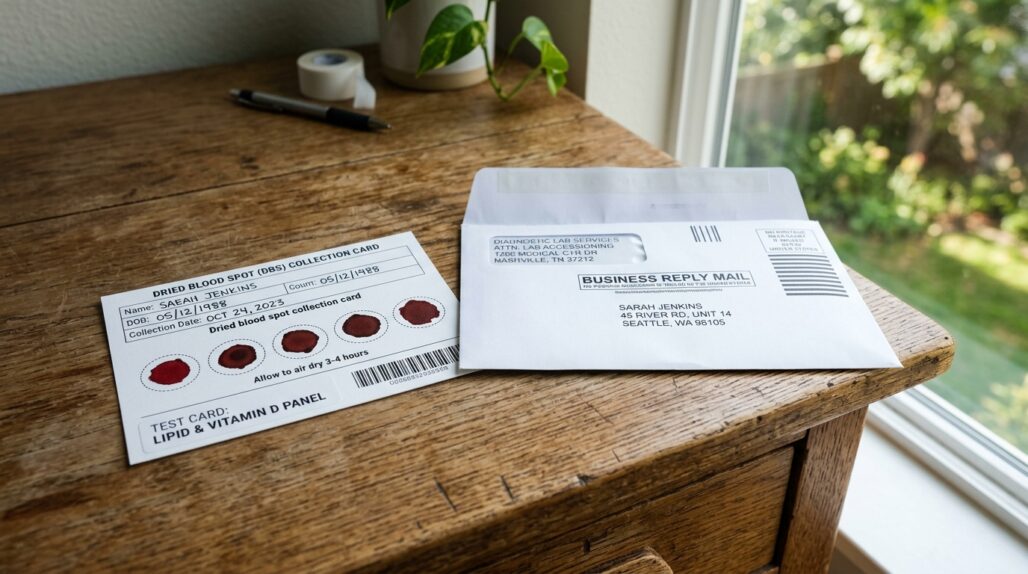
Mail-in collection kits (Dr. Boz, Everlywell-style) have you place blood drops on a card, dry it, and post it to a CLIA-certified lab that runs the same kind of assay a clinic uses. CLIA – the Clinical Laboratory Improvement Amendments program overseen by the CDC and CMS – sets federal quality standards that the lab must meet and be inspected against. You wait a few days, but the result sits closer to what a venous draw would give.
Two terms tell you whether a kit is serious. NGSP certification (the National Glycohemoglobin Standardization Program) means the method is traceable to the reference standard used in the landmark diabetes trials. CLIA certification means the lab itself is regulated and inspected. A kit that names neither is one to skip.
Either way, a few things skew A1C and no home kit can catch them: iron-deficiency anemia, recent blood loss or transfusion, kidney or liver disease, pregnancy, and inherited hemoglobin variants, which affect about 7% of people worldwide per the same Diabetes Care review. A lab can flag a variant; a home analyzer cannot. If your home number and your symptoms disagree, the lab wins.
The three at-home A1C kits compared
Prices move, so treat the figures below as ballpark as of writing and check the current listing. The picks split cleanly by what you need: instant feedback, a lab-grade result, or the cheapest single check.
| Kit | How it works | Accuracy standard | Turnaround | Approx. price |
|---|---|---|---|---|
| A1CNow Self Check | Fingerstick into a handheld analyzer you keep; 4 tests per kit | NGSP-certified, CLIA-waived analyzer; point-of-care variability | About 5 minutes, at home | Around $60 to $80 for 4 tests |
| Dr. Boz A1C kit | Fingerstick blood drops on a card, mailed in for analysis | CLIA-certified lab (OmegaQuant) running a lab-grade assay | A few days after the lab receives it | Around $40 to $50 per single test |
| General mail-in A1C kit | Dried blood-spot card mailed to a partner lab; results in a portal | CLIA-certified lab; physician-reviewed result release | A few days by email or app | Around $40 to $55 per single test |
Who each suits. Choose the A1CNow analyzer if you re-test often and want the number now without a mailbox in the loop – the per-test cost drops because you reuse the device. Choose a mail-in CLIA kit (Dr. Boz or an equivalent) when you want a result you would feel comfortable showing your doctor as a checkpoint. Choose the cheapest single mail-in kit if you only need one read to settle a question before your next appointment.
One thing none of them replace: the clinic draw your doctor orders for diagnosis or for any change to medication.

As an Amazon Associate, UsefulVitamins.com earns from qualifying purchases at no extra cost to you.
We may earn a commission from purchases made through the links below, at no extra cost to you. It does not change which kits we recommend.
How to read your result without over-reading it
Match your number to the band, then resist the urge to act on a single read.
Below 5.7%. Normal range. If you are tracking a lifestyle change, a stable number here is the goal, not a reason to keep re-testing weekly.
5.7% to 6.4%. Prediabetes range. For many people this is reversible, and it is worth a real conversation with your doctor rather than a supplement spree. Our walkthrough on what to do about a prediabetes-range result covers the levers that move it – and the ones that mostly do not.
6.5% or above. Diabetes range on this single test. Do not self-diagnose. Take the number to a doctor for a confirmatory lab test, because that is the decision point where home testing hands off to clinical care.
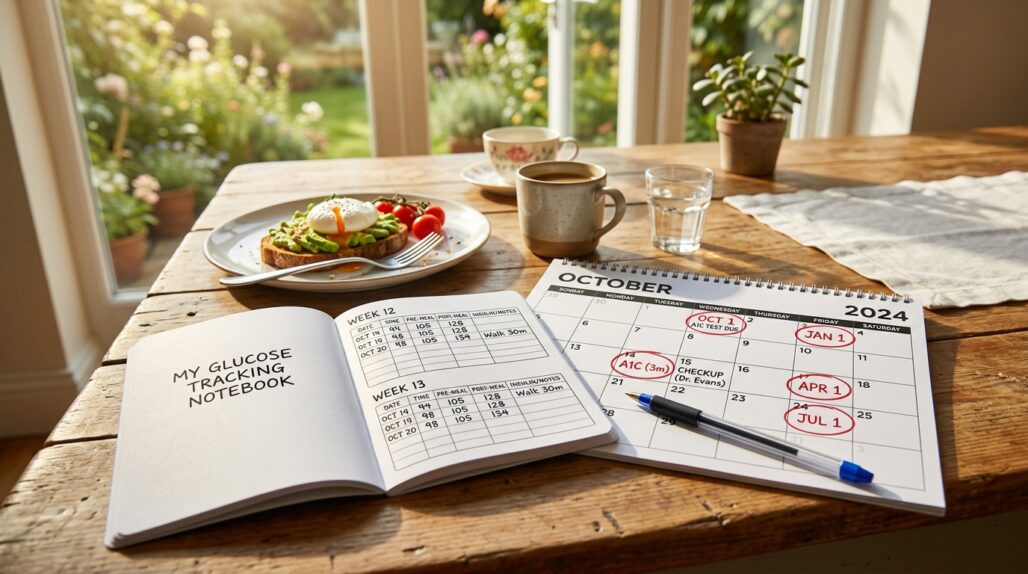
One reading is a dot. Two or three readings, twelve or more weeks apart, are a line – and the line is what matters. Keep your own simple log: date, result, and what changed (new medication, dose step, diet). A note in your phone or a calendar reminder set three months out does the job. The point is to compare like with like, same kit ideally, so you are reading a real trend and not device-to-device noise.
If you are also weighing whether a supplement belongs in the picture, read the honest take in our berberine dose calculator and guide before adding anything, and never let a supplement stand in for prescribed care.
See a doctor if
This is education, not a diagnosis. Bring in a clinician, not a kit, when:
- A home result lands at or above 6.5%, or jumps into the prediabetes range and you have not seen a doctor recently.
- You have classic high-sugar symptoms: heavy thirst, frequent urination, blurred vision, unexplained weight loss, or unusual fatigue.
- Your home number conflicts with how you feel, or you have a condition that skews A1C – anemia, recent blood loss, kidney or liver disease, pregnancy, or a known hemoglobin variant.
- You are on a GLP-1 or other glucose medication and want to change a dose. The home number informs the conversation; it does not authorize the change.
Diagnosis and medication are a doctor's call, made on an accredited-lab result. Your kit's job is to keep you informed in between.
FAQ
Are at-home A1C tests accurate enough to trust? For tracking your own trend, yes, especially mail-in kits run by a CLIA-certified lab. Fingerstick analyzers run more variably, with a measured bias up to roughly 1% against lab methods, so use them for direction rather than for decisions made right at a cutoff.
Can a home A1C test diagnose diabetes? No. The American Diabetes Association recommends diagnosis be made on a laboratory test, with a high result confirmed on a separate day. A home test screens and tracks; a doctor diagnoses.
How often should I test at home? About every three months if you have changed a medication, diet, or activity, since A1C reflects roughly 90 days of glucose. Testing more often than that mostly re-reads the same window.
What does CLIA-certified mean on a test kit? CLIA is the federal program, overseen by the CDC and CMS, that regulates and inspects clinical labs. A CLIA-certified lab must meet quality standards, which is why mail-in kits analyzed by one sit closer to a clinic result.
Will a GLP-1 medication change my A1C, and should I track it? GLP-1 medications often lower glucose, so A1C is a reasonable way to watch your response between appointments. Track it as a logbook and discuss any dose change with your prescriber rather than acting on a home number alone.
What can make my A1C reading wrong? Iron-deficiency anemia, recent blood loss or transfusion, kidney or liver disease, pregnancy, and inherited hemoglobin variants can all skew it. A lab can flag a variant; a home analyzer cannot, so a clinic test wins any disagreement.
The bottom line
An at-home A1C kit is a good way to watch your three-month glucose trend between doctor visits – useful if you are on a GLP-1, eating differently, or sitting in the prediabetes range and want to see whether your effort is paying off. Pick the A1CNow analyzer for instant, repeatable reads, or a mail-in CLIA-certified kit for a result closer to a clinic draw, and make sure whichever you buy names its NGSP method or CLIA lab.
Then keep it simple: log the date and number, re-test in about three months, and compare like with like. If a result reaches the diabetes range, conflicts with your symptoms, or you want to change a dose, that is a doctor's call on a proper lab test. The kit informs the conversation; it does not replace it.
This article is for education only and is not medical advice or a diagnosis. At-home tests are screening and tracking aids, not a substitute for clinical testing. Talk to your doctor or pharmacist before changing any medication or starting a supplement, and confirm any decision-changing result with a lab test ordered by a clinician.
Reviewed by the UsefulVitamins Editorial Team.
