
Affiliate disclosure: this article contains affiliate links. As an Amazon Associate, UsefulVitamins.com earns from qualifying purchases at no extra cost to you.
Picking a pill organizer sounds like a hardware problem. It is really a people problem. The right choice depends on who is taking the medication, how many doses a day they manage, and whether the failure mode is forgetting a dose or accidentally taking one twice.
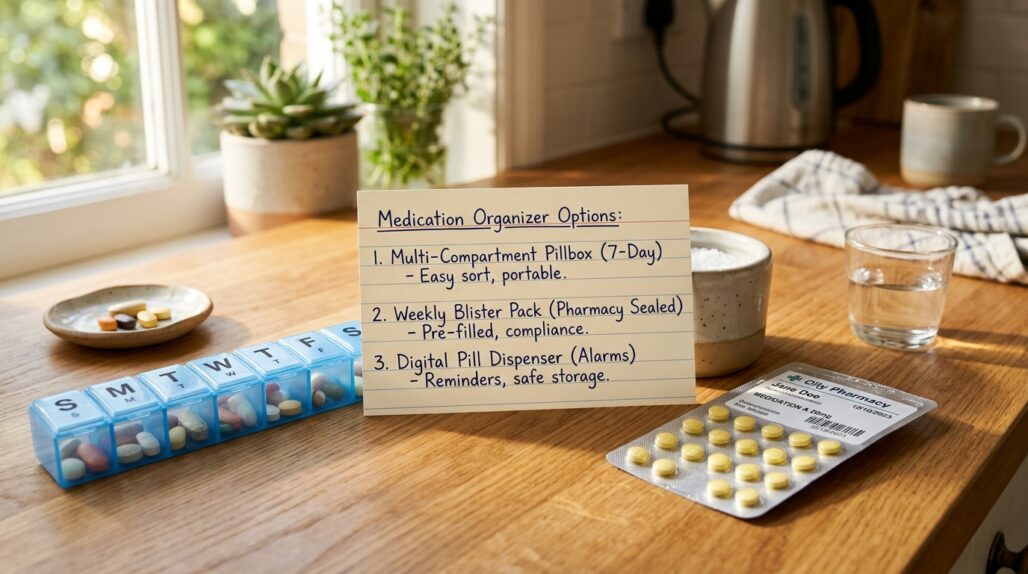
This page ranks three common options – a basic pillbox, a pharmacy blister pack, and a locked automatic dispenser – by who needs which. It is a buying guide, not medical advice. If the situation involves memory loss, a blood thinner, or any controlled medication, the device is the easy part; the safety plan belongs with a pharmacist or doctor.
What problem are you actually solving?
Before comparing products, name the failure you are trying to prevent. They are not the same, and they call for different tools.
Forgetting a dose is the most common issue. A reminder cue – a box that is visibly empty by lunch, a phone alarm, a calendar – usually fixes it.
Double-dosing is more dangerous and harder to catch. Someone takes their morning pills, forgets they did, and takes them again. This is where a locked, time-released dispenser earns its cost, because it physically prevents access until the next scheduled window.
Confusion about which pill is which shows up with long medication lists. Pre-sorted packaging – by a pharmacist or a careful caregiver – removes the daily sorting decision entirely.
The stakes are not abstract. The CDC reports that adverse drug events cause more than 1.5 million emergency department visits each year in the United States, and adults 65 and older account for more than 600,000 of those visits, more than twice the rate of younger people. The AHRQ patient-safety team estimates roughly half of adverse drug events are preventable. A lot of that prevention is mundane: the right dose, at the right time, not twice.
The three options, compared
Here is how the main choices stack up. Prices move, so treat these as rough as of writing and check the current price before you buy.
| Option | Best for | Locks / time-release | Who fills it | Rough cost |
|---|---|---|---|---|
| Weekly AM/PM pillbox | An organized adult on a handful of meds or supplements | No | You or the person taking the meds | Around $8-20 one-time |
| Pharmacy blister / multi-dose pack | Someone who forgets but can still self-manage, on several daily meds | No, but each dose is sealed and dated | The pharmacy, on a schedule | Often free to low monthly fee at participating pharmacies |
| Locked automatic dispenser | Memory loss, double-dosing risk, or a wandering/confused user | Yes – releases only at set times | A caregiver, usually monthly | Around $60-150 for the device, or $30-60/month for connected models |


As an Amazon Associate, UsefulVitamins.com earns from qualifying purchases at no extra cost to you.
Some links on this page are affiliate links. If you buy through them we may earn a small commission at no extra cost to you. It does not change which products we recommend.
Pick 1: The simple weekly pillbox
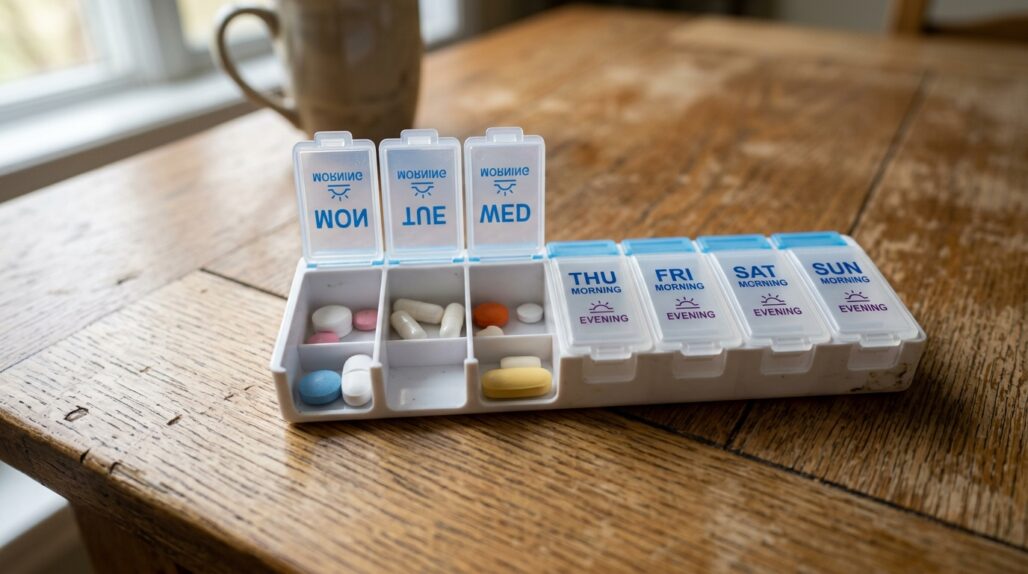
A weekly organizer with morning and evening rows is the right starting point for most people who are still managing their own medications. It is cheap, it needs no batteries, and the empty-compartment-by-evening cue does real work.
Watch the compartment size. Standard 7-day boxes were designed for small tablets, and a daily stack with a fish-oil softgel or two will not close the lid. If supplements are the main load, a larger-compartment case is worth the extra few dollars – we cover sizing in the guide to the best pill organizer for supplements and large fish-oil capsules.
The honest limit: a pillbox does nothing to stop a double dose, and it offers no proof a dose was taken. For an organized adult that is fine. For anyone with slipping memory, it is not enough.
Pick 2: The pharmacy blister pack
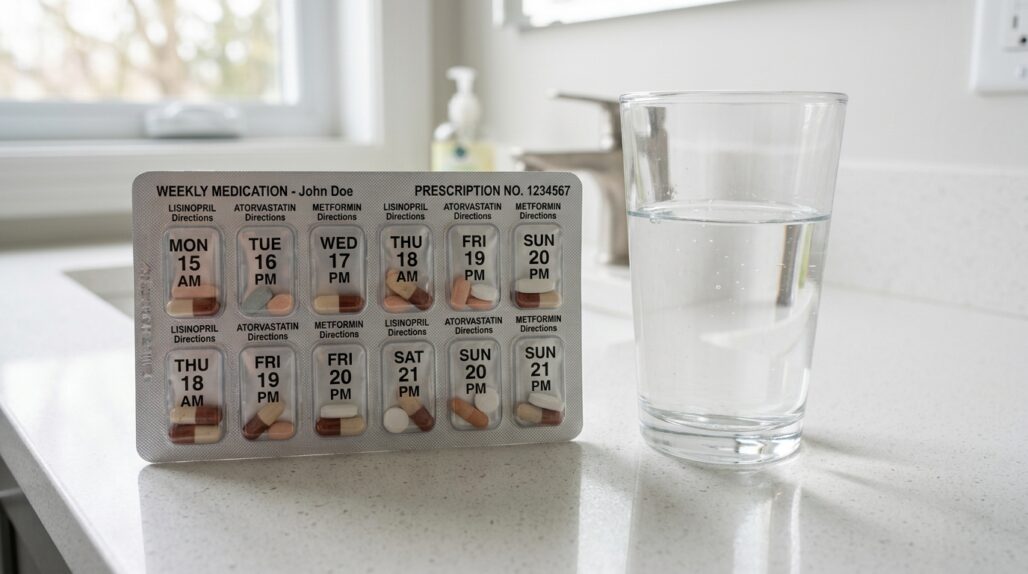
A multi-dose blister pack (sometimes called a bubble pack or compliance pack) is filled by a pharmacist, with each dose sealed in a dated pocket. You press out the 8 a.m. Tuesday dose and that is it – no sorting, no second-guessing which pill is which.
The evidence here is genuinely encouraging for the right user. A meta-analysis of packaging interventions found blister packs produced a larger effect on adherence (effect size 0.802) than pillboxes (0.384), with treatment groups reaching about 71% adherence versus 63% for controls. Pharmacist-prepared packs worked best of all.
One caveat matters for caregivers. That same analysis found packaging was far weaker in people with cognitive impairment – an effect size of just 0.074, close to no benefit. A blister pack still relies on the person remembering to open today's dose. If that is the gap, packaging alone will not close it.
Pick 3: The locked automatic dispenser
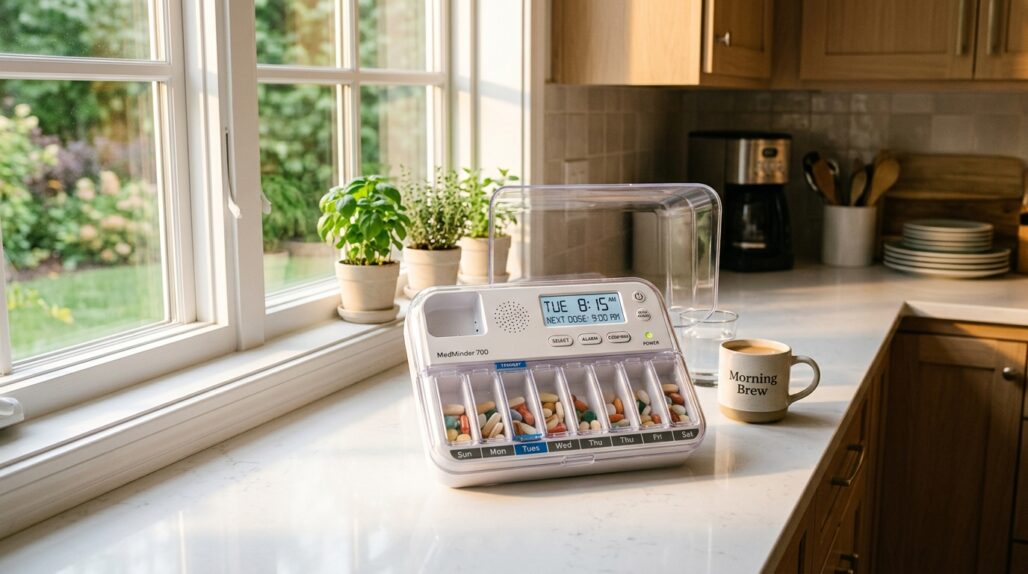
A locked, time-released dispenser holds a month or so of medication and only opens the right compartment at the right time, usually with an alarm. Some models text a caregiver if a dose is missed. This is the only option on the list that physically prevents a double dose.
It is also the one to reach for carefully. A systematic review of dispenser use by home-dwelling older adults found moderate evidence for better blood pressure and HbA1c control, and one study showed reduced caregiver overload – but the authors concluded there is not yet strong evidence that these devices contain healthcare costs, and only some studies showed reduced hospital visits. Translation: they can help the right person, especially when a caregiver is stretched, but they are not magic, and the monthly-fee connected models are a real ongoing expense.
Reserve the locked dispenser for genuine risk: memory loss, a history of double-dosing, or a user who might take pills off-schedule. For that situation, the lock is the whole point.
Who each option actually suits
Match the person to the tool:
- An organized adult on a few daily items: a weekly AM/PM pillbox. Cheap, effective, done.
- Someone who forgets doses but can still self-manage: a pharmacy blister pack. Removes the sorting step and adds a dated cue.
- Many medications across the day: a blister pack or a larger dispenser; build a master medication list first so whoever fills it has one accurate source.
- Memory loss, wandering, or double-dosing risk: a locked automatic dispenser, with the pharmacist or doctor in the loop.
- Frequent travel: a compact case or travel pillbox, since dispensers do not move well.
Whatever you choose, fill it the same way every time. Our walkthrough on how to fill a weekly pill organizer with many medications safely covers the routine that keeps mistakes out, and the broader system for organizing medications and supplements shows how the device fits into a wider habit.
The honest cost – and the gap a device cannot fill
A weekly box runs a few dollars. A connected dispenser can run $30-60 a month, which is $360-720 a year. That is real money, and it is worth asking what you get for it.
Here is the part the hardware marketing skips. A dispenser sorts pills by time. It does not know that two of those pills should not be taken together, or that a new prescription doubles up with an over-the-counter product already in the stack. Sorting is not the same as checking.
That checking step is where a tracking layer helps. StackMyMed (our own free app) lets you keep the full medication and supplement list in one place, and it flags potential interactions and accidental double-ups across the things a pill organizer simply holds. If you would rather not use an app, the low-tech version works too: a single up-to-date paper med list, kept on the fridge and updated whenever a prescription changes, that you can hand to any pharmacist. The goal is the same – one accurate list someone can actually read. The app is a convenience, not a requirement, and it does not make medication decisions for you. Those stay with the prescriber.
When to bring in a doctor or pharmacist
A device is a tool, not a care plan. Some situations need a professional, not a gadget:
- Cognitive decline or a dementia diagnosis – the medication-safety plan should be built with the doctor and pharmacist, because the evidence shows organizers and packaging help much less once memory is affected.
- A controlled substance in the mix – storage, access, and dosing need professional guidance.
- Repeated mix-ups, missed doses, or a recent fall or hospital visit – that is a signal to review the whole medication list, not just buy a better box.
- Blood thinners, insulin, or other high-risk drugs – these are the categories most often behind serious adverse events, so precision matters most here.
Ask the pharmacy directly whether they offer multi-dose packaging; many do, and a quick medication review is often free.
FAQ
Are automatic pill dispensers worth the money? For an organized person on a few meds, usually not – a weekly box does the job. They earn their cost when there is real double-dosing or memory risk, where the lock prevents a dangerous mistake. The research shows moderate health benefits for the right user, not a guaranteed payoff for everyone.
Is a blister pack better than a pillbox? For someone who forgets doses, the evidence leans yes – pharmacy blister packs showed a larger effect on adherence than refillable pillboxes in a published meta-analysis. But a pillbox you refill yourself is cheaper and fine for an organized adult.
Do pill dispensers work for someone with dementia? Only partly, and only if locked. Studies found packaging and reminder aids work much less well once cognitive impairment is present, because the person still has to act on the cue. A locked dispenser that controls access helps more, but this is a situation to plan with a doctor.
Can I use one organizer for both prescriptions and supplements? Yes, if it has room. The catch is compartment size – big softgels jam small boxes – and timing, since some supplements and medications should be spaced apart. Check spacing with a pharmacist and keep one combined list.
What is the cheapest setup that still works? A weekly AM/PM pillbox plus a single accurate medication list – on paper or in a free app – covers most organized adults for under $20. Spend more only when the risk profile (memory, double-dosing, many high-risk meds) calls for it.
How do I stop my parent from taking a dose twice? A visible cue (an empty compartment), a written log, or a phone alarm helps for mild forgetfulness. For genuine double-dosing, a locked time-release dispenser is the tool that physically prevents it – and the underlying pattern is worth raising with their doctor.
The bottom line
Buy for the person, not the brochure. An organized adult needs a weekly pillbox and nothing more. Someone who forgets but still self-manages does well with a pharmacy blister pack. Memory loss or double-dosing risk is the case for a locked automatic dispenser – and that same case is the one to plan with a pharmacist or doctor, because the device cannot read the medication list or catch an interaction on its own. Pair whatever you buy with one accurate, up-to-date list, keep filling it the same way every time, and re-check the plan after any new prescription, fall, or hospital visit.
This article is educational and is not medical advice. It cannot diagnose a condition or tell you to start or stop any medication. Pill organizers and dispensers are aids, not a substitute for professional care – talk to your doctor or pharmacist about your own medication plan.
Reviewed by the UsefulVitamins Editorial Team.
