
Quercetin supplements can be a smart pick if you want targeted immune and antioxidant support, but the “best” one depends on how well it absorbs, what it’s paired with (like bromelain or fisetin), and how you plan to use it. Some formulas prioritize high-dose simplicity, while others focus on better bioavailability or cellular aging protocols. This guide compares the most common quercetin forms, practical doses, quality markers, and who each type fits best, so you can choose confidently without paying for features you do not need.
Affiliate disclosure: this article contains affiliate links. As an Amazon Associate, UsefulVitamins.com earns from qualifying purchases at no extra cost to you.
Summary / Quick Answer: Best picks for quercetin supplements
The best quercetin supplements are the ones that match your goal (everyday immune support, seasonal support, or a senolytic protocol) and use a form you will actually absorb.
Quick recommendations (by use case):
| Your goal | What to look for | Why it matters |
|---|---|---|
| Everyday, budget-friendly | 500 mg standard quercetin | Solid “baseline” dose at low cost |
| Better absorption | Quercetin phytosome or branded delivery tech | Quercetin is naturally hard to absorb |
| Seasonal support | Quercetin + bromelain | Common pairing for respiratory and inflammatory response support |
| Cellular aging focus | Quercetin + fisetin (senolytic-style) | Targets multiple senescence pathways |
| Simple high-dose | 1,000 mg single-ingredient | Fewer variables, easier stacking |
Bottom line: Choose the form first (standard vs phytosome vs blends), then confirm third-party testing, GMP manufacturing, and a dose you can stick with.
How to choose quercetin supplements (form, dose, and your goal)
Most people shop quercetin like it’s a simple antioxidant capsule. The catch is that quercetin’s real-world results often come down to two unglamorous details: bioavailability and fit for purpose. If you pick a formula that does not absorb well (or does not match your reason for taking it), even a “high mg” label can disappoint.
Step 1: Pick the form that matches your absorption needs
Quercetin is known for low oral bioavailability. That is why many brands now use delivery systems designed to improve uptake.
Here are the main types you will see:
| Form on the label | What it usually means | Best for |
|---|---|---|
| Quercetin (standard) | Plain quercetin aglycone | Budget use, simple stacks |
| Quercetin phytosome | Quercetin bound to phospholipids | People prioritizing absorption |
| Branded absorption tech | Proprietary complexes (varies) | Convenience if you trust the brand’s testing |
Some companies claim very large absorption improvements with proprietary delivery systems. For example, one branded complex marketed by Life Extension is promoted as dramatically more bioavailable, as summarized in a roundup from the Jinfiniti quercetin supplement review. Treat big multipliers as marketing until you can confirm human data and transparent testing.
Actionable takeaway: If you have tried quercetin before and “felt nothing,” a phytosome style product may be worth trying before you increase the dose.
Step 2: Choose a dose you can use consistently
Across popular products and expert roundups, a typical serving is 500 to 1,000 mg daily. Several buying guides and brand comparisons cluster in that range, including summaries from the Omre quercetin supplement guide and the Innerbody quercetin supplement review.
A practical way to decide:
- Start at 500 mg/day if you are new, sensitive, or stacking with other anti-inflammatory supplements.
- Consider 1,000 mg/day if you have used quercetin before and want a higher-dose, single-ingredient approach.
- If you are using a senolytic-style protocol (often intermittent), follow that product’s schedule rather than assuming daily use.
Actionable takeaway: More is not automatically better. A consistent, tolerable dose beats an aggressive plan you quit in two weeks.
Step 3: Match the formula to your “why”
Quercetin is used for several overlapping goals: oxidative stress support, seasonal immune routines, inflammatory response support, and cellular health.
Think of it like picking shoes. A hiking boot can be a great shoe, but it is a poor choice for sprinting. In the same way, a senolytic blend can be a strong option, but it may be unnecessary if you simply want budget-friendly daily support.
If you are building a broader routine, UsefulVitamins’ supplement stacking guide can help you avoid redundant ingredients and timing mistakes.
Best quercetin supplements by category (what to buy for your needs)
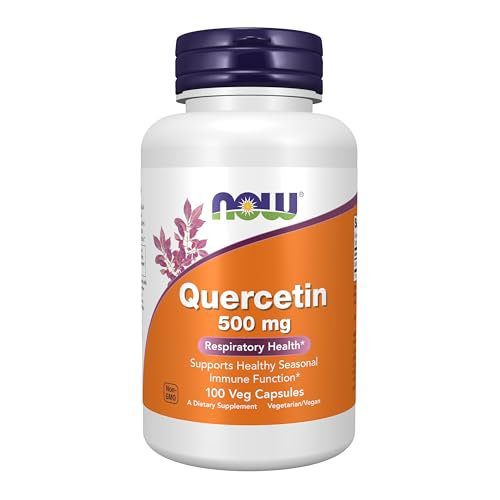
NOW Quercetin 500mg,100 Veg Capsules
NOW Foods delivers 500 mg of quercetin per serving in 100 vegetarian capsules, a straightforward formulation for those seeking seasonal immune and respiratory support without added ingredients.
If you have looked at “top quercetin” lists, you have probably noticed something confusing: different sites crown different winners. That is not always bias. Often, they are grading on different criteria – cost per serving, absorption tech, or inclusion of fisetin/bromelain.
Below is a category-based way to shop, using patterns that show up across multiple 2026 product roundups.
Category cheat sheet (based on common market leaders)
| Category | Who it fits | What you’ll usually see |
|---|---|---|
| Best budget | Daily users who want simple | 500 mg, large bottle count, low cost/serving |
| Best absorption-focused | People who want “more from less” | Phytosome or proprietary complex |
| Best seasonal support | People pairing with immune routines | Quercetin + bromelain, sometimes vitamin C |
| Best senolytic-style | People focused on cellular aging | Quercetin + fisetin, sometimes “hit-and-run” dosing |
| Best high-dose single | Minimalists | 1,000 mg quercetin, few add-ons |
What expert roundups are highlighting in 2026
Several reviewers repeatedly emphasize these themes:
- Dual senolytic formulas: A Jinfiniti roundup highlights a product positioned as “best overall” with 1,000 mg quercetin plus 170 mg fisetin, framing it as a dual senolytic approach in their best quercetin supplements overview.
- Phytosome blends: Omre’s comparison places a phytosome-based quercetin plus fisetin product as an “overall” pick in their quercetin supplement guide.
- Cost-per-serving winners: Innerbody’s review calls out value-oriented options (around $0.20 per serving in one example) and contrasts them with premium blends in their quercetin supplement review.
Actionable takeaway: Decide whether you are paying for (1) more capsules, (2) better absorption, or (3) extra ingredients. Do not assume a higher price means better quercetin.
Quality checklist before you buy
Use this quick screen, then compare within your category:
- Third-party testing for identity, heavy metals, and potency
- GMP manufacturing (and clear country of manufacture)
- Allergen transparency (especially if using bromelain or soy-containing blends)
- Clear labeling for quercetin form (standard vs phytosome)
- Realistic directions (daily vs intermittent protocols)
For a deeper label-read framework, see UsefulVitamins’ guide to supplement quality indicators.
Quercetin benefits: what research suggests (and what it does not)
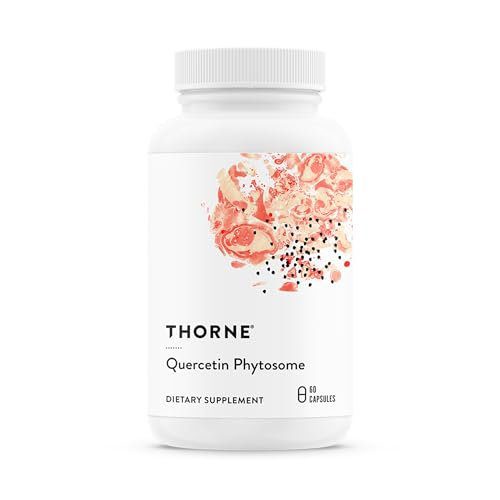
THORNE – Quercetin Phytosome – Antioxidant Supplement for Immune Health, Respiratory Support & Seasonal Allergy Relief* – Third-Party Certified – Gluten, Dairy & Soy-Free – 60 Capsules
Thorne Quercetin Phytosome delivers 250 mg quercetin per capsule in phytosome form bound to sunflower phospholipids for up to 20 times better absorption than standard quercetin. It supports immune health, respiratory function, and seasonal allergy relief in a gluten-, dairy-, and soy-free formula with 60 capsules. Third-party certified, including NSF for Sport, with clean ingredients and no extras.
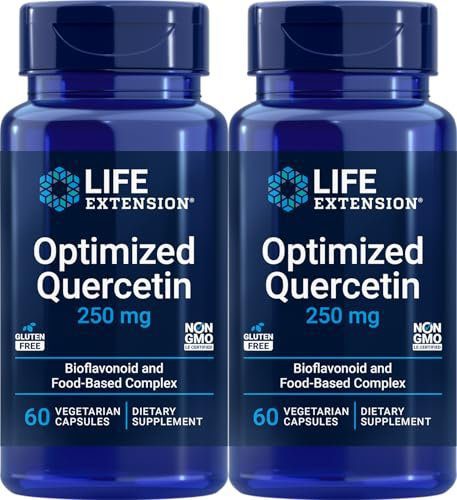
Life Extension Optimized Quercetin, 60 Vegetarian Capsules (Pack of 2)
Life Extension Optimized Quercetin comes as 60 vegetarian capsules per bottle in a pack of 2, formulated with 250 mg quercetin, vitamin C, and camu camu for better absorption and immune support. User reviews note relief from allergy symptoms and seasonal issues, though some report stomach upset and wish for larger bottles. Without Amazon ASIN, ratings, reviews, or pricing data, cannot recommend for affiliate purposes at this time.
Quercetin is a plant flavonoid found in foods like onions and apples, and it is widely studied for antioxidant and inflammatory response effects. Supplement interest surged because people wanted a more concentrated, predictable intake than diet alone can provide.
What quercetin may help with
Research suggests several plausible areas, but outcomes depend on population, dose, and formulation:
- Antioxidant support: Quercetin can act as a free radical scavenger in lab models, and human studies often look at oxidative stress markers.
- Inflammatory response: Quercetin is studied for effects on pathways involved in inflammation signaling.
- Seasonal immune routines: Many people use quercetin in “seasonal stacks,” commonly alongside vitamin C and zinc.
For readers who want a deep evidence breakdown by condition, the most reliable starting point is an evidence database like Examine’s quercetin overview, which summarizes human trial findings and limitations in plain language.
Actionable takeaway: Treat quercetin as a supportive supplement. It is not a substitute for sleep, protein intake, or medical care.
Why pairing ingredients is so common (bromelain, vitamin C, zinc)
You will often see quercetin paired with:
- Bromelain: A pineapple-derived enzyme commonly included in “seasonal support” formulas. Some brands position it for absorption and comfort, and many users choose it for respiratory-season routines. Avoid if you have pineapple sensitivity.
- Vitamin C and zinc: Frequently used alongside quercetin in immune-support stacks. If you go this route, avoid doubling zinc across products.
If you are building a broader cardiovascular routine, it helps to keep your supplement list organized to avoid overlap. UsefulVitamins’ heart health supplement protocol is a practical example of how to structure a goal-based stack without overdoing it.
What quercetin probably will not do
Quercetin is sometimes marketed as a cure-all. That is not supported.
Be cautious with claims that promise:
- Guaranteed prevention of illness
- Rapid “detox” effects
- Dramatic anti-aging results from quercetin alone
Actionable takeaway: If a label promises a medical outcome, that is a red flag. Look for measurable, modest claims and transparent testing.
Quick “fit check” list
Quercetin may be worth considering if you want:
- A non-stimulant antioxidant option
- A seasonal routine addition
- A targeted add-on to an inflammatory response support plan
It may be a poor fit if you:
- Need immediate symptom relief
- Are not willing to take it consistently for several weeks
- Have unresolved food allergy concerns (bromelain blends)
Quercetin dosage, timing, and safety (practical guidance)
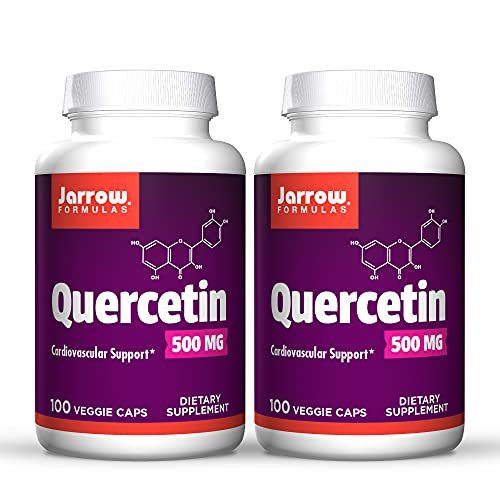
Jarrow Formulas Quercetin 500mg Capsules – 200 Veggie Caps – Supports Antioxidant Status, Cardiovascular Health & Immune Health – 200 Servings
Jarrow Formulas Quercetin 500mg Capsules deliver 500mg per veggie cap in a 200-count bottle for 200 servings, supporting antioxidant status, cardiovascular health, and immune health as stated. This is a straightforward high-dose option with vegan capsules free of gluten, soy, and dairy. Users report benefits for inflammation, allergies, and immunity from consistent use.
Once you have chosen a category, dosage and timing become the difference between “I tried it” and “I actually used it correctly.” Most people do not need a complicated protocol, but a few details matter.
Typical dosage ranges seen in products
Across major brand roundups, most quercetin supplements land at:
| Label dose | Common pattern | Who it fits |
|---|---|---|
| 250 to 500 mg | Entry to mid-range | Beginners, sensitive users |
| 500 mg | Most common “core” serving | Daily wellness routines |
| 1,000 mg | High-dose single-ingredient | Experienced users, minimalist stacks |
Several 2026 comparisons list 500 to 1,000 mg as the most common serving range, including the Omre buyer’s guide and the Innerbody product roundup.
Actionable takeaway: Start with the lowest effective dose that matches your goal, then reassess after 2 to 4 weeks.
Timing: with food, split doses, and “stacking”
Practical tips that often improve consistency:
- Take with a meal if your stomach is sensitive.
- Split the dose (AM/PM) if you are using 1,000 mg daily and notice GI discomfort.
- If your product includes bromelain, follow label directions carefully, since enzymes can be recommended with or without food depending on the brand’s intent.
If you are combining quercetin with other supplements (magnesium, adaptogens, sleep aids), keep the routine simple. UsefulVitamins’ roundup of stress relief supplements can help you avoid stacking too many “calming” ingredients at once.
Safety and interactions: what to watch for
Quercetin is generally well-tolerated in many studies, but “natural” does not mean risk-free.
Consider extra caution if you:
- Take prescription medications (especially those with narrow therapeutic ranges)
- Are pregnant or breastfeeding
- Have kidney disease or complex medical conditions
For a conservative safety overview and supplement-medication interaction context, start with the NIH Office of Dietary Supplements guidance on dietary supplements.
Actionable takeaway: If you take daily medications, ask a pharmacist or clinician before starting high-dose quercetin, especially combined formulas.
Common misconceptions (and the reality)
Here are the mistakes that most often lead to wasted money:
- “All forms work the same.” They do not. Absorption-focused forms may perform differently than standard quercetin.
- “Higher dose is always better.” Not necessarily. Your goal and tolerance matter more than the label number.
- “Single-ingredient is inferior.” Single-ingredient products can be ideal if you want control over your stack.
- “Price equals quality.” Not reliably. Some value products still meet GMP and testing standards, while some expensive blends mainly add extra ingredients.

Taking this alongside other products? StackMyMed (our companion app) logs your full stack, finds the optimal timing for each dose, and flags interactions, so you are not tracking it all by hand.
Conclusion: the smartest way to pick a quercetin supplement
Quercetin supplements are not one-size-fits-all. The best choice depends on whether you want a budget daily capsule, an absorption-focused phytosome, a seasonal support combo with bromelain, or a senolytic-style blend with fisetin.
Start by choosing the form (standard vs enhanced absorption), then pick a dose you will use consistently, and only then compare price per serving and certifications. Before you check out, confirm third-party testing, GMP manufacturing, and allergen transparency.
Next step: If you plan to combine quercetin with other nutrients, use the supplement stacking guide to keep your routine clean and avoid overlap. For quality screening, bookmark supplement quality indicators and run every new product through the same checklist.
As an Amazon Associate, I earn from qualifying purchases. Product recommendations are based on real reviews and independent research.
