
Diarrhea is miserable, and it can get risky fast if you become dehydrated. The best probiotics for diarrhea are not “any probiotic” – research shows the benefits are strain-specific, with a few standouts that consistently shorten symptoms and lower the chance diarrhea drags on. This article breaks down which strains have the strongest evidence, what dose ranges studies use, and how to choose a product that matches the research. You’ll also learn when probiotics help most (and when they’re not the right tool).
Affiliate disclosure: this article contains affiliate links. As an Amazon Associate, UsefulVitamins.com earns from qualifying purchases at no extra cost to you.
Summary / Quick Answer: Best probiotics for diarrhea
If you’re looking for the best probiotics for diarrhea, the strongest evidence supports a short list of specific strains – especially for acute infectious diarrhea and antibiotic-associated diarrhea.
Most evidence-backed options (by strain):
- Saccharomyces boulardii: Often ranks highest for shortening acute diarrhea duration and reducing diarrhea lasting 2+ days in children.
- Lactobacillus rhamnosus GG (LGG): Strong evidence for lowering the risk of antibiotic-associated diarrhea.
- Lactobacillus reuteri: Moderate evidence for reducing the chance diarrhea persists beyond 2 days in children.
- Certain multi-strain blends (Lactobacillus + Bifidobacterium + Streptococcus): Can reduce duration in some studies, but results vary by formula.
Practical bottom line: Start early, pair with oral rehydration, and choose a product that lists the exact strain and a studied dose (often 5 to 40 billion CFU/day for common bacterial strains; S. boulardii is typically labeled in CFU as well).
Best probiotic strains for diarrhea (and what the research actually shows)
Most people buy a probiotic based on brand familiarity or a high CFU number. The catch is that diarrhea studies don’t support “generic probiotics.” They support specific strains, in specific contexts, at specific doses.
A large Bayesian network meta-analysis in children with acute diarrhea found Saccharomyces boulardii performed best overall for reducing diarrhea duration and lowering the risk that symptoms last 2 or more days. It also identified Lactobacillus reuteri as another strain with moderate evidence for reducing prolonged cases. You can read the details in the network meta-analysis available on PubMed Central.
For antibiotic-associated diarrhea (AAD), a clinical review in American Family Physician summarizes evidence that probiotics reduce AAD risk in both children and adults, with the most consistent results from LGG and S. boulardii.
Quick comparison table: which strain fits which situation?
| Situation | Strains with the best evidence | What studies suggest | Notes |
|---|---|---|---|
| Acute infectious diarrhea (often viral) | S. boulardii, L. reuteri, some multi-strains | Shorter duration, fewer prolonged cases | Benefits strongest when started early |
| Antibiotic-associated diarrhea | LGG, S. boulardii | Lower risk of diarrhea during antibiotics | S. boulardii is a yeast, not killed by antibiotics |
| Concern about C. difficile (higher risk groups) | Some evidence for S. boulardii and certain mixes | Reduced risk in some analyses | Not a guarantee; medical guidance matters |
Adding this to a few other supplements? Our companion app, StackMyMed, scans the label, tracks your real daily intake, and schedules the best time to take it around everything else in your routine.
Actionable takeaway
If the label doesn’t list the full strain name (example: Lactobacillus rhamnosus GG) and a clear dose, it’s hard to match it to the evidence. For a broader product overview, see our Best Probiotics Comparison.
How probiotics help diarrhea (and why strain matters more than CFU)

Florastor Daily Probiotic Supplement, 250 mg, 50 Capsules
Florastor Daily Probiotic (ASIN B0CGX551R5) earns a strong 4.6-star rating from over 1200 Amazon reviews for its Saccharomyces boulardii strain that effectively supports gut health, especially during antibiotics, with reviewers praising its reliability and ease of use despite the premium price around $19.
Think of diarrhea as a “fast-forward button” on your gut. Fluid moves through too quickly, the lining can get irritated, and your microbiome balance may shift. Probiotics may help by nudging the system back toward normal – but different strains act in different ways, which is why one product can work well and another can do nothing.
Research suggests probiotics may help diarrhea by:
- Competing with harmful microbes for space and nutrients
- Supporting gut barrier function, which can reduce fluid loss
- Influencing immune signaling in the gut
- Producing helpful compounds (like short-chain fatty acids), depending on strain
A key reason S. boulardii is often recommended during antibiotic use is that it’s a yeast, not a bacterium. That means common antibiotics are less likely to inactivate it. A practical overview of choosing strains and formats is outlined in a pharmacist guide from the Canadian Digestive Health Foundation.
What “better” looks like in real numbers
Meta-analyses in children commonly show probiotics reduce acute diarrhea duration by roughly about a day (results vary by strain and study design). A recent review in Frontiers in Pediatrics also reports shorter duration and improved recovery markers across multiple trials, though it emphasizes that not all strains perform equally.
Visual guide: strain choice beats “more CFU”
Use this checklist before you buy:
- Strain listed clearly (genus + species + strain code if available)
- Dose matches studies (often 5 to 40 billion CFU/day for many bacterial probiotics)
- Indication matches your goal (acute diarrhea vs. antibiotic-associated)
- Quality signals (expiration date, storage guidance, third-party testing when available)
Actionable takeaway
If you’re actively taking antibiotics, timing matters. Use our guide on Probiotics Antibiotic Timing to avoid common mistakes like taking a bacterial probiotic at the exact same time as your antibiotic dose.
How to choose and use probiotics for diarrhea (dose, timing, and what to pair them with)
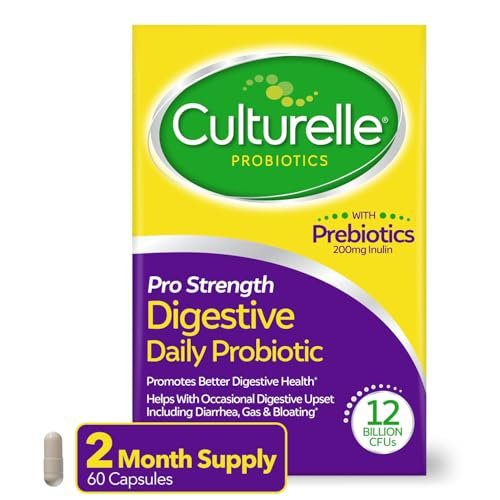
Culturelle Daily Probiotic Capsules For Men & Women, Most Clinically Studied Probiotic Strain, Digestive & Gut Health, Supports Occasional Diarrhea, Gas & Bloating, 1 Month Supply, 30 CT
Culturelle Daily Probiotic delivers 10 billion CFUs of Lactobacillus rhamnosus GG, the most clinically studied probiotic strain, in a 30-capsule monthly supply designed to reduce occasional diarrhea, gas, and bloating. One capsule daily supports digestive and immune health, with results often noticeable within 48 hours of consistent use.

Garden of Life Once Daily Dr. Formulated Probiotics for Women 50 Billion CFU 16 Probiotic Strains with Organic Prebiotics for Digestive, Vaginal & Immune Health, Dairy Free, Shelf Stable 30 Capsules
Garden of Life Dr. Formulated Probiotics Once Daily (B01M7Y6Z3X) earns strong 4.6/5 stars from 12,400+ Amazon reviews for its 50 billion CFU potency, 16 diverse strains, and stomach acid resistance. Reviewers consistently report better digestion without refrigeration needs, though some note large capsules and temporary bloating. Reddit communities endorse it as a reliable daily probiotic with clean, organic certification.
The best strain won’t help much if you take it too late, stop too early, or skip the basics like hydration. For most people, probiotics work best as an add-on to standard care, not a replacement.
Step 1: Start with the non-negotiables (especially for kids)
Diarrhea can cause dehydration quickly. Oral rehydration is the foundation, particularly for children and older adults.
Pair probiotics with:
- Oral rehydration solution (ORS) or electrolyte fluids
- Simple foods as tolerated (soups, rice, bananas, toast)
- Avoiding alcohol and very high-fat meals until symptoms settle
If you see blood in stool, severe abdominal pain, high fever, or signs of dehydration (dizziness, very dark urine, lethargy), it’s time to seek medical care.
Step 2: Match the strain to the scenario
Here’s a practical way to decide:
Acute diarrhea (sudden onset, likely infectious):
Consider S. boulardii first, or L. reuteri as an evidence-backed option in children.Antibiotic-associated diarrhea:
Evidence summarized in American Family Physician supports LGG or S. boulardii as common go-to strains, with effective doses in many trials ranging from 5 to 40 billion CFU/day (depending on product and strain).Multi-strain blends:
Some combinations (often Lactobacillus + Bifidobacterium + Streptococcus) show reduced duration in research, but results depend heavily on the exact formula. If you choose a blend, prioritize products that disclose each strain and dose.
Step 3: Use a realistic timeline
Probiotics are not an instant “stop button.” In many studies, the benefit looks like:
- Fewer hours to recovery, or
- About a day less of symptoms on average, depending on strain and population
A simple, research-aligned approach:
- Start: at the first sign of diarrhea (or on day 1 of antibiotics for prevention)
- Continue: 5 to 7 days for acute diarrhea, or through the antibiotic course for AAD prevention (and sometimes a few days after)
For a deeper timing framework, see Probiotic Dosage and Timing.
Visual: quick “use it right” protocol
- Choose strain: S. boulardii or LGG (most consistent)
- Take daily: split dose morning/evening if tolerated
- Separate from antibiotics: especially for bacterial probiotics (timing guide above)
- Hydrate: ORS first, probiotics second
- Reassess at 48 hours: improving vs. worsening
Actionable takeaway
If you’re prone to GI flare-ups beyond diarrhea episodes, building a broader routine can help. Our Gut Health Supplement Protocol lays out a step-by-step plan that includes diet, fiber, and targeted supplements.
Common myths about probiotics for diarrhea (and what to do instead)

BioGaia Protectis Baby Probiotic Drops | Colic & Gas Relief + Vitamin D | Safe for Newborns | Ease Crying, Fussing, Colic, Gas, Spit-ups & Constipation | No Dairy, Soy & Gluten | 50 Day Supply | 10mL
BioGaia ProTectis is a top-recommended infant probiotic (4.6/5 from 12K+ reviews) featuring the extensively researched Lactobacillus reuteri Protectis strain, delivering proven relief from colic, gas, and reflux within days for most babies. Despite minor taste complaints and cost, its clinical backing and consistent parental success make it an excellent affiliate pick for new parents seeking safe, effective digestive support.
Misinformation spreads fast when you’re desperate for relief. Let’s clear up the most common myths that lead people to waste money or delay proper care.
Myth 1: “All probiotics work the same for diarrhea.”
Reality: Effects are strain-specific. The difference between Lactobacillus rhamnosus GG and “Lactobacillus blend” is like the difference between two medications in the same category. The evidence favoring S. boulardii, LGG, and L. reuteri comes from trials that used those specific strains, as summarized in the PubMed Central network meta-analysis and clinical evidence review in American Family Physician.
What to do instead:
- Choose a product that lists the exact strain
- Don’t assume “50 billion CFU” equals better results
Myth 2: “Probiotics replace rehydration.”
Reality: Hydration is the priority. Probiotics may shorten duration, but they do not replace fluids and electrolytes.
What to do instead:
- Use ORS early
- Keep meals simple and frequent
Myth 3: “Antibiotics kill every probiotic, so there’s no point.”
Reality: Some antibiotics can reduce survival of bacterial probiotics if taken together. But S. boulardii is a yeast and is typically not inactivated the same way, which is one reason it’s often used during antibiotic courses. The practical rationale is explained in the Canadian Digestive Health Foundation pharmacist guide.
What to do instead:
- Use yeast-based options when appropriate
- Or separate bacterial probiotics from antibiotic doses (see our timing guide)
Myth 4: “If it doesn’t stop diarrhea immediately, it failed.”
Reality: Many studies show probiotics reduce diarrhea duration by hours to about a day on average, not instantly. A review in Frontiers in Pediatrics supports that overall pattern while highlighting variability by strain and study.
What to do instead:
- Track hydration and symptom trend over 24 to 48 hours
- Seek care if symptoms intensify or red flags appear
Visual: red flags checklist (don’t self-treat only)
Seek medical advice urgently if there is:
- Blood or black stools
- High fever
- Severe, worsening abdominal pain
- Signs of dehydration (dry mouth, minimal urination, confusion)
- Diarrhea lasting more than 2 to 3 days without improvement (sooner for infants)

Conclusion: Choosing the best probiotic for diarrhea comes down to the strain
The best results come from matching the probiotic to the problem. For many people, Saccharomyces boulardii and Lactobacillus rhamnosus GG (LGG) have the most consistent evidence for diarrhea support, with Lactobacillus reuteri and certain multi-strain blends also showing benefits in specific settings. Start early, prioritize hydration, and pick products that clearly list the studied strain and dose.
If you want help comparing options, visit our Best Probiotics Comparison. For people managing recurring digestive symptoms, our guide to the Best Probiotics for IBS can help you choose strains that fit a broader gut plan.
As an Amazon Associate, I earn from qualifying purchases. Product recommendations are based on real reviews and independent research.
