
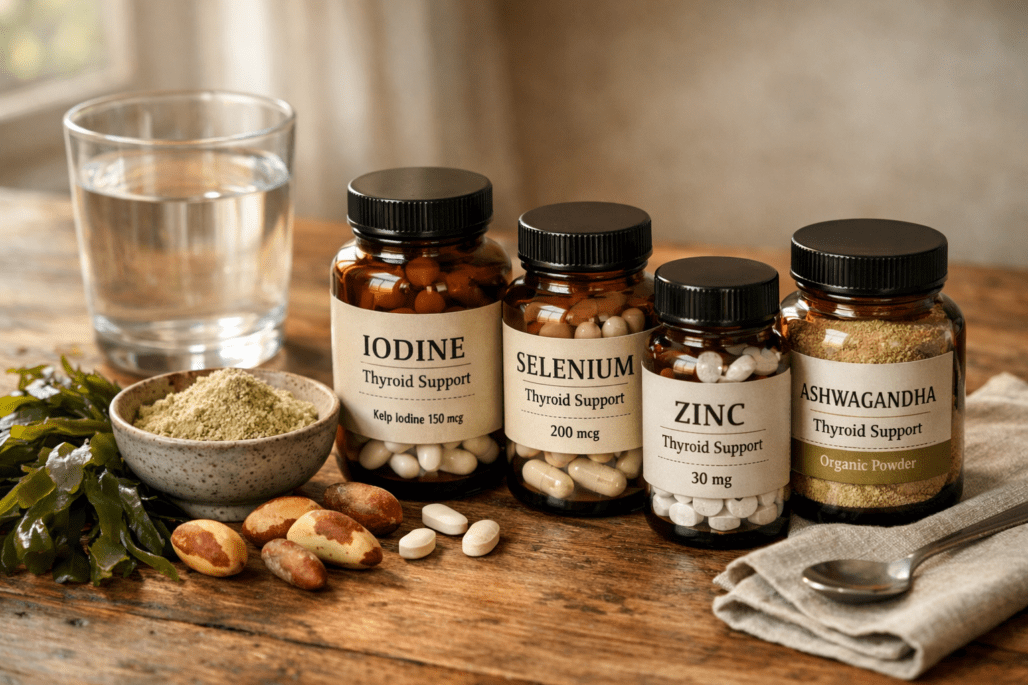
When thyroid labs feel “off,” it’s tempting to grab the first bottle labeled support and hope your energy returns. But the best thyroid supplements are rarely the fanciest blends. They are the ones that match a real need: a measured deficiency, autoimmune activity (like Hashimoto’s), gut issues, or stress that’s nudging thyroid markers in the wrong direction. This article breaks down which supplements have the strongest research, how to choose safe formulas, and how to time them – especially if you take levothyroxine.
Affiliate disclosure: this article contains affiliate links. As an Amazon Associate, UsefulVitamins.com earns from qualifying purchases at no extra cost to you.
Summary / Quick Answer
The best thyroid supplements are typically selenium, vitamin D, myo-inositol (often paired with selenium), targeted probiotics/synbiotics, and zinc or iron only when labs show deficiency. They may support thyroid antibody levels, hormone conversion, and symptoms, but they don’t replace prescribed medication.
Most evidence-backed options (choose based on labs and diagnosis):
- Selenium (often 200 mcg/day): may lower TPO antibodies in Hashimoto’s
- Vitamin D (dose based on blood level): may reduce thyroid antibodies if deficient
- Myo-inositol (commonly 600 mg/day): may improve TSH, especially with selenium
- Synbiotics (probiotic + prebiotic): may improve fatigue and modestly lower TSH in some trials
- Zinc, iron, B12, magnesium: helpful when low, common in hypothyroidism
Avoid: “thyroid glandulars,” hormone-spiked blends, and high-dose iodine unless a clinician confirms deficiency.
Best thyroid supplements (and who they’re actually for)
If you only remember one rule, make it this: match the supplement to the thyroid problem you have. “Thyroid support” can mean very different things depending on whether you’re dealing with Hashimoto’s (autoimmune hypothyroidism), subclinical hypothyroidism, medication absorption issues, or nutrient depletion.
Hypothyroidism affects about 4.6% of the U.S. population age 12+, and it’s more common in women and older adults. Symptoms like fatigue, constipation, dry skin, and weight changes overlap with iron deficiency, low vitamin D, and even sleep debt, which is why guessing can backfire.
A practical way to sort your options
Think of supplements in three buckets:
Autoimmunity support (Hashimoto’s)
Goal: calm antibody activity and reduce inflammatory “noise.”
Top picks: selenium, vitamin D, myo-inositol (with selenium).Hormone production and conversion support
Goal: provide building blocks and cofactors used to make T4 and convert it to T3.
Top picks: selenium, zinc, iron (if low), B12, magnesium.Gut-thyroid axis support
Goal: improve digestion, inflammation, and nutrient absorption that can affect thyroid function and symptoms.
Top picks: probiotics or synbiotics.
Evidence snapshot (quick comparison table)
| Supplement | What research suggests | Typical range used | Best fit |
|---|---|---|---|
| Selenium | May reduce TPO antibodies in Hashimoto’s | ~200 mcg/day (sometimes every other day) | Hashimoto’s, thyroid antibodies |
| Vitamin D | May lower antibodies if deficient | ~1,000-8,000 IU/day (lab-guided) | Low vitamin D, autoimmunity |
| Myo-inositol | May improve TSH, especially with selenium | ~600 mg/day | Subclinical hypo, antibodies |
| Synbiotics | May reduce TSH and fatigue in some trials | Product-dependent | Fatigue + gut symptoms |
| Zinc | Supports hormone synthesis; helpful if low | ~15-30 mg/day | Low zinc, poor intake |
| Iron | Supports thyroid hormone synthesis; affects meds | Lab-guided | Low ferritin/iron |
For readers comparing formulas, it can help to start with a reputable overview of what a thyroid support supplement typically contains, then cross-check each ingredient against your labs and diagnosis.
Selenium, vitamin D, and inositol: best-supported picks for Hashimoto’s
NOW Supplements Selenium 200 mcg, 180 Veg Capsules
NOW Supplements Selenium 200 mcg, 180 Veg Capsules provides essential selenium from L-Selenomethionine to support immune function and antioxidant activity in a vegetarian, non-GMO formula, with 180 capsules offering 6-month supply at 1 per day; however, without Amazon ASIN, ratings, or price data, and no third-party testing info, recommend verifying current Amazon listing and consulting a physician prior to use, especially in high-selenium regions[1].
Hashimoto’s changes the supplement conversation because the main issue is not “lazy thyroid.” It’s immune activity targeting thyroid tissue. That’s why the most consistent supplement research focuses on thyroid antibodies, especially TPO antibodies.
Selenium: the strongest “antibody” data (with a safety ceiling)
Selenium is involved in enzymes that help convert T4 to active T3 and protect thyroid tissue from oxidative stress. Multiple meta-analyses have found selenium supplementation can reduce TPO antibodies in autoimmune thyroiditis, with effects sometimes lasting months after supplementation ends.
A patient-friendly summary from the British Thyroid Foundation on diet and supplements also emphasizes that selenium may help some people with thyroid autoimmunity, but it’s not a cure and dosing matters.
Actionable guidance:
- Common studied dose: 200 mcg/day (some clinicians use every other day to reduce excess risk).
- Do not stack multiple selenium products (multi + thyroid blend + “immune” formula).
- Consider choosing a single-ingredient product if you’re already taking a multivitamin. For comparisons, see best selenium supplements.
Safety note: long-term high selenium can cause toxicity (hair loss, brittle nails, GI upset). Stay within clinician guidance, and recheck labs if you supplement for months.
Vitamin D: most helpful when you’re actually low
Vitamin D deficiency is common in people with hypothyroidism and autoimmune thyroid disease. Meta-analyses suggest vitamin D supplementation can lower TPO antibodies, especially when baseline vitamin D is low and supplementation continues for several months.
For dosing guardrails, the NIH Office of Dietary Supplements vitamin D fact sheet is a reliable reference for upper limits and safety considerations.
Actionable guidance:
- Ask for a 25(OH)D blood test before taking high doses.
- Take vitamin D with a fat-containing meal for absorption.
- Recheck levels after 8-12 weeks if using higher doses.
Myo-inositol (often paired with selenium): a “TSH support” option with real data
Myo-inositol is best known for insulin signaling and fertility support, but it also shows promise in thyroid autoimmunity. Trials suggest myo-inositol plus selenium can improve TSH and antibody markers more than selenium alone in some people with subclinical hypothyroidism or autoimmune thyroiditis.
Actionable guidance:
- Common studied dose: myo-inositol 600 mg/day.
- Often paired with selenium 83-200 mcg/day depending on the protocol.
- Give it 8-12 weeks, then reassess symptoms and labs with your clinician.
Quick “is this you?” checklist (structured list)
You’re more likely to benefit from selenium, vitamin D, and/or inositol if:
- Your labs show positive TPO antibodies
- You have subclinical hypothyroidism (mildly high TSH with normal T4)
- You’re vitamin D deficient
- You want a plan that supports antibodies alongside medication, not instead of it
Probiotics and synbiotics: the gut-thyroid connection (and what to look for)
Nature Made Vitamin D3 2000 IU, 220 Tablets
Vitamin D is mentioned as potentially reducing thyroid antibodies if deficient, making it a relevant supplement for thyroid health.
Check Price on Amazon →A lot of people with hypothyroidism also deal with bloating, constipation, reflux, or unpredictable stools. That’s not just annoying – it can affect nutrient absorption and how you feel day to day.
The “gut-thyroid axis” is a simple idea: gut microbes influence inflammation, nutrient status, and immune signaling, and those can influence thyroid autoimmunity and symptoms. While research is still developing, there are a few findings worth paying attention to.
What the research suggests
In a 2020 clinical trial, synbiotics (probiotics + prebiotics) were associated with lower TSH and improved fatigue in people with hypothyroidism after about 8 weeks. That doesn’t mean probiotics treat hypothyroidism, but it does suggest the microbiome can be a lever for symptoms in some people.
Probiotic vs synbiotic: which is better?
A probiotic contains live organisms. A synbiotic includes those organisms plus a prebiotic “food” source to support their survival and activity.
In practice:
- If your main issue is constipation and fatigue, a synbiotic may be worth trying first.
- If you’re sensitive to fibers (bloating from prebiotics), start with a gentler probiotic and add prebiotics later.
What to look for on the label (mini checklist)
Aim for a product with:
- Clearly listed strains (not just “proprietary blend”)
- A realistic CFU count (more is not always better)
- Storage guidance you can follow (shelf-stable vs refrigerated)
- A trial period of 6-8 weeks before you judge results
How to take it without making things worse
- Start low if you’re prone to gas or bloating.
- Many people do well taking probiotics on an empty stomach, but consistency matters more than perfect timing.
- If you take thyroid medication, probiotics generally don’t bind it like minerals do, but keep your medication routine stable and discuss changes with your clinician.
A simple symptom tracker (table)
Use this for 2 minutes a day:
| Day | Energy (1-10) | Bloating (Y/N) | Stool frequency | Constipation strain (Y/N) |
|---|---|---|---|---|
| 1 | ||||
| 7 | ||||
| 14 | ||||
| 56 |
If your gut symptoms improve but thyroid labs don’t change, that’s still a win. Better digestion often supports more consistent nutrition and medication absorption over time.
Zinc, iron, B12, and magnesium: “quiet” deficiencies that mimic hypothyroid symptoms
Jarrow Formulas Myo-Inositol, 120 Veggie Capsules
Myo-inositol is noted for improving TSH levels, especially when paired with selenium, which aligns with the article’s recommendations.
Check Price on Amazon →Garden of Life Dr. Formulated Probiotics for Women, 30 Capsules
Garden of Life Dr. Formulated Probiotics for Women (4.5 stars from 12,400+ Amazon reviews) is a strong recommendation for women seeking targeted digestive, vaginal, and urinary tract support. With 50 billion CFU and 16 diverse strains including L. reuteri and L. fermentum, it earns consistent praise for reducing bloating and UTI recurrence. The shelf-stable, clean formula appeals to sensitive users, though large capsules and temporary adjustment side effects are noted. At $24.99, it offers solid value for a premium women’s probiotic.
Some of the most frustrating hypothyroid symptoms overlap with nutrient deficiencies: fatigue, brain fog, hair shedding, low mood, and cold intolerance. That’s why a smart thyroid supplement plan often looks less like a “thyroid booster” and more like targeted repletion.
Zinc: supports thyroid hormone synthesis (but don’t overdo it)
Zinc plays a role in thyroid hormone metabolism and immune function. Low zinc intake is more likely with restrictive diets, low protein intake, or chronic GI issues.
Actionable guidance:
- Typical supplemental range: 15-30 mg/day.
- If supplementing zinc longer-term, ask about copper balance (high zinc can reduce copper status).
- If you want product guidance, see best zinc supplements.
Iron: essential, but timing matters a lot
Iron deficiency (especially low ferritin) can worsen fatigue and hair loss and may affect thyroid hormone production. But iron has a major downside: it can block absorption of levothyroxine.
For a detailed timing guide, use this resource on iron thyroid medication timing.
Actionable guidance:
- Test: ferritin, iron, transferrin saturation before supplementing.
- Separate iron from thyroid medication by at least 4 hours unless your clinician advises otherwise.
- Retest in 8-12 weeks to avoid overshooting.
B12 and magnesium: common “energy” gaps
Low B12 can cause fatigue, numbness, and memory issues. Magnesium supports sleep quality and bowel regularity, which can indirectly improve how hypothyroid symptoms feel.
Actionable guidance:
- Ask for B12 testing if you have fatigue plus tingling, glossitis, or a vegan diet.
- Consider magnesium if constipation and poor sleep are dominant symptoms, but keep it away from thyroid meds by 2-4 hours.
Quick lab checklist to request (structured list)
If you’re building a supplement plan with your clinician, consider asking about:
- TSH, free T4, free T3 (when appropriate)
- TPO antibodies (and Tg antibodies if indicated)
- 25(OH) vitamin D
- Ferritin and iron panel
- B12 (and methylmalonic acid if needed)
- Zinc (sometimes assessed via diet and risk factors)
If you’re also working on cycle-related symptoms, mood, or stress resilience, it may help to coordinate thyroid support with broader hormonal balance supplements so you’re not duplicating ingredients across products.

What to avoid (and how to use supplements safely with thyroid medication)
The supplement aisle has a thyroid problem: too many products imply they can “wake up” your gland, and some do it in risky ways.
Avoid thyroid glandulars and hormone-spiked blends
Some “thyroid support” products contain glandular ingredients (like bovine thyroid) or have been found to contain active thyroid hormones. That can push you toward hyperthyroid symptoms (palpitations, anxiety, insomnia) and distort lab results.
The American Thyroid Association patient education update has discussed concerns about thyroid supplements containing thyroid hormones.
Bottom line: If a product promises “rapid metabolism boost” or “natural T3,” skip it.
Be careful with iodine (especially in Hashimoto’s)
Iodine is required to make thyroid hormone, but more is not better. High iodine intake can worsen autoimmune thyroiditis in susceptible people.
The British Thyroid Foundation guidance on supplements cautions against routine iodine supplementation unless deficiency is confirmed. Kelp and seaweed-based pills are especially unpredictable.
Actionable guidance:
- Do not add iodine “just in case.”
- If iodine deficiency is suspected, discuss testing and dietary sources with your clinician first.
Watch out for biotin before thyroid labs
High-dose biotin (often sold for hair and nails) can interfere with some thyroid blood tests, creating misleading results.
Actionable guidance:
- Tell your lab and clinician if you take biotin.
- Ask whether you should stop it before testing (timing depends on dose and lab method).
Safe timing rules if you take levothyroxine (simple list)
To protect medication absorption:
- Take levothyroxine with water, consistent timing daily.
- Separate these by at least 4 hours: iron, calcium, magnesium, zinc.
- Keep your routine stable for 6-8 weeks before rechecking labs after major changes.
A “safe starter plan” template (table)
Use this as a discussion tool with your clinician:
| Goal | First step | Supplement option | When to reassess |
|---|---|---|---|
| Reduce antibodies | Check TPO, vitamin D | Selenium or vitamin D (lab-guided) | 8-12 weeks |
| Improve fatigue + gut | Track stool + diet | Synbiotic trial | 6-8 weeks |
| Fix deficiency symptoms | Test ferritin/B12/zinc | Replace what’s low | 8-12 weeks |
| Stress-related symptoms | Sleep + cortisol habits | Ashwagandha only if appropriate | 8 weeks |
Ashwagandha deserves a special mention: a randomized trial found 600 mg/day improved thyroid markers in subclinical hypothyroidism after 8 weeks. It may be useful when stress and poor sleep are part of the picture, but it’s not appropriate for everyone, and it should be cleared with a clinician if you have autoimmune disease, take sedatives, or are pregnant.
If you are stacking a few supplements for this, StackMyMed (our companion app) tracks what you actually take, schedules the best time for each one, and flags any combinations worth a second look.
Conclusion
The best results usually come from a simple strategy: test first, supplement with a clear target, and recheck. For many people, the best thyroid supplements are selenium, vitamin D, and myo-inositol for thyroid antibodies, plus probiotics for gut-related symptoms and zinc or iron only when labs confirm a need. The biggest gains often come from what you avoid, too – glandulars, hormone-spiked blends, and high-dose iodine “just because.”
Next step: review your latest thyroid labs and deficiency markers, then build a short list of 1-3 supplements to trial for 8-12 weeks. For more guidance, see our breakdown of a thyroid support supplement and our comparison guide to the best selenium supplements.
As an Amazon Associate, I earn from qualifying purchases. Product recommendations are based on real reviews and independent research.
