
Spend any time researching anti-aging serums and you will encounter two peptide names more than any others: GHK-Cu and Matrixyl. Both are topical peptides. Both have published human trial data behind them. Both are available in affordable over-the-counter formulations. The natural question is whether they are doing different things — or whether one is just a pricier synonym for the other.
The honest answer is that they work through genuinely different mechanisms, the clinical evidence is real but limited for both, and the comparison data that does exist slightly favors GHK-Cu on wrinkle volume reduction — though the gap is modest enough that formulation fit and skin tolerance often matter more than the raw numbers. Verdict: for gene-level remodeling and wound-repair signaling, GHK-Cu has the stronger mechanistic case; for accessible signal-peptide use with a clean tolerability record, Matrixyl is a legitimate and practical choice; and layering both in the same step is a formulation headache you can avoid with simple timing.
Affiliate disclosure: this article contains affiliate links. As an Amazon Associate, UsefulVitamins.com earns from qualifying purchases at no extra cost to you.
Summary: Two Peptides, One Shared Goal
GHK-Cu and Matrixyl are the two most-researched topical peptide actives in dermatology. They both aim to stimulate collagen production and reduce visible signs of aging. But the way each molecule achieves that goal is structurally and biochemically distinct, and understanding that distinction helps you make a smarter buying decision and a better routine.
For a broader primer on how topical peptides work as a category, see Peptides for Skin: Which Types Have Real Evidence and Which Are Marketing.
Both Peptides at a Glance
| Property | GHK-Cu | Matrixyl (pal-KTTKS) |
|---|---|---|
| Full name | Glycyl-L-histidyl-L-lysine copper complex | Palmitoyl pentapeptide-4 |
| INCI name | Tripeptide-1 (+ copper) | Palmitoyl pentapeptide-4 |
| Peptide class | Carrier / metal-binding peptide | Signal peptide |
| Molecular mechanism | Gene expression regulation via copper delivery to nuclear signaling | Collagen-synthesis stimulation via extracellular TGF-beta-like signaling |
| Developed by | Pickart (1970s); extensively studied at University of Washington | Sederma (1990s); patented matrikine-based fragment |
| Evidence level | Multiple human RCTs + gene-array studies | Multiple in-vitro + at least one published split-face RCT |
| Formulation challenge | Incompatible with L-ascorbic acid in the same step | Stable across most pH ranges; minimal interaction concerns |
| Typical effective concentration | 0.5–2% (as tripeptide-1) | 3–8 ppm (palmitoyl-KTTKS) |
| Price access | Budget (The Ordinary) to premium (NIOD) | Budget (The Ordinary) to mid-range |
Mechanism: Gene Expression vs. Signal Peptide
This is where the two ingredients genuinely diverge, and it is worth spending time here because it changes how you think about each one.
GHK-Cu: a gene-expression modulator
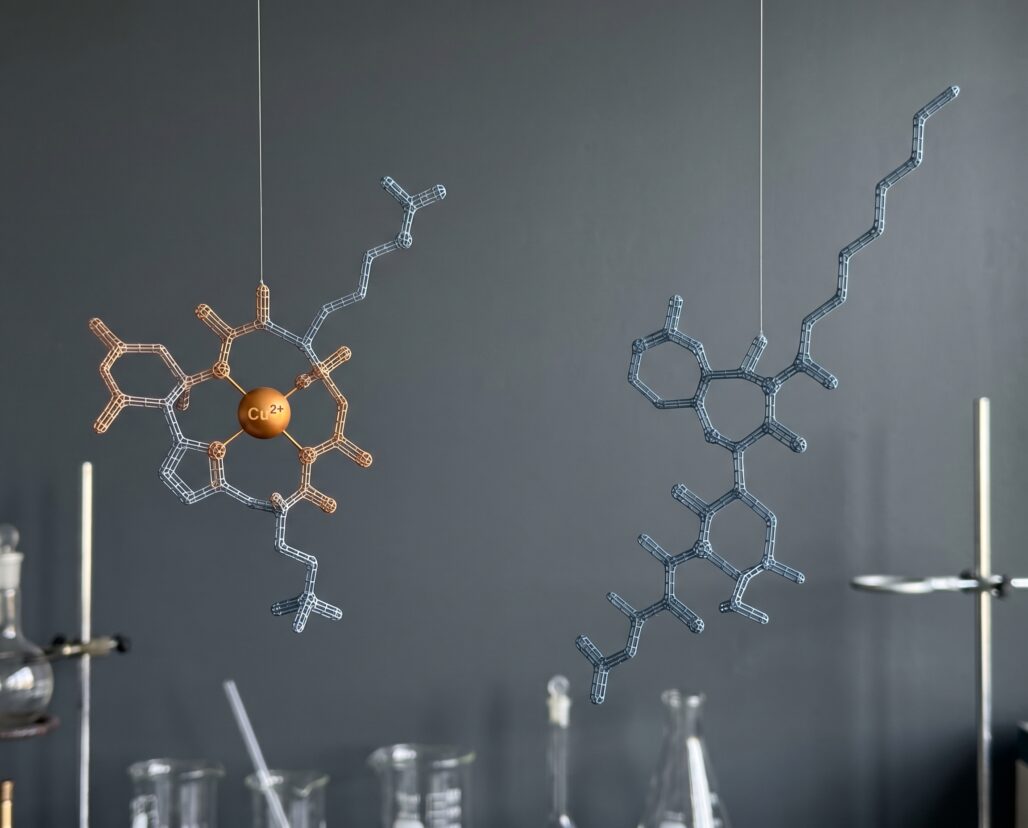
GHK-Cu is a tripeptide (glycine, histidine, lysine) that forms a tight complex with copper(II) ions. That copper-binding capacity is the mechanism. When GHK-Cu is taken up by skin cells, it functions less like a simple collagen signal and more like a broad biological remodeling agent.
A 2018 review by Pickart and Margolina in the International Journal of Molecular Sciences (PMID 29986520) — the most comprehensive synthesis of GHK-Cu research to date — found that GHK affects the expression of 31.2% of human genes when a 50% change threshold is applied. It upregulates 59% of those affected genes and suppresses 41%. The affected pathways include ubiquitin-proteasome gene families, TGF-beta signaling, wound repair cascades, metalloproteinase regulation, and anti-inflammatory networks.
The practical consequence of this breadth is that GHK-Cu is not doing one thing at a known receptor. It is influencing a wide gene-expression landscape. That is biologically interesting and probably accounts for the ingredient's effects beyond collagen — including reports of improved skin laxity, barrier function, and even hair follicle support.
Animal evidence established the collagen angle early. A 1993 study in the Journal of Clinical Investigation (PMID 8227353) using a rat wound chamber model showed that GHK-Cu produced concentration-dependent increases in collagen synthesis that were twice the increase seen in non-collagen proteins, with Type I and Type III collagen mRNAs upregulated without corresponding increases in TGF-beta mRNA. That finding suggests GHK-Cu is not simply amplifying TGF-beta the way you might expect — it is working upstream of or in parallel with that pathway.
One critical framing note: the gene-expression evidence is largely from in-vitro (cell culture) and bioinformatic analysis. The human RCTs tested cosmetic endpoints, not gene expression readouts directly. So the mechanistic story is compelling but connects to clinical outcomes through an inference step, not a direct causal chain.
Matrixyl: a matrikine-derived signal peptide
Matrixyl is a trade name for palmitoyl pentapeptide-4 (also written pal-KTTKS), developed by Sederma in the late 1990s. The "KTTKS" part is a fragment of Type I collagen's pro-alpha1 chain — specifically, a sequence that is released when collagen breaks down. These fragments are called matrikines, and their biological role is to signal the extracellular matrix that repair is needed.
The palmitoyl (fatty acid) tail is attached to make the molecule more lipophilic and better able to cross the stratum corneum. Without it, the pentapeptide is too water-soluble to penetrate effectively. Palmitoylation is the key formulation technology that transforms an interesting but non-penetrating fragment into a usable topical active.
The mechanism at the cell level is relatively straightforward compared to GHK-Cu. KTTKS binds to integrins and extracellular matrix receptors on fibroblasts, triggering downstream collagen I, collagen III, and fibronectin synthesis. It is a targeted signal rather than a broad gene-expression event. The narrower mechanism may actually be a feature — it means fewer off-target effects and predictable behavior across formulations.
A 2022 study in Microbiology Spectrum (PMID 35950860) developing novel peptide-ionic liquid conjugates benchmarked their collagenesis-inducing effects against Matrixyl (C16-KTTKS-OH) and found Matrixyl's collagen-stimulating activity strong enough to serve as a meaningful positive control. That kind of use as a benchmark ingredient reflects how well-established Matrixyl's collagen mechanism is considered to be within the formulation research community.
Topical Evidence Head-to-Head
Here is where things get interesting — and where the evidence requires honest parsing.
Human RCT data for GHK-Cu
The Pickart and Margolina 2018 review summarizes three categories of human trial evidence (PMID 29986520):
A facial cream trial involving 71 women with mild to advanced photoaging applied GHK-Cu for 12 weeks and found increased skin density and thickness, reduced laxity, improved skin clarity, and reduced fine lines and wrinkle depth compared to placebo. An eye cream trial in 41 women found comparable results around the periorbital area and outperformed both placebo and a vitamin K comparator cream.
The most relevant head-to-head data point: a randomized, double-blind trial using GHK-Cu encapsulated in a nano-lipid carrier applied twice daily for 8 weeks reported a 31.6% reduction in wrinkle volume compared to Matrixyl 3000 (a blend of Matrixyl and Matrixyl 3000 peptides), and a 55.8% reduction compared to carrier-alone control, with wrinkle depth reduced 32.8% vs. control.
One important caveat: this comparison trial is cited in the Pickart and Margolina review with a single reference (reference 20 in that paper). The trial was not independently replicated in a large multi-center study, and nano-lipid carrier encapsulation substantially improves GHK-Cu penetration beyond what a standard aqueous or serum formulation provides. Results from encapsulated delivery systems do not automatically translate to results from off-the-shelf serums.
Human evidence for Matrixyl
The clinical evidence for palmitoyl pentapeptide-4 includes both manufacturer-sponsored studies (Sederma) and independent evaluations. The foundational Sederma studies used split-face designs over 12-week periods, reporting wrinkle depth reductions of roughly 30–40% in the actively treated half vs. control. The ingredient has a published efficacy claim of reducing wrinkle depth by approximately 45% at 4 ppm concentration after 12 weeks in some evaluations, though this figure comes from non-peer-reviewed technical documents rather than journal RCTs.
The honest assessment of the human evidence is this: both ingredients have real clinical trial data at the cosmetic endpoint level (wrinkle depth, laxity, skin thickness). Neither has the volume of independent large-scale RCTs that establish, for example, sunscreen SPF claims. The 31.6% advantage for GHK-Cu in the direct comparison is real data, but it comes from a single trial with enhanced delivery technology, which limits how far you should generalize from it.
For a detailed look at the GHK-Cu evidence base in isolation, see the GHK-Cu Copper Peptide Deep Dive.
Formulation Considerations
This is the section that will most directly affect how you actually use these ingredients.
GHK-Cu: formulation is everything
GHK-Cu is chemically active. The copper(II) ion that makes it interesting is also the reason it reacts with other actives in ways that matter.
The vitamin C interaction is the one you need to know. L-ascorbic acid (the active form of vitamin C) reduces copper ions from Cu(II) to Cu(I). In a formulation or on your skin at the same time, L-ascorbic acid and GHK-Cu compete: the ascorbic acid partially degrades the copper complex, reducing GHK-Cu's activity and generating a small amount of free copper that can act as a pro-oxidant. This is not a catastrophic reaction — it is not an acid-base neutralization — but it wastes two expensive actives and may generate unwanted reactive species. Do not layer GHK-Cu with L-ascorbic acid in the same routine step. Either separate them into AM (vitamin C) and PM (GHK-Cu), or use GHK-Cu on alternate days from your vitamin C serum.
GHK-Cu is also pH-sensitive. It performs best in a slightly acidic to neutral environment (pH 5–7). Highly acidic exfoliants (AHA/BHA at pH 3–4) applied immediately before or after can destabilize the copper complex. A 10-to-15 minute gap between low-pH exfoliants and GHK-Cu serums is a reasonable precaution.
Formulation quality matters significantly for this ingredient. An encapsulated or liposomal delivery system dramatically improves skin penetration. A basic aqueous serum with copper peptides at 1% delivers meaningfully less active ingredient to dermal fibroblasts than a nano-lipid carrier formulation at the same nominal concentration. This is one reason results in the clinic tend to exceed results from consumer products at equivalent label concentrations.
Matrixyl: relatively formulation-friendly
Palmitoyl pentapeptide-4 is more forgiving to formulate with. The palmitoyl tail gives it reasonable lipid-phase solubility, and it does not carry a reactive metal ion. It is stable across a pH range of about 4 to 8, which means it plays well with most toners, moisturizers, and serums in a routine. There is no known significant interaction with vitamin C, niacinamide, or common antioxidants.
The palmitoyl conjugation does mean Matrixyl works better in richer, emollient formulations than in thin water-based serums — the fatty acid tail is doing some of the penetration work, and it performs better when the base vehicle supports lipid partitioning into the stratum corneum. This is one reason Matrixyl tends to appear more often in creams and hybrid serum-moisturizers than in pure watery serums.
Can You Stack GHK-Cu and Matrixyl?
Yes — with timing awareness.
Both work on collagen synthesis, but through different upstream mechanisms (copper-mediated gene regulation vs. matrikine receptor signaling). There is no known antagonism between the two molecules themselves. A routine that uses Matrixyl in a daytime moisturizer and GHK-Cu in a nighttime serum gives you two complementary collagen-signaling inputs with zero interaction risk.
If you want both in the same AM or PM slot, use the Matrixyl-containing product first (thinner, more aqueous formulation) and the GHK-Cu-containing product second — or choose a formulation that contains both, though such products are less common. The important constraint is that GHK-Cu needs to be separated from vitamin C and high-strength exfoliants. If your morning routine includes a vitamin C serum, reserve GHK-Cu for the evening and put Matrixyl wherever it fits most easily.
Actionable summary: AM vitamin C serum + Matrixyl moisturizer works cleanly. PM GHK-Cu serum + Matrixyl night cream also works cleanly. Do not combine GHK-Cu and L-ascorbic acid in the same step.
Buying Picks
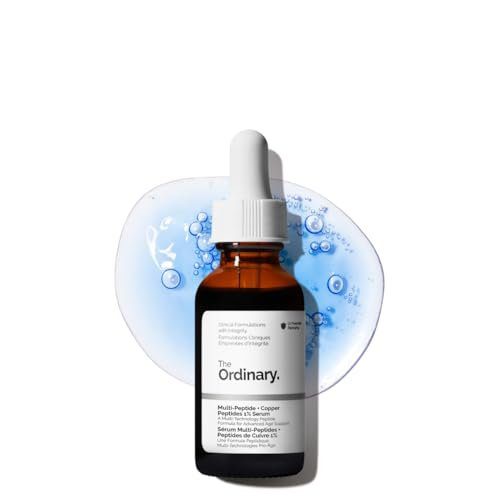
The Ordinary's copper peptide serum delivers tripeptide-1 copper at a functional concentration, and their Matrixyl 10% + HA puts palmitoyl pentapeptide-4 within the efficacy range cited in formulation literature. Both are among the most affordable entry points for each ingredient class.
FAQ
Is GHK-Cu or Matrixyl better for wrinkles?
The only direct comparison trial showed GHK-Cu reducing wrinkle volume 31.6% more than Matrixyl 3000 over 8 weeks using an encapsulated delivery system. That is meaningful data from a single trial — not enough replication to declare a clear winner, but it points to GHK-Cu's advantage when delivery is optimized.
Can I use both peptides in the same routine?
Yes. Matrixyl in a daytime moisturizer and GHK-Cu in a nighttime serum is the cleanest arrangement. Keep GHK-Cu away from vitamin C at any step; there is no such restriction for Matrixyl.
Do these peptides work for sensitive skin?
Matrixyl has a strong tolerability record and suits most sensitive skin types. GHK-Cu is generally well-tolerated but benefits from a staged introduction, particularly if you are already using vitamin C or strong exfoliants that require separation.
Are oral or injectable versions available?
Some injectable copper and signal peptide preparations exist in research contexts. Oral and injectable forms sold outside licensed medical channels are not FDA-approved for therapeutic use. This article addresses topical use only — consult a physician before considering any injected or oral peptide.
Does Matrixyl 3000 differ from the original Matrixyl?
Matrixyl 3000 is a Sederma blend of palmitoyl tripeptide-1 and palmitoyl tetrapeptide-7 — different from original Matrixyl (palmitoyl pentapeptide-4). Check INCI lists, as the terms are used interchangeably in product marketing.
Will either peptide interfere with retinol?
Neither has a known pharmacological interaction with retinol or retinoids. Retinoids and GHK-Cu are both best applied PM; sensitive skin may benefit from alternating nights. Matrixyl and retinol can be layered without known concerns.
As an Amazon Associate, I earn from qualifying purchases. Product recommendations are based on real reviews and independent research.
Tracking a protocol like this? Our companion app, StackMyMed, lets you log doses, schedule them, and check interactions across everything you take — alongside, never instead of, your clinician’s guidance.
Conclusion
GHK-Cu and Matrixyl are not interchangeable. GHK-Cu operates at the gene-expression level through copper-mediated signaling, with documented effects on collagen, elastin, wound repair, and metalloproteinase regulation. Matrixyl works as a matrikine fragment that signals collagen synthesis through integrin and ECM receptor pathways. The evidence favors GHK-Cu slightly in the only direct comparison trial, though the enhanced delivery technology used limits how far you can extrapolate to standard consumer formulations.
GHK-Cu is the more demanding ingredient to use correctly — it requires separation from vitamin C, attention to pH, and ideally an encapsulated delivery vehicle. Matrixyl is more forgiving and a reliable collagen-signaling active for people who want something effective with fewer formulation constraints.
For most people, the answer is not either-or. Keep vitamin C in the morning, GHK-Cu serum in the evening, and slot Matrixyl wherever the texture of your preferred product fits best.
This article is for informational purposes and not medical advice. Peptides, especially those marketed for therapeutic use, can interact with medications and health conditions. Consult a licensed physician before starting any supplement, particularly if you are pregnant, nursing, taking prescription medications, or managing a chronic condition.
As an Amazon Associate, I earn from qualifying purchases. Product recommendations are based on real reviews and independent research.
