
If you have type 1 diabetes, or you love someone who does, you have probably been told to keep a glucagon kit somewhere accessible. Maybe it is in a kitchen drawer, a bedside table, a school nurse's cabinet. What you may be less clear on is what glucagon actually is, how it works, which of the four FDA-approved products is easiest to use in a crisis, and exactly when you should reach for it versus dialing 911 first. Those are useful questions and the answers are not complicated — but they require some precision, because the stakes of severe hypoglycemia are real. Verdict: glucagon is a 29-amino-acid peptide hormone and a prescription-only, FDA-approved emergency medicine that can reverse severe hypoglycemia in someone who cannot swallow; the newer non-reconstitution formulations (Baqsimi, Gvoke, Zegalogue) are strongly preferred over traditional powder kits because they are faster to administer and far less likely to be misused under stress.
Summary / Quick Answer
Glucagon is a counter-regulatory hormone produced by alpha cells in the pancreas. When injected or inhaled during a severe hypoglycemic episode, it signals the liver to release stored glucose into the bloodstream, rapidly raising blood sugar. Four distinct products are currently FDA-approved for emergency use: traditional lyophilized powder kits (multiple manufacturers), Baqsimi intranasal powder (FDA-approved July 2019), Gvoke prefilled autoinjector (FDA-approved September 2019), and Zegalogue dasiglucagon autoinjector (FDA-approved March 2021).
- Best for: People with insulin-dependent diabetes and their household caregivers — this is an emergency medicine, not a routine therapy.
- Not ideal for: Mild or moderate hypoglycemia where the person can still swallow; mild lows should be treated first with 15 grams of fast-acting carbohydrate by mouth.
- What to look for: A current prescription, an unexpired device, and a trained caregiver. Without all three, the medicine is far less likely to reach the patient on time.
- Decision shortcut: The Endocrine Society (PMID 36477488) makes a strong recommendation favoring glucagon preparations that do not require reconstitution over those that do. If your prescriber still writes for a powder kit, ask whether Baqsimi, Gvoke, or Zegalogue is covered by your plan.
What Glucagon Is: A 29-Amino-Acid Pancreatic Peptide
Glucagon was first described in 1923 by Charles Kimball and John Murlin, who noticed that crude pancreatic extracts caused a brief rise in blood sugar before insulin's glucose-lowering effect took hold (PMID 21824250). Murlin named the factor "glucagon" — a contraction of glucose agonist — though glucagon's full hormonal status was not confirmed until the 1950s, when its amino acid sequence was worked out and a sensitive radioimmunoassay was developed by Roger Unger in 1959.
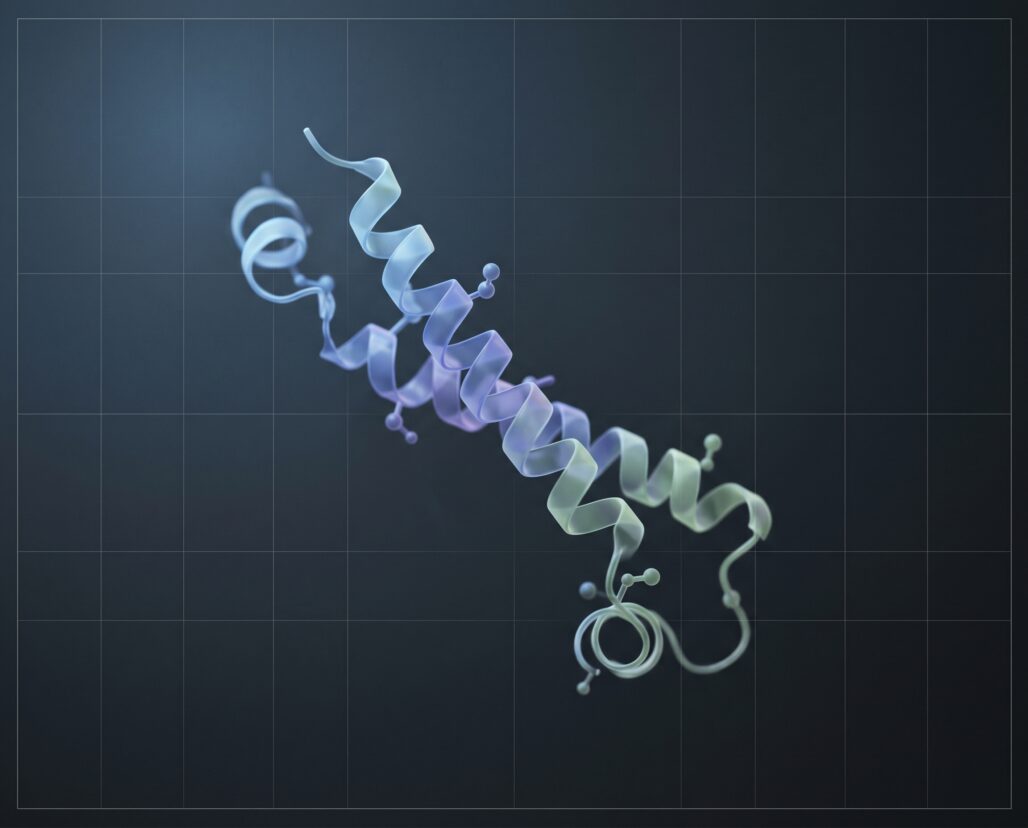
The modern picture: glucagon is a single-chain, 29-amino-acid peptide hormone secreted by alpha cells in the islets of Langerhans (PMID 37367959). Its structure belongs to the glucagon/secretin superfamily alongside GLP-1 and GIP — which is why GLP-1 receptor agonists like semaglutide appear in conversations about glucagon biology. For the full picture of how insulin and glucagon act as opposing forces, see insulin explained.
Glucagon acts almost exclusively on the liver. Liver cells express glucagon receptors densely; muscle and fat tissue do not, which is why glucagon cannot pull glucose out of muscle stores the way insulin pushes glucose in — a key limitation during emergencies.
How Glucagon Works: The Counter-Regulatory Hormone
Beta cells secrete insulin when blood glucose rises; alpha cells secrete glucagon when it falls, signaling the liver to break down stored glycogen (glycogenolysis) and synthesize new glucose from amino acids and lactate (gluconeogenesis). Together these pathways push glucose back into the bloodstream within minutes.
Think of the liver as a warehouse with fast-release stock and a production floor. Glucagon activates both in parallel. The result is a rapid glucose rise that reverses hypoglycemia in most patients within 10 to 15 minutes.
Two clinical caveats matter. First, glucagon only works if the liver has glycogen stored. A person who has been fasting, exercising intensely, or drinking heavily may have depleted hepatic glycogen, blunting the response. Second, pharmacological doses are far higher than physiological pulses — they trigger a robust glucose release but often cause nausea and vomiting, which caregivers should anticipate.
In people with type 1 diabetes, the counter-regulatory system is already impaired. Alpha-cell glucagon secretion in response to falling blood glucose is blunted by the loss of normal intra-islet insulin signaling — one reason T1D carries higher severe hypoglycemia risk, and why a glucagon prescription is especially important for that population.
The Four FDA-Approved Products
Traditional Lyophilized Powder Kit (Multiple Manufacturers)
The original glucagon kit — lyophilized glucagon powder in a vial, supplied with a syringe of diluent — has been available since the 1960s. Multiple manufacturers now market it, including Fresenius Kabi, Amphastar, Cipla, and Mylan. Dosing is 1 mg for adults; 0.5 mg for children under 25 kg.
The fundamental problem is the reconstitution process itself. Under the stress of watching someone convulse or go limp, a caregiver must open the kit, draw up diluent, inject it into the vial, swirl without shaking, draw up the reconstituted solution, and inject it — a multi-step sequence that takes training and composure. Studies have documented high error rates in untrained bystanders. That is not a hypothetical concern; it is the core reason the Endocrine Society guideline cited above explicitly recommends against powder kits as first choice.
Baqsimi (Glucagon) 3 mg Intranasal Powder — FDA-Approved July 2019
Baqsimi was developed by Eli Lilly and is now marketed by Amphastar Pharmaceuticals. It is the first and only intranasal glucagon formulation approved in the United States. The entire dose — 3 mg of glucagon in a pre-loaded nasal device — is delivered by inserting the tip into one nostril and pressing the plunger until the green indicator line disappears. No inhalation is required; the powder is absorbed through the nasal mucosa passively.
Approved for ages 1 year and older, Baqsimi is indicated for severe hypoglycemia in people with diabetes (NDA 210134). The prescribing information, available at DailyMed, specifies: administer one 3 mg actuation; if no response after 15 minutes, administer a second dose from a new device while waiting for emergency services. Emergency services must be called immediately after the first dose.
Storage is straightforward: up to 86 degrees F (30 degrees C) in the sealed shrink-wrapped tube. Do not open the packaging until use, because humidity degrades the powder. Contraindications are the same as for all glucagon products: pheochromocytoma (risk of severe hypertension), insulinoma (risk of hypoglycemia rebound), and known hypersensitivity to glucagon.
The single-step delivery is Baqsimi's main advantage. A caregiver who has never practiced can insert and press with reasonable confidence under stress.
Gvoke (Glucagon) Prefilled Autoinjector and Pre-filled Syringe — FDA-Approved September 2019
Gvoke, developed by Xeris Pharmaceuticals (now Xeris Biopharma), solved a different problem: traditional glucagon powder is unstable in solution, which is why it must be lyophilized and reconstituted. Xeris developed a non-aqueous, liquid-stable glucagon formulation — essentially dissolving glucagon in a solvent that prevents aggregation and degradation — allowing the drug to be pre-filled into a pen-style autoinjector or syringe and stored without refrigeration at room temperature (68 to 77 degrees F) (PMID 31660016).
Gvoke is available as the HypoPen autoinjector (0.5 mg for pediatric patients under 45 kg; 1 mg for adults and pediatric patients 45 kg or over) and as a pre-filled syringe (PFS) in the same doses. It is approved for ages 2 years and older. Subcutaneous injection goes into the lower abdomen, outer thigh, or outer upper arm. The administration sequence is: remove from foil pouch, pull off the red cap, press firmly against the skin and hold for five seconds until a click sounds. Two steps, once trained.
The prescribing information from DailyMed emphasizes calling emergency services immediately after administration and repeating the dose at 15 minutes if no response.
Zegalogue (Dasiglucagon) — FDA-Approved March 2021
Zegalogue, developed by Zealand Pharma, takes yet another approach. Dasiglucagon is not native glucagon but a glucagon analogue — a molecule with the same receptor-binding activity but modified at several amino acid positions to improve aqueous stability (PMID 34047955). The modification allows a ready-to-use liquid formulation without the non-aqueous solvent system Gvoke requires.
The approved dose is 0.6 mg subcutaneous injection for adults and pediatric patients aged 6 years and older. Zegalogue is available as a single-dose autoinjector or pre-filled syringe. Storage is 36 to 46 degrees F (refrigerated) but can be kept at room temperature up to 77 degrees F for up to 18 months — practically equivalent to room-temperature stability for most households.
Zegalogue's prescribing information is available at DailyMed. Contraindications parallel the other products: pheochromocytoma, insulinoma, known hypersensitivity.
All four products are prescription-only medicines in the United States. None can be purchased over the counter.
When to Use Glucagon vs. When to Call 911 First
This is where the guidance needs to be explicit, because getting the sequence wrong costs time that matters.
Call 911 immediately if:
- The person is unconscious AND not breathing, or is in respiratory distress
- The person is having a seizure and you cannot safely administer anything
- You are alone with no glucagon available
- You have administered glucagon and there is no response after 15 minutes and a second dose
Glucagon-first if:
- The person is unconscious but breathing normally (this is the classic severe hypoglycemia scenario)
- The person is conscious but unable to swallow safely (altered mental status, seizure risk)
- Glucagon is immediately available and you or another caregiver knows how to use it
The correct sequence in the glucagon-first scenario: administer glucagon, call 911, place the person in the recovery position (on their side), do not give anything by mouth until the person is fully conscious and can swallow, and offer a carbohydrate snack once they recover to prevent the blood sugar from falling again.
Note on pregnancy: glucagon is not contraindicated for emergency use during pregnancy. Severe untreated hypoglycemia poses far greater risk to mother and fetus than the medicine itself.
Practical Considerations: Storage, Training, and Who Needs a Kit
Who Should Have a Prescription
The ADA Standards of Care (PMID 39651981) and the Endocrine Society (PMID 36477488) both recommend glucagon availability for anyone at significant risk for severe hypoglycemia — at minimum, anyone with type 1 diabetes on insulin, anyone with T2D on intensive insulin therapy, and anyone with a prior severe episode regardless of diabetes type.
Despite this, glucagon prescriptions remain dramatically underprescribed. One emergency department study found only 3% of patients presenting with hypoglycemia had a prescription, and only 12% had received formal diabetes education in the prior year. That gap is not explained by clinical guidelines — it is a failure of implementation.
Training Matters More Than Product Choice
Here is something device marketing underplays: the most important variable in a glucagon emergency is not which product is in the drawer — it is whether the person reaching for it has practiced at least once in a calm setting. All three newer formulations are simpler than powder kits, but "simpler" is not the same as "no training needed." Baqsimi requires inserting the tip correctly into the nostril. Gvoke and Zegalogue require pulling a cap and pressing firmly for a full five-second count.
Actionable takeaway: Ask your endocrinologist or diabetes educator to walk through glucagon administration at your next visit — or request a training device if one is available from the manufacturer. Most device manufacturers offer training demo units. Do not wait until the emergency to learn how the device works.
Actionable takeaway: Store your glucagon kit where your household members know to find it, not where you find it convenient to put it. A kit that lives in a locked medicine cabinet is functionally unavailable to a caregiver in an emergency.
Storage and Expiration
Baqsimi: room temperature up to 86 degrees F; check the expiration on the tube annually. Gvoke HypoPen/PFS: room temperature 68 to 77 degrees F; check expiration; discard after use. Zegalogue: refrigerator preferred, but stable at room temperature up to 77 degrees F for 18 months. Lyophilized powder kits: room temperature; check expiration and do not use if vial or diluent appears compromised.
Set a phone reminder to check expiration every six months. An expired glucagon kit is not a reliable safety net.
Insurance and Access
All four products are prescription-only and often covered under the pharmacy benefit, though formulary placement varies. If a powder kit is the only covered option, ask your prescriber for a formulary exception citing the Endocrine Society's strong recommendation against reconstitution-required products. Most insurers have an exception pathway.
FAQ
Can glucagon be used in someone who does not have diabetes? It is approved specifically for severe hypoglycemia in people with diabetes. Off-label hospital uses exist (such as beta-blocker overdose), but for home emergencies it is a diabetes medicine.
What if the person vomits after receiving glucagon? Nausea and vomiting are common. Keep the person on their side (recovery position) to prevent aspiration. Vomiting does not mean the glucagon failed — the drug is absorbed and acting on the liver before vomiting begins.
Is Baqsimi effective if the person has nasal congestion? Meaningful absorption occurs even with mild congestion, but severe nasal blockage could reduce efficacy. An injectable option is more reliable in that scenario.
Can I use glucagon for a mild low blood sugar? No. Mild to moderate hypoglycemia — where the person is conscious and can swallow — should be treated with 15 grams of fast-acting carbohydrate by mouth (the 15-15 rule). Glucagon is reserved for severe episodes where oral treatment is not safe. Using it unnecessarily depletes hepatic glycogen reserves.
Do I still need to call 911 if glucagon works? Yes. Most emergency protocols recommend calling 911 immediately after administering glucagon regardless of initial response, because the response may not be sustained, secondary hypoglycemia can occur, and a provider should review the event and diabetes management plan.
Tracking a protocol like this? Our companion app, StackMyMed, lets you log doses, schedule them, and check interactions across everything you take — alongside, never instead of, your clinician’s guidance.
Conclusion: The Bottom Line on Glucagon
Glucagon is one of the few medicines where the gap between what is available and what patients actually have is measured in lives. The chemistry is old — a 29-amino-acid hormone isolated a century ago — but the formulation engineering of 2019 to 2021 removed the biggest practical barrier to emergency use: the reconstitution step that caused so many powder kits to be fumbled under the worst possible pressure.
The remaining barriers are simpler: prescribers need to prescribe, caregivers need to train, and devices need to stay current and somewhere people can actually find them. None of that requires new science. It requires follow-through.
Next steps:
- Review your current prescription: If you or a family member with diabetes does not have a current, unexpired glucagon prescription, raise it at the next clinical visit.
- Check the formulation: If you have a powder kit, ask whether Baqsimi, Gvoke, or Zegalogue is covered under your plan or available via formulary exception.
- Train your household: Do not assume anyone knows what to do. Practice with a trainer device or a step-through walkthrough with your diabetes care team.
- Read the related articles: For context on how insulin and glucagon form the two sides of glucose regulation, see insulin explained. For a broader look at which peptide drugs have FDA approval and why that distinction matters, see FDA-approved peptides or start with what are peptides.
This article is for informational purposes and not medical advice. Peptides, especially those marketed for therapeutic use, can interact with medications and health conditions. Consult a licensed physician before starting any supplement, particularly if you are pregnant, nursing, taking prescription medications, or managing a chronic condition.
