
If you are searching for the best rhodiola supplement, the short answer is: standardization to 3% rosavins and 1% salidrosides is the only specification that matters, and most products on Amazon do not meet it. This article ranks five picks that come closest to the SHR-5 extract used in the gold-standard RCTs, explains why the biphasic dosing curve makes many high-dose products wasteful, and names the categories of rhodiola products worth skipping entirely. You will also find the drug-interaction data you need before stacking rhodiola with any prescription medication.
Affiliate disclosure: this article contains affiliate links. As an Amazon Associate, UsefulVitamins.com earns from qualifying purchases at no extra cost to you.
Summary / Quick Answer: which rhodiola supplement should you buy in 2026?
For most people with stress-related fatigue, a standardized rhodiola extract at 100-200mg of active extract (yielding 3-6mg rosavins) taken in the morning is the most evidence-aligned starting point.
- Best for: Adults experiencing burnout-type fatigue linked to occupational or chronic life stress; people who want an adaptogen with an energizing rather than sedating profile; readers who have already ruled out sleep deprivation and excessive caffeine as root causes
- Not ideal for: People on SSRIs, MAOIs, antidepressants, or anticoagulants; evening supplementers (rhodiola is stimulating and can interfere with sleep); anyone managing anxiety without a stress-fatigue component
- What to check before buying: The label must show "3% rosavins" AND "1% salidroside" as standardization markers. A product that says only "rhodiola rosea extract" or "rhodiola root powder" gives you no useful potency information.
- Decision shortcut: If the label does not show both rosavin and salidroside percentages, put it back. That is the only buying rule that prevents you from paying supplement prices for ground-up root powder.
What you'll find in this guide
- Why the SHR-5 standardization is the reference standard
- Biphasic dosing: why more rhodiola is not always more useful
- 5 product picks ranked by standardization quality
- 3 categories of rhodiola to skip
- Side effects and drug interactions
- Frequently asked questions
Why the SHR-5 standardization is the reference standard {#shr5-standard}
The foundational evidence for rhodiola's effect on stress-related fatigue runs through a single extract: SHR-5, produced by the Swedish Herbal Institute and standardized to 3% rosavins and 1% salidroside. When a study claims rhodiola "works," that claim is almost always grounded in research that used SHR-5 specifically, not generic rhodiola root.
The most rigorous published trial is the Olsson, von Schele, and Panossian 2009 Phase III RCT (Olsson et al., n=60). Participants were randomized to 576mg of SHR-5 daily or placebo for 28 days. The treatment group showed statistically significant improvement on Pines' Burnout Scale, the Conners' Continuous Performance Test (attention and concentration indices), and cortisol response to awakening stress. No serious adverse events were reported. The limitations are real: sample size is modest (n=60) and the duration was 28 days. But the outcome measures go beyond self-report; they include objective cognitive performance testing and cortisol sampling.
A 2003 RCT (Shevtsov et al., n=161) tested two doses of SHR-5 as a single-dose intervention in military cadets under stress. Both doses produced significantly higher anti-fatigue index scores than placebo (p<0.001). The lower dose performed as well as the higher dose on most outcome measures, establishing the earliest signal for biphasic dosing behavior.
The NCCIH rhodiola fact sheet summarizes the current human evidence and notes that most published trials are methodologically limited, but that fatigue-related outcomes in stressed adults are the best-replicated finding.
Actionable takeaway: A product that does not replicate the SHR-5 standardization (3% rosavins, 1% salidroside) cannot reasonably claim those trial results apply to it. The standardization label is not a marketing feature; it is the only way to know whether you are getting pharmacologically relevant concentrations of the active compounds.
Biphasic dosing: why more rhodiola is not always more useful {#biphasic-dosing}
Rhodiola has a well-documented biphasic dose-response curve. This means higher doses do not simply produce more effect; at doses above a threshold, efficacy can plateau or decrease. This is an established pharmacological pattern for several adaptogens, but rhodiola's is particularly well-evidenced.
The Shevtsov 2003 data showed no significant difference between the low and high single-dose groups on the primary anti-fatigue index, with psychometric test performance trending toward the lower dose. A separate review published in 2010 (Panossian and Wikman, Pharmaceuticals, PMID 27713248 for context) noted that rhodiola's stimulating effects at low doses shift toward sedative or blunted effects at high doses in animal models, consistent with the human dose-signal.
Think of biphasic dosing like a volume control that goes fuzzy past a certain point. Below the threshold, turning it up improves signal. Above the threshold, you get noise. More supplement is not always more useful — some adaptogens have biphasic dosing where the higher dose loses effect.
The evidence-aligned approach is to look for a serving that delivers 100-200mg of SHR-5-equivalent extract, which for a 3% rosavin product means 3-6mg of rosavins. A 500mg product dosed at a fractional serving is usable. A 500mg product with instructions to take two capsules per serving is pushing past the effective range.
5 rhodiola supplement picks ranked by standardization quality {#product-picks}
Picks below are tiered by how closely they replicate the SHR-5 standardization benchmark. No fabricated ratings or ASINs appear here; cards are populated by the content pipeline via Amazon PA-API lookup.
Tier 1: SHR-5 standardized (or closest replication)
Our pick for most buyers when dosed correctly: Now Foods Rhodiola Rosea — because it discloses both 3% rosavins and 1% salidroside on the label, meeting the SHR-5 standardization specification that the Olsson 2009 RCT used. At 500mg per capsule, the effective serving is 100-200mg (split dose), not the full capsule. One bottle provides a long run at the evidence-aligned dose range.
Skip if: you need a smaller baseline capsule to dose precisely without cutting capsules.
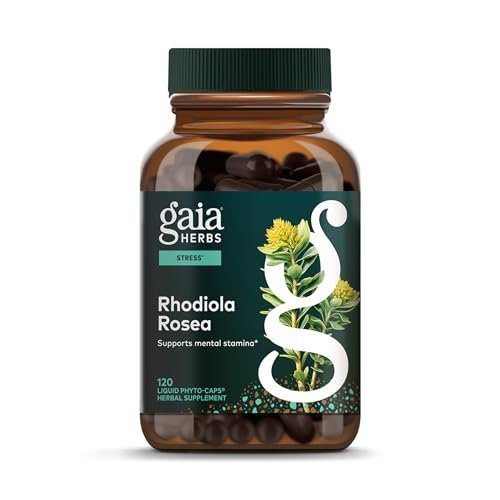
Premium choice for quality-transparency buyers: Gaia Herbs Rhodiola Rosea — because Gaia publishes third-party testing results via their HerbPrint QR code system, giving you lot-specific verification of rosavin content. Their extract is standardized and the company has a documented supply-chain transparency program, which matters when HPLC verification of rosavin content is the thing you are actually paying for.
Skip if: you are price-sensitive; Gaia carries a significant per-serving cost premium over comparable standardized options.
Tier 2: 3% rosavin standardized (acceptable middle tier)
Best for practitioners and clinically-oriented buyers: Pure Encapsulations Rhodiola — because Pure Encapsulations discloses standardization and has a long track record of clean-label manufacturing. The formulation is free of common fillers, which matters if you are already managing a complex supplement stack or have sensitivities to excipients. Dosing is conservative and requires attention to serving size for SHR-5-equivalent ranges.
Skip if: you want a lower per-unit cost or prefer capsules with adjustable dose flexibility.
Best for athletes and performance-focused buyers: Thorne Rhodiola — because Thorne maintains NSF Certified for Sport manufacturing and is one of the few supplement companies with consistent third-party batch testing. For anyone subject to drug testing or who wants independent verification beyond label claims, NSF certification is meaningful. Thorne's standardization disclosure should be verified on the current label before purchase, as formulations change.
Skip if: you are not in an NSF-relevant context; the certification premium is not worth it for general consumers.
Tier 3: review with caution (standardization disclosure varies by lot)
Solgar Rhodiola Rosea: acceptable if current lot shows standardization, but verify the label. Solgar has historically sold both standardized and non-standardized rhodiola products under similar packaging. Check the current lot's label carefully for rosavin percentage disclosure. An adaptogen brand can have impressive marketing and still miss third-party testing for the active marker compound; Solgar's rhodiola line has been inconsistent on this point across different product runs.
Skip if: the label on the specific bottle you are buying does not show both rosavin and salidroside percentages. That is the clearest signal to move to a Tier 1 or Tier 2 option.
3 categories of rhodiola to skip {#categories-to-skip}
Not brand names — categories. These patterns appear across dozens of SKUs and are reliable signals to walk away.
1. "Rhodiola root powder" (no extract, no standardization)
Ground root powder is not the same as a standardized extract. The rosavin concentration in whole dried root varies substantially depending on growing region, harvest timing, and processing. A product labeled "Rhodiola rosea root powder, 500mg" has not gone through the extraction and concentration process that produces a 3% rosavin content. The real question is not whether rhodiola works in lab conditions, but whether the human dose proves out — and root powder does not give you the dose that was used in the trials.
2. Megadose proprietary blends
Products that list rhodiola as part of a "proprietary adaptogen blend" at 1,000mg+ cannot tell you how much rhodiola is actually present, let alone what the rosavin concentration is. Proprietary blends protect manufacturer margins, not your dose. The per-ingredient amount is invisible; you are paying for marketing, not pharmacology.
3. "Extract" without a standardization percentage
"Rhodiola rosea extract" on a label sounds meaningful. It is not, without a percentage. Extraction can mean anything from a 2:1 concentration (marginally above root powder) to a 20:1 high-potency extract — but none of that matters if the rosavin content is not disclosed. Standardized to X% rosavins is the only spec that connects the product to the SHR-5 trial data. "Extract" without a percentage is not better than root powder; it is just more expensive root powder with a more credible-sounding label.
Side effects and drug interactions {#side-effects-interactions}
Reported adverse effects in clinical trials
In the Olsson 2009 RCT, the SHR-5 group reported no serious adverse events over 28 days at 576mg daily. Mild reported effects included dizziness and dry mouth in a subset of participants. The 2003 Shevtsov trial also reported no significant adverse events at single-dose testing. However, trial durations were short (4 weeks or less), so longer-term adverse effect data are limited.
The most commonly reported practical concern in longer-term use is insomnia or sleep disruption, particularly when rhodiola is taken in the afternoon or evening. Rhodiola has stimulating properties — the mechanism is partly via dopaminergic and serotonergic pathways — and late dosing frequently disrupts sleep. Taking it before noon is the standard guidance in the RCT literature.
Some users report agitation or mild anxiety, particularly at higher doses. This is consistent with the biphasic dosing pattern: doses above the effective range may produce stimulant-adjacent effects rather than adaptogenic ones.
Drug interactions: read this section before stacking rhodiola
Per Memorial Sloan Kettering's integrative herbs database, the interaction profile for rhodiola includes several clinically meaningful categories:
Antidepressants, SSRIs, and MAOIs: Rhodiola has been studied for mild antidepressant properties, possibly via serotonin and dopamine reuptake inhibition. Case reports have described serotonergic effects when high-dose rhodiola is combined with SSRIs. This combination should not be pursued without prescriber oversight. MAOIs are an especially high-risk combination given the additive serotonergic potential.
Stimulants: Rhodiola's stimulating properties may have additive effects when combined with caffeine, prescription stimulants (amphetamine-based ADHD medications), or other stimulant compounds. The additive stimulant load can push past the effective window of the biphasic curve and produce agitation or cardiovascular effects in sensitive individuals.
Anticoagulants (warfarin, heparin, newer blood thinners): Rhodiola may affect platelet aggregation. The NCCIH rhodiola fact sheet flags this interaction; patients on blood thinners should consult their prescriber before using rhodiola.
CYP3A4 substrates: In vitro studies suggest rhodiola may inhibit CYP3A4, an enzyme responsible for metabolizing a wide range of drugs including certain statins, immunosuppressants, some HIV medications, and several cardiac drugs. This does not confirm a clinically meaningful interaction at normal doses, but it is a flag worth raising with a prescriber if you take medications that are CYP3A4-sensitive.
Pregnancy and breastfeeding: No adequate human safety data exist for rhodiola during pregnancy or lactation. The general guidance from NCCIH is to avoid use during pregnancy and breastfeeding.
Actionable takeaway: If you are on any antidepressant, anticoagulant, stimulant medication, or immunosuppressant, the drug-interaction profile makes a prescriber conversation non-negotiable before adding rhodiola.
Dosing context: what the clinical trials actually used
This section frames the doses used in published RCTs. It is not a prescription.
In the Olsson 2009 Phase III RCT, participants received 576mg of SHR-5 daily for 28 days. In the Shevtsov 2003 single-dose trial, the lower dose group received 370mg and the higher dose group received 555mg. Both produced anti-fatigue effects; the lower dose performed comparably. A 2012 open-label pilot (Darbinyan et al., n=56) used 340mg daily over 10 weeks in physicians on night-call shifts and found significant fatigue-related cognitive improvement, though the open-label design limits the strength of that finding.
Most consumer products are dosed at 500mg per capsule. At the SHR-5-aligned effective range of 100-200mg, a 500mg product is best taken at a partial serving size. Most fatigue trials saw effects within 4 weeks; no published human RCT has tested rhodiola beyond 12 weeks as of 2026.
Frequently asked questions {#faq}
What does SHR-5 standardization actually mean?
SHR-5 is a patented rhodiola extract produced by the Swedish Herbal Institute, standardized to 3% rosavins and 1% salidroside. Most published RCTs on rhodiola fatigue and burnout used SHR-5 specifically. Products that replicate the 3%/1% standardization are the closest available approximation to the trial extract; products that do not disclose standardization cannot claim those trial results.
Is 500mg of rhodiola too much?
Possibly, depending on your goal. The biphasic dosing data from Shevtsov 2003 suggest that lower doses (100-200mg of SHR-5-equivalent extract) perform as well as higher doses on anti-fatigue outcomes. A 500mg capsule taken at a fractional serving is often more appropriate than the full label dose. If you experience agitation, insomnia, or jitteriness at full dose, reducing to 100-150mg is consistent with what the research supports.
Can I take rhodiola with ashwagandha?
Rhodiola is energizing and morning-appropriate; ashwagandha is sedating and often taken at night. The two have different evidence bases for different stress profiles. For a deeper comparison, see our guide on choosing between ashwagandha and rhodiola for stress.
How long before rhodiola works?
The Olsson 2009 RCT measured significant effects at 28 days. Objective cognitive performance data typically show the strongest effects at 4 weeks. If you see no change after 6 weeks of consistent morning dosing at an SHR-5-aligned dose, rhodiola likely is not the right tool for your particular fatigue profile.
Does rhodiola help with depression?
A 2015 pilot RCT (Mao et al., n=57) compared rhodiola to sertraline in adults with mild-to-moderate depression. Sertraline showed greater symptom reduction; rhodiola produced fewer adverse effects. This small pilot does not establish rhodiola as a first-line intervention for depression; do not substitute an adaptogen for a prescribed antidepressant without medical oversight.
What is the difference between rhodiola root powder and rhodiola extract?
Whole root powder is dried ground plant material with variable active compound content. Standardized extract concentrates the active compounds to a specified percentage. The trials used standardized extract; root powder cannot guarantee pharmacologically relevant rosavin concentrations.
Taking this alongside other products? StackMyMed (our companion app) logs your full stack, finds the optimal timing for each dose, and flags interactions, so you are not tracking it all by hand.
Conclusion: the bottom line on rhodiola supplements
The evidence for rhodiola's effect on stress-related fatigue is real, but it is specifically tied to the SHR-5 extract standardized to 3% rosavins and 1% salidroside. Products that do not meet that specification cannot borrow the trial results. Most products on the market do not meet it.
The biphasic dosing pattern means more is not better. A 500mg capsule taken at 100-200mg equivalent is often better than taking the full label dose.
The drug-interaction profile with SSRIs, MAOIs, anticoagulants, and stimulants makes a prescriber conversation mandatory if you are on any of those medications.
Next steps:
- Check the label on any product you are considering for both "3% rosavins" and "1% salidroside" standardization.
- Start at a lower dose (100-150mg of SHR-5-equivalent extract) and take it before noon.
- For the complete picture of how rhodiola fits into the adaptogen landscape, see Rhodiola Rosea: The Honest Guide to the Russian Adaptogen for Fatigue and Stress.
As an Amazon Associate, I earn from qualifying purchases. Product recommendations are based on real reviews and independent research.
Related reading
- Rhodiola Rosea: The Honest Guide to the Russian Adaptogen for Fatigue and Stress
- Best Ashwagandha Supplement in 2026: KSM-66 vs Sensoril and What the RCTs Actually Show
- Best Lion's Mane Supplement in 2026: Fruiting Body vs Mycelium and the Evidence That Separates Them
This article is for informational purposes and not medical advice. Herbal adaptogens — even traditional ones — can interact with thyroid medication, antidepressants, anticoagulants, immunosuppressants, blood-pressure drugs, and more. Consult a licensed physician before starting any adaptogen, particularly if you are pregnant, nursing, taking prescription medications, or managing a chronic condition.
As an Amazon Associate, I earn from qualifying purchases. Product recommendations are based on real reviews and independent research.
