
If you have been searching for an adaptogen that actually has rigorous human trial data behind its fatigue claims, rhodiola rosea is the short answer — and it is genuinely one of the best-supported options, with the strongest evidence concentrated specifically in chronic stress-related fatigue, not generic "energy." This guide will break down what the SHR-5 RCTs actually measured, why biphasic dosing makes higher-dose products a potential waste of money, and exactly which drug interactions make rhodiola a bad stack partner for several common prescriptions. You will also get an honest read on the Soviet-era research history — real science, but mostly outside PubMed — and what that means for how much weight you can give it.
Affiliate disclosure: this article contains affiliate links. As an Amazon Associate, UsefulVitamins.com earns from qualifying purchases at no extra cost to you.
Summary / Quick Answer: Is rhodiola rosea worth taking for fatigue and stress?
Rhodiola is worth considering for chronic stress-related fatigue, with the caveat that the evidence base is smaller than ashwagandha's and still carries quality limitations.
- Best for: Adults experiencing burnout-type fatigue linked to occupational or life stress; people who want an adaptogen with morning-appropriate stimulating properties (it is energizing, not sedating)
- Not ideal for: Situational or acute stress; people on SSRIs, antidepressants, MAOIs, or anticoagulants; anyone sensitive to stimulant-like effects; evening supplementers (can cause insomnia)
- What to check before buying: Standardization to 3% rosavins and 1% salidrosides (the SHR-5 extract used in trials); third-party testing; labeling that distinguishes root extract from root powder
- Decision shortcut: If your fatigue is stress-driven and you want an adaptogen that leans energizing rather than calming, rhodiola is a stronger choice than ashwagandha for that specific profile. If your primary goal is sleep or cortisol management, ashwagandha has more robust data.
What you'll find in this guide
- What rhodiola rosea actually is
- The two marker compounds that matter: rosavins and salidroside
- What the human RCT evidence actually shows
- Who it fits and who should skip it
- How it was used in clinical trials (dosing context)
- Side effects and drug interactions
- Rhodiola supplements: what to look for
- Frequently asked questions
What rhodiola rosea actually is {#what-rhodiola-is}
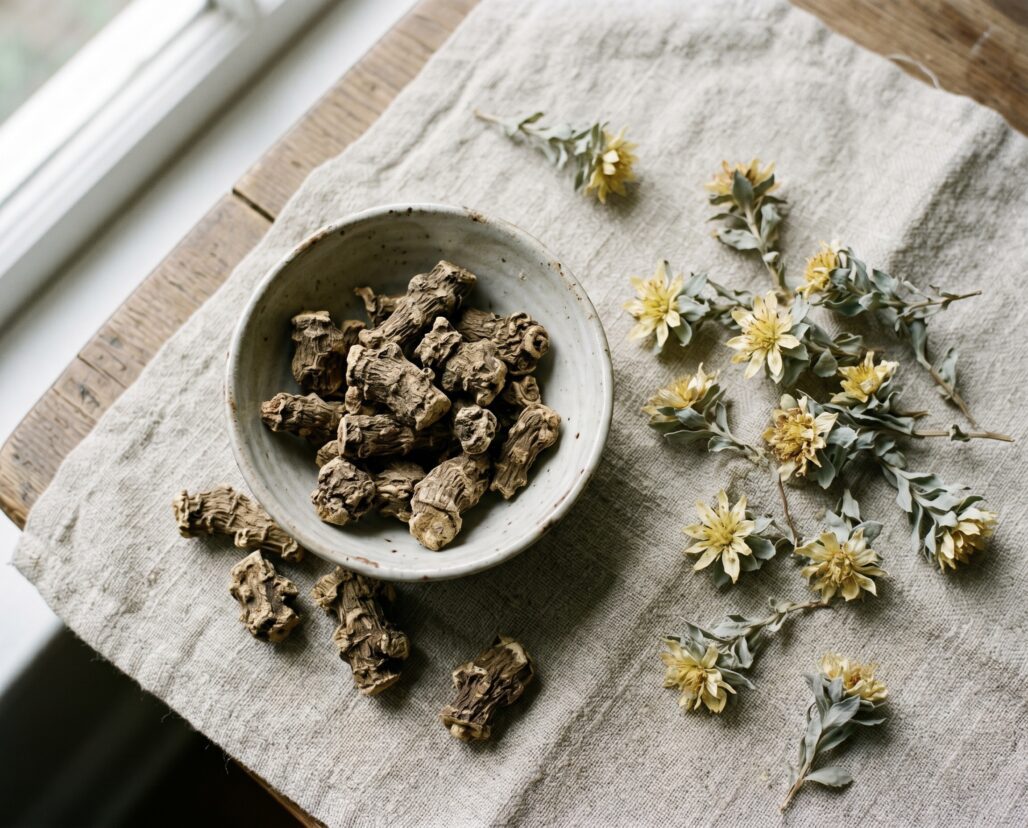
Rhodiola rosea (also called golden root or Arctic root) is a flowering plant from the family Crassulaceae, native to the cold mountainous regions of northern Europe, Siberia, and central Asia. The root and rhizome are the parts used medicinally. For context only: traditional use in Russia and Scandinavia dates back centuries, including applications in high-altitude endurance, harsh weather adaptation, and mental performance under physical hardship. Traditional use is not the same as RCT evidence, but it explains why Soviet-era scientists began systematic study of the plant in the 1960s.
The researchers who drove that Soviet research — most notably Nikolai Lazarev (who coined the term "adaptogen" in 1947) and Israel Brekhman (who extended the framework) — produced a substantial body of work on rhodiola and related plants. Most of that research is not indexed in PubMed; it was published in Russian-language journals during the Cold War and remains difficult to independently evaluate. This article leans on the published, peer-reviewed RCT literature that is verifiable.
The adaptogen classification and what it actually means
An adaptogen, by the original Brekhman-Lazarev definition, is a substance that: (1) is nontoxic at normal doses, (2) produces a nonspecific increase in resistance to stress, and (3) has a normalizing effect on physiology regardless of the direction of pathological change. Rhodiola is the adaptogen with perhaps the most direct fit to definition point (2) — the RCT data targets stress-related fatigue and burnout specifically, not general wellness.
Think of the adaptogen effect like a shock absorber. A shock absorber does not make the road smoother — it reduces the amplitude of each bump transmitted to the frame. Rhodiola does not eliminate the stressor. In clinical trials, it appears to reduce the physiological degradation of performance under sustained stress.
Active marker compounds: rosavins and salidroside {#marker-compounds}
Rhodiola root contains two primary categories of pharmacologically active compounds:
Rosavins (rosavin, rosarin, rosin) are phenylpropanoid glycosides specific to Rhodiola rosea — they do not appear in significant quantities in other Rhodiola species (like R. crenulata), which means they function as a species authentication marker. Rosavins are thought to contribute to the serotonergic and dopaminergic effects seen in depression trials.
Salidroside (also called tyrosol glucoside) is a phenylethanol glycoside present in several Rhodiola species. It has been studied for its effects on neuronal protection and stress-response pathways. Salidroside concentrations vary significantly across commercial products.
The SHR-5 extract used in the published RCTs is standardized to 3% rosavins and 1% salidroside. This is the reference standard. A product labeled simply "rhodiola root extract" with no standardization disclosure tells you nothing about whether it contains pharmacologically relevant concentrations of either compound.
Actionable takeaway: The label must say "standardized to 3% rosavins and 1% salidroside" (or the equivalent mass: for example, 500mg extract yielding 15mg rosavins and 5mg salidroside). If it doesn't, you're guessing at the dose.
What the human RCT evidence actually shows {#what-research-shows}
The research base for rhodiola is real but limited. Here is what verified, peer-reviewed human trials have found — not what Soviet archival documents or supplement marketing suggests.
The Olsson 2009 fatigue trial: the strongest evidence
The most rigorous published RCT on rhodiola for stress-related fatigue is the Olsson, von Schele, and Panossian 2009 Phase III study (Olsson et al., n=60). Participants were randomized to SHR-5 at 576mg daily (four tablets) or placebo for 28 days. The study used five outcome measures: Pines' Burnout Scale, the Conners' Continuous Performance Test (CCPT II) for attention and concentration, cortisol response to awakening stress, SF-36 quality of life, and the Montgomery-Asberg Depression Rating Scale.
The treatment group showed statistically significant improvement on Pines' burnout scale and on CCPT II indices (omissions, response time standard error, and variability) compared to placebo. Cortisol response to awakening stress also differed significantly between groups after 28 days. No serious adverse effects were reported.
This is a solid result: double-blind, placebo-controlled, Phase III designation, multi-domain measurement. The limitations are sample size (n=60 is modest for a Phase III claim) and the 28-day duration. But the outcome measures are clinically meaningful — they go beyond self-report stress scales.
Shevtsov 2003: the biphasic dosing signal
A 2003 RCT (Shevtsov et al., n=161) tested two doses of SHR-5 as a single-dose intervention in military cadets under stress. Both doses produced significantly higher anti-fatigue index (AFI) scores than placebo (AFI 1.04 vs 0.90, p<0.001). Critically, there was no significant difference between the lower and higher dose groups, and a trend in psychometric test performance favored the lower dose.
This is the clearest human-trial signal for biphasic dosing in rhodiola. The pattern — where a higher dose does not outperform a lower dose, and may perform slightly worse — has been observed in several rhodiola studies and is consistent with the pharmacology of monoamine-related adaptogens. More herb is not always more useful, and for rhodiola this is especially relevant given the interaction risk at high doses with psychiatric medications.
Edwards 2012: real-world open-label data
A 2012 open-label multicentre study (Edwards et al., n=101) used WS 1375 extract at 200mg twice daily for four weeks in subjects with life-stress symptoms. All seven measurement instruments showed clinically relevant improvements in stress symptoms, functional impairment, and disability. Improvements were apparent within three days. No serious adverse effects were reported.
The limitation is significant: this was open-label with no placebo arm. As a result, it cannot distinguish the rhodiola effect from placebo response or natural time-course of stress symptom improvement. It functions better as a safety and tolerability signal than an efficacy proof. The findings are directionally consistent with Olsson 2009, but methodologically weaker.
Darbinyan 2007: mild-to-moderate depression
A 2007 RCT (Darbinyan et al., n=89) tested SHR-5 at 340mg/day or 680mg/day versus placebo for six weeks in patients with mild-to-moderate depression. Both treatment groups showed significant improvements on the Hamilton Rating Scale for Depression and the Beck Depression Inventory compared to placebo. Specifically, overall depression, insomnia, emotional instability, and somatization improved in treated participants.
This is preliminary but important: it suggests rhodiola's mechanism touches serotonergic pathways in a clinically meaningful way, which also explains why the drug interaction profile with antidepressants is non-trivial. No serious side effects were reported in the trial, but the combination of rhodiola with prescribed antidepressants outside a clinical trial is a different risk profile.
De Bock 2004: athletic performance — acute effect only
A 2004 double-blind crossover RCT (De Bock et al., n=24/12) tested 200mg of rhodiola extract (standardized to 3% rosavin, 1% salidroside) as both a single acute dose and a four-week supplementation protocol. Acute supplementation produced a statistically significant increase in time to exhaustion (16.8 to 17.2 minutes, p<0.05) and improvements in VO2peak. The four-week protocol showed no significant effects on any measured performance variable.
The real question isn't whether rhodiola works in lab rats — it's whether the effect holds over a sustained supplementation period. For athletic performance specifically, the acute signal is there; the sustained supplementation signal is not. This limits its utility as a training supplement for most people.
The Ishaque 2012 systematic review: honest appraisal
A 2012 systematic review (Ishaque et al., PMID 22643043) covering six physical fatigue trials and five mental fatigue RCTs found that two of six physical fatigue trials and three of five mental fatigue trials showed positive results. Critically, the authors noted that "all of the included studies exhibit either a high risk of bias or have reporting flaws that hinder assessment of their true validity." This is an honest summary of where the rhodiola evidence actually sits: directionally positive, technically imperfect.
Actionable takeaway: Rhodiola has more human RCT data than most adaptogens, and the Olsson 2009 trial is genuinely well-designed. But the overall evidence tier is "moderate, preliminary" — not "established." Anyone claiming rhodiola is definitively effective for fatigue is extrapolating past the current evidence.
Who it fits and who should skip it {#who-its-for}
Strong fit
- Adults experiencing chronic stress-related fatigue lasting three months or more, particularly occupational burnout patterns (the Olsson 2009 cohort specifically recruited for "stress-related fatigue")
- People who want morning-appropriate, energizing adaptation support (as opposed to ashwagandha's more sedating, evening-oriented profile)
- Adults considering a short-term course (four to eight weeks) for a specific high-demand period: exam season, heavy work project, new business phase
- Those with mild-to-moderate depressive symptoms who are not already on prescription antidepressants (and who have medical supervision)
Skip or consult your prescriber first
- You take any SSRI, SNRI, tricyclic antidepressant, or MAOI (see Section 8 for the specific mechanism)
- You take anticoagulants such as warfarin (rhodiola inhibits CYP2C9 and can alter drug metabolism)
- You take any drug with a narrow therapeutic index metabolized by CYP3A4 (immunosuppressants, some statins, certain antifungals) — preclinical inhibition of this enzyme has been documented
- You are pregnant or breastfeeding — no adequate safety data exist for either population
- You have a history of tachyarrhythmia or cardiac conduction abnormalities
- You are looking to take it in the evening — insomnia is a documented side effect; rhodiola should be taken in the morning
Who needs to think harder
That may be appropriate for occupational fatigue, but unnecessary for situational anxiety or short-term life stress. If your stress is event-driven (a breakup, a move, a difficult month), the case for a four-week adaptogen course is weaker than lifestyle interventions. The Olsson 2009 cohort was specifically chronic, occupational stress. That is the evidence base.
How rhodiola was used in clinical trials: dosing context {#dosing-context}
The editorial template note applies here: dosing information is presented as RCT-derived context, not prescriptions.
Dose ranges across verified RCTs
In the Olsson 2009 Phase III trial, the dose was SHR-5 at 576mg daily (four tablets of 144mg each). In the Edwards 2012 open-label study, WS 1375 was given at 200mg twice daily (400mg total). In the Darbinyan 2007 depression trial, SHR-5 was tested at 340mg/day and 680mg/day. In the Shevtsov 2003 single-dose study, the lower dose (equivalent to two standard SHR-5 capsules) performed comparably to the higher dose.
The pattern across these trials is striking: lower doses in the 200–400mg range performed as well as or better than doses above 500mg in terms of subjective fatigue and mental performance. The 576mg/day in Olsson 2009 is the highest dose in any well-controlled trial showing a positive fatigue outcome.
The biphasic dosing context
Rhodiola's primary active compounds interact with monoamine neurotransmitter systems. Monoamine-modulating substances frequently show a U-shaped or inverted-U dose-response: too little does nothing, an intermediate dose produces the target effect, and a higher dose can produce tolerance, overstimulation, or — in preclinical models — paradoxical fatigue. For a reader evaluating high-dose rhodiola products (600mg, 1,000mg, or more), the clinical trial evidence does not support the assumption that more extract means more effect.
Standardization markers and what the label should say
Products used in positive RCTs were standardized to 3% rosavins and 1% salidrosides. This is the reference standard. An extract at 500mg standardized to 3% rosavins yields 15mg of rosavin-class compounds per capsule. A product labeled only "rhodiola root powder 500mg" makes no such guarantee. The standardization label is the critical quality signal, not the total milligram count.
Timing
In clinical trials, rhodiola was dosed in the morning. The Edwards 2012 study used two morning doses. Rhodiola's mechanism includes mild monoamine activity that produces alerting effects. Taking it in the evening is the most common self-reported cause of insomnia among rhodiola users. Morning-only dosing is consistent with all positive trial protocols.
Duration
Most stress and fatigue trials ran four to six weeks. The Olsson 2009 trial found meaningful effects at four weeks. Unlike ashwagandha, where effects have been documented at 60 days, rhodiola's trial data skews shorter. Standard practice in the clinical literature is four to eight weeks per course, with a washout period. No long-term safety data beyond 12 weeks exists in humans.
Actionable takeaway: The clinical trial sweet spot for rhodiola is 200–400mg/day of an SHR-5-equivalent extract (3% rosavins / 1% salidroside), taken in the morning, for four to eight weeks. Doses above 576mg/day exceed what positive trials used and lack a better-evidence justification.
Side effects and drug interactions {#side-effects-interactions}
Reported adverse effects from trials
In the published RCTs, adverse effects were generally mild and infrequent. The most commonly reported include: dizziness, headache, dry mouth, and insomnia (particularly when taken in the afternoon or evening). The Edwards 2012 study (n=101, four weeks) reported no serious adverse events. Olsson 2009 (n=60, 28 days) likewise reported no serious adverse events.
A clinically significant case report documented tachyarrhythmia (irregular heartbeat) in a 26-year-old woman who combined rhodiola with a prescription antidepressant for three days. This case, documented in Memorial Sloan Kettering's integrative herbs database, frames the antidepressant interaction as a real — not merely theoretical — concern.
Drug interactions: specific and named
Antidepressants (SSRIs, SNRIs, tricyclics): Per the Memorial Sloan Kettering integrative herbs database, rhodiola has MAO inhibition activity and may increase serotonergic side effects when combined with serotonergic drugs. The documented case of tachyarrhythmia with concurrent antidepressant use reinforces this concern. Combining rhodiola with any prescribed antidepressant should not happen without explicit prescriber approval.
MAOIs: Rhodiola's own MAO-inhibiting properties create an additive risk when combined with prescription MAOIs (phenelzine, tranylcypromine, selegiline). This combination carries a theoretical risk of hypertensive crisis, consistent with general monoamine pharmacology, though no human case reports appear in the indexed literature specifically for this combination.
Stimulants (caffeine, amphetamine-class medications, ADHD medications): Rhodiola's monoamine activity can produce additive cardiovascular effects — elevated heart rate and blood pressure — when combined with stimulants. The MSK database specifically flags enhancement of hypertensive effects. For a reader who takes Adderall, Vyvanse, or high-dose caffeine regularly, the additive jitter and tachycardia risk is worth considering before adding rhodiola.
Anticoagulants (warfarin, apixaban, rivaroxaban): Rhodiola has been shown in preclinical studies to inhibit CYP2C9, the primary enzyme responsible for warfarin metabolism. Inhibiting this enzyme can increase warfarin plasma levels, raising the risk of bleeding. The NCCIH rhodiola information page specifically cites reported interactions with losartan — a CYP2C9 substrate — suggesting this enzyme inhibition has measurable clinical relevance.
CYP3A4 substrates: Preclinical studies cited by MSK show rhodiola inhibits CYP3A4, affecting intracellular concentrations of drugs metabolized by this pathway. CYP3A4 metabolizes a broad range of medications including immunosuppressants (cyclosporine, tacrolimus), certain statins (simvastatin), some antifungals, and several HIV medications. The clinical magnitude of this interaction in humans remains unclear, but it is a meaningful risk flag for anyone on these drug classes.
P-glycoprotein substrates: MSK also documents preclinical evidence that rhodiola inhibits P-glycoprotein (P-gp) activity, which can interfere with drug efflux at the blood-brain barrier and gut wall, potentially altering absorption and CNS penetration of P-gp substrate drugs. The clinical relevance in humans at supplementation doses has not been established.
Pregnancy and breastfeeding
No adequate safety data exist for rhodiola use in pregnancy or during breastfeeding. Per the NCCIH rhodiola page: "Little is known about whether it's safe to use rhodiola during pregnancy or while breastfeeding." The absence of data is not reassurance — it is a knowledge gap. Rhodiola should be avoided during pregnancy and breastfeeding on the precautionary standard that applies to any bioactive supplement without gestational safety data.
A quick interaction screen
| Question | If yes: |
|---|---|
| Taking any antidepressant (SSRI, SNRI, tricyclic, MAOI)? | Do not combine without prescriber review |
| Taking warfarin or any anticoagulant? | Consult your prescriber; INR monitoring may be needed |
| Taking an immunosuppressant (tacrolimus, cyclosporine)? | CYP3A4 interaction risk; consult your transplant team |
| Taking stimulant medication (Adderall, Vyvanse, etc.)? | Additive cardiovascular effects; caution warranted |
| Pregnant or breastfeeding? | Avoid; insufficient safety data |
| History of tachyarrhythmia? | Avoid; case report of arrhythmia exists |
Rhodiola supplements: what to look for {#product-picks}
An adaptogen brand can have impressive marketing and still miss third-party testing for the active marker compound. For rhodiola, the critical quality signals are: (1) extract standardized to 3% rosavins and 1% salidroside, (2) disclosure that the extract is from Rhodiola rosea specifically (not R. crenulata, which lacks rosavin-class markers), and (3) third-party testing verification.
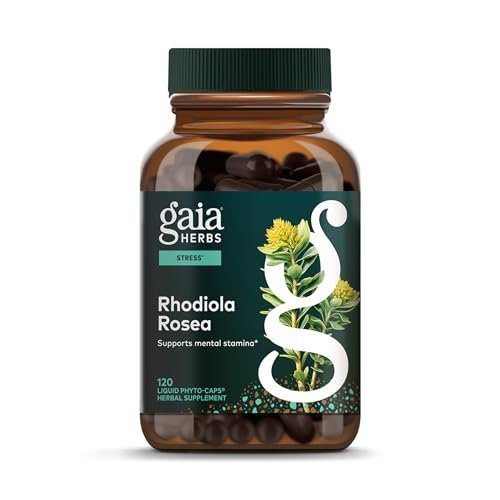
For a full evidence-based roundup comparing these products on standardization, third-party testing, and cost-per-dose, see Best Rhodiola Supplement: Tested and Ranked for Rosavin Content.
Frequently asked questions {#faq}
How is rhodiola different from ashwagandha?
The most practical difference is directionality: rhodiola leans energizing and the evidence is strongest for fatigue; ashwagandha leans calming and the evidence is strongest for cortisol and sleep. Rhodiola is better dosed in the morning; ashwagandha is commonly taken at night. For a deeper look at ashwagandha's evidence profile, see Ashwagandha Complete Guide: What the RCTs Show. For a head-to-head analysis see Ashwagandha vs Rhodiola for Stress: Which Adaptogen Fits Your Profile.
What does "SHR-5" mean on a rhodiola label?
SHR-5 is a proprietary standardized extract code for a specific production process that yields Rhodiola rosea extract at 3% rosavins and 1% salidroside. It is the extract used in the Olsson 2009, Darbinyan 2007, and Shevtsov 2003 trials. A product labeled SHR-5 is making a specific standardization claim — the only one with direct RCT support. Non-SHR-5 products standardized to 3% rosavins/1% salidroside are approximately equivalent; products without any standardization disclosure are not equivalent.
Can I take rhodiola with coffee?
The combination is not well-studied in humans. Rhodiola has mild monoamine activity that produces some alerting effect, and caffeine is a stimulant with cardiovascular effects. For healthy adults without cardiac history, a single morning cup of coffee alongside rhodiola at clinical trial doses is unlikely to be dangerous based on the safety profile in trials. High caffeine intake combined with rhodiola (multiple coffees, pre-workout stacks, caffeine pills) increases the additive cardiovascular risk. If you have any history of arrhythmia or hypertension, consult your physician before combining.
How long before rhodiola works?
The Edwards 2012 open-label study (n=101) reported apparent improvements in stress symptoms within three days at 200mg twice daily. The Olsson 2009 double-blind trial found statistically significant improvements at four weeks. The faster subjective signal likely reflects rhodiola's more immediate stimulating mechanism (monoamine activity) versus the slower cortisol-axis modulation seen with ashwagandha. If you see no benefit at four weeks of standardized extract at appropriate dose, it is unlikely to work for your profile.
Is rhodiola safe for long-term daily use?
The published trial data covers up to 12 weeks. No long-term human safety data exists beyond that. This is a genuine gap — most positive RCTs ran four to six weeks. Some practitioners suggest cycling rhodiola (e.g., six weeks on, two weeks off) based on general adaptogen theory, though no RCT has tested this cycling approach. Given the monoamine pharmacology, prolonged daily high-dose use without cycling carries a theoretical tolerance concern.
Does rhodiola help with athletic performance?
The acute signal is real: in the De Bock 2004 crossover RCT (De Bock et al., n=24), a single 200mg dose modestly improved time to exhaustion versus placebo. The sustained supplementation protocol (four weeks at the same dose) showed no significant performance benefit. The honest summary: rhodiola may help on an acute, pre-exercise basis, but it is not a proven training supplement for sustained performance gains.
What is the Soviet research history and should I trust it?
Brekhman and Lazarev's Soviet-era work from the 1960s to 1980s established the adaptogen framework and included rhodiola studies. This research is real and historically significant — it drove the standardization of extracts like SHR-5. But most of it was published in Russian-language journals, was not blinded or placebo-controlled by modern standards, and is not indexed in PubMed. Citing it as clinical evidence is a stretch; it is better framed as the origin of a research tradition that eventually produced verifiable RCTs like Olsson 2009 and Darbinyan 2007.
As an Amazon Associate, I earn from qualifying purchases. Product recommendations are based on real reviews and independent research.
Related reading
- The Complete Guide to Adaptogens: What They Are and How to Choose — the hub article covering all major adaptogens in one place
- Rhodiola Rosea for Energy and Focus: What the Data Actually Shows
- Rhodiola Rosea for Depression: Reviewing the Trial Evidence
- Rhodiola Side Effects and Safety: Who Should Avoid It
- Best Rhodiola Supplement: Tested and Ranked for Rosavin Content
- Ashwagandha vs Rhodiola for Stress: Which Adaptogen Fits Your Profile
Adding this to a few other supplements? Our companion app, StackMyMed, scans the label, tracks your real daily intake, and schedules the best time to take it around everything else in your routine.
Conclusion: the bottom line on rhodiola rosea
Rhodiola rosea is the adaptogen with the most targeted human RCT data for stress-related fatigue, and it earns that distinction honestly. The Olsson 2009 Phase III trial is a real double-blind placebo-controlled study with clinically meaningful outcomes. The Darbinyan 2007 depression trial adds a second RCT showing mechanism-relevant effects. The Shevtsov 2003 single-dose study provides the clearest signal for biphasic dosing — a signal worth taking seriously when evaluating high-dose products.
The limitations are real too. The evidence base is smaller than ashwagandha's. The systematic review of rhodiola trials found methodological flaws across most studies. The Soviet-era foundation is historically interesting but not independently verifiable by modern standards.
What you can reasonably conclude: rhodiola, at 200–400mg/day of SHR-5-equivalent extract (3% rosavins/1% salidroside), taken in the morning, has a meaningful probability of improving subjective fatigue and stress-performance measures in adults with chronic occupational stress over four to eight weeks. That is a specific, honest claim — not a general wellness endorsement.
The drug interaction profile is the most important thing to get right before trying rhodiola. If you are on any antidepressant, anticoagulant, or immunosuppressant, the interaction risks outlined above require a conversation with your prescriber, not a solo supplement decision.
Next steps:
- If you want to understand how rhodiola fits within the broader adaptogen landscape, start with The Complete Guide to Adaptogens
- If you are comparing rhodiola to ashwagandha for a specific use case, read Ashwagandha vs Rhodiola for Stress
- If you are ready to choose a product, see Best Rhodiola Supplement for a standardization-focused breakdown
References
- Olsson EM, von Schele B, Panossian AG. A randomised, double-blind, placebo-controlled, parallel-group study of the standardised extract SHR-5 of the roots of Rhodiola rosea in the treatment of subjects with stress-related fatigue. Planta Med. 2009;75(2):105-112. PMID 19016404
- Edwards D, Heufelder A, Zimmermann A. Therapeutic effects and safety of Rhodiola rosea extract WS 1375 in subjects with life-stress symptoms — results of an open-label study. Phytother Res. 2012;26(8):1220-1225. PMID 22228617
- Darbinyan V, Aslanyan G, Amroyan E, Gabrielyan E, Malmstrom C, Panossian A. Clinical trial of Rhodiola rosea L. extract SHR-5 in the treatment of mild to moderate depression. Nord J Psychiatry. 2007;61(5):343-348. PMID 17990195
- Shevtsov VA, Zholus BI, Shervarly VI, et al. A randomized trial of two different doses of a SHR-5 Rhodiola rosea extract versus placebo and control of capacity for mental work. Phytomedicine. 2003;10(2-3):95-105. PMID 12725561
- De Bock K, Eijnde BO, Ramaekers M, Hespel P. Acute Rhodiola rosea intake can improve endurance exercise performance. Int J Sport Nutr Exerc Metab. 2004;14(3):298-307. PMID 15256690
- Ishaque S, Shamseer L, Bukutu C, Vohra S. Rhodiola rosea for physical and mental fatigue: a systematic review. BMC Complement Altern Med. 2012;12:70. PMID 22643043
- Aslanyan G, Amroyan E, Gabrielyan E, et al. Double-blind, placebo-controlled, randomised study of single dose effects of ADAPT-232 on cognitive functions. Phytomedicine. 2010;17(7):494-499. PMID 20374974
- Memorial Sloan Kettering Cancer Center. Rhodiola. Integrative Medicine Herbs Database. mskcc.org
- National Center for Complementary and Integrative Health. Rhodiola. nccih.nih.gov
This article is for informational purposes and not medical advice. Herbal adaptogens — even traditional ones — can interact with thyroid medication, antidepressants, anticoagulants, immunosuppressants, blood-pressure drugs, and more. Consult a licensed physician before starting any adaptogen, particularly if you are pregnant, nursing, taking prescription medications, or managing a chronic condition.
As an Amazon Associate, I earn from qualifying purchases. Product recommendations are based on real reviews and independent research.
