
If you're asking whether rhodiola is a good choice for energy, the honest answer is: it can be, but only for a specific kind of fatigue — the stress-driven, HPA-axis-mediated kind, not the kind you fix with a stronger coffee. This article breaks down what the clinical evidence actually shows for rhodiola and energy, how the mechanism differs from caffeine and B-vitamins, and the biphasic dosing reality that most supplement brands won't tell you. You'll also get a clear drug-interaction picture, because rhodiola carries a meaningful interaction profile that is often buried in fine print.
Affiliate disclosure: this article contains affiliate links. As an Amazon Associate, UsefulVitamins.com earns from qualifying purchases at no extra cost to you.
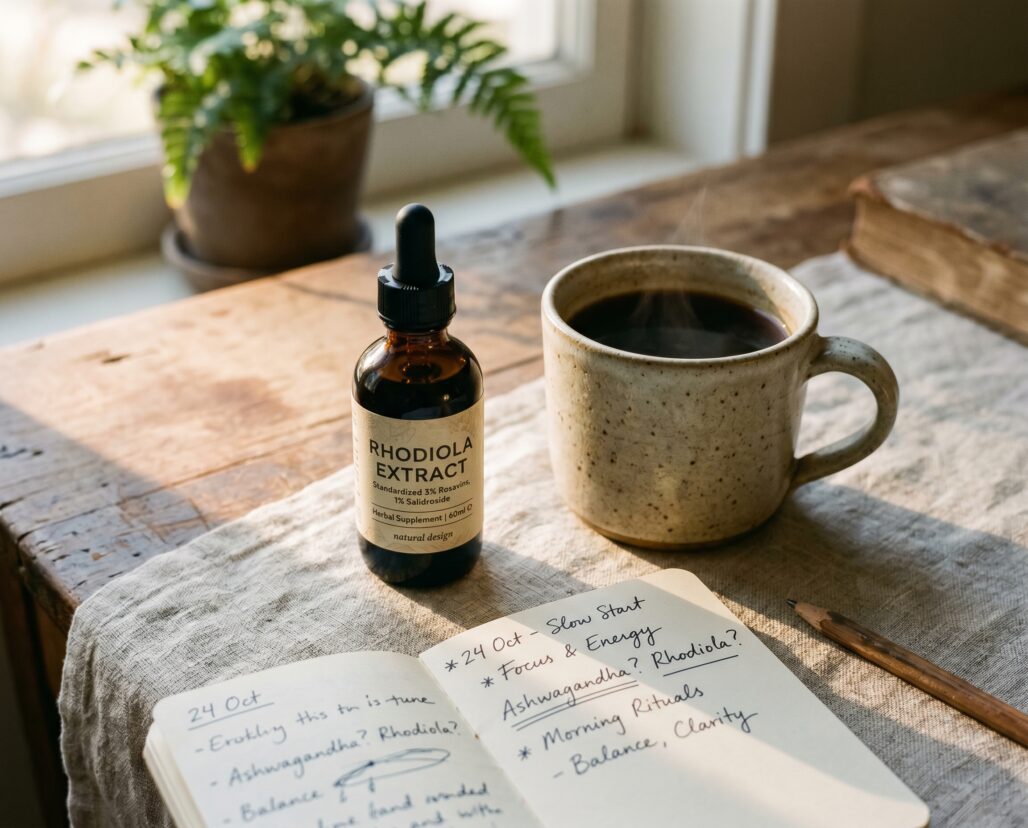
Summary: quick answer on rhodiola for energy
Rhodiola rosea, standardized to rosavins and salidroside, has shown statistically significant improvement in stress-related fatigue in at least one Phase III RCT — but it is not an acute energy booster, it takes weeks to build effect, and it is not the right tool if your fatigue is deficiency-driven or sleep-deprivation-driven.
Best for: Adults with chronic stress-related fatigue (sustained weeks to months), professionals or students under occupational demand, people who have already addressed sleep and caffeine and are still fatigued.
Not ideal for: Acute tiredness from one bad night, fatigue traced to iron deficiency or B12 deficiency, people who need an energy boost in the next two hours, anyone on antidepressants (SSRIs, SNRIs, MAOIs), anticoagulants, or antiseizure medications without physician clearance.
What to check before buying: Standardization to both rosavins (typically 3%) and salidroside (typically 1%). SHR-5 is the extract used in the key clinical trials. Generic "rhodiola root powder" tells you nothing useful about active-compound content.
What rhodiola actually does in the body {#what-rhodiola-does}
Rhodiola rosea is a perennial plant from the Crassulaceae family, native to cold, high-altitude environments in Scandinavia, Siberia, and the Arctic. Its roots have been used in Russian and Scandinavian folk medicine as a general tonic for centuries. Traditional use is historical context, not clinical evidence.
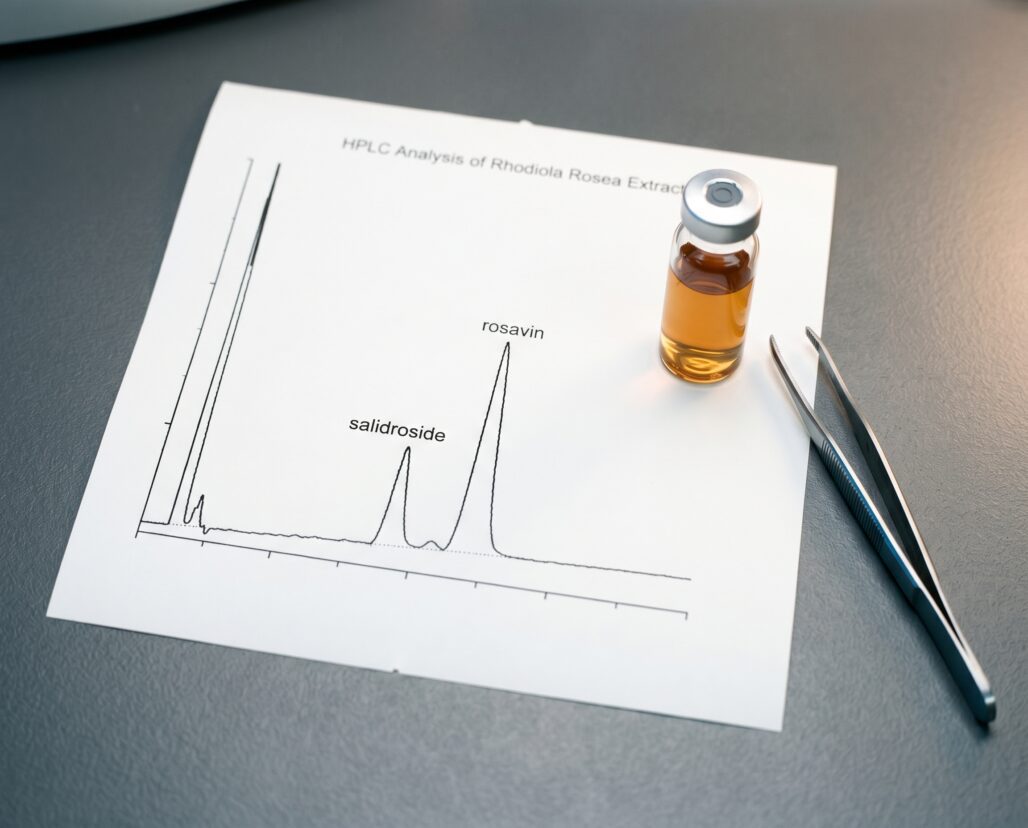
The active marker compounds in the root extract are rosavins (a group of phenylpropanoids unique to Rhodiola rosea) and salidroside (also called tyrosol glycoside, found in several plant species). Quality standardized extracts specify both: typically 3% rosavins and 1% salidroside. If a product doesn't disclose these percentages, the label is telling you very little.
The primary proposed mechanism is modulation of the hypothalamic-pituitary-adrenal (HPA) axis — the hormonal cascade that governs the stress response. Think of the HPA axis like a thermostat that responds to perceived threat. Under chronic stress, this thermostat gets stuck in a high-alert position, sustaining elevated cortisol, disrupting sleep architecture, and producing the characteristic wired-but-exhausted feeling. Rhodiola's rosavin and salidroside fractions appear to influence the sensitivity of this axis, supporting a more measured cortisol awakening response rather than the blunted or exaggerated curves seen in burnout populations.
There is also evidence from mechanistic studies that rhodiola inhibits monoamine oxidase (MAO) activity, which affects serotonin and dopamine turnover. This is clinically important because it explains both the potential mood benefit and the significant drug interaction risk with antidepressants (detailed in Section 7 below).
Actionable takeaway: Rhodiola is not a stimulant and does not bind adenosine receptors like caffeine. It works upstream, at the stress-response regulation level, and that means the timeline for effect is measured in weeks, not hours.
What the clinical evidence shows for fatigue and energy {#what-the-research-shows}
The most rigorous human evidence for rhodiola and fatigue comes from a 2009 Phase III randomized, double-blind, placebo-controlled trial (Olsson et al., n=60). Participants with stress-related burnout received SHR-5 extract at 576 mg per day for 28 days. The treatment group showed statistically significant improvements versus placebo in Pines' burnout scale scores, attention performance on the Conners' Continuous Performance Test (CCPT-II), mental health sub-scores on the SF-36, and — notably — the cortisol awakening response, a biomarker of HPA-axis regulation. No serious adverse effects attributable to the extract were reported.
A 2012 open-label multicentre study (Edwards et al., n=101) used Rhodiola rosea extract WS-1375 at 200 mg twice daily for four weeks in adults with life-stress symptoms. All seven assessment instruments — including the Multidimensional Fatigue Inventory-20, the Perceived Stress Questionnaire, and the Sheehan Disability Scale — showed clinically relevant improvements. Benefits emerged within three days and were sustained through four weeks. The limitation is significant: this was an open-label single-arm design with no control group. It suggests rapid onset of subjective benefit, but cannot establish causality.
A 2007 double-blind, placebo-controlled RCT (Darbinyan et al., n=89) used SHR-5 in a mild-to-moderate depression population, testing both 340 mg/day and 680 mg/day for six weeks. Both active doses improved Hamilton Rating Scale for Depression (HAMD) scores, emotional instability, and somatization versus placebo. Neither higher dose produced meaningfully better results than the lower dose — a finding that directly informs the biphasic dosing discussion below.
Taken together, the evidence picture is: one solid Phase III RCT, one supportive but methodologically weak open-label study, and one RCT in a depression-plus-fatigue population. Meaningfully more data than most adaptogens have — and not enough replication to treat it as settled pharmacology.
Actionable takeaway: The Olsson 2009 trial is the load-bearing citation for any rhodiola-for-energy claim. Everything else is supportive context. If a supplement brand cites "studies" without naming this trial specifically, the marketing is more confident than the evidence.
Rhodiola vs caffeine: why the comparison is almost a category error {#rhodiola-vs-caffeine}
Caffeine is an adenosine receptor antagonist. It blocks the neurochemical signal that induces sleepiness, producing a fast, reliable, dose-dependent increase in alertness within 30 to 60 minutes. It is one of the most thoroughly studied psychoactive compounds in human pharmacology.
Rhodiola does not touch adenosine receptors. It works on the upstream stress-hormone axis over a time course of days to weeks.
Comparing them as "energy supplements" is like comparing a volume dial to a circuit breaker. Caffeine turns up the signal. Rhodiola tries to fix why the circuit keeps tripping.
Here is the practical tradeoff table:
| Factor | Caffeine | Rhodiola (SHR-5) |
|---|---|---|
| Onset | 30-60 minutes | Days to weeks |
| Mechanism | Adenosine receptor blockade | HPA-axis modulation |
| Tolerance development | Yes (within days) | Not established in RCTs |
| Withdrawal symptoms | Yes (headache, fatigue) | Not documented |
| Addresses stress-fatigue root cause | No | Possibly yes (Olsson 2009) |
| Evidence quality for energy | Very high (extensive human data) | Moderate (1 Phase III RCT) |
| Interaction risk | Low for most adults | Significant (see Section 7) |
Many chronically fatigued adults find caffeine has stopped working as well as it once did — tolerance builds, and the dose climbs. Rhodiola does not substitute for caffeine in the acute sense. But if the underlying fatigue is stress-driven, rhodiola may address the mechanism caffeine is only masking. Combining both is common; the effect is additive, not synergistic, and rhodiola's MAO inhibition means the pairing deserves more caution than it typically gets.
Rhodiola vs B-vitamins: different problems, different tools {#rhodiola-vs-b-vitamins}
B-vitamins (particularly B12, B6, folate, and B1) are cofactors in energy metabolism — they help cells convert nutrients into ATP. The rationale for B-vitamins and energy is solid but narrow: they address fatigue caused by deficiency. If you are deficient in B12, supplementing B12 will improve energy. If you are not deficient, additional B12 does nothing measurable for fatigue.
The problem is that most people reaching for an energy supplement do not have a frank B12 or B6 deficiency. They have stress-driven fatigue, poor sleep, or high allostatic load — none of which B-vitamins target.
Before supplementing rhodiola, a basic panel — B12, folate, iron/ferritin, thyroid TSH — is worth running to rule out deficiency-driven causes. If B12 is low, fix that first. Rhodiola does not address deficiency states; the two categories target different physiological problems.
Who should use rhodiola for energy (and who should skip it) {#who-it-is-for}
Strong fit:
- Adults with chronic stress-related fatigue (sustained more than 4 weeks), particularly from occupational demand, academic pressure, or sustained life stress
- People who have addressed sleep hygiene and caffeine dependence and remain fatigued
- Adults with normal thyroid function, not on antidepressants or anticoagulants, who want a studied adaptogen with a fatigue-specific trial
Consider with caution (physician clearance advisable):
- People on antihypertensive medication (rhodiola may add hypotensive effects via MAO inhibition)
- Athletes using CNS stimulant-based pre-workouts (additive stimulant effect possible)
- People with anxiety disorders — the activating effect at higher doses may increase, not decrease, anxiety
Skip if:
- You are on SSRIs, SNRIs, MAOIs, or any antidepressant — the MAO inhibition activity creates meaningful serotonergic risk
- You take warfarin, phenytoin, or other anticoagulants/antiseizure medications with a narrow therapeutic index
- You are pregnant or nursing — safety data are insufficient
- Your fatigue is acute (one poor night of sleep, jetlag, shift work adjustment) — rhodiola is too slow to help here
- Your fatigue is driven by iron-deficiency anemia, B12 deficiency, or hypothyroidism — treat the root cause
Dosing: the biphasic reality and morning timing {#dosing}
The biphasic dosing pattern is one of the genuinely counterintuitive findings in rhodiola research. In the Darbinyan 2007 trial, the 340 mg/day group performed comparably to the 680 mg/day group on depression and fatigue measures. Anecdotal and clinical reports from practitioners who use rhodiola regularly suggest that doses above 400-500 mg per day can become activating to the point of increasing anxiety or disrupting sleep in sensitive individuals.
This is not unique to rhodiola. It is a recognized pattern in adaptogen pharmacology: more is not always better, and the response curve can invert at higher doses. A practical framing: rhodiola at 100-200 mg of a standardized extract (3% rosavins / 1% salidroside) in the morning is a reasonable starting point. Some research protocols went to 576 mg (Olsson 2009) with good tolerability, but that study population was specifically screened for burnout, not anxiety.
Morning or early-afternoon timing is strongly preferred. Rhodiola's activating properties at any dose make evening use counterproductive for sleep quality — consistent with the NCCIH's rhodiola safety summary noting insomnia as a documented side effect.
Look for products labeled as "SHR-5 extract" or clearly stating 3% rosavins and 1% salidroside. Generic "rhodiola root powder" or products that only declare total milligrams without marker-compound percentages give you no useful information about the dose of active compounds you are actually consuming.
Actionable takeaway: Start at the lower end of the clinical range (around 200-340 mg of standardized extract per day), take it in the morning, and give it at least four weeks before evaluating effect. If you notice increased anxiety or sleep disruption, reduce the dose rather than discontinuing abruptly.
Side effects and drug interactions {#side-effects-and-interactions}
Reported adverse effects
Clinical trials using SHR-5 reported minimal adverse effects. The Olsson 2009 Phase III trial noted "no serious side effects" attributable to the extract. The most commonly documented adverse effects across studies and case reports are: dizziness, headache, dry mouth, and insomnia (particularly with evening dosing or higher doses). Per the NCCIH rhodiola safety overview, rhodiola is considered possibly safe for up to 12 weeks based on current data.
Drug interactions (REQUIRED reading before starting)
Rhodiola has a meaningful drug interaction profile that is routinely underrepresented on supplement labels. The following are documented or pharmacologically expected interactions, per Memorial Sloan Kettering's integrative herbs database:
Antidepressants (SSRIs, SNRIs, MAOIs): Rhodiola exhibits MAO inhibition activity. Combining it with any MAOI creates a direct pharmacodynamic conflict. Combining it with SSRIs or SNRIs raises the risk of serotonergic side effects. A case report documented tachyarrhythmia in a patient taking rhodiola alongside an antidepressant after three days. This is the interaction with the highest severity level. Do not combine without physician supervision.
Anticoagulants (warfarin) and antiseizure medications (phenytoin): Rhodiola inhibits CYP2C9, raising plasma levels of warfarin (bleeding risk) and phenytoin (toxicity risk). Both are narrow therapeutic index medications where small concentration changes have serious consequences. NCCIH also documents an interaction with losartan. Rhodiola additionally inhibits CYP3A4 and P-glycoprotein, affecting a wide range of other prescription drugs — if you take any CYP3A4-metabolized medication, a pharmacist check is warranted.
CNS stimulants: Rhodiola's MAO inhibition can enhance the hypertensive effects of stimulants. Prescription stimulants, high-dose caffeine, or stimulant pre-workouts combined with rhodiola carry an additive effect that deserves attention.
Pregnancy and breastfeeding
Safety data for rhodiola in pregnancy are insufficient. The NCCIH's summary states that "little is known about whether it's safe to use rhodiola during pregnancy or while breastfeeding." Avoid during pregnancy and nursing in the absence of evidence-based guidance.
Actionable takeaway: The drug interaction profile is the part of the rhodiola conversation that gets skipped most often. Traditional use and low-dose clinical trial tolerability do not mean it's interaction-free. If you take any prescription medication, a five-minute pharmacist check before starting rhodiola is worth the time.
Frequently asked questions {#faq}
How long does rhodiola take to work for energy?
The Olsson 2009 Phase III RCT measured significant improvements at 28 days with SHR-5 576 mg/day. The Edwards 2012 open-label study reported subjective benefit emerging within three days, though without a control group this is hard to interpret rigorously. A reasonable expectation is that effect — if it occurs — will be noticeable within two to four weeks of consistent morning use at a standardized extract dose.
Is rhodiola better than caffeine for energy?
They are different tools for different problems. Caffeine is faster, more reliable for acute alertness, and backed by much stronger evidence. Rhodiola targets stress-driven fatigue at the HPA-axis level and takes weeks to build effect. If your fatigue comes from sustained stress, rhodiola may address a mechanism caffeine does not. If you need alertness in the next 60 minutes, caffeine is the evidence-based choice.
What does "standardized to rosavins and salidroside" mean?
The extract has been verified to contain a specified concentration of active marker compounds — typically 3% rosavins and 1% salidroside for clinical-trial-grade preparations. Without that label, the product could contain any amount (or none) of the bioactive fraction. Unstandardized "rhodiola root powder" is like coffee labeled only "contains some caffeine."
Can I take rhodiola with antidepressants?
No, not without physician clearance. Rhodiola has documented MAO inhibition activity and may increase serotonergic side effects when combined with SSRIs, SNRIs, or MAOIs. A case report of tachyarrhythmia in a patient on this combination has been documented in the literature. This is one of the more significant interaction risks in the adaptogen category.
Does higher rhodiola dose mean better energy effect?
Not necessarily. The Darbinyan 2007 RCT found comparable outcomes at 340 mg/day and 680 mg/day — no dose-response advantage at the higher dose. Some practitioners and case reports suggest that doses above 400-500 mg per day in sensitive individuals can become activating to the point of increasing anxiety or disrupting sleep. Start lower; more is not always more.
Conclusion: the bottom line on rhodiola for energy
Rhodiola rosea, as the SHR-5 standardized extract, has legitimate clinical evidence for stress-related fatigue: one Phase III RCT showing meaningful improvement at 28 days, with support from a large open-label study and a depression-plus-fatigue trial. That is a more credible evidence base than most adaptogens have.
The comparison to caffeine and B-vitamins clarifies the use case. Rhodiola is not acute, it is not for deficiency fatigue, and it works over weeks at the HPA-axis level. The biphasic dosing reality and meaningful drug interaction profile (MAO inhibition, CYP2C9/3A4 inhibition, anticoagulant and antidepressant interactions) deserve more attention than supplement labels typically give them.
Next steps:
- For the full clinical picture, read Rhodiola Rosea: Complete Guide to Evidence, Dosing, and What to Expect.
- For formulation guidance, Best Rhodiola Supplement: What Standardization Labels Actually Mean.
- If fatigue has a mood component, Rhodiola for Depression: What the Darbinyan 2007 RCT Shows and What It Doesn't.
- Before starting, check your prescription list with a pharmacist — particularly antidepressants, anticoagulants, or antiseizure drugs.
As an Amazon Associate, I earn from qualifying purchases. Product recommendations are based on real reviews and independent research.
This article is for informational purposes and not medical advice. Herbal adaptogens — even traditional ones — can interact with thyroid medication, antidepressants, anticoagulants, immunosuppressants, blood-pressure drugs, and more. Consult a licensed physician before starting any adaptogen, particularly if you are pregnant, nursing, taking prescription medications, or managing a chronic condition.
As an Amazon Associate, I earn from qualifying purchases. Product recommendations are based on real reviews and independent research.
