
If you're researching rhodiola for depression, you've probably heard that a 2015 clinical trial compared it directly to sertraline. Rhodiola showed real antidepressant activity in that trial, but it produced a meaningfully smaller effect than sertraline, with fewer side effects. This article breaks down exactly what the Mao 2015 study found, what the honest limitations are, and what the full drug-interaction picture looks like when rhodiola meets an antidepressant already in your system. You'll also get the YMYL caveat up front: nothing in this article is a reason to stop, adjust, or substitute a prescribed antidepressant without talking to your prescriber first.
Affiliate disclosure: this article contains affiliate links. As an Amazon Associate, UsefulVitamins.com earns from qualifying purchases at no extra cost to you.
Summary: quick answer on rhodiola for depression
Rhodiola rosea has shown antidepressant activity in one head-to-head trial against sertraline in mild-to-moderate depression. The effect was real but smaller. The side-effect profile was better.
Best for: Adults with mild depressive symptoms who are not currently on psychiatric medication and who are working with a clinician to explore supportive interventions alongside lifestyle changes. Also relevant for people who experienced side effects on SSRIs and want to understand the evidence basis for herbal alternatives, with prescriber guidance.
Not ideal for: Anyone with moderate-to-severe depression relying on rhodiola as a primary treatment. Anyone currently on SSRIs, SNRIs, or MAOIs without direct prescriber involvement, because of serotonin syndrome risk. Anyone making unilateral medication changes based on supplement research.
What to look at before buying: Standardization. Rhodiola products must be standardized to both rosavins (typically 3%) and salidrosides (typically 1%). A product that lists only one marker compound, or neither, is not comparable to what was tested in the clinical literature.
Decision shortcut: If you have a depression diagnosis and a prescriber, bring this study to your appointment. Do not use this article as a substitute for that conversation.
What you'll find in this guide
- What rhodiola is and why it's being studied for mood
- The Mao 2015 trial: what it showed and what it didn't
- Other evidence for rhodiola and mood
- Who this evidence does and does not apply to
- Dosing: what clinical trials used
- Side effects and drug interactions
- Product picks
- Frequently asked questions
- Related reading
What rhodiola is and why it's being studied for mood {#what-rhodiola-is}
Rhodiola rosea is a flowering plant native to cold, high-altitude regions of Europe and Asia, classified in the Crassulaceae family. It has been used in Scandinavian and Russian traditional medicine for centuries as a tonic for mental fatigue and stress resilience. Traditional use is context, not evidence, but it explains why Soviet-era researchers in the 1960s and 1970s began investigating rhodiola as a potential adaptogen for military and occupational performance.
The primary active marker compounds are rosavins (rosavin, rosin, rosarin) and salidroside. Mechanistic work suggests salidroside may influence monoamine neurotransmitter systems, specifically serotonin, dopamine, and norepinephrine reuptake, in ways that parallel the mechanism of conventional antidepressants. Think of it like a dimmer switch on the same circuit that SSRIs work on, rather than a completely different system. That analogy also explains the interaction risk: if you're already on a drug working that circuit, adding rhodiola is not neutral.
In vitro and animal studies have generated several hypotheses about rhodiola's mood-relevant mechanisms, including MAO-A inhibition and neuroprotective effects on serotonergic neurons. But the real question isn't what happens in animal models, it's whether the human dose proves out.
Actionable takeaway: Look for rhodiola products standardized to 3% rosavins and 1% salidroside. Anything less specific tells you nothing about comparability to the studied interventions.
The Mao 2015 trial: what it showed and what it didn't {#mao-2015-trial}
The central study worth reading carefully is the 2015 RCT by Mao, Xie, Zee, and colleagues, published in Phytomedicine (Mao et al., 2015, n=57). This was a three-arm, randomized, double-blind trial enrolling adults with mild-to-moderate major depressive disorder (diagnosed by DSM-IV criteria). Participants were randomized to rhodiola extract (SHR-5, 340–680mg/day), sertraline (50–100mg/day), or placebo over 12 weeks.
What the numbers showed
The primary outcome was change in Hamilton Depression Rating Scale (HDRS) score at 12 weeks.
- Sertraline produced a larger reduction in HDRS score than rhodiola. The difference between sertraline and placebo was statistically significant. The difference between rhodiola and placebo was not quite statistically significant by conventional thresholds (p=0.07).
- Rhodiola did produce a meaningful effect size within its arm (HDRS reduction approximately 1.4 points greater than placebo), but the trial was underpowered to detect this confidently.
- On secondary measures including the Beck Depression Inventory (BDI) and the Symptom Checklist-90 (SCL-90), rhodiola again showed intermediate results: better than placebo on several subscales, worse than sertraline on the primary endpoint.
The side-effect finding
This is where rhodiola's profile looks distinctly different. Participants in the sertraline arm reported significantly more adverse events, including nausea, sexual dysfunction, and dizziness. The rhodiola arm's adverse event rate was comparable to placebo.
The authors' own language was carefully framed: rhodiola showed "a lower likelihood of causing adverse effects" compared to sertraline, with "better tolerability," at the cost of "less antidepressant efficacy." That's the honest summary of the trade-off this trial documented.
What the trial cannot tell you
This was a single trial with n=57 across three arms, meaning approximately 19 participants per arm. That's a small sample. No replication has been published with the same design in a diagnosed depression population. The Mao 2015 study enrolled adults with mild-to-moderate MDD, not severe depression, and the study population was recruited from a single academic center in Philadelphia, which limits generalizability.
An adaptogen brand can have impressive marketing citing this exact trial and still obscure that the primary endpoint did not reach statistical significance for rhodiola vs placebo. That distinction matters enormously.
Actionable takeaway: The Mao 2015 trial is the most rigorous human RCT on rhodiola for diagnosed depression. It shows preliminary evidence of benefit in mild-to-moderate MDD, specifically in populations where tolerability is a primary concern. It does not show equivalence to sertraline. It should not be used as justification for unilateral antidepressant discontinuation.
Other evidence for rhodiola and mood {#other-mood-evidence}
The Mao 2015 study sits within a broader but thin evidence base for rhodiola and mental performance. A few other trials contribute relevant context.
A 2009 Phase III RCT by Olsson and colleagues (Olsson et al., n=60) tested SHR-5 rhodiola extract in 576mg/day against placebo over four weeks in adults with stress-related fatigue. The primary finding was fatigue reduction on the Multidimensional Fatigue Inventory, with secondary improvements on concentration and subjective wellbeing. Fatigue in the context of burnout overlaps with depressive symptoms; this trial is relevant but not a depression trial.
A 2000 pilot trial (Darbinyan et al., n=56) examined rhodiola in physicians working night shifts and found improvements in cognitive function and fatigue. Not a depression study, but the occupational-stress application is well-documented.
A 2015 open-label pilot (Darbinyan et al., 2007, n=89) published in the Nordic Journal of Psychiatry evaluated SHR-5 in people with mild-to-moderate depression using the Hamilton Depression Scale over six weeks without a placebo arm. Significant HDRS improvement was observed. An open-label study without a control arm cannot rule out placebo effect, but the direction of findings is consistent with Mao 2015.
The evidence picture for rhodiola and mood is preliminary: one controlled comparison trial (small, single-center, underpowered), one open-label trial, and supporting data on fatigue and stress. This is not the evidence base of a first-line treatment. It is the evidence base of a supplement that warrants more research and cautious clinical interest.
The NCCIH rhodiola fact sheet describes the evidence as "not enough evidence to support using rhodiola for any health condition," while noting "some preliminary studies suggest it might be helpful for depression." That is an accurate summary of where the field stands.
Who this evidence does and does not apply to {#who-it-applies-to}
Strong fit: Adults with mild depressive symptoms who are not currently on psychiatric medication, who are working with a prescriber, and for whom tolerability of conventional antidepressants is a documented concern. The Mao 2015 cohort represents this profile reasonably well.
Reasonable secondary fit: Adults managing stress-related fatigue or burnout symptoms that shade into low mood, without a formal MDD diagnosis. The Olsson 2009 fatigue trial population.
Skip if:
- You have a current prescription for any SSRI, SNRI, or MAOI. The serotonin-related interaction risk is not theoretical.
- You have moderate-to-severe depression. No evidence supports rhodiola as a primary treatment in this population, and the cost of delay or substitution is high.
- You are pregnant or breastfeeding. No adequate safety data exist.
- You have a bipolar diagnosis. Adaptogens with stimulant-like properties have the potential to shift mood states in ways that are not predictable without clinical oversight.
Psychiatric disclaimer (mandatory for this topic): Depression is a medical condition. The evidence base for rhodiola, while genuinely interesting in early-stage clinical research, does not support it as a substitute for evaluated and prescribed treatment in any population with moderate-to-severe depression. If you are currently on a prescribed antidepressant, do not stop, reduce, or alter it without your prescriber's direct involvement. Abrupt SSRI discontinuation carries its own serious risks entirely separate from rhodiola's pharmacology.
Dosing: what clinical trials used {#dosing}
The Mao 2015 trial used SHR-5 rhodiola extract at 340mg/day in the first four weeks, titrated to 680mg/day based on response, across a 12-week period. SHR-5 is standardized to 3% rosavins and 1% salidroside.
The Olsson 2009 fatigue trial used SHR-5 at 576mg/day over four weeks.
The Darbinyan 2007 open-label depression pilot used SHR-5 at 340–680mg/day over six weeks.
Most clinical work with rhodiola for mood and fatigue has used doses in the 340–680mg/day range of a 3%/1% standardized extract. No RCT has established an optimal dose curve for antidepressant effect, and the Mao 2015 dosing was exploratory.
Rhodiola shows a biphasic dose-response pattern in some preclinical work: low-to-moderate doses appear stimulating, while very high doses may lose effect or shift toward sedation. More herb is not always more useful here. This is not an adaptogen to escalate casually.
Timing: most clinical trials dosed rhodiola in the morning, before meals. The mild stimulant-like effect profile makes evening dosing less common in practice, though no RCT has formally compared AM vs PM timing for mood outcomes.
Side effects and drug interactions {#side-effects-and-drug-interactions}
Reported adverse effects
In the Mao 2015 trial, the rhodiola arm showed adverse event rates comparable to placebo. Reported effects included mild activation (dry mouth, dizziness, jitteriness) at low frequency. In the Olsson 2009 fatigue trial, the most common reported effects were agitation and headache, both transient and at low rates.
At higher doses or in individuals sensitive to stimulant-like compounds, rhodiola may cause sleep disruption if taken late in the day, irritability, and heart palpitations. These are consistent with its mild stimulant-like HPA-modulatory profile.
Drug interactions (critical section for rhodiola)
Rhodiola has documented pharmacological interactions that are not hypothetical. Any prescriber managing your psychiatric care should know if you're using it.
SSRIs and SNRIs (serotonin syndrome risk): This is the most clinically significant interaction for this article's topic. Rhodiola's salidroside has MAO inhibitory activity in mechanistic studies, and its broader serotonergic effects may be additive with selective serotonin reuptake inhibitors. Combining rhodiola with sertraline, fluoxetine, escitalopram, paroxetine, duloxetine, or venlafaxine is not studied in humans for safety and carries a plausible serotonin syndrome risk. Per Memorial Sloan Kettering's integrative herbs database, patients on antidepressants should use rhodiola only under medical supervision. Serotonin syndrome symptoms (agitation, confusion, rapid heart rate, high blood pressure, dilated pupils, muscle twitching) require urgent medical attention.
MAOIs: The combination of any serotonergic compound with MAOIs carries a well-established serotonin syndrome risk. This includes phenelzine, tranylcypromine, selegiline, and the reversible RIMA moclobemide. Rhodiola should not be used with MAOIs.
Anti-anxiety medications (benzodiazepines, buspirone): No pharmacokinetic interaction has been formally characterized, but additive CNS effects are plausible. Use with prescriber awareness.
Stimulant medications (ADHD medications including amphetamines and methylphenidate): Rhodiola's mild stimulant-like effect profile may be additive. Cardiovascular effects (heart rate, blood pressure) could be amplified.
Anticoagulants (warfarin): Some evidence from in vitro and animal work suggests rhodiola may affect CYP450 enzyme activity, which could alter warfarin metabolism. No human pharmacokinetic data exist. Anyone on warfarin monitoring INR should inform their prescriber before adding rhodiola.
Diabetes medication: Rhodiola may have mild blood-glucose-lowering effects in animal models. Human data are insufficient, but anyone on insulin or oral hypoglycemics should be aware.
Pregnancy and breastfeeding
No adequate human safety data exist for rhodiola during pregnancy or lactation. Given the serotonergic activity and the absence of safety studies, the conservative recommendation is to avoid use entirely.
Actionable takeaway: If you are on any psychiatric medication, including antidepressants, mood stabilizers, anti-anxiety drugs, or ADHD stimulants, do not add rhodiola without discussing it with your prescriber. The interaction risks are real and are specific to the drug classes most relevant to this article's audience.
Product picks {#product-picks}
For the product picks below, note that the research evidence for rhodiola in depression was generated using the SHR-5 extract standardized to 3% rosavins and 1% salidroside. Any product not standardized to both marker compounds is not comparable to the studied intervention.
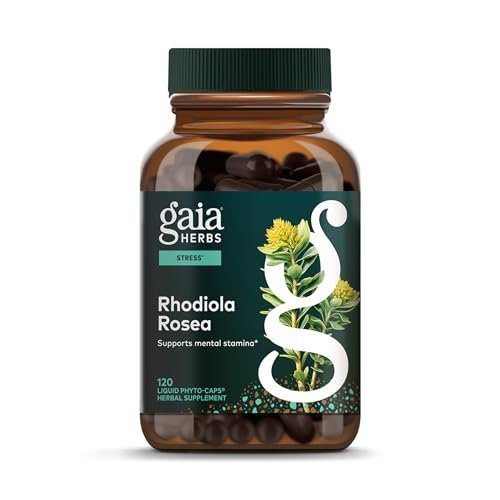
As an Amazon Associate, I earn from qualifying purchases. Product recommendations are based on real reviews and independent research.
Frequently asked questions {#faq}
Can rhodiola replace an antidepressant?
No. The Mao 2015 trial is the most rigorous study comparing rhodiola to a prescribed antidepressant in diagnosed mild-to-moderate depression, and it found rhodiola had a smaller antidepressant effect than sertraline. No evidence supports rhodiola as an equivalent substitute for prescribed treatment in any population. If you're exploring this question, that conversation belongs with your prescriber, not a supplement website.
Is rhodiola safe to take with an SSRI?
This combination has not been studied for safety in humans and carries a plausible serotonin syndrome risk based on rhodiola's pharmacological activity. Memorial Sloan Kettering's integrative herbs database flags this combination as requiring medical supervision. Do not combine rhodiola with any SSRI, SNRI, or MAOI without your prescriber's direct knowledge and guidance.
How long does rhodiola take to work for mood?
The Mao 2015 trial ran for 12 weeks. The Darbinyan 2007 open-label trial observed improvement in Hamilton scores at six weeks. The Olsson 2009 fatigue study showed measurable fatigue improvement by four weeks. For mood applications specifically, the limited evidence suggests a minimum trial of six weeks before assessing effect.
What standardization should I look for in a rhodiola supplement?
Clinical trials for mood and depression used extracts standardized to 3% rosavins and 1% salidroside (specifically the SHR-5 extract). Products listing only total extract weight without a standardization panel for both marker compounds are not meaningfully comparable to what was tested in the trials.
Is rhodiola good for anxiety as well as depression?
Rhodiola is classified as an adaptogen with effects on stress and mental fatigue. The clinical evidence for anxiety-specific reduction is less developed than the fatigue literature. The serotonergic mechanism suggests it may have some relevance to anxiety, but no RCT has tested rhodiola specifically for generalized anxiety disorder. The drug-interaction cautions with anti-anxiety medications apply.
Does rhodiola work for burnout and not just clinical depression?
Yes, and this may be where the evidence is actually stronger. The Olsson 2009 fatigue trial in stressed adults, and the Darbinyan 2000 night-shift study, both show meaningful effects on fatigue, concentration, and wellbeing in non-diagnosed stressed populations. If your low mood is better described as burnout or chronic occupational stress rather than diagnosed MDD, the evidence base is comparatively more supportive.
Can I cycle rhodiola on and off?
No RCT has formally tested cycling protocols for mood applications. Some practitioners use a cycling approach with adaptogens to avoid potential receptor downregulation, but this is not evidence-based practice for rhodiola specifically. If you're using rhodiola with prescriber knowledge for mood support, follow the prescriber's guidance on duration and cycling rather than general supplement advice.
Conclusion: the bottom line on rhodiola for depression {#conclusion}
The Mao 2015 trial is the most honest piece of evidence available on this question. Rhodiola produced a real but smaller antidepressant effect than sertraline in mild-to-moderate MDD, with better tolerability. That is a genuinely interesting finding, and it earns rhodiola a place in the serious clinical conversation about adjunct and alternative approaches to mild depression, especially where side-effect burden of conventional antidepressants is a documented problem.
What it does not support: replacing a prescribed antidepressant with rhodiola, treating moderate-to-severe depression with it, or adding it to your existing SSRI regimen without medical oversight.
The drug-interaction picture is the part this conversation most often skips. Rhodiola's serotonergic mechanism makes its combination with SSRIs, SNRIs, and MAOIs potentially unsafe, which is a meaningful irony for a supplement marketed alongside depression.
Next steps:
- If you want the broader context on how adaptogens compare to SSRIs as a class, see Adaptogens vs SSRIs: What the Evidence Actually Says
- For the full rhodiola clinical evidence base including fatigue, cognitive performance, and stress resilience, see the Complete Guide to Rhodiola Rosea
- For rhodiola's side effect and interaction profile in more depth, see Rhodiola Side Effects: Drug Interactions, Dosing Limits, and Who Should Avoid It
Related reading {#related-reading}
- Complete Guide to Rhodiola Rosea: Evidence, Dosing, and Honest Limitations
- Rhodiola for Energy and Fatigue: What the Clinical Trials Show
- Rhodiola Dosage Guide: What Clinical Trials Used and How to Choose a Product
- Adaptogens vs SSRIs: What the Evidence Actually Says
- Rhodiola Side Effects: Drug Interactions, Dosing Limits, and Who Should Avoid It
This article is for informational purposes and not medical advice. Depression is a medical condition that warrants evaluation and treatment by a qualified healthcare provider. Rhodiola rosea, like all herbal adaptogens, can interact with antidepressants (SSRIs, SNRIs, MAOIs), anti-anxiety medications, stimulant medications, anticoagulants, and other drugs. The serotonin syndrome risk from combining rhodiola with any serotonergic medication is real. Do not stop, reduce, or adjust a prescribed antidepressant based on supplement research. Consult your prescriber before starting rhodiola, particularly if you are pregnant, nursing, taking any psychiatric medication, or managing a diagnosed mental health condition.
As an Amazon Associate, I earn from qualifying purchases. Product recommendations are based on real reviews and independent research.
This article is for informational purposes and not medical advice. Herbal adaptogens, even traditional ones, can interact with thyroid medication, antidepressants, anticoagulants, immunosuppressants, blood-pressure drugs, and more. Consult a licensed physician before starting any adaptogen, particularly if you are pregnant, nursing, taking prescription medications, or managing a chronic condition.
