
If you're searching for the right rhodiola dosage, the short answer is: 200–680mg per day of a standardized extract (3% rosavins, 1% salidroside) is the range that showed up in successful human trials, but the dose your body responds to depends on extract quality, timing, and what you're taking it for. This article breaks down the dose ranges from published RCTs, explains why standardization markers matter more than milligrams alone, and covers the morning timing rationale and the drug interactions you need to know before starting. You'll also find a realistic look at which products have the right marker compound ratios, and what happens if you buy an unstandardized root powder instead.
Affiliate disclosure: this article contains affiliate links. As an Amazon Associate, UsefulVitamins.com earns from qualifying purchases at no extra cost to you.
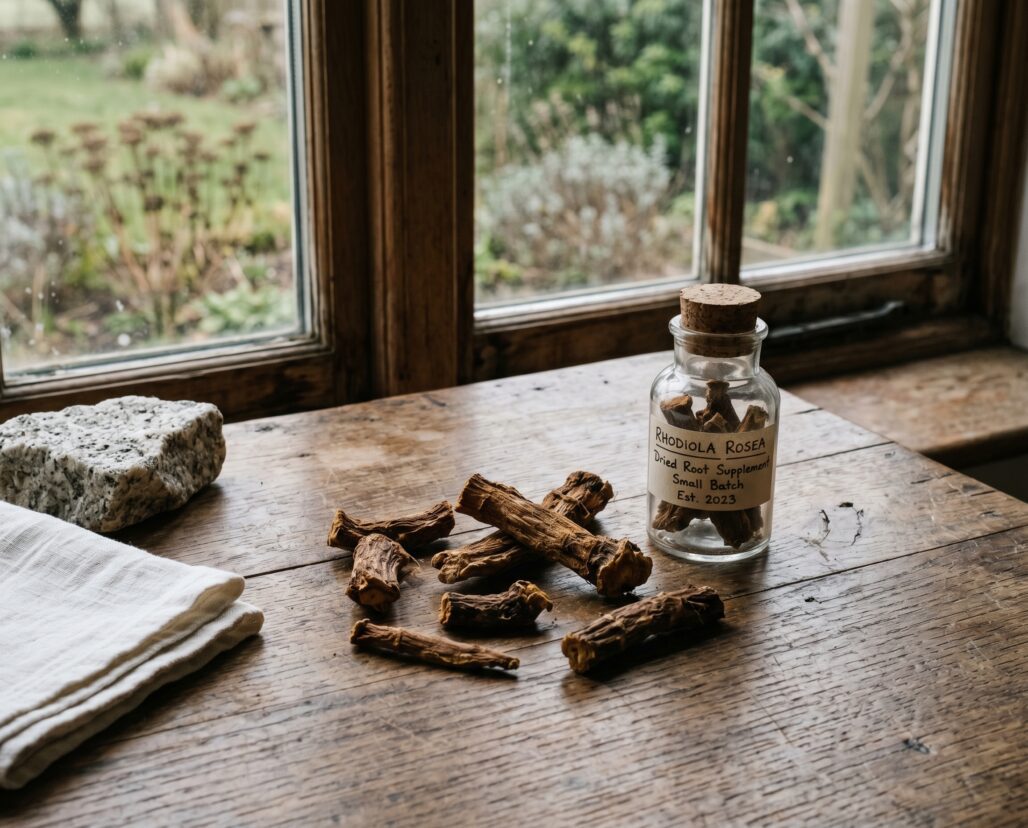
Summary: quick answer on rhodiola dosage
The RCT-supported dose range is 200–680mg/day of SHR-5 or equivalent extract standardized to 3% rosavins + 1% salidroside.
Best for: Adults managing occupational fatigue, burnout-adjacent stress, or performance dips from sustained mental load. Most trials recruited physically healthy adults with work-related fatigue.
Not ideal for: Anyone on SSRIs, SNRIs, MAOIs, or stimulant medications without physician clearance. Rhodiola has documented serotonergic activity and additive stimulant-like effects. Also not studied in pregnancy.
What to check before buying: Is the extract standardized to both rosavins AND salidroside? A product listing "standardized to 3% rosavins" only, without salidroside content, doesn't match the clinical trial specification.
Decision shortcut: If you're managing fatigue from chronic stress, start with the lower end of the RCT range (200–340mg/day). Don't assume more milligrams means more effect; some rhodiola research suggests a flatter dose-response above 400mg.
What you'll find in this guide
- How rhodiola dosing was studied in humans
- The SHR-5 extract and why the marker ratio matters
- Why timing matters: the HPA-axis rationale for morning dosing
- Who fits the RCT profile and who doesn't
- Side effects and drug interactions
- What to look for in a product
- Frequently asked questions
How rhodiola dosing was studied in humans {#how-rhodiola-dosing-was-studied}
Rhodiola rosea has a narrower but more consistent human trial record than many adaptogens. Most of the credible dose data comes from studies using the SHR-5 extract, a standardized preparation that was the subject of several Scandinavian pharmaceutical-grade trials in the 2000s.
The key trials and what doses they used
The most-cited foundation study is a 2009 Phase III placebo-controlled RCT by Olsson et al. (n=60) published in Planta Medica. Participants received 576mg/day of SHR-5 extract for 28 days. At four weeks, the group showed statistically significant improvement on the Multidimensional Fatigue Inventory versus placebo, with no serious adverse events reported. That dose (576mg/day) sits toward the higher end of what's been tested.
An earlier pilot RCT by Darbinyan et al. (2000) used a much lower dose, 170mg/day of SHR-5, in night-shift physicians assessed for fatigue and cognitive performance. Over 42 nights, the rhodiola group showed meaningful performance differences on tests of mental fatigue. The n was small (n=56), and the crossover design has methodological limits, but the dose-direction is useful: improvements appeared even at the lower end of the range.
A 2012 trial by Hung et al. examined 340mg/day of a rhodiola extract in adults with life-stress symptoms (n=80, 12 weeks). Participants showed significant improvements in stress, fatigue, mood, and concentration scores. Notably, improvements were measured as early as day 3, which the authors attributed to rhodiola's acute adaptogenic activity rather than cumulative building.
Taken together, these three trials anchor the effective dose window at roughly 170–576mg/day of SHR-5 extract, with the strongest evidence clustering around 200–340mg/day for general stress-fatigue and up to 576mg/day for clinically validated fatigue reduction.
The headline range (200–680mg/day) extends to 680mg to capture upper-dose trials, including a 2015 comparison study by Lekomtseva et al. using WS-1375, another standardized rhodiola preparation, at 680mg/day in adults with burnout (n=118, 12 weeks). The higher dose did not appear to perform better than mid-range doses in that population.
Actionable takeaway: The RCT evidence does not support a "more is better" strategy for rhodiola. The curve flattens above 400mg/day in stress-fatigue contexts. Dose escalation beyond trial-tested ranges has no clinical evidence base.
A note on unstandardized root powder
Many budget rhodiola products are simply "rhodiola root powder" or "rhodiola extract 5:1" without disclosing the rosavin or salidroside percentage. This is a significant problem: rhodiola's active marker compounds vary widely across plant sources, harvest timing, and extraction methods. Buying 500mg of undisclosed root powder is meaningless as a dose reference; the actual active compound load could be negligible. Standardized to X% rosavins is meaningful. "Rhodiola root powder" alone tells you nothing.
The SHR-5 extract and why the marker ratio matters {#the-shr-5-extract-and-the-marker-ratio}
SHR-5 is not a brand name in the traditional sense. It's a standardized extract specification developed by a Swedish pharmaceutical company that specifies both rosavin content (minimum 3%) and salidroside content (minimum 1%). Most of the legitimate Rhodiola rosea RCTs used this specification or a closely matched equivalent.
Rosavins vs salidroside: two different active compounds
Rhodiola's two key marker compounds are rosavins (a group of cinnamyl alcohol glycosides unique to Rhodiola rosea) and salidroside (also called tyrosol glucoside, found in other Rhodiola species too). Both are considered pharmacologically active. Rosavins are thought to contribute to the adaptogenic and anti-fatigue effects; salidroside has been associated with neuroprotective and antidepressant-like activity in preclinical models, per a 2016 review in Phytomedicine.
Think of rosavins and salidroside like the two hands of a clock: both need to be in position for the reading to make sense. A product that only specifies rosavin content is giving you one number without the other.
The 3:1 rosavin-to-salidroside ratio
The naturally occurring ratio in high-quality Rhodiola rosea root is approximately 3:1 (3% rosavins to 1% salidroside). When you see a product labeled "3% rosavins, 1% salidroside," that matches the plant's natural profile and the clinical trial specification. Ratios that deviate significantly from this are not equivalent to what trials used; especially watch for products that only specify salidroside without rosavins, which may indicate Rhodiola crenulata (a cheaper species) rather than Rhodiola rosea.
The NCCIH's rhodiola fact sheet notes that product quality and composition vary considerably among rhodiola supplements, and that consumers should look for products standardized to the species Rhodiola rosea (not other Rhodiola species) with disclosed marker compound percentages.
Actionable takeaway: When reading a rhodiola label, check for: (1) Rhodiola rosea species specified, (2) 3% rosavins AND 1% salidroside on the label, and (3) a dose in the 200–600mg range per serving.
Timing: the HPA-axis rationale for morning dosing {#timing-the-hpa-axis-rationale}
Most rhodiola RCTs administered the extract in the morning, typically 30 minutes before breakfast. This timing wasn't arbitrary.
Cortisol and the diurnal curve
Cortisol follows a pronounced daily rhythm. In healthy adults, cortisol peaks sharply in the first 30–60 minutes after waking (the cortisol awakening response), then declines across the day toward its lowest point around midnight. This is the HPA (hypothalamic-pituitary-adrenal) axis's natural operating cycle.
Rhodiola is thought to act partly by modulating stress-hormone responses through HPA-axis normalization, based on preclinical data reviewed in Panossian and Wikman 2010. Taking a modulatory agent during the ascending cortisol phase, when the axis is most active, is the rationale behind morning dosing. There are no human RCTs directly comparing morning vs evening rhodiola timing, so this remains a mechanistic inference rather than a clinical verdict. But it's consistent with how most trials were conducted.
Practical implication: avoid evening dosing
Rhodiola is mildly activating for some people, particularly at higher doses. Several participants in rhodiola trials have reported insomnia or difficulty winding down when doses were taken in the afternoon. The Olsson 2009 paper specifically notes the morning administration schedule. Evening dosing may counteract rhodiola's activating profile with your body's natural wind-down.
Rhodiola is not a sedative adaptogen. It sits on the activating end of the adaptogen spectrum, unlike ashwagandha, which tends to reduce cortisol output and works better for some people in the evening. That activating profile makes morning timing the sensible default.
Who fits the RCT profile and who doesn't {#who-fits-the-rct-profile}
The populations studied in rhodiola RCTs were specific. Extrapolating to other populations involves some uncertainty.
Strong fit
Adults experiencing work-related or occupational fatigue, specifically the kind that builds over weeks or months of sustained mental load. The Olsson 2009 cohort was described as having "stress-related fatigue," a burnout-adjacent condition. The Hung 2012 trial recruited adults with "life-stress symptoms." The Darbinyan 2000 trial focused on night-shift physicians. All these represent chronic, sustained-demand fatigue, not acute sleep deprivation or illness-related tiredness.
Physically healthy adults with normal thyroid function, not on psychiatric medications, with no autoimmune conditions.
Who should be cautious or skip it
Anxiety disorders with medication management. Rhodiola's activating properties may worsen anxiety symptoms in susceptible individuals. If you're managing anxiety with SSRIs or benzodiazepines, the interaction considerations below apply directly.
People on antidepressants. The serotonergic mechanism of rhodiola's salidroside has been discussed in preclinical literature; combined with SSRIs or SNRIs, the risk of additive serotonin-related effects is plausible. This doesn't mean the risk is high, but it warrants medical clearance before combining.
Pregnancy and breastfeeding. No human safety data exists for rhodiola in pregnancy. Standard adaptogen caution applies: avoid in the absence of evidence.
Autoimmune conditions. Some adaptogens, including rhodiola, have immune-modulating properties in animal models. People on immunosuppressive regimens should check with their prescriber.
These populations were excluded from most trials.
Side effects and drug interactions {#side-effects-and-drug-interactions}
Rhodiola's adverse-effect profile in trials has been mild. But its interaction profile is worth knowing precisely because the risks are specific and not always disclosed by product marketing.
Reported adverse effects from trials
In the Olsson 2009 trial (n=60, 28 days, 576mg/day), adverse events were infrequent and mild: some participants reported dizziness, dry mouth, or headache. No serious adverse events were recorded. Similar patterns appeared in the Hung 2012 trial. At lower doses (200–340mg/day), adverse effects were rare. Insomnia or agitation with evening dosing has been reported by participants in multiple trials but is largely avoidable with morning administration.
Drug interactions (CRITICAL: read before starting)
SSRIs and SNRIs (serotonin reuptake inhibitors / serotonin-norepinephrine reuptake inhibitors). Salidroside, one of rhodiola's active compounds, has demonstrated monoamine oxidase inhibitory-like and serotonin-modulating activity in preclinical models. Combining rhodiola with serotonergic antidepressants (sertraline, fluoxetine, venlafaxine, duloxetine, etc.) may increase serotonin-related side effects, and in rare cases carries a theoretical serotonin syndrome risk. Per Memorial Sloan Kettering's integrative herbs database, rhodiola should be used with caution alongside antidepressants and serotonergic medications.
Stimulants (caffeine, amphetamines, modafinil, methylphenidate). Rhodiola has an activating adaptogenic profile. Taken alongside high-dose caffeine or prescription stimulants, it may produce additive stimulant-like effects: elevated heart rate, anxiety, or insomnia. The real question isn't whether rhodiola works in combination with your morning coffee. Moderate caffeine is a different league from prescription stimulants. It's whether adding a mild activating agent on top of an existing stimulant load tips the balance.
Anti-anxiety medications (benzodiazepines, buspirone). No direct interaction data in humans. Combining a stimulant-profile adaptogen with sedating anxiolytics may partially offset the therapeutic effects of either. Theoretical, not documented, but worth flagging to your prescriber.
Diabetes medications. Some preclinical data suggests rhodiola may affect blood glucose. The clinical significance in humans is unclear, but people on insulin or oral hypoglycemics should monitor glucose if starting rhodiola.
Anticoagulants. No well-documented interaction, but several adaptogens have mild platelet or coagulation effects in animal models. If you're on warfarin or other blood thinners, inform your prescriber and monitor INR.
The NCCIH rhodiola overview summarizes the evidence base and interaction considerations in accessible form.
Pregnancy and breastfeeding
No human safety data. Standard recommendation: do not use during pregnancy or while breastfeeding unless under physician supervision.
Actionable takeaway: The side-effect profile at trial doses is mild, but the drug interaction list is real. Anyone on psychiatric medications, stimulants, or anticoagulants should discuss with their prescriber before starting rhodiola.
What to look for in a product {#what-to-look-for-in-a-product}
Rhodiola's market is crowded and label quality varies widely. Here's what the clinical evidence actually supports looking for.
The species-and-standardization check
Species: Rhodiola rosea, not Rhodiola crenulata, Rhodiola imbricata, or generic "rhodiola." Only Rhodiola rosea matches the SHR-5 trial profile.
Standardization: 3% rosavins and 1% salidroside, both disclosed. A product claiming only one of these is not matching the clinical extract specification.
Dose per serving: 200–680mg per serving, ideally in the 200–400mg range for a daily single dose, or up to 576mg if divided.
Third-party testing
An adaptogen brand can have impressive marketing and still miss third-party testing for the active marker compound. Look for products that list an independent testing certificate (NSF Certified for Sport, USP Verified, or ConsumerLab reviewed). These programs verify that the claimed active compound percentages are actually in the capsule.
Product card placeholders
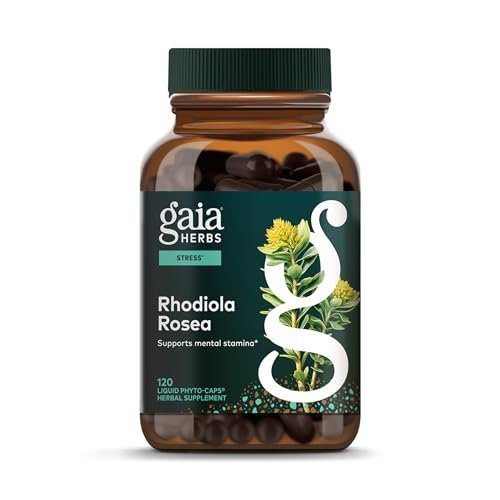
For a deeper comparison of specific brands with third-party testing verification, see our best rhodiola supplement guide.
Frequently asked questions {#frequently-asked-questions}
What dose of rhodiola worked in clinical trials?
The range across successful human RCTs spans 170–576mg/day of SHR-5 or equivalent standardized extract. The Olsson 2009 trial used 576mg/day; the Hung 2012 trial used 340mg/day; both showed significant outcomes versus placebo. The Darbinyan 2000 night-shift physician trial found effect even at 170mg/day, though its crossover design has limitations.
Does more rhodiola mean a stronger effect?
Not reliably. The Lekomtseva 2015 trial used 680mg/day without outperforming mid-range doses in the same population. Pharmacological data suggests a flatter dose-response curve above 400mg, consistent with adaptogenic biphasic patterns. Starting at the lower end of the clinical range is sensible.
When should I take rhodiola?
Most RCTs administered rhodiola 30 minutes before breakfast. The morning timing aligns with the cortisol awakening response and rhodiola's mildly activating profile. Afternoon or evening dosing has been associated with sleep disturbance in some trial participants.
How long before rhodiola works?
Some trial participants reported subjective improvements within the first week (Hung 2012 noted early response data). Statistically significant fatigue reduction in the Olsson 2009 trial was measured at 28 days. If you've taken a standardized extract at an RCT-range dose for 4–6 weeks without any perceptible effect, it's unlikely to work for your presentation.
Can I take rhodiola with caffeine?
No serious interactions are documented at moderate caffeine levels (one or two cups). High-dose caffeine or prescription stimulant combinations warrant caution due to additive activating effects.
Is rhodiola safe with antidepressants?
This is a question for your prescribing physician, not a supplement guide. Salidroside has preclinical serotonergic activity, and Memorial Sloan Kettering's integrative herbs database flags caution for serotonergic medications. Do not combine with SSRIs, SNRIs, or MAOIs without physician clearance.
What's the difference between rosavins and salidroside?
Rosavins are a group of compounds unique to Rhodiola rosea. Salidroside (tyrosol glucoside) occurs in Rhodiola rosea and other Rhodiola species. Both are considered pharmacologically active. The SHR-5 clinical specification requires both: 3% rosavins and 1% salidroside, in a 3:1 ratio that reflects the natural plant profile. Products specifying only one marker may be using a different species or an extraction process that doesn't replicate the clinical-trial product.
Conclusion: the bottom line on rhodiola dosage
The RCT evidence points to a clear window: 200–680mg/day of an extract standardized to 3% rosavins and 1% salidroside, taken in the morning, for 4–12 weeks. The strongest evidence clusters at 340–576mg/day. Going higher than 680mg has no trial support; going lower than 200mg puts you outside the range where effects were reliably demonstrated.
But the dose number on the label is only half the story. An unstandardized root powder at 800mg tells you less about bioactive load than a 300mg capsule with disclosed 3% rosavins and 1% salidroside from Rhodiola rosea. Standardization labels matter more than pretty branding.
The interaction picture is real and specific: SSRIs, SNRIs, stimulants, and anti-anxiety medications all require physician clearance before combining. Rhodiola is not a "harmless herbal" category. It's a pharmacologically active extract with documented preclinical serotonergic activity.
Next steps:
- Read the Rhodiola Rosea Evidence Guide for the full mechanism and evidence tier breakdown.
- See our morning vs evening adaptogen timing guide for how rhodiola compares to ashwagandha across the diurnal cycle.
- For energy-specific context, rhodiola for energy and fatigue covers the fatigue-outcome trials in more depth.
- For safety specifics, rhodiola side effects covers the adverse-event data by dose and population.
Related reading
- Rhodiola Rosea: Complete Evidence Guide
- Best Rhodiola Supplement: Third-Party Tested Picks for 2026
- Morning vs Evening Adaptogens: When to Take What
- Rhodiola for Energy and Fatigue: What the Trials Show
- Rhodiola Side Effects, Safety, and Who Should Skip It
As an Amazon Associate, I earn from qualifying purchases. Product recommendations are based on real reviews and independent research.
This article is for informational purposes and not medical advice. Rhodiola rosea can interact with antidepressants (including SSRIs and SNRIs), stimulant medications, anti-anxiety drugs, anticoagulants, and blood-glucose-lowering medications. Consult a licensed physician before starting rhodiola, particularly if you are pregnant, nursing, taking any prescription medications, or managing a chronic condition.
As an Amazon Associate, I earn from qualifying purchases. Product recommendations are based on real reviews and independent research.
This article is for informational purposes and not medical advice. Herbal adaptogens, even traditional ones, can interact with thyroid medication, antidepressants, anticoagulants, immunosuppressants, blood-pressure drugs, and more. Consult a licensed physician before starting any adaptogen, particularly if you are pregnant, nursing, taking prescription medications, or managing a chronic condition.
