
Why this happens to almost everyone
You are standing in the kitchen, bottle in hand, and your brain goes blank. Did you already take it this morning, or are you remembering yesterday? It is a strange, slightly unnerving little blank, and it has nothing to do with your memory being bad.
Taking a daily pill or supplement is a habit, and habits run on autopilot. When you do something the same way every day, your brain stops recording it as a separate event. That is the whole point of a habit, and it is also why the action does not leave a clear memory you can replay later. Researchers who study why people miss doses point to this kind of everyday forgetfulness as one of the most common reasons, not as a sign of anything wrong.
So the first thing to do is relax. This is a routine moment with a calm, methodical answer. Below is how to work out what actually happened, when it is fine to move on, and the few situations where the safe move is a quick call rather than a guess.
Figure out what happened, before you do anything
Resist the urge to either skip or double on a hunch. Spend two minutes gathering evidence. Most of the time it points clearly one way.
- Count the pills against the date. If you started the bottle on a known day, do the math. A 30-count bottle opened on the 1st should have a predictable number left on any given morning. One pill off from what you expect usually tells the story.
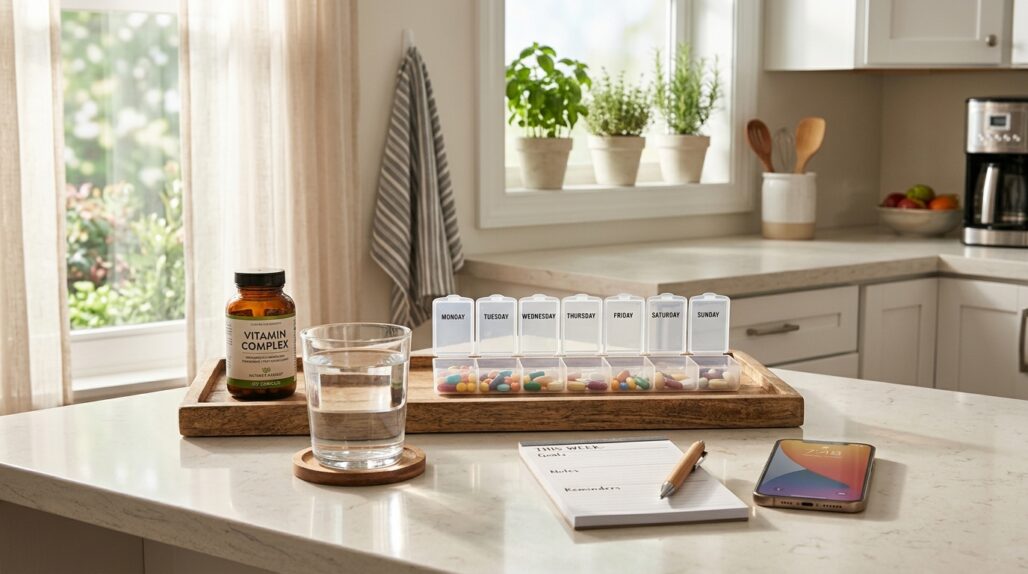
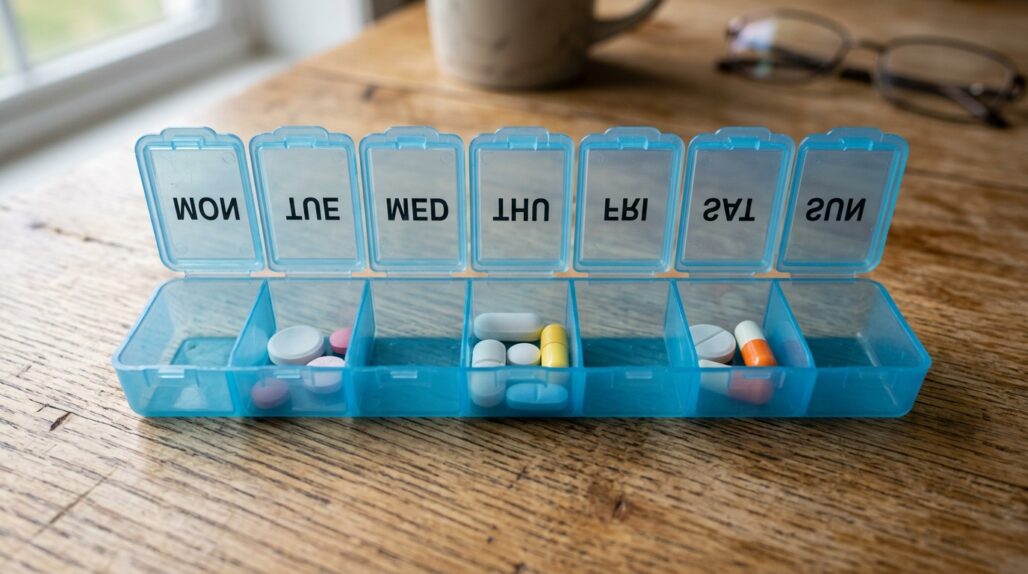
- Check your organizer. If you use a weekly pill box, this is the fastest answer in the world. An empty Wednesday slot on Wednesday afternoon means you took it. A full one means you did not.
- Retrace the routine. Walk back through your morning. Did you fill the glass? Is the glass in the sink? Do you remember the taste of a chalky tablet or the size of a capsule? Small physical traces are surprisingly reliable.
- Look for the leftovers. A wrapper in the bin, a blister pack with one more popped cell, a cap left loose. These are the breadcrumbs your autopilot self leaves behind.
If two or three of these line up, trust them. You almost certainly have your answer, and you can carry on with your normal schedule.
The safety rule that matters most
Here is the part to take seriously. For most everyday supplements, a single missed dose is low risk. Vitamins, fish oil, magnesium, and similar products work over weeks and months, so one skipped day rarely changes anything. The NIH Office of Dietary Supplements still recommends talking with your healthcare provider about what you take, since some supplements can interact with medicines. If you genuinely cannot tell and it is a basic supplement, the cautious move is usually to skip the questionable dose rather than risk taking two.
Prescription medication is a different matter. Do not take a second dose of a prescription to "catch up" without checking first. The FDA labeling for the blood thinner warfarin, for example, tells patients in plain language not to take a double dose to make up for a missed one, because doing so raises the risk of dangerous bleeding. Pharmacist guidance from the American Society of Health-System Pharmacists SafeMedication resource gives the same general caution: take a missed dose when you remember if it is not close to the next scheduled one, but do not take extra doses at once, and call if you are unsure.
Some categories deserve real care. Doubling up on these can cause harm, so a possible double is a pharmacist question, not a guess:
| If it is… | Why doubling is risky | What to do |
|---|---|---|
| A blood thinner (warfarin, apixaban, rivaroxaban) | Extra dose can raise bleeding risk | Call your pharmacist or anticoagulation clinic before acting |
| A heart or blood pressure medicine | Can drop blood pressure or heart rate too far | Check with your pharmacist; mention any dizziness |
| A diabetes medicine or insulin | Can push blood sugar dangerously low | Call your pharmacist or doctor; know your low-sugar signs |
| A seizure or psychiatric medicine | Levels need to stay steady; extra doses cause side effects | Ask your pharmacist for the specific missed-dose rule |
| A basic vitamin or supplement | Usually low risk either way | When in doubt, skip the questionable dose |
When the uncertainty is about a critical prescription, treat it as something to ask about rather than something to solve in your head. Pharmacists field this exact question every day, and a thirty-second call is far better than the wrong assumption. If you have already taken what might be a double and you feel off in any way, that is a reason to call sooner.
A manual method so you never wonder again
The lasting fix is to remove the guesswork from tomorrow. None of this needs an app or a gadget. Pick one of these and stick with it.
- Use a weekly pill organizer. This is the single most reliable trick, and the CDC describes pillboxes and blister packs as a proven, low-cost way to keep daily routines clear. Fill it on the same day each week. After that, "did I take it" answers itself: the slot is either empty or it is not.
- Habit-stack onto something you already do. Attach the dose to a fixed anchor, like the coffee maker finishing or brushing your teeth at night. Pairing it with an existing routine turns a vague intention into a reliable cue.
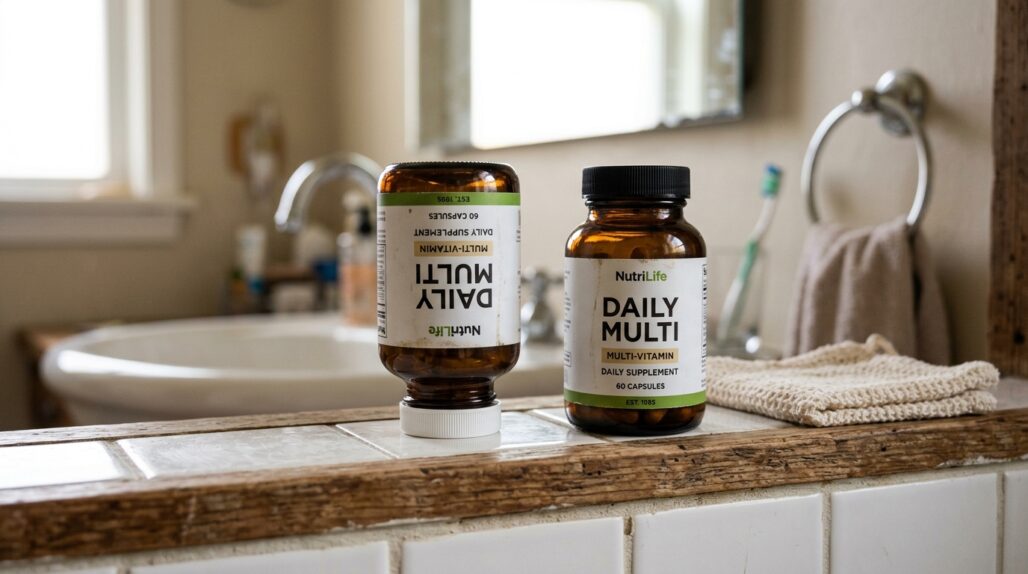
- Turn the bottle. Keep the bottle upside down, and flip it upright the moment you take the dose. One glance tells you whether today is done.
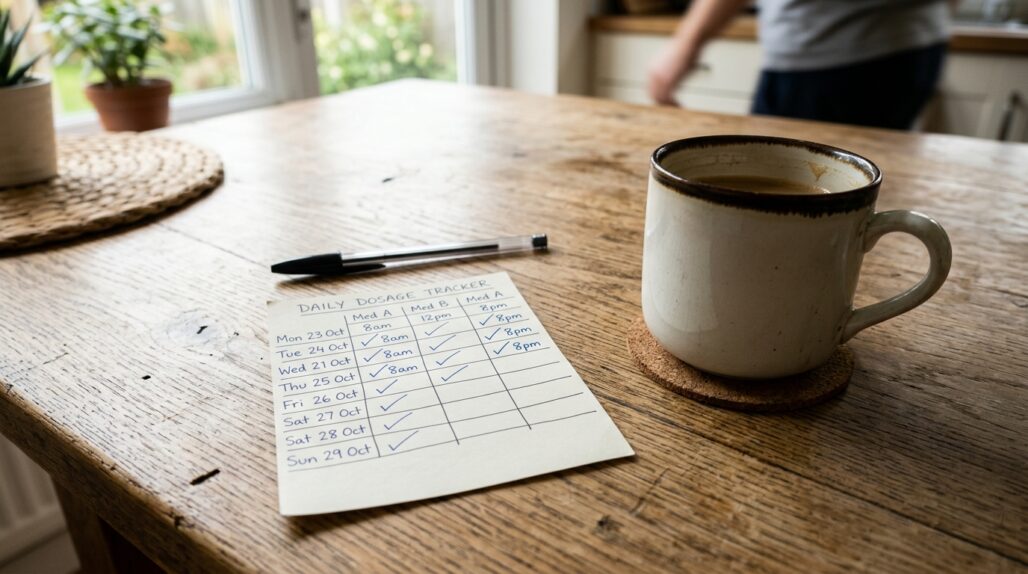
- Keep a paper dose log. Tape a simple sheet to the cabinet and tick a box each day. It costs nothing and works during a power outage.
Here is a printable log you can copy onto a sticky note or index card. One row per day, one column per dose:
| Day | Morning | Evening |
|---|---|---|
| Mon | [ ] | [ ] |
| Tue | [ ] | [ ] |
| Wed | [ ] | [ ] |
| Thu | [ ] | [ ] |
| Fri | [ ] | [ ] |
| Sat | [ ] | [ ] |
| Sun | [ ] | [ ] |
Whatever you choose, the goal is the same: make the answer visible so your brain does not have to recall it. The real fix is removing the guesswork next time, and a free app we make, StackMyMed, logs each dose the moment you tap taken, so tomorrow you just open it instead of counting pills in the bottle. If you prefer paper, the organizer or the log above does the same job, and for anything about whether two doses are safe, that stays a question for your pharmacist rather than the app.
When this is really a timing question
Sometimes the worry is not "did I take it" but "did I take it at the right time," which is a separate and common concern, especially when you juggle several products. If spacing is your real puzzle, our supplement and medication timing guide walks through morning, with-meal, and evening slots in detail.
And if part of the unease is whether the things you take could clash with each other, that is worth a proper look. You can start with our drug and supplement interaction checker, read the deeper background in the complete guide to drug and supplement interactions, and bring anything you find to your pharmacist. None of these replace that conversation; they help you arrive at it with good questions, the way our supplement review process is built to do.
FAQ
Is it bad to accidentally skip one day of a supplement? For most everyday vitamins and supplements, no. They build up gradually, so a single missed day rarely matters. When you are unsure and it is a basic supplement, skipping the questionable dose is usually the safer choice than doubling.
Can I take two doses to make up for the one I might have missed? Not without checking, especially with prescriptions. The FDA’s warfarin labeling specifically tells patients not to double up for a missed dose. If it is a prescription medicine, call your pharmacist before taking a second dose.
Why can I never remember taking my pill? Because daily doses run on autopilot, and habits do not leave clear memories. It is one of the most common reasons people lose track of doses, and it is not a sign your memory is failing.
What is the most reliable way to stop wondering? A weekly pill organizer. The CDC points to pillboxes as a proven, low-cost way to keep daily routines clear, because an empty slot tells you the dose is done at a glance.
Which medications are dangerous to double up on? Blood thinners, heart and blood pressure medicines, diabetes medicines and insulin, and seizure or psychiatric drugs are the main ones. For any of these, treat a possible double as a pharmacist call, not a guess.
What if I already took what might be a double dose? If it was a basic supplement and you feel fine, it is usually low risk. If it was a prescription, or you feel dizzy, unusually tired, or otherwise off, call your pharmacist or doctor, and seek urgent care for severe symptoms.
The bottom line
When you cannot remember whether you took today's dose, gather the evidence first: count the pills, check the organizer, and retrace your routine before you decide anything. A single missed supplement is almost always low risk, but never double up on a prescription to catch up without asking your pharmacist, because some medicines are genuinely dangerous to take twice. Then set up one simple system, an organizer, a habit anchor, or a paper log, so tomorrow you are not guessing at all. The one action that matters most: when the question is about a critical prescription, make it a pharmacist question rather than a hunch.
This article is for general information and is not medical advice. It does not replace guidance from your own doctor, pharmacist, or other qualified healthcare professional, and you should not start, stop, or change any medication or supplement based on it alone.
StackMyMed is made by UsefulVitamins. It helps you organize your list and flag things to discuss with a pharmacist or doctor; it is not a diagnosis or treatment tool and does not replace professional medical advice.
Reviewed by the UsefulVitamins Editorial Team.
