
If you've ever wondered whether the timing of your adaptogen matters, or whether you can just take everything at once with your morning coffee, the short answer is: often yes, timing matters, but the evidence is more nuanced than most adaptogen brands admit. This article breaks down the circadian cortisol logic behind timing, reviews which adaptogens have trial data supporting specific time-of-day dosing, and tells you which ones carry a real risk if you take them at the wrong time. You'll also get a practical decision table, honest notes on drug interactions with stimulants and sedatives, and product pointers for the three timing categories.
Affiliate disclosure: this article contains affiliate links. As an Amazon Associate, UsefulVitamins.com earns from qualifying purchases at no extra cost to you.
Quick answer: morning vs evening adaptogens
Timing your adaptogens to match your natural cortisol curve is a reasonable strategy, supported in part by how RCTs have designed their dosing protocols.
Best for morning use: Rhodiola rosea, Panax ginseng, eleuthero. Each has stimulant-adjacent effects and a documented insomnia risk when taken late in the day.
Best for evening use: Ashwagandha (KSM-66 or Sensoril), holy basil. These are associated with cortisol blunting and sleep-onset improvement in clinical trials, effects that align with your body's need to wind down.
Timing-flexible: Lion's mane (Hericium erinaceus). Its mechanism is neurotrophin-supportive, not stimulant or sedating. Most trials used morning dosing by default, but no insomnia or sedation signals have appeared in RCT adverse-event reports.
Not ideal for rigid timing-based protocols: anyone expecting timing alone to fix disrupted sleep or chronic fatigue without addressing caffeine load, sleep hygiene, or underlying chronic illness.
Decision shortcut: if your adaptogen has "energizing" in its marketing copy, it probably should not be taken after 2 PM.
What you'll find in this guide
- The cortisol curve that drives the timing logic
- Morning adaptogens: the energizing HPA modulators
- Evening adaptogens: cortisol blunting and sleep onset
- Timing-flexible adaptogens
- Drug interactions: caffeine, alcohol, and prescription timing
- Who should not rely on timing protocols
- Product picks by timing category
- Frequently asked questions
The cortisol curve that drives the timing logic {#the-cortisol-curve}
Cortisol is not constant throughout the day. The Cortisol Awakening Response (CAR) produces a sharp spike within 30 to 45 minutes of waking, typically reaching its daily peak between 8 and 9 AM, then declining over the rest of the day. By midnight, cortisol in most adults is at or near its nadir.
This pattern, well-documented in human circadian research (reviewed by Stalder et al., 2016), has practical implications for adaptogens that work on the hypothalamic-pituitary-adrenal (HPA) axis. An adaptogen that blunts or modulates cortisol output will have different physiological consequences depending on when the cortisol signal is naturally high versus low.
Think of cortisol like a thermostat with a daily schedule. In the morning, the setpoint is deliberately high: it mobilizes glucose, sharpens alertness, and prepares you for demands. By evening, the setpoint drops to let sleep happen. Some adaptogens nudge that thermostat down. That's useful at night, but counterproductive first thing in the morning when you need the natural rise.
The timing logic that follows is derived largely from this cortisol physiology plus how specific adaptogen RCTs actually structured their dosing. Most trials used twice-daily dosing (AM and PM), which limits how precisely we can isolate a single time-of-day effect. Where trials used only morning dosing, that is noted.
Actionable takeaway: Circadian cortisol rhythm gives you a biological rationale for timing, but it's the starting framework, not a precise prescription. Use it to avoid obvious mismatches, not to micromanage your supplement schedule to the minute.
Morning adaptogens: the energizing HPA modulators {#morning-adaptogens}
Rhodiola rosea: the clearest case for AM-only
Rhodiola (Rhodiola rosea) is the adaptogen with the strongest practical argument for morning-only dosing. Its active marker compounds, rosavins and salidrosides, influence serotonin, dopamine, and norepinephrine reuptake, producing effects that parallel mild stimulants in clinical trials.
In a 2009 Phase III RCT (Olsson et al., n=60), SHR-5 rhodiola extract at 576mg/day for 28 days produced statistically significant improvement in the Multidimensional Fatigue Inventory versus placebo. The dosing protocol in that trial used morning administration. Participants in several smaller rhodiola trials have reported difficulty sleeping when doses were taken in the afternoon or evening, a signal noted in the NCCIH rhodiola overview.
This is not merely anecdotal: the insomnia risk with late-day rhodiola is documented enough that Memorial Sloan Kettering's integrative medicine database lists it as a known adverse effect to watch for. Most practitioners suggest taking rhodiola before noon, ideally before 10 AM. With breakfast or coffee is acceptable, though the caffeine interaction is worth understanding (see the drug-interactions section below).
Actionable takeaway: Take rhodiola before 10 AM. If you experience sleep disturbance within the first week of use, morning timing is your first corrective variable before reducing dose.
Panax ginseng and eleuthero: lower certainty, same directional logic
Panax ginseng (Panax ginseng C.A. Meyer) and eleuthero (Eleutherococcus senticosus, also called Siberian ginseng) share a similar stimulant-adjacent mechanism. Both appear to modulate HPA reactivity in ways associated with increased alertness. Neither has a large AM-versus-PM RCT, but multiple small human trials used morning dosing by default, and both the NCCIH ginseng fact sheet and the Memorial Sloan Kettering eleuthero entry flag insomnia as a potential adverse effect.
For eleuthero specifically, the ADAPT-232 combination product (eleuthero, schisandra, and rhodiola) studied in an RCT (Panossian et al., PMID 20374974) used morning dosing for the fatigue-reduction protocol. Treating eleuthero like rhodiola in terms of timing is the conservative, evidence-adjacent position.
Evening adaptogens: cortisol blunting and sleep onset {#evening-adaptogens}
Ashwagandha: the most RCT-grounded case for evening use
Ashwagandha (Withania somnifera) is the adaptogen with the deepest human trial evidence for evening or bedtime dosing. The mechanism is cortisol modulation via withanolides acting on HPA feedback. The real question is not whether ashwagandha can lower cortisol, but what the timing of that effect looks like.
In a 2019 RCT (Salve et al., n=60, PMID 32021735), participants given KSM-66 ashwagandha (300mg twice daily for 8 weeks) showed significant improvement in sleep quality (Pittsburgh Sleep Quality Index) and serum cortisol reduction. The twice-daily protocol included a bedtime dose. A 2012 RCT (Chandrasekhar et al., n=64, PMID 23439798) using 300mg KSM-66 twice daily found a 28% reduction in serum cortisol versus a 7% reduction in placebo at 60 days.
The bedtime dose in the Salve 2019 trial is the most direct RCT anchor for evening ashwagandha use. If you're taking ashwagandha once daily rather than twice, the sleep-and-cortisol data points most clearly to before-bed dosing. If twice daily, the AM/PM split used in the RCTs is the most evidence-adjacent approach.
Ashwagandha does not act like a sedative. It doesn't induce drowsiness through histamine or GABA pathways. The sleep improvement in RCTs reflects cortisol normalization, which creates conditions for sleep, not sleep itself.
Holy basil: lower certainty, supportive evidence
Holy basil (Ocimum sanctum, also called tulsi) has one moderate-quality human trial. A 2008 study (Bhattacharyya et al., n=158, PMID 19253862) found improvements in stress, anxiety, and cognitive function with twice-daily tulsi extract. No strict evening-only protocol was tested, but the anti-anxiety and cortisol-adjacent effects make evening use reasonable.
The caution with holy basil in a timing context: it has some evidence for blood-glucose lowering effects, which may be relevant if taken at bedtime by people using insulin or sulfonylureas. The NCCIH holy basil page flags blood-sugar interaction as a topic to discuss with a prescriber.
Timing-flexible adaptogens {#timing-flexible}
Lion's mane: cognitive support without a timing signal
Lion's mane (Hericium erinaceus) works through a different pathway than HPA-targeting adaptogens. Its bioactive hericenones and erinacines support nerve growth factor (NGF) synthesis. The 2009 RCT (Mori et al., n=30, PMID 18844328) and a 2010 RCT (Nagano et al., n=30, PMID 20834180) both used morning dosing, but neither was designed to test timing. Neither trial reported sleep disturbance or sedation adverse events.
Lion's mane is more like fertilizer for existing neural connections than a stimulant or sedative. You won't feel it acutely on any given day, and taking it at night versus morning is unlikely to produce a noticeable difference. Morning is conventional and carries no risk. If evening is more convenient for you, the current evidence suggests that's fine.
Drug interactions: caffeine, alcohol, and prescription timing {#drug-interactions}
This section is required for this article because all adaptogens discussed here (ashwagandha, rhodiola, Panax ginseng, eleuthero, holy basil) have documented interaction profiles.
Rhodiola + caffeine: additive stimulant effect
Rhodiola and caffeine are both stimulant-adjacent. Stacking them amplifies the alertness and heart-rate effects. For most adults this is tolerable at typical doses. For people sensitive to caffeine, or those using caffeine for athletic performance at the high end of intake, adding rhodiola to a morning pre-workout protocol can push stimulant load higher than expected. The NCCIH rhodiola overview does not list a formal drug interaction with caffeine, but the additive physiological mechanism is consistent with rhodiola's monoamine-reuptake effects. Take rhodiola without caffeine first if you're new to it; observe your response before combining.
Ashwagandha + alcohol: sedation risk at bedtime
Ashwagandha's cortisol-modulating effects are distinct from sedation, but some individuals report increased drowsiness, particularly with higher evening doses. Alcohol is a CNS depressant. Taking ashwagandha at bedtime alongside alcohol use is not a documented formal drug interaction, but the combination may produce stronger-than-expected drowsiness. Per Memorial Sloan Kettering's ashwagandha profile, ashwagandha should be used cautiously with other CNS-active compounds.
Ashwagandha + thyroid medication: timing is critical
Ashwagandha has demonstrated stimulation of thyroid hormone in multiple case reports, including TSH suppression. For patients on levothyroxine or other thyroid hormone replacement, the timing of ashwagandha relative to thyroid medication matters because both can affect the same hormonal axis. Per Memorial Sloan Kettering's integrative herbs database, this interaction warrants prescriber review before starting ashwagandha. Do not self-manage the timing of ashwagandha around thyroid medication.
Ginseng + anticoagulants: INR interaction
Panax ginseng has documented interaction with warfarin. Case reports and pharmacokinetic studies suggest ginseng can affect CYP enzyme activity and platelet aggregation, potentially altering INR (clotting time). The Memorial Sloan Kettering Panax ginseng entry flags this as a clinically relevant interaction. If you take warfarin, heparin, or other anticoagulants, do not add ginseng without explicit physician review.
Holy basil + hypoglycemic drugs: blood glucose monitoring
Holy basil has shown blood-glucose lowering activity in small human studies. Patients using insulin, metformin, or sulfonylureas who add holy basil may experience lower blood glucose than expected, particularly if the holy basil is taken at bedtime around the same time as medication. Monitor blood glucose more carefully during the first weeks of combined use and consult your prescriber.
Eleuthero + sedatives: biphasic caution
Eleuthero is generally stimulant-adjacent, but some reviews note potential mild sedative effects at high doses, creating a biphasic dose-response. More herb is not always more useful, and at high eleuthero doses the expected alerting effect can reverse. If you're also using prescription sedatives, benzodiazepines, or sleep medication, adding eleuthero without prescriber review is inadvisable.
Pregnancy and breastfeeding: None of the adaptogens in this article have adequate human safety data in pregnancy. Rhodiola has shown potential uterotonic effects in some animal models. Ashwagandha should be avoided in pregnancy. The precautionary default for all adaptogens is: do not use during pregnancy or while breastfeeding unless under physician guidance.
| Adaptogen | Key interaction | Severity signal | Source |
|---|---|---|---|
| Rhodiola | Caffeine: additive stimulant | Moderate | NCCIH |
| Ashwagandha | Thyroid meds: TSH effect | High, prescriber required | MSK |
| Ashwagandha | CNS depressants / alcohol | Low-moderate | MSK |
| Panax ginseng | Warfarin/anticoagulants: INR change | High, prescriber required | MSK |
| Holy basil | Hypoglycemics: blood sugar | Moderate, monitor | NCCIH |
| Eleuthero | Sedatives: possible biphasic effect | Low-moderate | MSK |
Who should not rely on timing protocols {#who-should-skip}
Timing optimization is a refinement. It presupposes you've already handled the basics. This framework is not appropriate as a primary intervention for:
People with untreated sleep disorders. If you have obstructive sleep apnea, circadian rhythm disorder, or chronic insomnia driven by hyperarousal or anxiety disorder, ashwagandha at bedtime is a peripheral intervention. Address the primary cause first.
People on multiple interacting medications. The interaction table above is not exhaustive. Anyone on thyroid medication, anticoagulants, immunosuppressants, antidepressants, or psychiatric medications should consult a pharmacist or physician before adding any adaptogen, regardless of timing.
People expecting rapid effects. The cortisol-reduction effects documented in ashwagandha RCTs emerged at 4 to 8 weeks of daily use. Rhodiola's fatigue benefits appeared by 4 weeks in the Olsson 2009 trial. Timing protocols do not accelerate onset. Consistent daily use over multiple weeks is the central variable.
Actionable takeaway: If you're managing multiple medications or a diagnosed sleep disorder, bring the timing table above to your pharmacist or prescriber before using it as a protocol.
Product picks by timing category {#product-picks}
For each Amazon query in the brief, a placeholder is provided for the pipeline's card-insertion step.
Morning pick: rhodiola
Look for a product standardized to at least 3% rosavins and 1% salidrosides. "Rhodiola rosea root powder" without standardization percentages tells you nothing about potency. Capsule form is preferable to bulk powder for consistent dosing.
Evening pick: ashwagandha KSM-66
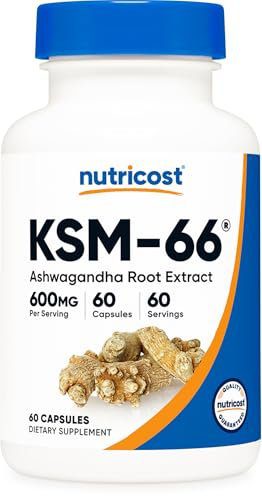
KSM-66 and Sensoril are the two extract forms with the most RCT backing. Products using unspecified "ashwagandha root extract" without a branded extract designation typically have no published safety or efficacy data at the manufacturer level. Standardization to 5%+ withanolides is the floor for meaningful dosing.
Timing-flexible pick: adrenal support blend
Combination products that include both ashwagandha and rhodiola (or eleuthero and schisandra) may seem like an easy one-capsule solution, but they complicate timing because the stimulant-adjacent ingredients and the cortisol-blunting ingredients have opposite timing logic. Review ingredient lists carefully. If a blend has rhodiola plus ashwagandha in a single capsule, the manufacturer is assuming you'll ignore timing entirely.
As an Amazon Associate, I earn from qualifying purchases. Product recommendations are based on real reviews and independent research.
Frequently asked questions {#faq}
Can I take ashwagandha and rhodiola together?
You can, but the timing conflict is real. Rhodiola is stimulant-adjacent and best taken in the morning. Ashwagandha's sleep-and-cortisol benefits align with evening dosing. If you use both, take rhodiola before 10 AM and ashwagandha before bed, not in a single combined dose. Combination products that include both in one capsule ask you to choose one timing, which means one ingredient is working against its ideal window.
Does it matter if I take adaptogens with food or on an empty stomach?
For ashwagandha, most RCTs used dosing with food. Taking ashwagandha on an empty stomach is associated with mild GI discomfort in some users; food reduces this. For rhodiola, the Olsson 2009 trial protocol was taken 30 minutes before breakfast and lunch, suggesting an empty-stomach approach worked at least in that cohort. There's no strong across-the-board rule.
How long before I notice any difference in sleep with ashwagandha?
The Salve 2019 RCT (PMID 32021735) found measurable sleep quality improvements at 8 weeks. Some participants in smaller trials report subjective changes by week 4. If you see no change after 8 weeks of standardized KSM-66 or Sensoril at 300mg twice daily, the evidence does not support continuing to add dose or extend duration indefinitely.
Why do most adaptogen products not mention timing on the label?
Because labeling rules for dietary supplements in the US (under DSHEA, FDA) do not require manufacturers to specify time-of-day dosing, and most brands prefer the convenience narrative of "take once daily." The timing logic is derived from how clinical trials structured their dosing, not from manufacturer guidance.
Is it safe to take lion's mane every day long-term?
The Mori 2009 trial (PMID 18844328) ran for 16 weeks without significant adverse events in elderly participants. Long-term safety data beyond that timeframe remain limited. Rare reports of allergic reaction exist. If you have a known mushroom allergy, consult a physician before use.
Can shift workers use a morning-evening timing framework?
Not straightforwardly. Shift work disrupts circadian cortisol rhythm, meaning the "morning" peak may occur during what the clock calls midday or afternoon. For timing adaptogens around cortisol, you'd need to anchor to your wake time, not clock time. There's a fuller discussion of this challenge in Adaptogens for Shift Workers: Navigating an Inverted Circadian Clock.
Related reading
- Best Adaptogens for Stress: A Practical 2026 Guide
- Rhodiola Dosage Guide: What the RCTs Actually Used
- Stacking Adaptogens Safely: What Combinations Have Evidence
- Ashwagandha for Sleep: Does the Evidence Actually Support It?
- Adaptogens for Shift Workers: Navigating an Inverted Circadian Clock
This article is for informational purposes and not medical advice. Herbal adaptogens, even traditional ones, can interact with thyroid medication, antidepressants, anticoagulants, immunosuppressants, blood-pressure drugs, and more. Consult a licensed physician before starting any adaptogen, particularly if you are pregnant, nursing, taking prescription medications, or managing a chronic condition.
As an Amazon Associate, I earn from qualifying purchases. Product recommendations are based on real reviews and independent research.
This article is for informational purposes and not medical advice. Herbal adaptogens, even traditional ones, can interact with thyroid medication, antidepressants, anticoagulants, immunosuppressants, blood-pressure drugs, and more. Consult a licensed physician before starting any adaptogen, particularly if you are pregnant, nursing, taking prescription medications, or managing a chronic condition.
