
If you're searching for the best adaptogens for stress, the honest answer is: ashwagandha has the strongest human RCT evidence for chronic stress, but it isn't right for everyone, and several alternatives are worth knowing. This guide ranks five adaptogens by evidence tier, not by marketing spend. You'll learn which one has two replicated placebo-controlled trials behind it, which shows genuine promise but thinner evidence, and which popular options you can reasonably skip. You'll also get a plain-language look at the drug interactions that most product pages leave out entirely.
Affiliate disclosure: this article contains affiliate links. As an Amazon Associate, UsefulVitamins.com earns from qualifying purchases at no extra cost to you.
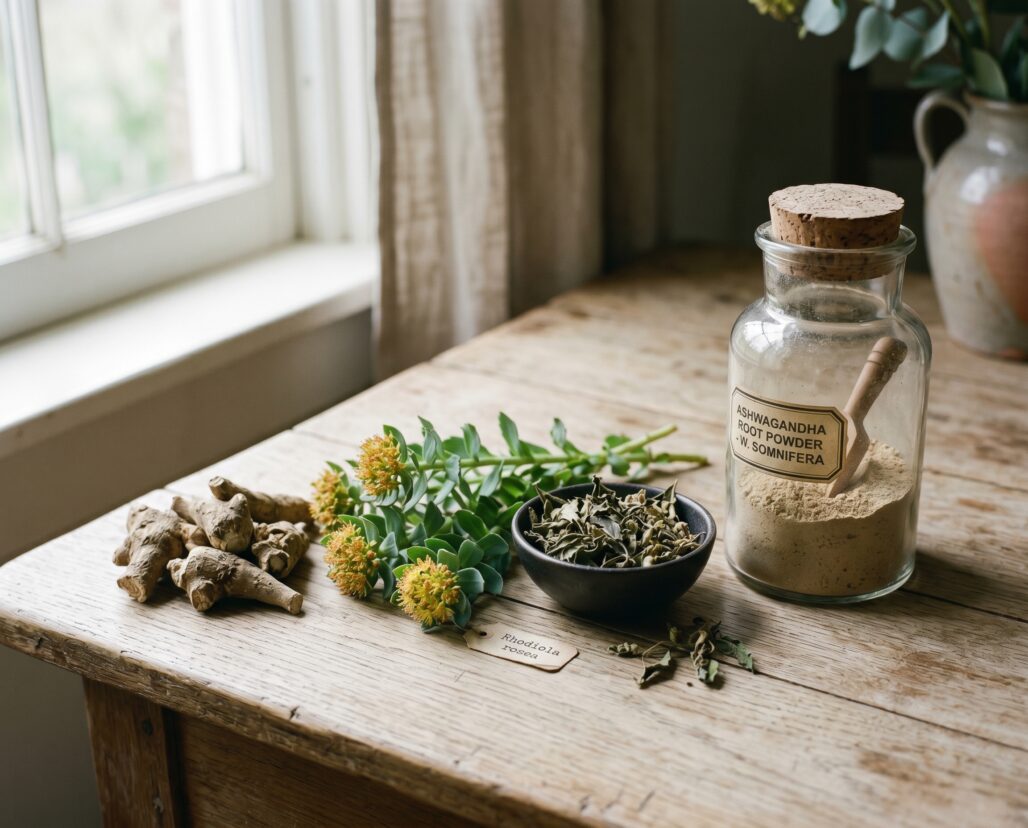
Summary / Quick Answer: which adaptogen is best for stress?
Ashwagandha (KSM-66 or Sensoril extract) is the best-supported single adaptogen for chronic stress, with two independent RCTs showing measurable cortisol reduction at 8 weeks.
- Best for: Adults with chronic stress lasting three months or longer, normal thyroid function, no immunosuppressant use
- Not ideal for: Anyone on thyroid medication, immunosuppressants, or sedatives; pregnant women; anyone whose stress is primarily situational (acute, short-duration)
- What to look at before buying: Standardization claim (KSM-66 or Sensoril vs. plain root powder), third-party verification, withanolide percentage
- Decision shortcut: If you can only buy one, buy KSM-66 ashwagandha. If you have burnout-pattern fatigue alongside stress, add rhodiola as a second choice after checking for antidepressant conflicts.
What you'll find in this guide
- How adaptogens work on stress physiology
- The evidence tiers, ranked
- Product picks with buying criteria
- Who should take adaptogens and who should skip them
- Dosing ranges from clinical trials
- Side effects and drug interactions
- Frequently asked questions
How adaptogens work on stress physiology {#how-adaptogens-work-on-stress}
Adaptogens are a class of herbs defined by a specific functional criterion: they help the body maintain homeostasis under physical or psychological load, without causing dependence. The term was coined by Soviet researcher Nikolai Lazarev in 1947 and refined through decades of Soviet military research before Western interest picked up in the 1990s.
For a deeper foundation on the category as a whole, see our Complete Guide to Adaptogens.
The stress connection runs through the HPA (hypothalamic-pituitary-adrenal) axis. Under chronic stress, the HPA axis keeps cortisol elevated past the point that's useful. Cortisol works like a thermostat: useful when spiking briefly in response to a real challenge, counterproductive when stuck on high for weeks. Adaptogens are studied for their ability to help reset that setpoint, not to eliminate cortisol entirely but to reduce the baseline elevation that chronic stress produces.
The active compounds vary by plant. In ashwagandha (Withania somnifera), the primary actives are withanolides, steroidal lactones that appear to modulate glucocorticoid signaling. In rhodiola rosea, rosavins and salidrosides are the marker compounds and are linked to monoamine regulation. Holy basil (Ocimum sanctum, also called tulsi) contains eugenol and rosmarinic acid, with proposed anti-cortisol and anti-inflammatory pathways. Eleuthero (Eleutherococcus senticosus, sometimes called Siberian ginseng) contains eleutherosides, primarily studied for fatigue resistance and cognitive performance under stress.
Buying ashwagandha without checking the withanolide percentage is like buying olive oil labeled "Mediterranean blend" without checking the oleic acid content. The label tells you almost everything except what matters.
The evidence tiers, ranked {#evidence-tiers-ranked}
Tier 1: Ashwagandha (Withania somnifera)
Ashwagandha has the most replicable human RCT data of any adaptogen for chronic stress.
In a 2012 prospective, randomized, double-blind placebo-controlled trial (Chandrasekhar et al., n=64), participants with a documented history of chronic stress took 300mg of full-spectrum ashwagandha root extract twice daily for 60 days. Both perceived stress scale (PSS) scores and serum cortisol were significantly reduced versus placebo (PSS: p<0.0001, cortisol: p=0.0006). Adverse events were mild and comparable between groups.
A 2019 follow-up (Salve et al., n=60) tested two doses (250mg/day and 600mg/day) of KSM-66 ashwagandha over 8 weeks. Both doses reduced PSS scores and serum cortisol compared to placebo; the higher dose showed stronger effects (p<0.0001 for cortisol at 600mg/day). Sleep quality also improved in both active-treatment groups. This was notable as the first study to compare dose levels using this extract in a standardized protocol.
Two independent RCTs, two different dose ranges, both placebo-controlled: that's about as clean a signal as the supplement category produces.
The caveat: these trials used standardized extracts (KSM-66). Plain ashwagandha root powder with no withanolide disclosure tells you nothing about whether you're getting the active-marker concentration used in the trials.
Actionable takeaway: Look for KSM-66 or Sensoril on the label. Both are branded extracts standardized to withanolide content and have been used in multiple published trials. A label that just says "Ashwagandha root 500mg" without a standardization claim is not equivalent.
Tier 2: Rhodiola rosea (SHR-5 extract)
Rhodiola has meaningful RCT data, though primarily for fatigue and burnout-pattern stress rather than cortisol per se.
In a 2009 Phase III randomized, double-blind, placebo-controlled parallel trial (Olsson et al., n=60), participants took SHR-5 rhodiola extract at 576mg daily for 28 days. The treatment group showed significant improvement in Pines' burnout scores, improved attention performance on computerized testing, and a reduced cortisol response to awakening stress versus placebo. No serious adverse effects were attributed to the extract.
Rhodiola's mechanism differs from ashwagandha's. Its active compounds (rosavins, salidrosides) appear to modulate monoamine systems, which is why it's studied for fatigue, cognitive clarity, and low-mood states under chronic load. Think of it as more of a neurological reset than a cortisol-suppression tool.
But traditional use is not the same as RCT evidence. Rhodiola has a long history in traditional Scandinavian and Russian folk medicine for endurance under cold and hardship. That history is interesting context. The human RCT picture is promising but smaller than ashwagandha's, and the MSK integrative herbs database documents a case report of tachycardia when rhodiola was combined with an antidepressant, which matters for the drug-interaction section below.
Actionable takeaway: For burnout-pattern stress (mental fog, low motivation, wired-but-tired) rhodiola may be a better primary choice than ashwagandha. Look for extracts standardized to 3% rosavins and 1% salidrosides. If you take any antidepressant or blood-pressure medication, check the drug-interaction section before buying.
Tier 3: Holy Basil (Ocimum sanctum / Tulsi)
Holy basil has a smaller human trial base. The most cited stress-relevant trial is a 2008 controlled clinical study (Bhattacharyya et al., n=35) in which participants with generalized anxiety disorder symptoms took 500mg Ocimum sanctum leaf extract twice daily for 60 days. Anxiety, stress, and depression subscale scores all improved significantly versus baseline (p<0.001 for each). The study was hospital-based but lacked explicit blinding information in its published abstract, which limits how much weight to put on these results alone.
In Ayurveda, holy basil has been used for centuries as a rasayana (adaptogenic tonic) and classified as an anti-stress herb. This traditional use is historically consistent with the modern direction of research, but it's not itself clinical evidence.
For readers who want a daily-ritual approach and are sensitive to the sedating or immunomodulatory effects associated with ashwagandha, tulsi tea or a standardized extract is a lower-risk option with genuine preliminary data. The evidence ceiling is lower than ashwagandha's, but so is the drug-interaction risk for most users.
Tier 4: Eleuthero (Eleutherococcus senticosus)
Eleuthero is sometimes grouped with rhodiola as an "energy and endurance" adaptogen. The ADAPT-232 combination study (Aslanyan et al., 2010, n=40) tested a single 270mg dose of a standardized combination of rhodiola, schisandra, and eleuthero in healthy females and found significant improvement in attention and accuracy under stress conditions within two hours (p<0.05). The limitation: this was a combination product, not eleuthero alone, and it was a single-dose pilot study in healthy (not chronically stressed) participants.
Eleuthero's standalone stress RCT data is thin. Most of the evidence base is older Soviet-era research, much of which was never published in peer-reviewed Western journals in a form that allows proper assessment. The real question isn't whether eleuthero works in Soviet occupational-stress research from the 1970s, it's whether the human dose proves out in modern controlled trials. That evidence is sparse.
For a full head-to-head comparison between the top two options, see Ashwagandha vs Rhodiola for Stress: Which Adaptogen Wins?
What to skip
Schisandra (standalone): The most cited combination data includes schisandra in multi-herb formulas (ADAPT-232 above). Standalone stress RCT data for schisandra in humans is essentially absent as of 2026.
Ashwagandha from brands with no withanolide disclosure: An adaptogen brand can have impressive marketing and still miss third-party testing for the active marker compound. If the product label says "ashwagandha root powder" without a withanolide percentage or a standardized extract name, you're likely paying for inert plant fiber.
Product picks {#product-picks}
The following products match the extraction and standardization criteria established by the clinical trials above. Amazon cards below are populated from PA-API lookup and verified by the insert script.
Top pick: ashwagandha for chronic stress
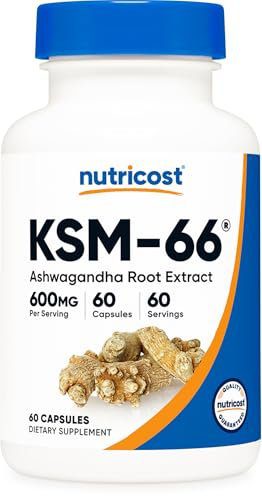
Why this pick: KSM-66 is the most-studied standardized ashwagandha extract, appearing in both the Chandrasekhar 2012 and Salve 2019 trials. At 600mg/day, this matches the higher-dose arm of the Salve 2019 study.
Skip if: You take thyroid medication, immunosuppressants, or sedatives. See the drug-interaction section.
Premium pick: pharmaceutical-grade manufacturing
Why this pick: Pure Encapsulations is NSF-certified with documented third-party manufacturing controls. The premium matters if you're on other medications where contamination risk is a real concern, or if you have sensitivities to common capsule fillers.
Skip if: Budget is the primary constraint. Nutricost KSM-66 is meaningfully cheaper and uses the same branded extract.
Rhodiola pick
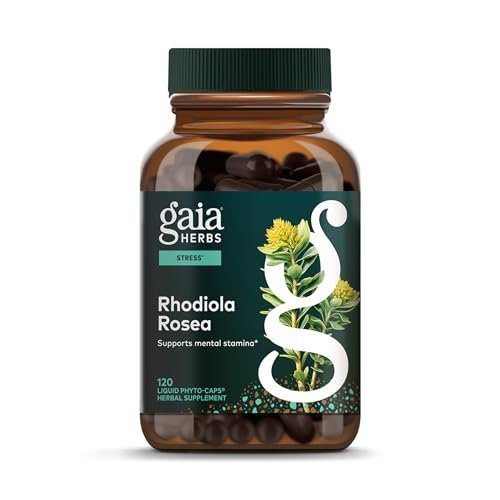
Why this pick: Gaia Herbs' rhodiola is standardized to rosavins and salidrosides, the marker compounds studied in the Olsson 2009 trial. Gaia publishes traceability data via their "Meet Your Herbs" database.
Skip if: You take any antidepressant, MAO inhibitor, or blood-pressure medication. Rhodiola has documented monoamine-interaction risk.
Holy basil / tulsi pick
Why these picks: Both use standardized Ocimum sanctum leaf extract. Organic India's Tulsi Stress Relief combines tulsi with other adaptogens (ashwagandha, brahmi) for a synergistic approach; the Now Foods version is a simpler single-herb extract for those who want to isolate the effect.
Skip if: You're on anticoagulants or blood-sugar medications. Holy basil has documented interactions with both classes of drugs.
Eleuthero pick
Why this pick: Solgar is a legacy supplement brand with clean manufacturing standards. Eleuthero earns a spot for its fatigue-resistance data in combination studies, though its standalone stress evidence is limited.
Skip if: You take digoxin. MSK's integrative herbs database documents elevated digoxin serum levels associated with eleuthero use.
Who should take adaptogens and who should skip them {#who-should-take-them}
Use this quick screen before buying:
| Question | If yes, read this |
|---|---|
| Is your stress chronic (lasting 3+ months)? | Adaptogens most studied for this profile. Single-event stressors probably don't warrant them. |
| Are you on thyroid, immunosuppressant, or antidepressant medication? | See drug-interaction section before starting any adaptogen covered here. |
| Have you addressed sleep and caffeine load first? | Adaptogens don't substitute for 7-8 hours of sleep or replacing four daily espressos. |
| Are you pregnant or breastfeeding? | Most adaptogens lack pregnancy safety data. Avoid. |
Strong fit: Adults with documented chronic stress (workplace burnout, chronic anxiety symptoms lasting months), normal thyroid and immune function, no relevant prescription medications, and realistic 8-week timeline expectations.
Weak fit or skip: Situational stress around a discrete event (exam, job interview, bereavement). Adaptogens operate at the hormonal regulation level over weeks. That may be appropriate for occupational stress, but unnecessary for situational anxiety.
Dosing ranges from clinical trials {#dosing-from-clinical-trials}
These are the dose ranges used in the cited clinical trials, reported in past tense. This is not a prescription or recommendation.
Ashwagandha: In the Chandrasekhar 2012 trial, participants took 300mg of full-spectrum ashwagandha root extract twice daily (600mg/day total) for 60 days. In Salve 2019, the two arms used 250mg/day and 600mg/day for 8 weeks; both reduced cortisol, with the 600mg arm showing stronger effects.
Rhodiola: In the Olsson 2009 trial, participants took SHR-5 extract at 576mg daily (four tablets) for 28 days.
Holy basil: In the Bhattacharyya 2008 study, participants took 500mg Ocimum sanctum leaf extract twice daily (1,000mg/day total) for 60 days.
Eleuthero (in combination): The ADAPT-232 pilot used a 270mg single dose of the three-herb combination. Isolated daily-dose data for standalone eleuthero in stress populations is not available from modern controlled trials.
Duration pattern: Most trials measured effects at 4-8 weeks. None of the cited studies established long-term safety data beyond 3 months.
More on how each adaptogen fits into a cortisol-management strategy is in our piece on Best Adaptogens for Cortisol.
Side effects and drug interactions {#side-effects-and-drug-interactions}
This section covers the specific named interactions documented for each adaptogen. References are drawn from the NCCIH ashwagandha fact sheet, Memorial Sloan Kettering's integrative herbs database, and the MSK entries for rhodiola and Siberian ginseng.
Ashwagandha interactions
Thyroid medications: Multiple case reports document thyrotoxicosis following ashwagandha use, with symptoms resolving after discontinuation. Per the MSK database, ashwagandha may increase thyroxine levels. Anyone taking levothyroxine, methimazole, or other thyroid hormone regulators should not start ashwagandha without discussing it with a prescribing physician.
Immunosuppressants: The MSK database documents a kidney transplant rejection case in a patient using ashwagandha, requiring graft nephrectomy and dialysis. Withanolides appear to modulate immune activity; taking ashwagandha alongside tacrolimus, cyclosporine, mycophenolate, or biologics carries real risk.
Sedatives and anticonvulsants: Ashwagandha appears to have GABAergic activity and may potentiate benzodiazepines, barbiturates, and anticonvulsant medications. Clinical trials have generally not investigated this combination systematically; caution applies.
CYP3A4 interactions: Ashwagandha acts as a moderate CYP3A4 inducer, which can affect blood levels of drugs metabolized by that enzyme pathway, including some statins, antiretrovirals, and calcium channel blockers.
Pregnancy: Ashwagandha should be avoided during pregnancy. Per the MSK entry, higher doses have been associated with abortifacient effects in historical records.
Rhodiola interactions
Antidepressants: Rhodiola has documented MAO-inhibitory activity. The MSK database cites a case report of a 26-year-old woman experiencing fast and irregular heartbeat after taking rhodiola alongside her antidepressant medication for three days. Combined use with SSRIs, SNRIs, or MAOIs is a real risk.
Stimulants: Rhodiola's monoamine-modulating effects may be additive with stimulant medications or high-dose caffeine, increasing the risk of cardiovascular side effects.
CYP3A4 and CYP2C9 substrates: Rhodiola inhibits both enzymes, which can affect drugs like warfarin and phenytoin. Anyone on warfarin anticoagulation therapy should not add rhodiola without INR monitoring.
Holy basil interactions
Anticoagulants: Holy basil contains eugenol, which has antiplatelet activity. Adding it to warfarin, aspirin, or other blood-thinning protocols may increase bleeding risk. This is a theoretical interaction documented in pharmacological literature rather than a large clinical trial, but the mechanism is plausible.
Blood-sugar medications: Holy basil has demonstrated hypoglycemic effects in some human studies. Combining it with metformin, sulfonylureas, or insulin increases the risk of blood-sugar dropping too low.
Pregnancy: Insufficient safety data exist for holy basil during pregnancy. Most integrative medicine guidelines recommend avoiding it.
Eleuthero interactions
Digoxin: The MSK database documents that eleuthero elevated serum digoxin levels in a case report and may cause falsely elevated digoxin immunoassay readings. Anyone on digoxin for heart conditions should not take eleuthero.
CYP enzyme interactions: Eleutherosides B and E show in vitro inhibition of CYP2C9 and CYP2E1; clinical relevance has not been established in controlled human trials, but the potential for affecting drug metabolism exists.
Pregnancy and breastfeeding: Per the MSK entry, eleuthero should be avoided while breastfeeding due to unknown safety profile in this population.
Frequently asked questions {#frequently-asked-questions}
Which adaptogen is best for stress and anxiety?
Ashwagandha (KSM-66 or Sensoril extract) has the most replicated RCT evidence for reducing perceived stress and serum cortisol in chronically stressed adults. For anxiety-adjacent symptoms, the Chandrasekhar 2012 RCT and Salve 2019 RCT both showed significant PSS-score reductions. Rhodiola is a reasonable second choice if the primary complaint is fatigue and mental fog alongside stress.
How long before an adaptogen works for stress?
The Chandrasekhar 2012 RCT measured significant effects at 60 days. The Salve 2019 study saw significant improvements within 8 weeks. Expect no meaningful result before 4 weeks on a standardized extract at the trial-matched dose. If you see no effect at 8 weeks of KSM-66 at 300mg twice daily, it is unlikely to work for your particular stress profile.
Can I take multiple adaptogens at once?
The ADAPT-232 study (Aslanyan et al., 2010) tested a combination of rhodiola, schisandra, and eleuthero with measurable cognitive benefits under stress. However, combining adaptogens also stacks their interaction risks. Combining ashwagandha and rhodiola, for example, means both a potential immunomodulatory effect and a potential MAO-inhibitory effect. Start with one adaptogen, assess tolerance, and consult a physician before stacking if you're on prescription medications.
Do adaptogens lose effectiveness over time?
There is no published human RCT evidence for receptor downregulation or tolerance specific to ashwagandha or rhodiola at the doses and durations studied. Some practitioners recommend cycling (5 days on, 2 days off, or a one-month break every three months) but this is not supported by any clinical trial data. The Chandrasekhar 2012 and Salve 2019 trials both ran continuously for 8 weeks without evidence of diminishing returns.
Are adaptogens safe for daily use?
Short-term daily use (up to 3 months) appears safe for ashwagandha per the NCCIH fact sheet, with adverse events in trials being mild and comparable to placebo. Rhodiola was studied for up to 28 days in the Olsson 2009 trial without serious adverse events. Long-term safety data beyond 3 months is limited for most adaptogens covered here.
Can I take adaptogens with coffee?
For ashwagandha: no significant interaction with caffeine documented in clinical trials. For rhodiola: caution applies because of its monoamine activity and potential additive stimulant effect with high caffeine doses.
What is the difference between KSM-66 and Sensoril ashwagandha?
Both are standardized ashwagandha root extracts with withanolide content verified. KSM-66 is a full-spectrum root extract standardized to 5% withanolides by conventional extraction. Sensoril is standardized to 8% withanolides plus 32% oligosaccharides from both root and leaf. Most published stress and cortisol trials have used KSM-66. Sensoril appears in sleep and anxiety trials. Both are significantly superior to unstandardized root powder.
Adding this to a few other supplements? Our companion app, StackMyMed, scans the label, tracks your real daily intake, and schedules the best time to take it around everything else in your routine.
Conclusion: the bottom line on adaptogens for stress
The adaptogen category is real, but it is not uniformly supported. Ashwagandha, specifically KSM-66 or Sensoril extracts, has the strongest and most replicated human RCT evidence for chronic stress and cortisol regulation. Two independent placebo-controlled trials, two dose ranges, consistent direction of effect. That's a signal worth acting on if your stress is chronic, your thyroid is healthy, and you're not on immunosuppressants or sedatives.
Rhodiola is a credible second choice for burnout-pattern stress, with one solid RCT behind it and a different mechanism (monoamine modulation vs. cortisol suppression) that makes it complementary to ashwagandha for some readers. Holy basil is a gentler, lower-evidence option with fewer interaction concerns. Eleuthero has a role in multi-herb fatigue protocols but sparse standalone stress data.
Actionable takeaway: The most common mistake in this category is buying non-standardized ashwagandha root powder and concluding that adaptogens don't work. Check the label for KSM-66 or Sensoril, confirm withanolide standardization, and set an 8-week minimum timeline before evaluating results.
Next steps:
- Check the drug-interaction screen before purchasing if you take any prescription medication
- Read Ashwagandha vs Rhodiola for Stress if you're deciding between the two
- If cortisol management is your primary goal, see Best Adaptogens for Cortisol
- If burnout is the primary complaint, see Adaptogens for Burnout
As an Amazon Associate, I earn from qualifying purchases. Product recommendations are based on real reviews and independent research.
Related reading
- Complete Guide to Adaptogens: How They Work, Who Should Use Them, and What the Research Actually Says
- Ashwagandha vs Rhodiola for Stress: Which Adaptogen Wins?
- Best Adaptogens for Cortisol: Evidence-Based Rankings and What to Skip
- Adaptogens for Burnout: What Actually Helps When You're Running on Empty
- Ashwagandha Complete Guide: Evidence, Dosing, and Who Should Avoid It
- Rhodiola Complete Guide: What the Research Says and Who It's Actually For
This article is for informational purposes and not medical advice. Herbal adaptogens, even traditional ones, can interact with thyroid medication, antidepressants, anticoagulants, immunosuppressants, blood-pressure drugs, and more. Consult a licensed physician before starting any adaptogen, particularly if you are pregnant, nursing, taking prescription medications, or managing a chronic condition.
As an Amazon Associate, I earn from qualifying purchases. Product recommendations are based on real reviews and independent research.
