
If you're wondering whether ashwagandha is actually worth adding to your routine, the honest answer is: often yes, specifically for chronic stress and sleep onset, and with real caveats around drug interactions that most guides skip. This article covers what the plant actually is, which active compounds drive the effects, what the best-quality human RCTs found (with actual numbers, not vague language), how KSM-66 and Sensoril differ, who should be cautious, and the specific medications ashwagandha can interfere with. You'll also get a dosing section grounded entirely in past-tense trial data, not prescriptions.
Affiliate disclosure: this article contains affiliate links. As an Amazon Associate, UsefulVitamins.com earns from qualifying purchases at no extra cost to you.

Summary / Quick Answer: does ashwagandha work?
Ashwagandha has the strongest human trial evidence of any common adaptogen for chronic stress and sleep onset. The evidence for testosterone and muscle support is promising but comes from smaller trials. Thyroid hormone and cognitive claims are real but more nuanced.
- Best for: Adults with chronic stress lasting three months or longer, elevated perceived stress scores, slow sleep onset, and normal thyroid function. The core trial cohorts fit this profile.
- Not ideal for: Anyone on levothyroxine or other thyroid hormone replacement, immunosuppressants, sedatives, benzodiazepines, or anti-diabetic medications without physician clearance first. Pregnancy is a hard contraindication.
- What to look for before buying: Standardized extract (KSM-66 or Sensoril), disclosed withanolide percentage (typically 5% for KSM-66, 10% for Sensoril), and third-party testing. "Ashwagandha root powder" with no standardization marker tells you nothing meaningful about dose.
- Decision shortcut: If your stress is chronic and your thyroid panel is normal, ashwagandha is the most evidence-backed adaptogen to try first. If your stress is situational (a tough week, a deadline), the case is much weaker.
What you'll find in this guide
- What ashwagandha actually is
- Withanolide chemistry: the active compounds
- KSM-66 vs Sensoril: the two extract families
- What the research actually shows
- Who it is for, and who should skip it
- Dosing: what clinical trials used
- Side effects and drug interactions
- Product picks
- Frequently asked questions
- Related reading
What ashwagandha actually is
Ashwagandha (Withania somnifera) is a small woody shrub in the Solanaceae family, the same plant family that includes tomatoes, peppers, and potatoes. The name "somnifera" is Latin for "sleep-inducing," a nod to its traditional use as a calming tonic. The plant is native to dry regions of India, North Africa, and the Mediterranean, and is now cultivated commercially across South Asia and the American Southwest.
In Ayurveda, ashwagandha has been classified for centuries as a rasayana, meaning a rejuvenative or tonifying herb. Traditional practitioners used root preparations to support energy, reproductive vitality, and resilience in aging. That is useful historical context, but traditional use is not the same as RCT evidence. The modern interest in ashwagandha is grounded in a distinct body of controlled human trials, not in ancient texts.
The medicinal parts are the root and, to a lesser extent, the leaves. The roots are dried and either powdered or extracted. The characteristic smell, often described as earthy and horse-like (the Sanskrit "ashwagandha" translates roughly to "smell of horse"), comes from iron content and specific alkaloids in the root.
Cortisol works like a thermostat. When it is stuck on high for weeks or months, you get the wired-tired feeling where sleep quality drops, appetite shifts, and motivation flattens. The claim made for ashwagandha is that its active compounds help reset the setpoint, not switch off the stress response entirely. Whether that claim holds up in controlled trials is the core question this guide addresses.
Actionable takeaway: The plant's traditional reputation as a calming tonic is contextual background. The actual evidence test is whether standardized human trials replicate that calming effect at measurable doses in controlled conditions. They mostly do, at 60 days, for chronic-stress populations.
Withanolide chemistry: the active compounds
The primary bioactive compounds in ashwagandha root are a family of steroidal lactones called withanolides, with withaferin A and withanolide D among the most studied. These are structurally similar to the body's steroid hormones, which helps explain why they may influence cortisol signaling and immune modulation.
Withanolides act through several proposed mechanisms. Animal and in vitro research suggests they modulate the HPA (hypothalamic-pituitary-adrenal) axis, the hormonal cascade that governs cortisol release under stress. In animal models, withanolide-rich extracts also showed inhibition of the NF-kB inflammatory pathway and interaction with GABA-A receptors, which may contribute to the observed anxiolytic and sleep-onset effects. These are mechanistic hypotheses, not proven clinical mechanisms. The human trials measure outcomes (cortisol levels, perceived stress scores, sleep onset times), but they do not directly prove which molecular pathway produces the effect.
The withanolide content of a supplement product depends entirely on how it is extracted and standardized. Dried ashwagandha root powder typically contains 0.3 to 0.5% withanolides by weight. Concentrated root extracts like KSM-66 and Sensoril are standardized to much higher levels, 5% and 10% respectively, making the active-compound dose per capsule far more predictable.
Standardized to X% withanolides is meaningful. "Ashwagandha root powder" alone tells you nothing about the dose you are actually getting.
The withalide alkaloids (somniferine, somnine) and iron in the root also contribute to the plant's overall pharmacological profile, but withanolides remain the primary marker compound used in clinical trials and product standardization.
KSM-66 vs Sensoril: the two extract families
Most of the rigorous human RCT evidence comes from products using one of two patented extract families. Understanding the difference helps you read supplement labels correctly.
KSM-66
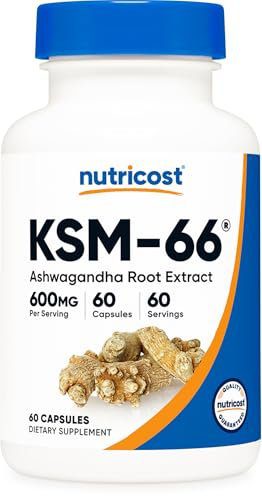
KSM-66 (manufactured by Ixoreal Biomed) is a root-only extract standardized to 5% withanolides. It is produced using a milk-based solubilization process, which the manufacturer argues preserves the full-spectrum phytochemical profile of the root. The extraction uses no alcohol or chemical solvents as the primary extraction medium.
Most of the well-known ashwagandha stress, cortisol, and testosterone RCTs used KSM-66, including the Chandrasekhar 2012 and Wankhede 2015 trials (PMIDs 23439798 and 26609282). Typical clinical doses ranged from 300mg twice daily to 600mg once daily.
Sensoril
Sensoril (manufactured by Natreon) uses both root and leaf of the plant, standardized to a higher withanolide concentration of 10% (with an additional oligosaccharide standardization). The extraction uses water and ethanol. Because of the higher withanolide density, Sensoril trials use lower gram-weight doses (125–250mg per serving) compared to KSM-66 (300mg per serving), but the withanolide mass per dose is roughly comparable.
Sensoril has been used in some of the sleep-focused ashwagandha trials. The 2019 Salve study (PMID 32021735) used a different standardized extract, not a branded one, at 250 or 600mg daily.
Which one is better?
The honest answer: both have respectable trial evidence, and neither has a head-to-head RCT against the other. KSM-66 has a larger body of published trials for stress, cortisol, and testosterone. Sensoril has more consistent representation in sleep-quality trials. If sleep is your primary concern, Sensoril is a reasonable choice. If stress and performance are primary, KSM-66 has more trial coverage. For most buyers, both are meaningfully better than unstandardized root powder.

What the research actually shows
The strongest evidence for ashwagandha in humans comes from a cluster of placebo-controlled RCTs across four outcome areas: stress and cortisol, sleep onset, testosterone and muscle performance, and cognitive function.
Stress and cortisol
The most-cited trial is the 2012 placebo-controlled RCT from Chandrasekhar, Kapoor, and Anishetty (Chandrasekhar et al., n=64). Adults with a history of chronic stress were given KSM-66 ashwagandha at 300mg twice daily or placebo for 60 days. The treatment group showed a significant reduction in serum cortisol compared to placebo (p=0.0006) and significantly improved scores on the Perceived Stress Scale at day 60 (p<0.0001). Adverse effects were mild and comparable between groups.
A 2019 double-blind RCT (Salve et al., n=60) extended that finding. Participants received either 250mg/day or 600mg/day of a standardized ashwagandha extract, or placebo, for eight weeks. Both active doses produced significant reductions in perceived stress (p<0.05 for 250mg; p<0.001 for 600mg) and in morning serum cortisol (p<0.05 and p<0.0001 respectively). Sleep quality also improved significantly at both doses versus placebo.
Two well-controlled trials showing cortisol reduction with the same class of extract, at consistent doses, over 60 days, is the kind of replication pattern that earns genuine confidence in an outcome.
Sleep onset and quality
The same Salve 2019 trial (PMID 32021735) measured sleep quality as a secondary outcome and found significant improvements versus placebo. The sleep benefit aligns with the proposed GABA-A modulating mechanism of withanolides, as well as the cortisol-lowering effect: sleep onset difficulty in chronic stress populations often correlates with elevated evening cortisol. Reducing cortisol burden may help normalize the evening cortisol dip that precedes healthy sleep.
This is one of the more plausible mechanistic pathways for ashwagandha sleep effects, rather than a direct sedative action. The "somnifera" in the Latin name reflects traditional observation of that effect, even if the specific mechanism was not understood historically.
Testosterone and muscle performance
In a 2015 double-blind RCT (Wankhede et al., n=57), healthy young men undergoing resistance training received KSM-66 at 300mg twice daily or placebo for eight weeks. The ashwagandha group showed significantly greater testosterone increases compared to placebo (mean increase: 96.2 ng/dL vs. 18.0 ng/dL, p=0.004). Muscle strength gains on the 1-RM bench press were also significantly higher in the treatment group (p=0.001).
One important caveat: this was an all-male cohort of active-resistance trainees, ages 18 to 50. The testosterone effect may be specific to the exercise-and-recovery context, not a general testosterone-boosting effect in sedentary men. The real question is not whether ashwagandha works in lab conditions, but whether the specific dose and population profile matches the person considering buying it.
The NCCIH ashwagandha fact sheet notes that limited data suggests 2 to 4 months of use might support testosterone and sperm quality, with the caveat that evidence quality remains preliminary.
Memory and cognitive function
A 2017 double-blind RCT (Choudhary et al., n=50) gave adults with mild cognitive complaints 300mg of KSM-66 twice daily or placebo for eight weeks. The ashwagandha group showed significant improvements across several Wechsler Memory Scale subtests, including logical memory (p=0.006), verbal paired associates (p=0.042), and faces (p=0.020). Executive function improved on the Eriksen Flanker task (p=0.002).
This is a smaller pilot trial and the population had pre-existing cognitive complaints, so the findings should not be extrapolated to healthy adults with normal baseline cognition. It does, however, suggest the HPA-axis modulation may have downstream effects on working memory and attention in stressed or cognitively burdened populations.
Actionable takeaway: The strongest case for ashwagandha is chronic stress plus sleep trouble in adults with normal thyroid function. The testosterone and cognitive data are real but apply to narrower populations. If your stress is situational or short-term, the chronic-stress-specific trial evidence is much less applicable.
Who it is for, and who should skip it
Strong fit
Adults experiencing chronic stress (three months or longer), elevated perceived stress, poor sleep onset related to stress, or males engaged in resistance training who want a modest evidence-backed testosterone support. The Chandrasekhar 2012 and Salve 2019 trial cohorts both used adults with documented chronic stress histories, so these populations map most directly to the evidence.
Adults over 40 with age-related cognitive complaints may also find the Choudhary 2017 data relevant, with the understanding that the trial was small and targeted a specific population.
Skip if
You take levothyroxine, liothyronine, or any thyroid hormone replacement. Case reports documented in the Memorial Sloan Kettering integrative herbs database indicate ashwagandha can stimulate TSH suppression and elevate thyroxine levels, which can lead to thyrotoxicosis symptoms in patients on thyroid medication. This is a real clinical concern, not a theoretical one.
You take immunosuppressants (tacrolimus, cyclosporine, mycophenolate, or any biologic for autoimmune disease). Withanolides appear to modulate immune function, and there is a documented case report of kidney transplant rejection associated with ashwagandha use.
You take benzodiazepines, barbiturates, or any prescription sedative. Ashwagandha has demonstrated additive sedative effects via GABAergic activity. The MSK integrative herbs database characterizes this interaction as having additive potential with benzodiazepines and anticonvulsants.
You are pregnant. The NCCIH and MSK databases both note that ashwagandha may cause abortion at higher doses. This is a hard contraindication, not a precautionary soft warning.
You take diabetes medications (metformin, sulfonylureas, insulin). Ashwagandha has documented blood-glucose-lowering activity, and concurrent use can produce additive hypoglycemic effects.
| Question | Consider before starting |
|---|---|
| Is your stress chronic (3+ months) or short-term? | Evidence applies primarily to chronic stress |
| Are you on thyroid, diabetes, or sedative medication? | Discuss with prescriber first |
| Have you tried sleep hygiene and caffeine reduction first? | These are more established interventions |
| What is your timeline expectation? | RCT effects appeared at 4-8 weeks, not days |
Dosing: what clinical trials used
No dose is being recommended here. The ranges below describe what was used in published clinical trials, in past tense.
In the 2012 Chandrasekhar RCT (PMID 23439798), participants took KSM-66 ashwagandha at 300mg twice daily (600mg total per day) for 60 days. This is the most-replicated dosing protocol for stress and cortisol outcomes.
In the 2019 Salve RCT (PMID 32021735), two doses were tested: 125mg twice daily (250mg/day total) and 300mg twice daily (600mg/day). Both produced significant cortisol and stress reductions, with the 600mg arm showing larger effects. Sleep quality improvements were observed at both doses.
In the 2015 Wankhede testosterone RCT (PMID 26609282), participants received 300mg KSM-66 twice daily (600mg/day) throughout an 8-week resistance training program.
Across these trials, the protocol that appears most consistently is 300mg of a standardized KSM-66 extract (5% withanolides), taken twice daily with food, for 8 to 12 weeks. Most trials reported the cortisol-lowering effect becoming statistically significant by week 4 and most pronounced at 60 days.
On standardization markers: products labeled simply "ashwagandha root powder" at 500mg with no withanolide percentage are not equivalent to 300mg of KSM-66. The dosing comparisons in the trials are specific to standardized extracts. An adaptogen brand can have impressive marketing and still miss third-party testing for the active marker compound.
Cycling has been debated, with some practitioners recommending 5 days on, 2 days off, but no human RCT has tested cycling protocols versus continuous dosing. There is no clinical evidence basis for cycling recommendations at this time.
Actionable takeaway: If you are evaluating a product, confirm it specifies the withanolide percentage and matches one of the tested extract families (KSM-66 at 5% or Sensoril at 10%). Dose weights that lack this information cannot be mapped to the trial protocols.
Side effects and drug interactions
Reported adverse effects in clinical trials
In the Chandrasekhar 2012 RCT, adverse effects were described as "mild in nature and comparable in both groups" between ashwagandha and placebo. The most commonly reported effects across ashwagandha trials include drowsiness, loose stools, nausea, and headache, generally at higher doses. The NCCIH notes that short-term use up to three months appears safe based on available trial data, but long-term safety data beyond three months is inadequate.
Case reports in the post-marketing literature have documented rare but serious events including thyrotoxicosis, liver injury, and one case of kidney transplant rejection. These are case reports, not RCT findings, which limits causal attribution, but they inform the interaction profile below.
Drug interactions (named, with source)
Per Memorial Sloan Kettering's integrative herbs database and the NCCIH ashwagandha fact sheet:
Thyroid medications (levothyroxine, liothyronine, armour thyroid): Ashwagandha can stimulate thyroid hormone production and suppress TSH. In patients on thyroid replacement therapy, this creates a risk of thyrotoxicosis. The MSK database flags false elevation in thyroxine levels as a documented lab test interference. Patients on thyroid medication should not use ashwagandha without prescriber supervision.
Immunosuppressants (tacrolimus, cyclosporine, mycophenolate, biologics): Withanolides modulate immune function in ways that can counteract immunosuppressive therapy. A case report of kidney transplant rejection following ashwagandha use has been documented. This is a serious interaction category.
Sedatives and benzodiazepines (lorazepam, clonazepam, diazepam, zolpidem): Ashwagandha demonstrates GABAergic activity and the MSK database characterizes potential additive sedative effects. Combined use can enhance drowsiness and CNS depression beyond the intended therapeutic level of either agent.
Anti-diabetic medications (metformin, glipizide, insulin): Ashwagandha has blood-glucose-lowering activity in its own right. Concurrent use with anti-diabetic drugs can produce additive hypoglycemia. Blood glucose should be monitored if ashwagandha is used alongside these medications.
CYP3A4 substrates: The MSK database notes ashwagandha acts as a moderate inducer of CYP3A4, the enzyme pathway that metabolizes a broad range of drugs including statins, calcium channel blockers, some antibiotics, and immunosuppressants. Induction can reduce the plasma concentration of co-administered drugs metabolized by this pathway.
Pregnancy and breastfeeding
Ashwagandha is contraindicated in pregnancy. Both the NCCIH and MSK sources note the potential for abortifacient activity at higher doses. No adequate safety data exists for breastfeeding. This is not a theoretical concern to mention in fine print; it is a specific documented risk.
Actionable takeaway: The drug interaction list for ashwagandha is longer than most herbal supplement guides acknowledge. If you take any prescription medication, the conversations to have are specifically around thyroid medications, immunosuppressants, sedatives, anti-diabetics, and any CYP3A4-metabolized drug. This is not a category of herbs that can be assumed to be inert alongside prescription regimens.
Product picks
The three products below represent the range from mainstream to clinical-grade. Each uses a standardized extract rather than raw root powder.
When evaluating any ashwagandha product, look for: (1) named extract type (KSM-66 or Sensoril), (2) withanolide percentage disclosed on label, (3) third-party testing certificate (NSF, USP, or Informed Sport). Products lacking these three data points cannot be reliably mapped to the trial doses and therefore carry meaningful uncertainty about active-compound delivery.
Frequently asked questions
Can I take ashwagandha every day?
Most RCTs used daily dosing for 8 to 12 weeks. The Chandrasekhar 2012 trial ran 60 consecutive days without dose interruption. Long-term safety data beyond three months is limited, per the NCCIH. Some practitioners recommend cycling (5 days on, 2 days off), but no clinical trial has compared cycling to continuous dosing. If you take any thyroid or sedative medication, daily use without prescriber awareness is not appropriate.
How long before ashwagandha works?
In the Chandrasekhar 2012 RCT, measurable cortisol reduction and improved perceived stress scores were statistically significant at 60 days. Some participants reported subjective improvements earlier, but the trial's formal measurement point was day 60. If you are using a standardized KSM-66 extract at 300mg twice daily and see no meaningful change at 8 weeks, additional time is unlikely to alter the trajectory.
Does ashwagandha raise testosterone in women?
The Wankhede 2015 testosterone RCT enrolled only men aged 18 to 50 in a resistance training program. The testosterone finding cannot be directly extrapolated to women or to sedentary populations. The NCCIH notes possible testosterone and sperm quality support, framing it as limited preliminary data in the male fertility context specifically.
Is ashwagandha the same as ginseng?
No. Ashwagandha (Withania somnifera, Solanaceae family) and ginseng (Panax ginseng, Araliaceae family) are unrelated plants with different active compounds, different evidence profiles, and different interaction risks. Both are classified as adaptogens based on proposed HPA-axis and stress-response effects, but they are not interchangeable. Their drug interaction profiles also differ; ginseng has documented interactions with warfarin (INR fluctuation) that are distinct from ashwagandha's thyroid and immunosuppressant interactions. For a comparison of how the two stack up on stress specifically, see Ashwagandha vs Rhodiola for Stress: Which Adaptogen Handles Chronic Cortisol Better.
What is the difference between KSM-66 and generic ashwagandha?
KSM-66 is a root-only extract standardized to 5% withanolides using a validated extraction process. Generic ashwagandha root powder has variable withanolide content, often 0.3 to 0.5%, with no standardization guarantee. A 500mg capsule of generic root powder does not deliver the same active-compound dose as a 300mg KSM-66 capsule. The trials that produced meaningful cortisol and stress outcomes used standardized extracts, not raw powder. For a detailed head-to-head, see the KSM-66 vs Sensoril comparison.
Can ashwagandha help with thyroid conditions?
This is one of the more complicated questions in ashwagandha research. Some studies have suggested ashwagandha may mildly increase thyroid hormone production, which has been explored as a possible benefit for subclinical hypothyroidism. However, that same mechanism creates a risk for patients already on thyroid replacement therapy (excess thyroid hormone stimulation) and for anyone with hyperthyroidism. The practical guidance is in the dedicated ashwagandha and thyroid article, which covers both sides of this relationship in detail.
Are there specific ashwagandha side effects to watch for?
The most common trial-reported effects are mild: drowsiness, loose stools, and nausea, generally at higher doses and more common in the first week of use. Rare but serious post-market case reports include liver injury and thyrotoxicosis. For a comprehensive rundown, see Ashwagandha Side Effects: What the Clinical Evidence and Case Reports Actually Say.
As an Amazon Associate, I earn from qualifying purchases. Product recommendations are based on real reviews and independent research.
Related reading
- The Complete Guide to Adaptogens: How They Work, What the Evidence Shows, and Which to Try First — the C2 cluster pillar that covers every major adaptogen family and helps you decide whether ashwagandha is the right starting point for your stress profile.
- Best Ashwagandha Supplement: Which Products Actually Deliver the Withanolide Dose
- KSM-66 vs Sensoril: Which Ashwagandha Extract Has Better Evidence?
- Ashwagandha for Sleep: What the Clinical Trials Found
- Ashwagandha and Thyroid: The Complicated Relationship Explained
- Ashwagandha Side Effects: What the Clinical Evidence and Case Reports Actually Say
- Rhodiola Complete Guide: What Withania's Closest Competitor Actually Does
- Ashwagandha vs Rhodiola for Stress: Which Adaptogen Handles Chronic Cortisol Better
Taking this alongside other products? StackMyMed (our companion app) logs your full stack, finds the optimal timing for each dose, and flags interactions, so you are not tracking it all by hand.
Conclusion: the bottom line on ashwagandha
Ashwagandha is the best-studied adaptogen for chronic stress and cortisol. Two well-controlled RCTs with the same extract family (KSM-66) produced consistent, statistically significant cortisol reductions at 60 days. Sleep quality data supports a secondary benefit, plausibly via the same cortisol-reduction mechanism. Testosterone and muscle performance data from a 2015 RCT is real but specific to the resistance-training male population studied.
The part most guides underserve is the drug interaction profile. Thyroid medications, immunosuppressants, sedatives, benzodiazepines, and anti-diabetic drugs all carry documented interaction risks with ashwagandha. These are not vague herbal-medicine disclaimers; they are case-report-backed and database-documented interactions from the MSK integrative herbs DB and NCCIH.
Next steps:
- If you want to go deeper on which specific products deliver the right extract dose, see the Best Ashwagandha Supplement roundup.
- If your main concern is sleep rather than cortisol, see Ashwagandha for Sleep.
- If you take thyroid medication and want to understand the risk in detail, Ashwagandha and Thyroid covers both the potential benefit in hypothyroid populations and the risk in treated patients.
- If you are deciding between ashwagandha and rhodiola for stress, the comparison article maps the evidence profiles side by side.
This article is for informational purposes and not medical advice. Herbal adaptogens — even traditional ones — can interact with thyroid medication, antidepressants, anticoagulants, immunosuppressants, blood-pressure drugs, and more. Consult a licensed physician before starting any adaptogen, particularly if you are pregnant, nursing, taking prescription medications, or managing a chronic condition.
As an Amazon Associate, I earn from qualifying purchases. Product recommendations are based on real reviews and independent research.
