
If you are searching for what adaptogens actually are, whether they work, and which ones have real clinical evidence behind them, the honest answer is: some do, for specific outcomes, in specific populations, at specific doses, and the marketing around almost all of them significantly overstates the evidence. This guide will break down the category clearly: how these herbs are defined, what the human clinical data actually shows across ashwagandha, rhodiola, lion's mane, reishi, cordyceps, holy basil, and schisandra, and how to separate the products worth buying from the ones coasting on label claims. You will also get a frank look at drug interactions, dosing ranges from clinical trials, and a plain-language framework for deciding whether any adaptogen is appropriate for you.
Affiliate disclosure: this article contains affiliate links. As an Amazon Associate, UsefulVitamins.com earns from qualifying purchases at no extra cost to you.
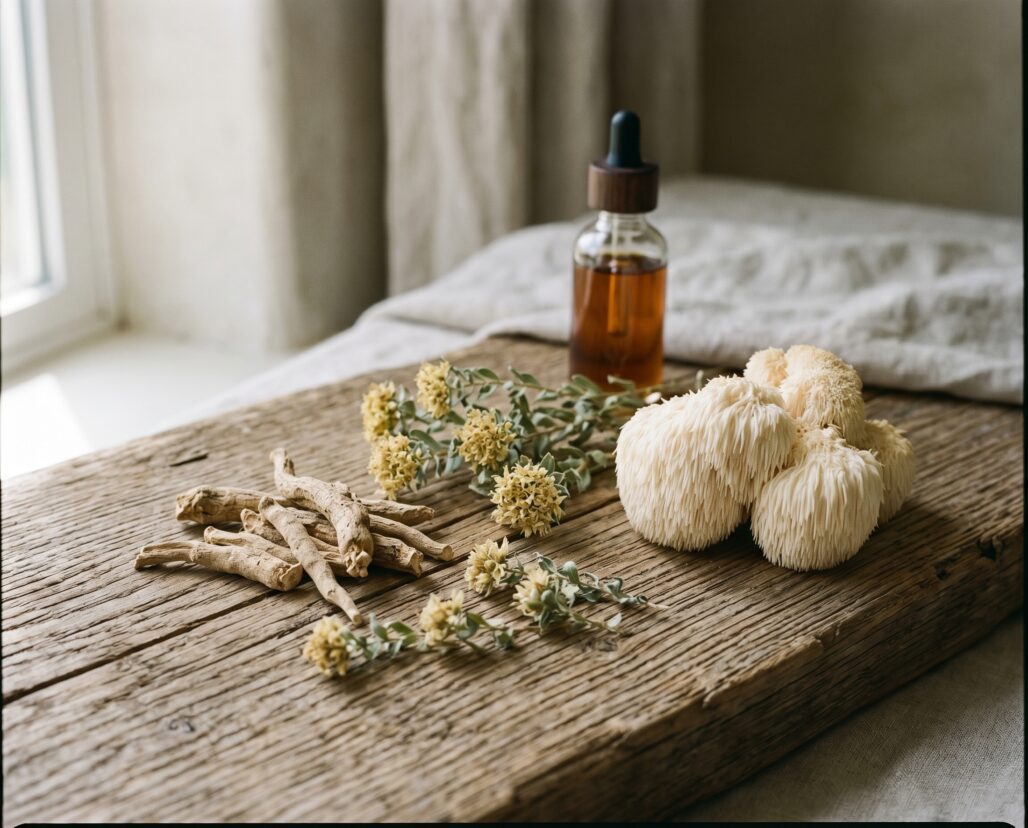
Summary: what are adaptogens, and should you take one?
Adaptogens are a functional category of herbs and fungi characterized by their proposed ability to help the body maintain homeostasis under physical or psychological stress. The strongest human evidence is concentrated in a handful of extracts, primarily ashwagandha (stress, cortisol), rhodiola (fatigue, cognitive load), and lion's mane (mild cognitive impairment). Evidence for others is thinner, often based on animal models or very small trials.
Best for: Adults with documented chronic stress lasting three months or more, occupational cognitive fatigue, or early subjective memory complaints who have already addressed sleep, diet, and exercise fundamentals.
Not ideal for: People on thyroid medication, immunosuppressants, anticoagulants, or antidepressants (without prescriber consultation), anyone expecting a quick fix for acute anxiety, or those who have not ruled out an underlying medical cause for their fatigue.
What to look at before buying: Standardized extract (not raw powder), named active marker compound (withanolides, rosavins, salidrosides, beta-glucans), third-party potency testing, and evidence that the exact extract used in clinical trials matches the product formulation.
Decision shortcut: If you cannot identify the specific extract and its standardized marker percentage on the product label, the product gives you no basis for comparison to the clinical trial that supposedly supports it.
What you will find in this guide
- What adaptogens actually are
- The evidence tier: which adaptogens have real human data
- Who benefits, who should skip them
- Dosing ranges from clinical trials
- Side effects and drug interactions
- What to look for when buying
- Frequently asked questions
- Related reading
What adaptogens actually are
The term "adaptogen" was coined in 1947 by Soviet pharmacologist Nikolai Lazarev, who was looking for compounds that could improve stress resistance in soldiers and workers without being stimulants. His student Israel Brekhman later defined adaptogens as substances that (1) are non-toxic at normal doses, (2) produce a nonspecific response that increases resistance to multiple stressors, and (3) have a normalizing effect on physiology regardless of the direction of stress-induced change.
That last criterion is the clinically interesting one: a true adaptogen should, in theory, help whether stress-induced cortisol is too high or too low, heart rate is elevated or suppressed, and so on. In practice, this bidirectional effect is difficult to demonstrate cleanly in human trials, and many herbs are marketed as adaptogens with no evidence for this property.
The primary active compounds vary by species. Ashwagandha (Withania somnifera) contains withanolides, a family of steroidal lactones. Rhodiola (Rhodiola rosea) contains rosavins and salidrosides. Lion's mane (Hericium erinaceus) contains hericenones and erinacines, which stimulate nerve growth factor (NGF) synthesis. Reishi (Ganoderma lucidum) contains triterpenoids and polysaccharides. Cordyceps species contain cordycepin and adenosine analogs that may influence cellular energy production. Holy basil (Ocimum sanctum) contains ursolic acid and eugenol. Schisandra (Schisandra chinensis) contains lignans called schisandrins.
Cortisol works like a thermostat. When it is stuck on high, you get the wired-tired feeling, elevated inflammatory markers, and disrupted sleep. Ashwagandha, among the better-studied adaptogens, appears to help reset the cortisol setpoint rather than simply suppress the stress response entirely. That distinction matters for how you evaluate the research.
In Ayurveda, ashwagandha has been used for centuries as a rasayana, a rejuvenative tonic. Traditional Chinese Medicine classifies reishi as a tonifying herb. But traditional use is not the same as RCT evidence, and a long history of use tells us something about safety tolerability, not about whether specific clinical outcomes are reliably produced.
The evidence tier: which adaptogens have real human data
Not all adaptogens are equal, and the supplement marketing ecosystem does not distinguish between "robust RCT evidence in humans" and "one rat study from 2003." Below is an honest tier ranking of where the human evidence stands in 2026.
Ashwagandha: the strongest chronic-stress evidence in the category
Ashwagandha has the deepest and most replicated human clinical dataset of any single adaptogen for stress and cortisol outcomes.
The landmark study is a 2012 placebo-controlled RCT (Chandrasekhar et al., n=64). Participants with a history of chronic stress received high-concentration full-spectrum ashwagandha root extract at 300mg twice daily for 60 days. All stress-assessment scale scores showed significant reduction (p<0.0001) and serum cortisol was substantially reduced (p=0.0006) compared to placebo. This remains the most cited human trial in the category.
A 2019 RCT (Salve et al., n=58) tested two ashwagandha doses over eight weeks: 250mg daily and 600mg daily. Both doses produced statistically significant reductions in Perceived Stress Scale scores and serum cortisol, with the 600mg dose producing more pronounced effects (p<0.0001). The same trial found significant improvement in sleep quality for the ashwagandha groups.
A separate 2017 RCT (Choudhary et al., n=50) tested ashwagandha root extract at 300mg twice daily for eight weeks in adults with mild cognitive complaints and found significant improvements in logical memory (p=0.007) and executive function (p=0.002). This is relevant context for the broad "stress support" framing most brands use.
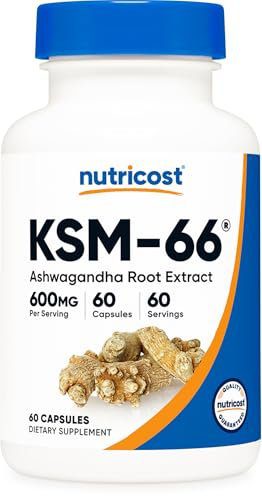
The catch, and it is a real one: the two main commercial extracts with RCT backing, KSM-66 and Sensoril, are different fractionations of the same plant. Most human trials used one of these two. A product labeled simply "ashwagandha root powder" that has not been tested using one of these standardized extracts gives you no basis for comparison to the trial evidence.
Actionable takeaway: For ashwagandha, look for KSM-66 or Sensoril on the label, with at least 5% withanolides disclosed. Raw ashwagandha root powder is not the same as the extract used in trials.
Rhodiola rosea: solid fatigue and burnout evidence, narrower than the marketing suggests
Rhodiola's strongest evidence is for occupational fatigue and burnout, not general anxiety or "energy."
A 2009 Phase III RCT (Olsson et al., n=60) tested standardized SHR-5 Rhodiola extract at 576mg daily for 28 days in burned-out professionals. The extract showed significant improvements versus placebo on the Pines burnout scale, attention indices, and cortisol awakening response. Quality of life and depression scores (MADRS) also improved, though with smaller effect sizes.
An important mechanistic note: rhodiola inhibits monoamine oxidase (MAO) activity, which is the same mechanism as MAO-inhibitor antidepressants. This creates a genuine interaction risk with serotonergic medications (discussed in the drug-interactions section below).
The real question is not whether rhodiola works in lab settings, but whether the human dose in a typical capsule product proves out. Many rhodiola products contain 100-200mg of unstandardized root extract, which is substantially below the 576mg standardized SHR-5 dose used in the main RCTs. Standardized to at least 3% rosavins and 1% salidrosides is the meaningful label claim.
Lion's mane: the most interesting cognition data, but context matters
Lion's mane (Hericium erinaceus) is the most promising adaptogen-adjacent mushroom for cognitive function, but the evidence is more limited than the TikTok discourse implies.
The primary human RCT is a 2009 study (Mori et al., n=30) in older adults with mild cognitive impairment. Participants received fruiting body extract at 3g daily for 16 weeks and showed significantly higher scores on the Revised Hasegawa Dementia Scale compared to placebo at weeks 8, 12, and 16. The catch: cognitive scores returned to placebo-level four weeks after discontinuation, suggesting the effect requires ongoing supplementation.
A 2010 RCT (Nagano et al., n=30) in menopausal women found that lion's mane cookies consumed for four weeks produced significantly lower depression and anxiety scores (CES-D) compared to placebo, suggesting mood-adjacent effects beyond the NGF-pathway cognitive claims.
Lion's mane's nerve-growth-factor effect is more like fertilizer for an existing plant than a transplant. Do not expect cognitive transformation in a week. The NGF pathway involves hericenones and erinacines stimulating endogenous production of nerve growth factor, a slow-acting process. Most human trials showing measurable effect used 8-16 weeks of consistent dosing.
The critical product distinction: fruiting body extract versus mycelium grown on grain substrate. Most budget lion's mane supplements are mycelium-on-grain, which is lower in hericenones and higher in starchy grain content. Fruiting body extract, standardized to beta-glucan content, is what the clinical trials used.
Cordyceps: exercise performance data is real but modest
Cordyceps (Cordyceps militaris, the cultivated species) has genuine human data for aerobic exercise capacity.
A 2017 RCT (Hirsch et al., n=28) using a 4g daily mushroom blend containing Cordyceps militaris found significant VO2max improvement after three weeks (+4.8 ml/kg/min, p=0.042) versus placebo (+0.9). Time to exhaustion also improved meaningfully. One week of supplementation showed no significant effect, suggesting chronic use is necessary.
The limitation: this was a small trial using a blend, not pure cordyceps isolate, and n=28 means confidence intervals are wide. The effect is real enough to be interesting, not large enough to promise a measurable performance gain for every user.
Holy basil: anxiety evidence exists, but human trials are small
A 2008 controlled trial (Bhattacharyya et al., n=35) tested Ocimum sanctum (holy basil) leaf extract at 500mg twice daily for 60 days in adults with generalized anxiety disorder. The extract significantly attenuated GAD symptoms (p<0.001) and correlated stress and depression measures. The trial was not double-blind, which limits interpretation.
Holy basil contains ursolic acid and eugenol, which have demonstrated anti-inflammatory and cortisol-modulating properties in animal models. But the real question is not whether these compounds work in animal models. It is whether the human dose proves out in a properly controlled RCT. The Bhattacharyya 2008 trial is encouraging but not conclusive.
Schisandra and eleuthero: combination evidence, weaker standalone data
Schisandra (Schisandra chinensis) and Siberian ginseng (eleuthero, Eleutherococcus senticosus) appear frequently in combination adaptogen products. The most rigorous human data for both involves the ADAPT-232 blend, which combines rhodiola, schisandra, and eleuthero.
A 2010 pilot RCT (Aslanyan et al., n=40) tested a single 270mg ADAPT-232 dose in fatigued healthy females. Two hours post-administration, the treatment group showed significantly better performance on the d2 Test of Attention (speed, accuracy, p<0.05) versus placebo. The single-dose design limits clinical interpretation, but the mechanistic signal is coherent.
Standalone schisandra and eleuthero human RCTs are smaller and fewer than the marketing suggests. An adaptogen brand can have impressive marketing and still miss third-party testing for the active marker compound.
Reishi: sleep claims outrun the human data
Reishi (Ganoderma lucidum) is heavily marketed for sleep and immune support. Most sleep-specific claims trace back to animal studies. One controlled human trial (Tang et al., 2005, n=132) in patients with neurasthenia (a chronic fatigue condition) found improvement in fatigue and well-being measures. Human sleep-specific RCT data remain limited as of 2026. The immune-modulation evidence in cancer-adjacent contexts is separate and more robust, but that is a different use case than the stress-and-sleep marketing most reishi products employ.
Who benefits, who should skip them
Strong fit for adaptogens generally: Adults with chronic stress lasting at least three months, elevated subjective fatigue that is not explained by an underlying medical condition, and who have already addressed the fundamentals (sleep quantity, caffeine intake, sustained movement, and diet quality). The Chandrasekhar 2012 cohort and the Olsson 2009 cohort matched these profiles closely.
Weaker fit: Anyone looking for rapid symptom relief from acute situational anxiety. Adaptogens are not anxiolytics. That may be appropriate for occupational stress, but unnecessary for situational anxiety that resolves when the stressor is removed.
Skip ashwagandha if: You take levothyroxine or other thyroid medication (ashwagandha has stimulated TSH changes in case reports, per the NCCIH ashwagandha fact sheet); you are on immunosuppressants (tacrolimus, cyclosporine, biologics), as withanolides can modulate immune function; you are pregnant or breastfeeding (the NCCIH explicitly advises avoidance during pregnancy).
Skip rhodiola if: You take antidepressants, particularly SSRIs or SNRIs, due to rhodiola's MAO-inhibiting activity and the case report of tachyarrhythmia in a patient combining rhodiola with antidepressants, documented in the MSK integrative herbs database. You take anticoagulants including warfarin.
Skip ginseng (Panax) if: You take warfarin or other anticoagulants. American ginseng has documented antagonism of warfarin's effects in humans, including reductions in PT, PTT, and INR, per the MSKCC American ginseng entry.
Skip holy basil if: You take blood-thinning medications, as eugenol has antiplatelet properties.
| Question | Your answer |
|---|---|
| Is your stress chronic (three months or more) or situational? | |
| Are you on thyroid, immunosuppressant, anticoagulant, or antidepressant medication? | |
| Have you addressed sleep quality and caffeine intake first? | |
| What timeline are you expecting: four weeks or twelve? |
Dosing ranges from clinical trials
Dosing for adaptogens is permitted to discuss because these are OTC dietary supplements with established trial-based ranges. The frame is always what researchers tested, not a prescription.
Ashwagandha (KSM-66): In the Chandrasekhar 2012 trial, participants took 300mg twice daily (600mg total) for 60 days. In the Salve 2019 trial, the 250mg and 600mg daily groups both showed cortisol reduction, with 600mg producing larger effects. Most stress-focused trials used 8-12 weeks minimum before assessing outcomes. Look for products standardized to at least 5% withanolides and disclosing the specific extract name.
Rhodiola (SHR-5): In the Olsson 2009 Phase III trial, participants took 576mg standardized SHR-5 daily for 28 days. Most rhodiola products at the retail level provide 100-200mg, substantially below trial doses. Products standardized to 3% rosavins and 1% salidrosides are the meaningful specification.
Lion's mane: In the Mori 2009 RCT, participants took 3g of fruiting body powder daily (as four 250mg tablets, three times daily) for 16 weeks. This is a high dose relative to most capsule products. Fruiting body-standardized products with verified beta-glucan content are the relevant comparison.
Cordyceps militaris: In the Hirsch 2017 trial, participants took 4g daily of a mushroom blend for three weeks. Pure Cordyceps militaris at 1g/day is common in retail products; this may underdo the trial dose.
Holy basil: In the Bhattacharyya 2008 trial, participants took 500mg leaf extract twice daily (1g total) for 60 days.
Cycling guidance for adaptogens varies by herb and is not firmly established in human RCTs. Some practitioners suggest five days on, two days off for rhodiola to reduce MAO-inhibition accumulation, but no human trial has tested this protocol directly.
Actionable takeaway: Standardization labels matter more than pretty branding. "Ashwagandha root powder" tells you nothing about withanolide content. The clinical trial evidence is attached to specific extracts, not to the plant in general.
Side effects and drug interactions
This section is required reading before starting any adaptogen. The OTC status of these herbs does not mean they are inert.
Ashwagandha
Reported adverse effects in clinical trials were generally mild: gastrointestinal discomfort, drowsiness, and loose stools at higher doses. The NCCIH ashwagandha fact sheet documents the following interaction categories: thyroid hormone medications, diabetes medications (additive blood-sugar-lowering effect), high blood pressure medications (additive hypotensive effect), immunosuppressants (withanolides modulate immune function), sedatives (additive CNS depression), and anticonvulsants.
The thyroid interaction warrants special attention. Ashwagandha has been reported to affect TSH levels. If you take levothyroxine or any thyroid hormone replacement, do not add ashwagandha without prescriber oversight and TSH monitoring.
Ashwagandha should not be used during pregnancy. The NCCIH notes this explicitly; there are historical records of ashwagandha inducing uterine contractions at high doses.
Rhodiola
Per the MSK integrative herbs database on rhodiola: rhodiola inhibits MAO, which creates an additive risk with antidepressants, particularly SSRIs, SNRIs, and MAO-inhibitors. The mechanism can increase serotonergic side effects including, in a documented case report, tachyarrhythmia. Rhodiola also interacts with anticoagulants including warfarin (may affect how it works), antihypertensives (may enhance hypotensive effects), anti-seizure medications (phenytoin), and CNS stimulants (may increase hypertensive effects). Rhodiola inhibits CYP3A4, which affects metabolism of a wide range of drugs.
Panax ginseng and American ginseng
Both ginseng varieties interact with warfarin. American ginseng has demonstrated antagonism of warfarin's anticoagulant effect in humans, with documented reductions in PT, PTT, and INR (per the MSKCC American ginseng entry). Asian ginseng evidence for this interaction is mixed but clinically meaningful enough to warrant caution. Both should be avoided by anyone on anticoagulation therapy without hematologist sign-off.
Holy basil (Ocimum sanctum)
Holy basil contains eugenol, which has antiplatelet properties. This creates a potential interaction with blood-thinning medications and anticoagulants. The evidence for this interaction is mechanistic rather than from documented human case reports, but the risk is real enough to flag.
Eleuthero (Siberian ginseng)
Eleuthero has thyroid-stimulating properties and is flagged alongside ashwagandha and holy basil for those on thyroid medication. It may also interact with digoxin (cardiac glycoside), with at least one published case report of falsely elevated digoxin readings in a patient using eleuthero.
Universal warnings
No adaptogen in this guide has been adequately studied for safety during pregnancy or breastfeeding. The default recommendation from NCCIH and most integrative medicine bodies is to avoid all herbal adaptogens during pregnancy and lactation unless prescribed by a physician familiar with the specific herb.
If you are managing a chronic condition, the complexity of adaptogen-drug interactions scales with the number of medications you take. This is not an invitation to avoid all adaptogens; it is a reason to run the interaction profile past your prescriber before adding one.
Actionable takeaway: The adaptogen-drug interaction landscape is genuinely complex. Sharing your full medication list with a pharmacist or physician before starting is not overcaution, it is appropriate caution given documented interactions with thyroid drugs, anticoagulants, antidepressants, and immunosuppressants across this category.
What to look for when buying
Buying mushroom supplements without checking fruiting-body content is like buying olive oil labeled "Mediterranean blend." The label tells you everything except what is actually in it.
For any adaptogen, the minimum information a quality product should provide:
- Named extract, not just the herb. KSM-66, Sensoril (ashwagandha), SHR-5 (rhodiola), specific fruiting body source (lion's mane).
- Standardized marker compound percentage. Withanolides (ashwagandha), rosavins + salidrosides (rhodiola), beta-glucans (mushrooms).
- Third-party testing. Ideally with a Certificate of Analysis available, or from a brand verified by ConsumerLab or Labdoor.
- Fruiting body vs mycelium (for mushrooms). Mycelium grown on grain is cheaper to produce and often has low hericenone/beta-glucan content relative to fruiting body.
A simple way to judge a product without a PhD: search the product name on Examine.com or ConsumerLab, and check whether the active marker compound is tested and disclosed. Products that cannot answer this question are not worth paying supplement prices for.
The label red flags to recognize quickly
- "Proprietary blend" with no individual doses: no way to assess effective dose.
- "Full spectrum" without standardized extract: marketing language, not quality data.
- No withanolide percentage on ashwagandha products: the active compound is unstated.
- "Fruiting body and mycelium blend" on lion's mane: often a cost-reduction strategy.
- Claims like "clinically proven" without naming the specific study and extract.
More herb is not always more useful. Some adaptogens, rhodiola in particular, exhibit a biphasic dose-response pattern where higher doses can produce stimulant-like side effects rather than the calming fatigue-relief seen at moderate doses.
Actionable takeaway: Standardized to X% withanolides is meaningful. "Ashwagandha root powder" alone tells you nothing about how the product compares to the clinical evidence.
Frequently asked questions
What exactly qualifies an herb as an adaptogen?
The working definition, from Brekhman and Dardymov (1969), requires three properties: the substance is non-toxic at normal doses, it increases nonspecific resistance to stress, and it has a normalizing physiological effect. Many herbs are marketed as adaptogens without evidence for all three criteria. The term is not regulated by the FDA, so any brand can call any herb an adaptogen without demonstrating these properties.
Can I take multiple adaptogens together?
Combination products exist and some have trial data, including the ADAPT-232 blend tested in the Aslanyan 2010 RCT (PMID 20374974). But stacking multiple adaptogens also stacks their interaction profiles. If you take rhodiola and holy basil together while on an SSRI and warfarin, you are layering MAO inhibition with antiplatelet activity with anticoagulant therapy. Individual adaptogens with known interaction risks should not be combined casually.
How long before adaptogens work?
Timeline varies by herb and outcome. The Chandrasekhar 2012 RCT measured cortisol at 60 days. The Olsson 2009 rhodiola trial measured fatigue improvements at 28 days. The Mori 2009 lion's mane trial showed cognitive improvements beginning at week 8. If you see no measurable effect after 8-12 weeks of a properly standardized extract at clinical-trial-equivalent doses, the herb likely will not work for you for that outcome.
Are adaptogens the same as nootropics?
No, though there is overlap. Nootropic is a broader category that includes synthetic compounds (racetams, modafinil) and other herbs. Adaptogens are specifically characterized by the stress-resistance and homeostasis criteria above. Lion's mane is sometimes called a nootropic for its NGF-pathway effects; its evidence profile is distinct from typical adaptogen-cortisol mechanisms.
Can I take ashwagandha and rhodiola together?
These two do not have a well-documented direct interaction with each other, but both can affect blood pressure and sedation. The primary concern is additive CNS effects if you are also taking any sedative, sleep aid, or antidepressant. The combination is not contraindicated per se, but starting one at a time and assessing individual response before adding the second is the more conservative and informative approach.
What does "standardized extract" actually mean?
Standardized extract means the manufacturing process has been controlled to achieve a consistent concentration of a specified active marker compound. For ashwagandha, that is withanolide percentage; for rhodiola, rosavins and salidrosides; for lion's mane, beta-glucans. A non-standardized product may vary in active compound content from batch to batch, making it impossible to replicate trial-equivalent doses.
Are adaptogens regulated by the FDA?
No, not as drugs. The FDA's DSHEA framework classifies most adaptogens as dietary supplements, meaning pre-market efficacy review is not required. Manufacturers are responsible for safety, but the FDA does not verify the ingredient claims on the label before a product goes to market. Third-party testing fills this gap, which is why ConsumerLab and Labdoor data are more useful than the "clinically proven" claims on front-of-label marketing.
Is reishi good for sleep?
Sleep-specific claims for reishi mostly trace to animal studies. The main human trial in this category (Tang et al., 2005, n=132, PMID 16041170) was in a neurasthenia (chronic fatigue) population and showed improvements in fatigue and wellbeing, not sleep architecture specifically. Human RCT data for reishi as a direct sleep aid remain limited as of 2026.
As an Amazon Associate, I earn from qualifying purchases. Product recommendations are based on real reviews and independent research.
Related reading
Adaptogens are a broad category. These cluster guides go deeper on each major herb and the specific risk areas:
- Best Adaptogens for Stress: A Practical 2026 Guide covers the evidence-ranked picks for chronic stress specifically, with head-to-head comparisons of ashwagandha versus rhodiola versus holy basil.
- The Complete Ashwagandha Guide goes deep on KSM-66 versus Sensoril, thyroid interactions, and the full evidence tier for this most-studied adaptogen.
- Lion's Mane: Complete Evidence Review covers fruiting body versus mycelium, the NGF pathway, and what the human trial data actually shows for cognitive complaints.
- Rhodiola Complete Guide covers the SHR-5 extract, burnout versus anxiety evidence distinctions, and the MAO-inhibitor interaction profile.
- Medicinal Mushrooms Complete Guide covers reishi, cordyceps, and lion's mane as a group, with the full beta-glucan standardization breakdown.
- Adaptogens Side Effects: The Master List is the comprehensive reference for adverse effects across the category.
- Adaptogens and Medications: The Complete Interaction Reference provides the full drug-interaction table for all major adaptogens including thyroid drugs, anticoagulants, antidepressants, and immunosuppressants.
Taking this alongside other products? StackMyMed (our companion app) logs your full stack, finds the optimal timing for each dose, and flags interactions, so you are not tracking it all by hand.
Conclusion: the bottom line on adaptogens
Adaptogens are not a monolith. Some, specifically ashwagandha at standardized KSM-66 or Sensoril doses, have multi-trial human evidence for chronic stress and cortisol reduction. Rhodiola has solid fatigue data. Lion's mane has genuinely interesting NGF-pathway cognition data in older adults. Others, including reishi for sleep and eleuthero as a standalone, are riding marketing claims that substantially outrun the human evidence.
The consistent mistake in the adaptogen market is treating the plant name as the product specification. Ashwagandha root powder and KSM-66 ashwagandha extract standardized to 5% withanolides are not the same thing, and only one of them has RCT backing.
Next steps:
- If chronic stress is the primary concern, start with the ashwagandha complete guide and confirm you are not on thyroid medication or immunosuppressants before trying it.
- If cognitive fatigue or occupational burnout is the primary concern, the rhodiola complete guide covers the SHR-5 evidence and the stimulant/antidepressant interaction risk in detail.
- If you take any prescription medication, read the adaptogens and medications interaction reference before buying anything.
- If you are interested in mushrooms specifically, the medicinal mushrooms guide will help you distinguish between products worth the price and grain-based mycelium fillers.
This article is for informational purposes and not medical advice. Herbal adaptogens, even traditional ones, can interact with thyroid medication, antidepressants, anticoagulants, immunosuppressants, blood-pressure drugs, and more. Consult a licensed physician before starting any adaptogen, particularly if you are pregnant, nursing, taking prescription medications, or managing a chronic condition.
References
- Chandrasekhar K, Kapoor J, Anishetty S. A prospective, randomized double-blind, placebo-controlled study of safety and efficacy of a high-concentration full-spectrum extract of ashwagandha root in reducing stress and anxiety in adults. Indian J Psychol Med. 2012;34(3):255-262. PMID 23439798
- Salve J, Pate S, Debnath K, Langade D. Adaptogenic and anxiolytic effects of ashwagandha root extract in healthy adults: a double-blind, randomized, placebo-controlled clinical study. Cureus. 2019;11(12):e6471. PMID 32021735
- Choudhary D, Bhattacharyya S, Bose S. Efficacy and safety of ashwagandha (Withania somnifera) root extract in improving memory and cognitive functions. J Diet Suppl. 2017;14(6):599-612. PMID 28471731
- Olsson EM, von Scheele B, Panossian AG. A randomised, double-blind, placebo-controlled, parallel-group study of the standardised extract SHR-5 of the roots of Rhodiola rosea in the treatment of subjects with stress-related fatigue. Planta Med. 2009;75(2):105-112. PMID 19016404
- Mori K, Inatomi S, Ouchi K, Azumi Y, Tuchida T. Improving effects of the mushroom Yamabushitake (Hericium erinaceus) on mild cognitive impairment: a double-blind placebo-controlled clinical trial. Phytother Res. 2009;23(3):367-372. PMID 18844328
- Nagano M, Shimizu K, Kondo R, et al. Reduction of depression and anxiety by 4 weeks Hericium erinaceus intake. Biomed Res. 2010;31(4):231-237. PMID 20834180
- Hirsch KR, Smith-Ryan AE, Roelofs EJ, Trexler ET, Mock MG. Cordyceps militaris improves tolerance to high-intensity exercise after acute and chronic supplementation. J Diet Suppl. 2017;14(1):42-53. PMID 27408987
- Bhattacharyya D, Sur TK, Jana U, Debnath PK. Controlled programmed trial of Ocimum sanctum leaf on generalized anxiety disorders. Nepal Med Coll J. 2008;10(3):176-179. PMID 19253862
- Aslanyan G, Amroyan E, Gabrielyan E, Nylander M, Wikman G, Panossian A. Double-blind, placebo-controlled, randomised study of single dose effects of ADAPT-232 on cognitive functions. Phytomedicine. 2010;17(7):494-499. PMID 20374974
- Tang W, Gao Y, Chen G, et al. A randomized, double-blind and placebo-controlled study of a Ganoderma lucidum polysaccharide extract in neurasthenia. J Med Food. 2005;8(1):53-58. PMID 16041170
Author: Emily Collins, Useful Vitamins Editorial Team
As an Amazon Associate, I earn from qualifying purchases. Product recommendations are based on real reviews and independent research.
