
If you're trying to choose a medicinal mushroom supplement, the short answer is: some species have meaningful human clinical evidence, most do not, and the majority of products on US shelves are not what the label implies. This guide covers the six major species — reishi, cordyceps, chaga, turkey tail, lion's mane, and maitake — with an honest tier-by-tier breakdown of what the research actually shows. You'll also get a practical guide to the fruiting body versus mycelium-on-grain problem that affects nearly every product in this category, dosing ranges drawn from actual clinical trials, and a drug-interactions section because several of these mushrooms have real interaction risks with anticoagulants, immunosuppressants, and diabetes medications.
Affiliate disclosure: this article contains affiliate links. As an Amazon Associate, UsefulVitamins.com earns from qualifying purchases at no extra cost to you.
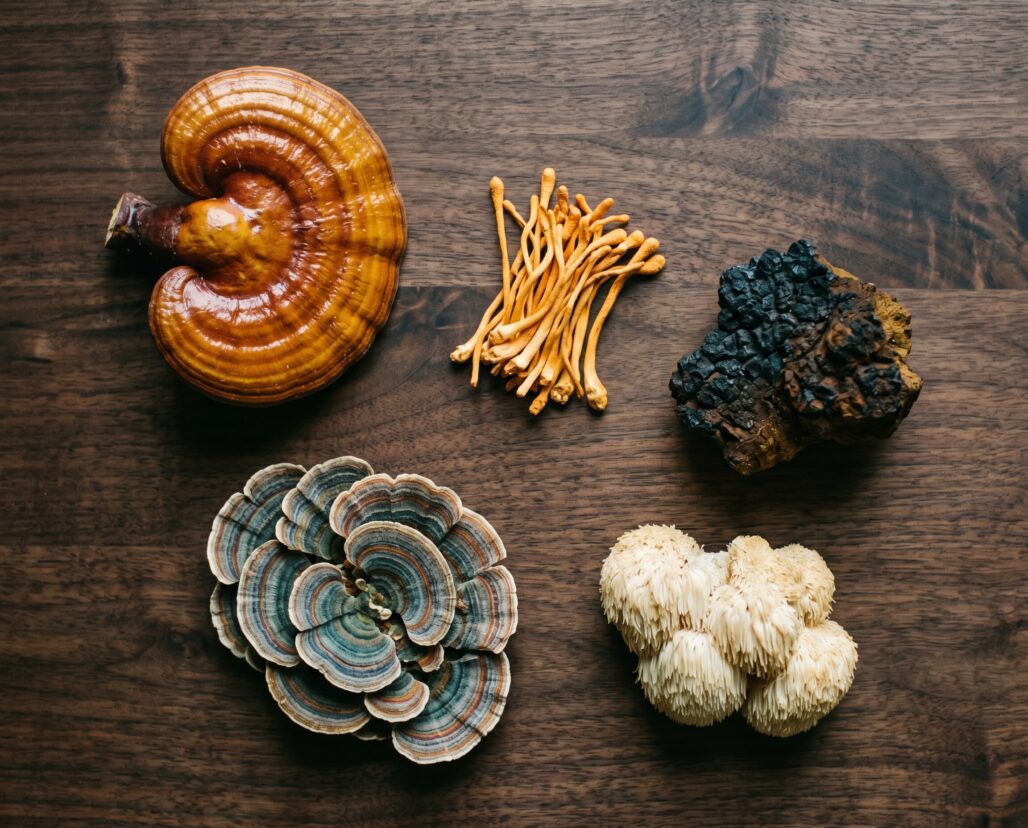
Summary / Quick Answer: which medicinal mushroom has the strongest evidence?
Turkey tail (Trametes versicolor) and its PSK extract have the strongest human clinical evidence, specifically in cancer-adjunct settings, followed by lion's mane for cognition and reishi for fatigue in the context of neurasthenia.
- Best for evidence-based immune support (cancer-adjunct context): Turkey tail PSK — backed by Phase III RCT data in post-surgical gastric cancer patients
- Best for cognition in older adults: Lion's mane fruiting body extract — two small but placebo-controlled RCTs in elderly populations
- Best for fatigue and well-being: Reishi Ganopoly extract — one 132-person RCT with modest but real effect
- Not ideal for: Anyone expecting chaga to do anything proven in humans; anyone substituting medicinal mushrooms for prescribed cancer treatment; children or pregnant/nursing individuals
- What to look at before buying: Does the label say "fruiting body" or "mycelium on grain"? Is beta-glucan content disclosed and tested by a third party?
- Decision shortcut: If you want immune support and are not in an oncology context, turkey tail fruiting body standardized to beta-glucans is the most defensible choice. If cognition is the goal, lion's mane fruiting body extract is the only species with human RCT support for that outcome.
What you'll find in this guide
- What medicinal mushrooms actually are
- The fruiting body vs mycelium-on-grain problem
- Species by species: the evidence
- Who benefits and who should skip
- Dosing ranges from clinical trials
- Side effects and drug interactions
- Product picks
- Frequently asked questions
What medicinal mushrooms actually are {#what-medicinal-mushrooms-are}
Medicinal mushrooms are fungi used for health purposes, primarily for immune modulation, fatigue reduction, and cognitive support. Unlike psilocybin mushrooms, they contain no psychoactive compounds. The relevant active compounds are primarily polysaccharides — particularly beta-glucans — along with triterpenoids, ergosterol precursors, and glycoproteins depending on the species.
Beta-glucans are the most studied mechanism. They bind to receptors on immune cells, particularly dectin-1 on macrophages and dendritic cells, triggering downstream innate immune signaling. This is not "boosting" immunity in any simple sense; it is modulating immune readiness. The relevant analogy: beta-glucans work more like a fire drill for your immune system than a fire itself. The drill raises preparedness; it does not start fires.
Traditional Chinese Medicine has classified reishi (Ganoderma lucidum) as a ling zhi — a "spirit mushroom" associated with longevity — for over 2,000 years. Similarly, Tibetan and Nepali healers used Cordyceps sinensis as a high-altitude tonic. Traditional use is context, not evidence. But it did direct early researchers toward the species that have since been studied in human trials.
The modern commercial category emerged in the 1970s and 1980s when Japanese researchers isolated PSK from Trametes versicolor and began clinical trials in post-surgical cancer patients. That work generated the strongest human RCT evidence the entire category has produced.
The fruiting body vs mycelium-on-grain problem {#fruiting-body-vs-mycelium}
This is the most consequential consumer issue in the medicinal mushroom category and it is not widely understood.
A mushroom has two main growth stages. The mycelium is the root-like network that grows through a substrate. The fruiting body is what most people recognize as "the mushroom" — the cap, stem, and gills. Almost all the published human research on medicinal mushrooms used fruiting body extracts or isolated polysaccharides derived from them.
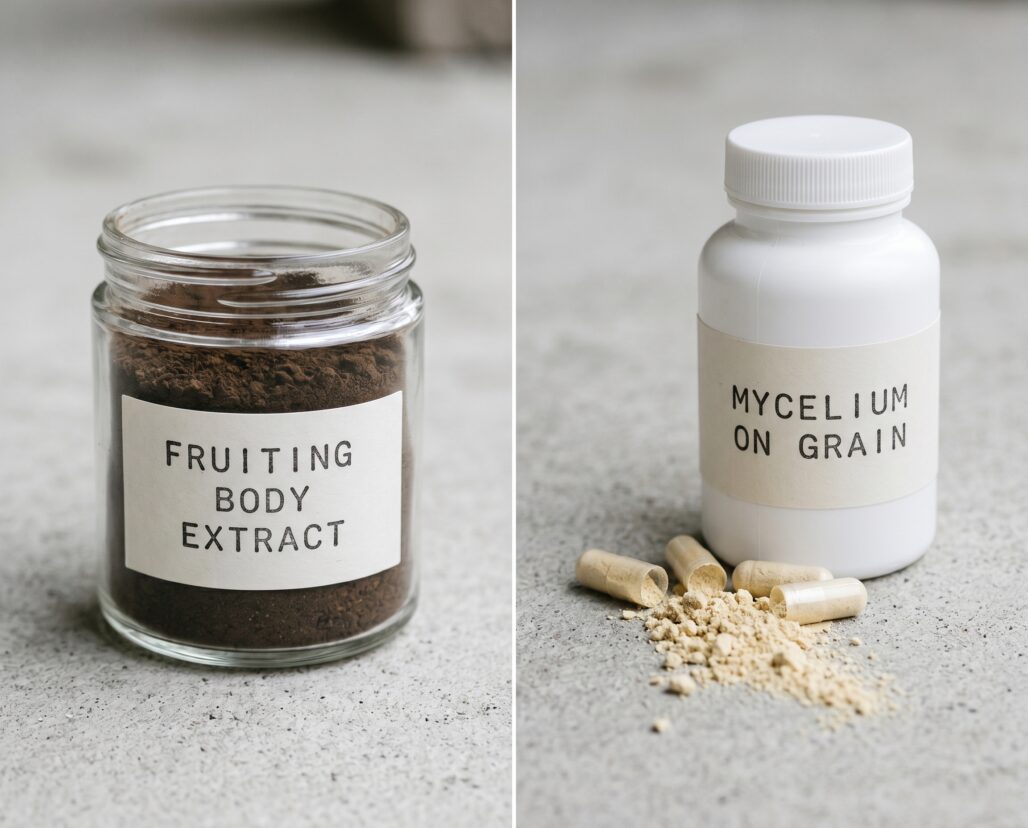
In the US supplement market, the majority of products labeled "mushroom supplement" are actually mycelium grown on grain (usually rice, oats, or brown rice). The mycelium is fermented on this grain substrate, then the entire substrate is dried and powdered. The result is a product that is, by weight, mostly starch from the grain, with variable and often low beta-glucan content.
A 2017 analysis published in the journal Fungal Biology found that mycelium-on-grain products contained significantly higher starch content and substantially lower beta-glucan concentrations compared to fruiting body extracts. Reputable brands now disclose beta-glucan percentage on their label; many do not.
Buying mushroom supplements without checking whether the product specifies "fruiting body" and discloses a beta-glucan percentage is like buying olive oil labeled "Mediterranean blend" — the label tells you everything except what's in it.
Actionable takeaway: Look for "fruiting body extract" or "dual extract (fruiting body)" on the label. Look for a disclosed beta-glucan percentage (typically 25-40% for quality fruiting body extracts). If neither appears, treat the product as low-evidence regardless of any health claims on the packaging.
Species by species: the evidence {#species-evidence}
Turkey tail (Trametes versicolor): the best human RCT data in the category
Turkey tail is the most evidence-supported species in this guide, specifically in the context of cancer treatment as an adjunct to conventional therapy. Its two active polysaccharide fractions are PSK (polysaccharide-K, also marketed as Krestin) and PSP (polysaccharide-peptide).
The strongest human trial is a multicenter Japanese RCT (Nakazato et al., n=262) in patients who had undergone curative surgery for gastric cancer. Participants received either standard chemotherapy (mitomycin plus fluorouracil) or standard chemotherapy plus PSK at 3g per day. After five years, disease-free survival was 70.7% in the PSK group versus 59.4% in the control group (p=0.047). Overall survival was 73.0% versus 60.0% (p=0.044). This is a meaningful absolute difference, not a marginal finding, and the trial was conducted across 46 institutions.
What turkey tail does not have is strong evidence for healthy adults seeking immune "boosts." The PSK/PSK data is from post-surgical cancer patients receiving concurrent chemotherapy. The population is specific, the context is specific, and the mechanism is likely chemotherapy-augmentation rather than standalone immune enhancement. Extrapolating this to daily wellness supplementation in healthy adults is not supported by the trial data.
Actionable takeaway: Turkey tail PSK has legitimate human RCT support in the cancer-adjunct context. For general immune support in healthy adults, the evidence is extrapolated, not direct. If you are in active cancer treatment, discuss turkey tail PSK with your oncologist specifically — do not self-supplement alongside immunosuppressive or chemotherapy protocols without medical guidance.
Reishi (Ganoderma lucidum): one solid fatigue trial, modest effects
Reishi has an extensive preclinical research profile and significant marketing presence, but its human clinical evidence is narrower than most consumers assume.
The most rigorous human RCT is a 2005 multicenter placebo-controlled trial (Tang et al., n=132). Participants met diagnostic criteria for neurasthenia (a chronic fatigue syndrome characterized by physical and mental exhaustion, classified in Chinese medicine and ICD-10). They received Ganopoly — a reishi polysaccharide extract — at 1,800mg three times daily for eight weeks, or placebo. Clinical improvement was rated as "more than minimally improved" in 51.6% of the Ganopoly group versus 24.6% of the placebo group. Fatigue sense reduction was 28.3% versus 20.1%.
These are real but modest effects in a specific population. Neurasthenia is not equivalent to generalized fatigue or chronic fatigue syndrome (CFS/ME) as defined in Western clinical practice. Extrapolating this trial to "reishi helps with tiredness" in a general healthy adult population is a stretch.
Sleep claims for reishi are almost entirely derived from mouse studies. The human RCT data for reishi-specific sleep improvement does not exist as of 2026.
Cordyceps (Cordyceps militaris and sinensis): small exercise trials, biologically plausible
Cordyceps is the most popular mushroom supplement in athletic communities, based on its traditional use as a high-altitude energy tonic in Tibet and the biological plausibility of its adenosine-pathway activity.
The real question isn't whether cordyceps works in lab rats — it has shown interesting metabolic effects in animal models — it's whether the human dose proves out in controlled trials.
One well-designed human trial (Hirsch et al., n=28) used a Cordyceps militaris-containing mushroom blend at 4g per day in a randomized, double-blind, placebo-controlled design. After three weeks, the treatment group showed a statistically significant improvement in VO2max of approximately 4.8 ml/kg/min (p=0.042) and extended time to exhaustion by roughly 70 seconds compared to minimal gains in controls. This is a small sample but a well-controlled design.
A key limitation is that this trial used a mushroom blend, not isolated cordyceps, making it impossible to attribute the effect to cordyceps alone. Cordyceps sinensis — the Tibetan caterpillar fungus at the center of most traditional use claims — is extremely expensive and rarely the actual ingredient in commercial products, which typically use the more affordable cultivated Cordyceps militaris.
Lion's mane (Hericium erinaceus): strongest evidence for cognition
Lion's mane has two small but well-controlled human RCTs supporting cognitive and mood effects, making it the most evidence-supported species for those specific outcomes. For a complete review of lion's mane, see our dedicated Lion's Mane Complete Guide.
In brief: a 2009 double-blind RCT (Mori et al., n=30) in older Japanese adults with mild cognitive impairment found significantly improved cognitive function scores on the Revised Hasegawa Dementia Scale at weeks 8, 12, and 16 compared to placebo. Participants received 250mg fruiting body powder tablets four times daily (1g total) for 16 weeks. Scores declined after treatment stopped. A 2010 RCT (Nagano et al., n=30) in menopausal women found lion's mane reduced CES-D depression scores significantly compared to placebo over four weeks.
Both trials have small sample sizes and specific populations (elderly, menopausal). Extrapolating to general cognitive enhancement in healthy younger adults requires larger confirmatory trials that do not yet exist.
Chaga (Inonotus obliquus): almost entirely animal and in vitro
Chaga is marketed aggressively in wellness circles, but as of 2026 its evidence base in humans is essentially nonexistent. A PubMed search for human clinical trials on Inonotus obliquus returns animal studies only. The published literature contains interesting in vitro and rodent data on antioxidant activity, anti-inflammatory pathways, and potential antitumor mechanisms in cell culture. None of this constitutes human evidence.
This is the key point: traditional use of chaga tea in Siberian and Finnish folk medicine is not the same as RCT evidence. There is a meaningful difference between "people have consumed this for centuries" and "randomized controlled trials in humans show an effect." Chaga sits firmly in the first category and not in the second.
One additional note: chaga is very high in oxalates. A 2020 case report in Frontiers in Medicine described renal failure in a patient consuming large amounts of chaga tea daily for several months. High oxalate intake can contribute to kidney stone formation, particularly in individuals with pre-existing renal vulnerability.
Maitake (Grifola frondosa): early clinical data, mostly immune and cancer contexts
Maitake has a smaller research profile than reishi or turkey tail, but it has progressed further in human trials than chaga. A 2009 Phase I/II trial (Deng et al., n=34) in breast cancer patients evaluated a maitake D-Fraction polysaccharide extract and found "both immunologically stimulatory and inhibitory measurable effects in peripheral blood," indicating maitake modulates rather than uniformly activates immune function.
A 2022 study (Hu and Xie, PMID 36070433) in laryngeal and pharyngeal cancer patients undergoing concurrent chemoradiotherapy found maitake D-Fraction alleviated treatment-related adverse events and quality-of-life deterioration. This is preliminary data in small, specific populations. General wellness claims for maitake have essentially no human trial support.
Who benefits and who should skip {#who-benefits}
Strong fit for medicinal mushrooms:
- Adults in active cancer treatment (as adjunct only, with oncologist approval) — turkey tail PSK has Phase III evidence in this context
- Older adults seeking cognitive support who want a studied OTC option — lion's mane fruiting body extract has the most relevant human data
- Adults with chronic fatigue (neurasthenia phenotype specifically) considering reishi — one RCT with modest but real effect
Skip or approach with caution:
- Anyone on anticoagulants (warfarin, rivaroxaban, apixaban) — reishi, turkey tail, and cordyceps all have additive bleeding risk signals
- Organ transplant recipients and anyone on immunosuppressants (tacrolimus, cyclosporine, mycophenolate, biologics) — most medicinal mushrooms modulate immune function and can counteract suppression
- Anyone with a history of kidney stones or chronic kidney disease — chaga specifically due to high oxalate load
- Anyone expecting chaga to provide documented cancer protection or immune benefits — no human trial evidence exists
- Pregnant or nursing individuals — safety data are insufficient for any species in this guide
Dosing ranges from clinical trials {#dosing-ranges}
These are ranges observed in published clinical trials, not prescriptive recommendations.
Reishi: In the 2005 Tang et al. neurasthenia trial, the dose was Ganopoly polysaccharide extract at 1,800mg three times daily (5,400mg total per day) for eight weeks. Commercial reishi products typically offer 1-3g per day of fruiting body extract; whether this matches the polysaccharide concentration in Ganopoly is rarely disclosed.
Turkey tail: In the 1994 Nakazato et al. gastric cancer RCT, PSK was administered at 3g per day as an adjunct to chemotherapy. This dose was used specifically in post-surgical cancer patients — not as a general wellness dose. PSP cancer-adjunct trials used similar 3g/day ranges.
Cordyceps: In the Hirsch 2017 exercise trial, the mushroom blend containing Cordyceps militaris was used at 4g per day for three weeks. Most commercial cordyceps products run at 1-3g per day.
Lion's mane: In the Mori 2009 cognition trial, participants took 250mg fruiting body powder tablets four times daily for 16 weeks — approximately 1g per day of dried fruiting body powder. Extracts are often standardized at higher concentrations, meaning effective doses in extract form may differ.
Maitake: Phase I/II cancer-context trials used proprietary D-Fraction extracts in controlled clinical settings; commercial product dosing is not directly comparable.
Chaga: No human clinical dose has been established. No clinical trial has validated any dose.
Most trials in this category ran for 4-16 weeks. Long-term safety data beyond 6 months are limited for most species.
Actionable takeaway: No one can tell you the "right" dose of medicinal mushrooms because the human RCT data is too limited. What the trials give you are the specific doses used in specific populations with specific extracts. If you use a different product, a different extract type, or a different population, you're extrapolating.
Side effects and drug interactions {#side-effects-drug-interactions}
Reported adverse effects
In the Tang 2005 reishi RCT at 5,400mg/day for eight weeks, no significant adverse events were reported. In the Hirsch 2017 cordyceps exercise trial, no adverse events were noted at 4g/day for three weeks. In the Mori 2009 lion's mane trial, laboratory testing showed no adverse effects at 1g/day for 16 weeks.
Chaga carries a documented oxalate risk. High daily intake has been associated with renal failure in at least one published case report (2020, Frontiers in Medicine). Individuals with renal impairment should avoid concentrated chaga supplementation.
Drug interactions
Anticoagulants and antiplatelet drugs (HIGH PRIORITY): Per Memorial Sloan Kettering's integrative herbs database, reishi extracts may prolong INR, PT, and APTT test results and can increase bleeding risk when combined with warfarin, aspirin, clopidogrel, and similar agents. Cordyceps has also shown platelet aggregation inhibition in laboratory studies, with at least one published case report of excessive post-extraction bleeding in a patient taking daily cordyceps. Turkey tail PSK, due to its broad immunomodulatory activity, warrants similar caution. If you take any anticoagulant, discuss these mushrooms with your prescriber before using them.
Immunosuppressants (HIGH PRIORITY): Most medicinal mushrooms modulate immune function, primarily through beta-glucan activity on innate immune receptors. This creates a pharmacodynamic conflict with immunosuppressant drugs (tacrolimus, cyclosporine, mycophenolate mofetil, azathioprine, and biologic agents including TNF inhibitors). Per MSK's clinical documentation, reishi in particular can enhance immune response in ways that may counteract transplant-rejection prevention. This interaction class is relevant to all species in this guide. Transplant recipients should treat medicinal mushrooms as contraindicated absent explicit guidance from their transplant team.
Diabetes medications and insulin: Cordyceps has shown additive hypoglycemic effects in laboratory studies. Combined use with insulin, metformin, sulfonylureas, or GLP-1 agonists could theoretically augment blood sugar lowering. No confirmed clinical hypoglycemia event has been published, but the signal exists. Diabetic individuals monitoring blood glucose should be aware.
Cytochrome P450 substrates: Reishi polysaccharides have shown inhibition of CYP2E1, CYP1A2, and CYP3A in laboratory studies, per MSK data. These enzyme systems metabolize a broad range of prescription drugs including certain statins, antiepileptics, antiretrovirals, and antidepressants. Clinical relevance of this inhibition in humans at typical supplement doses has not been established, but the interaction pathway exists.
Pregnancy and breastfeeding: No species in this guide has adequate human safety data for pregnancy or breastfeeding. Absence of evidence is not evidence of safety. Standard medical guidance is to avoid unproven herbal supplements during pregnancy unless clearly directed by a healthcare provider.
Product picks {#product-picks}
When evaluating any medicinal mushroom supplement, apply this three-question screen before looking at the label's health claims:
- Does it specify "fruiting body" as the source, or does it list mycelium/myceliated biomass?
- Is a beta-glucan percentage disclosed? (Quality fruiting body extracts typically show 25-40%)
- Is there third-party testing — from a lab, not the brand — confirming that percentage?
Most US products fail at least one of these three questions.
Our pick for a comprehensive multi-species blend: Real Mushrooms Organic Mushroom Complex — because it specifies fruiting body sourcing, discloses beta-glucan content, and provides third-party testing documentation. This is the baseline standard the category should meet but frequently does not.
For single-species immune support: Host Defense MyCommunity by Paul Stamets uses a combination of mycelium and fruiting body with disclosed beta-glucan ranges. A legitimate premium option, though mycelium-inclusive products warrant scrutiny of the actual beta-glucan numbers.
As an Amazon Associate, I earn from qualifying purchases. Product recommendations are based on real reviews and independent research.
Frequently asked questions {#faq}
What is the difference between fruiting body and mycelium in mushroom supplements?
The fruiting body is the above-ground mushroom structure that most consumers recognize. The mycelium is the root-like network that grows through the substrate. Most published human research used fruiting body extracts. Products made from mycelium grown on grain (rice or oats) are largely starch by weight, with beta-glucan concentrations that are typically much lower than fruiting body extracts. Look for "fruiting body" on the label and a disclosed beta-glucan percentage to verify what you're buying.
which medicinal mushroom has the most human evidence?
Turkey tail (Trametes versicolor), specifically its PSK extract, has the most robust human RCT data — but that data comes from post-surgical cancer patients receiving concurrent chemotherapy. Lion's mane has two small but well-controlled RCTs for cognitive and mood outcomes in elderly and menopausal women. Reishi has one 132-person RCT in neurasthenia. Chaga has essentially no human clinical trial data.
can I take medicinal mushrooms with blood thinners?
No, not without prescriber guidance. Reishi and cordyceps both have published signals for increased bleeding risk through platelet-related mechanisms. Turkey tail's immunomodulatory effects also warrant caution in patients on anticoagulation. If you take warfarin, aspirin therapeutically, or any other anticoagulant, discuss medicinal mushroom supplements with the prescriber managing your anticoagulation before starting.
does chaga really help with cancer?
There is no human clinical trial evidence supporting anti-cancer effects of chaga in people. There are interesting in vitro (cell culture) and animal studies showing anti-tumor activity of chaga extracts, but these have not translated into human trials as of 2026. Traditional Siberian use is historical context, not clinical evidence. Chaga should not be used as a cancer treatment or cancer-prevention strategy.
how long before medicinal mushrooms have an effect?
In the trials with the clearest outcomes, effects appeared at 4-8 weeks for reishi (fatigue), at 8-16 weeks for lion's mane (cognition), and over 3 weeks for cordyceps (exercise tolerance). These timelines are from specific extracts at specific doses in specific populations. If you are using a different product type, results may differ. If you see no effect after 8 weeks with a well-documented fruiting body extract at the trial dose range, the intervention likely will not work for you.
is lion's mane actually good for the brain?
Two small but legitimate RCTs suggest lion's mane fruiting body extract may support cognitive function in elderly adults with mild cognitive impairment, and reduce depression symptoms in menopausal women. The effect in younger, healthy adults has not been tested in controlled trials. Lion's mane's nerve growth factor (NGF)-stimulating mechanism is biologically plausible but does not automatically translate to measurable cognitive enhancement in healthy brains. Think of it as fertilizer for an existing plant, not a transplant — and only in the populations studied so far.
can I take multiple medicinal mushrooms together?
Most commercial blends combine four to ten species, and no serious safety signals have emerged from multi-species products in clinical settings. The concern with stacking is not acute toxicity but rather interaction risk: if you are taking multiple mushroom species with immune-modulating or anticoagulant-adjacent effects, the combined effect on these pathways is unknown. Start with one species and introduce others cautiously if you take any medications in the interaction categories above.
Related reading
- Complete Guide to Adaptogens: Ashwagandha, Rhodiola, and More
- Best Mushroom Coffee: What to Look for and What to Skip
- Reishi for Sleep: What the Evidence Actually Says
- Cordyceps for Energy: RCT Evidence vs Marketing Claims
- Chaga Immune Support: Separating Claims from Clinical Data
- Mushroom Tincture vs Powder: Which Extract Form Is More Effective?
- Lion's Mane Complete Guide: Cognition, NGF, and the Best Products
Adding this to a few other supplements? Our companion app, StackMyMed, scans the label, tracks your real daily intake, and schedules the best time to take it around everything else in your routine.
Conclusion: the bottom line on medicinal mushrooms
The medicinal mushroom category is built on real biology — beta-glucan immunomodulation is a legitimate pharmacological mechanism — but the gap between that biology and the health claims on most product labels is wide. Turkey tail PSK has Phase III RCT data in cancer-adjunct settings. Lion's mane has two small RCTs supporting cognitive and mood effects in elderly and menopausal populations. Reishi has one modest but real fatigue trial. Cordyceps has one small but well-controlled exercise trial. Chaga has essentially nothing in humans.
The larger problem is that even when the species has some evidence, most US products are mycelium-on-grain with starch-heavy profiles and minimal beta-glucan content. An adaptogen brand can have impressive marketing and still miss third-party testing for the active marker compound. For medicinal mushrooms, the active marker compound is beta-glucan, and you should demand its percentage on the label.
Next steps:
- If you're evaluating a current product, check the label for "fruiting body" and a disclosed beta-glucan percentage
- If you take anticoagulants or immunosuppressants, speak to your prescriber before starting any medicinal mushroom supplement
- For deeper evidence on any single species, see the dedicated guides linked in Related Reading above
- For context on how medicinal mushrooms fit within the broader adaptogen category, see Complete Guide to Adaptogens
This article is for informational purposes and not medical advice. Herbal adaptogens — even traditional ones — can interact with thyroid medication, antidepressants, anticoagulants, immunosuppressants, blood-pressure drugs, and more. Consult a licensed physician before starting any adaptogen, particularly if you are pregnant, nursing, taking prescription medications, or managing a chronic condition.
Author: Emily Collins / Useful Vitamins Editorial Team
References
- Tang W, Gao Y, Chen G, et al. A randomized, double-blind and placebo-controlled study of a Ganoderma lucidum polysaccharide extract in neurasthenia. J Med Food. 2005;8(1):53-58. PMID 15857210
- Mori K, Inatomi S, Ouchi K, Azumi Y, Tuchida T. Improving effects of the mushroom Yamabushitake (Hericium erinaceus) on mild cognitive impairment: a double-blind placebo-controlled clinical trial. Phytother Res. 2009;23(3):367-372. PMID 18844328
- Nagano M, Shimizu K, Kondo R, et al. Reduction of depression and anxiety by 4 weeks Hericium erinaceus intake. Biomed Res. 2010;31(4):231-237. PMID 20834180
- Hirsch KR, Smith-Ryan AE, Roelofs EJ, Trexler ET, Mock MG. Cordyceps militaris improves tolerance to high-intensity exercise after acute and chronic supplementation. J Diet Suppl. 2017;14(1):42-53. PMID 27408987
- Nakazato H, Koike A, Saji S, et al. Efficacy of immunochemotherapy as adjuvant treatment after curative resection of gastric cancer. Lancet. 1994;343(8906):1122-1126. PMID 7910230
- Deng G, Lin H, Seidman A, et al. A phase I/II trial of a polysaccharide extract from Grifola frondosa in breast cancer patients: immunological effects. J Cancer Res Clin Oncol. 2009;135(9):1215-1221. PMID 19253021
- Memorial Sloan Kettering Cancer Center. Reishi Mushroom. Integrative Medicine. mskcc.org
As an Amazon Associate, I earn from qualifying purchases. Product recommendations are based on real reviews and independent research.
