
If you are searching whether reishi mushroom genuinely improves sleep, the short answer is: it might, but the human evidence is much thinner than the marketing suggests — the strongest clinical data come from a fatigue trial, not a sleep study, and most of the direct sleep research is in rodents. This article breaks down what that evidence hierarchy actually looks like, why so many reishi-for-sleep claims trace back to animal models and traditional Chinese medicine rather than human RCTs, and what the one well-designed human trial (Tang 2005, n=132) really measured. You will also get a clear comparison with adaptogens that have stronger sleep-specific evidence, a drug-interaction warning that carries real clinical weight — reishi has documented antiplatelet activity — and a practical guide to evaluating reishi products if you decide to try it.
Affiliate disclosure: this article contains affiliate links. As an Amazon Associate, UsefulVitamins.com earns from qualifying purchases at no extra cost to you.
Summary: quick answer on reishi for sleep
Reishi has biologically plausible sleep mechanisms and consistent animal-model data, but as of 2026 there is no dedicated human RCT testing it specifically for sleep.
Best for: Adults looking for a broad-spectrum mushroom adaptogen to support stress resilience and immune function, who have realistic expectations about the indirect and preliminary nature of the sleep evidence.
Not ideal for: Anyone taking anticoagulants, antiplatelet agents, blood-pressure medications, immunosuppressants, or diabetes drugs — reishi has documented interaction risk with all of these. People seeking an ashwagandha-level evidence base for sleep improvement will be disappointed.
What to look at before buying: Whether the product uses fruiting body extract (not mycelium-on-grain), the beta-glucan or polysaccharide content disclosed on the label, and whether a third-party testing certificate exists. "Reishi mushroom powder" alone tells you almost nothing about potency.
Decision shortcut: If your primary goal is better sleep and you want the best-supported evidence tier, ashwagandha (KSM-66 or Sensoril) has two dedicated sleep RCTs and cleaner effect-size data. Reishi is an interesting secondary option for people who also want immune support and are comfortable with preliminary evidence.
What is reishi and what does it do in the body {#what-reishi-is}
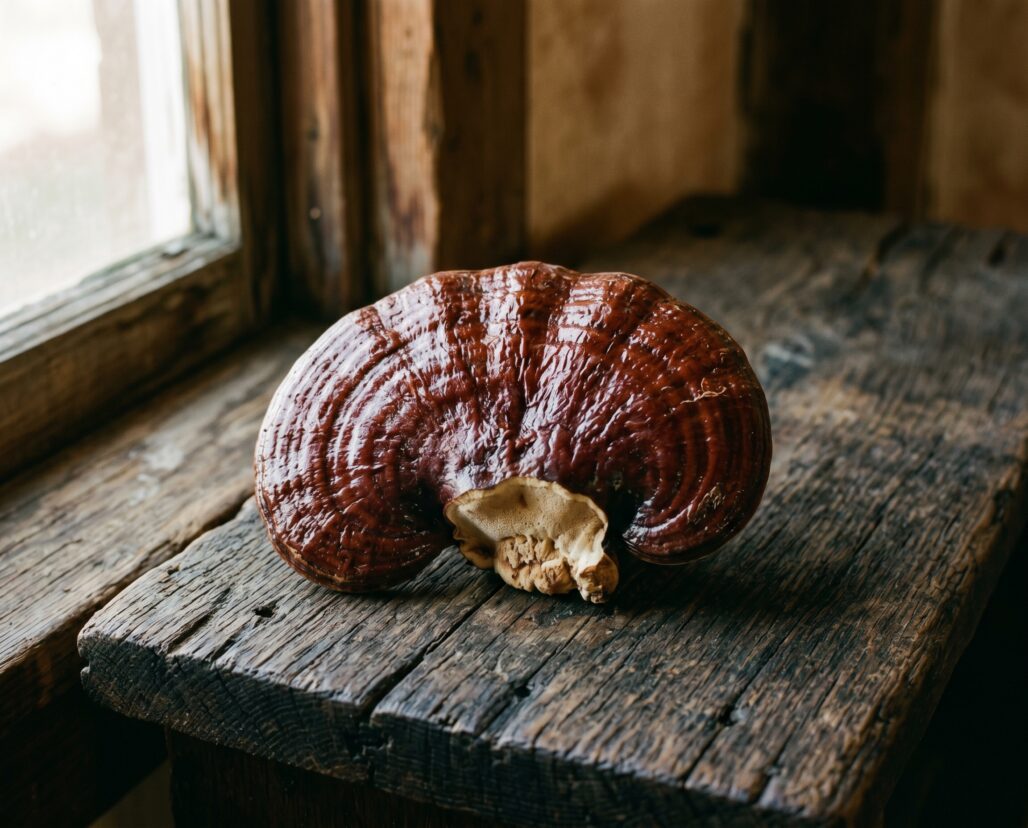
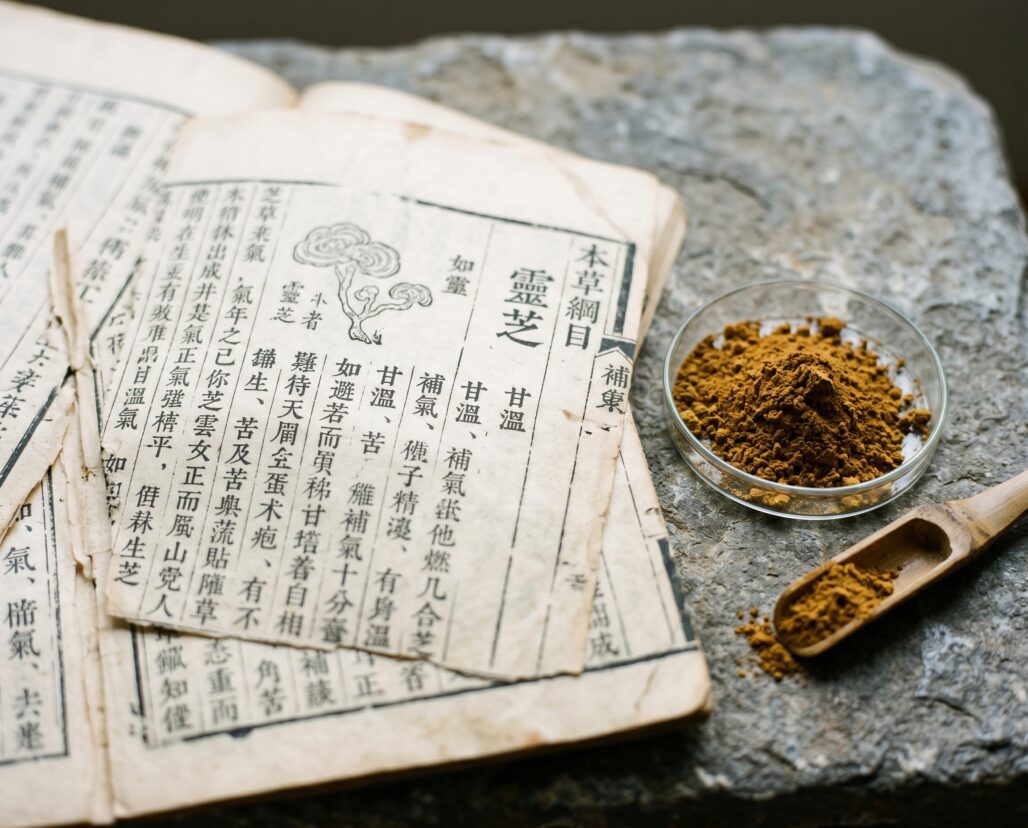
Reishi (Ganoderma lucidum, family Ganodermataceae) is a woody bracket mushroom with a distinctive kidney-shaped cap and deep red-brown lacquered surface — recognizable in traditional Chinese art for over two thousand years. Its Chinese name, lingzhi, translates loosely as "herb of spiritual potency." In Traditional Chinese Medicine (TCM), reishi was classified as a shen tonic: a category of herbs said to calm the mind and settle the spirit. That classification is historical context, not clinical evidence.
The pharmacologically active fractions include polysaccharides (primarily beta-glucans), triterpenoids (ganoderic acids), and peptidoglycans. Research attention has focused on two main areas: immunomodulation via the beta-glucan fraction and sedative-adjacent effects via the triterpenoid fraction.
The proposed sleep-relevant mechanism runs through two parallel pathways. First, animal studies suggest that reishi extracts may modulate GABAergic signaling — the same inhibitory neurotransmitter system targeted by benzodiazepines, though through much milder means. Second, a 2021 mouse study (Yao et al., PMID 34211003) identified a gut microbiota-dependent serotonin pathway: GLAA extract increased hypothalamic serotonin and enriched Bifidobacterium species, and antibiotic-induced microbiota depletion eliminated the sleep-promoting effect. Neither pathway has been confirmed in human trials.
Think of the evidence like blueprints for a building that has been modeled in simulation but never actually constructed at full scale. The architectural logic is sound; the rodent simulations work. No one has yet built and occupied the human version.
Actionable takeaway: Reishi's sleep mechanisms are plausible and internally consistent across multiple animal models, but plausibility in animal models does not automatically translate to human benefit. Dose, bioavailability, and interspecies pharmacokinetics can all disrupt a clean translation.
What the research actually shows {#what-research-shows}
The Tang 2005 RCT: what it measured and what it did not
The only well-powered human RCT on reishi relevant to sleep is the 2005 randomized, double-blind, placebo-controlled multicenter trial by Tang et al. (PMID 15857210), published in the Journal of Medicinal Food. The study enrolled 132 patients (123 assessable) diagnosed with neurasthenia — a diagnostic category used in Chinese clinical practice characterized by persistent mental and physical fatigue, sleep disturbance, and functional impairment.
The intervention was Ganopoly (a Ganoderma lucidum polysaccharide extract) at 1,800 mg three times daily (5,400 mg/day total) for 8 weeks versus placebo.
The primary outcomes were Clinical Global Impression (CGI) severity and Visual Analogue Scales for fatigue and well-being. The results:
- CGI severity reduction: 15.5% in treatment vs. 4.9% in placebo
- Fatigue score reduction: 28.3% vs. 20.1%
- Well-being improvement: 38.7% vs. 29.7%
- 51.6% of treatment patients rated "more than minimally improved" vs. 24.6% in placebo
The Tang 2005 trial is real, methodologically sound, and worth taking seriously. But it is not a sleep RCT. Neurasthenia patients experience fatigue-related sleep disruption, and some improvement in well-being presumably touched on sleep quality — but sleep architecture, sleep latency, and nighttime awakenings were not the primary endpoints. Citing this study as evidence that "reishi improves sleep" overstates what the data show.
The dose used (1,800 mg three times daily) is also substantially higher than most commercial reishi supplements, and the polysaccharide extract (Ganopoly) is a pharmaceutical-grade formulation, not a standard retail product.
Animal data: real findings, real limitations
Three animal studies form the backbone of reishi's sleep reputation:
Chu et al. 2007 (PMID 17383716), in Sprague-Dawley rats and ICR mice: Ganoderma lucidum aqueous extract at 80-120 mg/kg significantly decreased sleep latency and extended total sleep time in pentobarbital-treated animals. The mechanism appeared to involve GABAergic signaling (flumazenil, a benzodiazepine antagonist, blocked most of the effect). Critically, no effects were observed in animals with normal sleep — the effect required the barbiturate to be present.
Cui et al. 2012 (PMID 22207209), in rats: three-day oral administration of GLE at 80 mg/kg significantly increased total sleep time and NREM sleep measured via EEG, with no effect on slow-wave or REM sleep. The mechanism ran through TNF-alpha: GLE raised serum and hypothalamic TNF-alpha levels, and blocking TNF-alpha with antibody injection eliminated the hypnotic effect.
Yao et al. 2021 (PMID 34211003), in mice: 28 days of GLAA extract (25-100 mg/kg) shortened sleep latency and extended sleeping time via gut microbiota-dependent serotonin pathways. Disrupting the microbiome with antibiotics abolished the effect.
These are three different proposed mechanisms (GABAergic, TNF-alpha, serotonin-via-gut-microbiota) in three different animal models, which is not necessarily reassuring — convergent mechanisms in a single model would be more compelling. The real question isn't whether reishi works in lab rats; it's whether the human dose proves out in the same direction.
But traditional use is not the same as RCT evidence. Animal data are a starting point, not a conclusion.
Actionable takeaway: Cite the Chu, Cui, and Yao studies only with the explicit label "in animal models." Do not present them as evidence of human benefit. Any reishi brand that markets its product with "clinically proven to improve sleep" without specifying a human RCT is misrepresenting the literature.
How reishi compares to better-evidenced sleep supplements
For direct comparison: ashwagandha for sleep has two dedicated human RCTs — Salve et al. 2019 (PMID 32021735) in 60 adults with insomnia and Chandrasekhar et al. 2012 (PMID 23439798) with sleep quality as a secondary endpoint — both showing statistically significant effects on sleep onset latency and total sleep time. Magnesium glycinate has a dedicated systematic review base in older adults. L-theanine has small but consistent human RCT data showing reduced sleep latency.
Reishi operates through a different and less-documented mechanism (immune-mediated, GABAergic, and gut-serotonin pathways) versus ashwagandha's cortisol-HPA axis approach. They are not interchangeable, and reishi's human sleep evidence sits at a clearly lower tier.
| Supplement | Human sleep RCTs | Mechanism tier | Evidence confidence |
|---|---|---|---|
| Ashwagandha (KSM-66/Sensoril) | 2 dedicated | HPA axis / cortisol | Moderate |
| Magnesium glycinate | Multiple (systematic review) | NMDA / GABAergic | Moderate |
| L-theanine | Several small RCTs | GABAergic / alpha-wave | Low-moderate |
| Reishi | 0 dedicated | Animal model: GABAergic + TNF-alpha + serotonin | Low (extrapolation only) |
Who might consider reishi and who should skip it {#who-its-for}
Reasonable fit: Adults using reishi primarily for immune support (where the beta-glucan evidence is somewhat stronger), who view any potential sleep benefit as a secondary and speculative bonus. People already doing the basics well — consistent sleep schedule, low caffeine after noon, managed stress — and looking to layer in an adaptogen for general resilience.
Skip if: You are on any anticoagulant (warfarin, apixaban, rivaroxaban) or daily aspirin — reishi's antiplatelet activity can increase bleeding risk and this is not a theoretical concern. You are on immunosuppressant therapy (tacrolimus, cyclosporine, biologics) — reishi's immune stimulation can work against your treatment. You have uncontrolled low blood pressure — additive hypotension is documented. You have sleep-disorder-level insomnia (clinically defined); the evidence gap is too large to rely on reishi as primary treatment.
An adaptogen brand can have impressive marketing and still miss third-party testing for the active marker compound. A reishi label that says "1,000 mg reishi" without beta-glucan percentage tells you the serving size, not the potency.
Dosing and product form: what the trials used {#dosing}
In the Tang 2005 RCT, the dose was 1,800 mg Ganopoly (polysaccharide extract) three times daily for 8 weeks — 5,400 mg/day total. This is a pharmaceutical-grade polysaccharide extract, not a whole-mushroom powder or mycelium product. The dose for sleep specifically has not been established in any human RCT, because no human sleep RCT exists.
Most commercial reishi products offer 500-2,000 mg per serving, typically fruiting body extract or a blend. The variables that matter more than raw milligrams:
- Fruiting body vs. mycelium-on-grain: Fruiting body extracts concentrate the beta-glucans and triterpenoids; mycelium-on-grain products often have significant grain starch content and lower active-compound density. Real Mushrooms and Host Defense are among the brands that publish fruiting-body sourcing.
- Beta-glucan or polysaccharide percentage disclosed: Look for this on the label. Products standardized to 20-30% beta-glucans are comparable to the polysaccharide fractions used in animal and some clinical research.
- Third-party testing: NSF, Informed Sport, or USP certification provides independent confirmation of label accuracy.
- Duration: The Tang 2005 trial ran 8 weeks. Do not expect results at 2 weeks.
Side effects and drug interactions {#side-effects-interactions}
Reported adverse effects
In the Tang 2005 trial, the Ganopoly group reported no serious adverse events. The tolerability profile was generally favorable at that dose. However, higher-dose or longer-term use has produced case reports of hepatotoxicity (liver injury), including at least one fatal case with powdered formulations, documented in Memorial Sloan Kettering's integrative herbs database. Nausea, dry mouth, constipation, and dizziness have also been reported.
Drug interactions: the anticoagulant warning is not small print
Reishi has documented antiplatelet activity. The clinical consequence: patients taking warfarin, heparin, apixaban, rivaroxaban, clopidogrel, or daily aspirin face a meaningful bleeding-risk increase. Case reports of bleeding events in patients combining reishi with anticoagulants exist. This is not a theoretical concern based on in vitro data alone — it is a real interaction. Tell your prescriber before starting reishi if you are on any blood-thinning agent.
Immunosuppressants: Reishi modulates immune function upward. That is directly counter to the therapeutic goal of tacrolimus, cyclosporine, mycophenolate, or biologic agents. Patients on post-transplant immunosuppression or managing autoimmune disease with immunosuppressants should avoid reishi.
Blood-pressure medications: Additive hypotension has been documented. If you are on antihypertensive therapy and your blood pressure already runs controlled-to-low, adding reishi creates unpredictable stacking risk.
Diabetes medications: Reishi has mild glucose-lowering activity documented in preclinical studies. If you are on metformin, insulin, or sulfonylureas, combined use may increase hypoglycemia risk. Monitor glucose more closely if you choose to add reishi.
Cytochrome P450 interactions: In vitro data suggest reishi inhibits CYP2E1, CYP1A2, and CYP3A4. The clinical magnitude in humans is not yet established, but any drug metabolized via CYP3A4 (a long list including many statins, antihistamines, and psychiatric medications) could theoretically be affected.
Pregnancy and breastfeeding
Safety data in pregnancy and breastfeeding are absent. Given the immune-modulatory activity and interaction profile, reishi is not appropriate during pregnancy or lactation without direct physician oversight.
Frequently asked questions {#faq}
Does reishi make you sleep better?
Human RCT evidence specifically for sleep does not exist as of 2026. Animal models consistently show sleep-promoting effects via GABAergic and serotonin pathways. The Tang 2005 human RCT showed fatigue and well-being improvement in neurasthenia patients, which may include sleep as a component, but sleep was not the primary endpoint. Any brand claiming reishi is "clinically proven" for sleep is misrepresenting the current data.
How is reishi different from ashwagandha for sleep?
Different mechanisms, different evidence tiers. Ashwagandha targets the HPA axis and cortisol — two human RCTs have tested it specifically for sleep outcomes and shown statistically significant reductions in sleep latency and improvements in total sleep time. Reishi appears to work through GABAergic and gut microbiota-serotonin pathways; its sleep evidence is from animal studies only. For sleep as a primary outcome, ashwagandha has substantially stronger support.
Is reishi safe for daily use?
In the Tang 2005 trial, 8 weeks of Ganopoly was well-tolerated with no serious adverse events. However, case reports of hepatotoxicity exist with powdered reishi formulations. People on anticoagulants, immunosuppressants, antihypertensives, or diabetes medications face real interaction risk. Daily reishi without physician awareness is not appropriate for those groups.
What dose of reishi was used in the main human trial?
Tang 2005 used 1,800 mg Ganopoly three times daily (5,400 mg/day total) for 8 weeks. This was a polysaccharide-extract pharmaceutical formulation. Most retail products offer far lower doses in different extraction forms. The dose relevant to sleep specifically has not been tested in any human trial.
Is fruiting body reishi better than mycelium products?
For polysaccharide and triterpenoid content, fruiting body extracts generally have higher concentrations of the active fractions used in research. Mycelium-on-grain products contain significant grain starch, diluting potency per gram. When comparing products, beta-glucan percentage disclosed on the certificate of analysis is more informative than the raw milligram count.
Can reishi help with stress that disrupts sleep?
Plausible, but unproven in humans via a dedicated trial. The indirect logic — reishi reduces fatigue and improves well-being (Tang 2005), stress and fatigue drive sleep disruption, therefore reishi could improve stress-disrupted sleep — is reasonable. But that logical chain is not the same as a direct RCT of reishi's effect on stress-induced insomnia. For stress-linked sleep disruption with stronger evidence, the medicinal mushrooms complete guide covers the full adaptogen context.
Does reishi interact with melatonin or sleep medications?
No direct interaction studies exist for reishi plus melatonin. The GABAergic mechanism documented in animal models raises a theoretical additive sedation concern with benzodiazepines, Z-drugs (zolpidem, eszopiclone), and other GABA-targeting sleep medications. The clinical magnitude in humans is unknown. Combining reishi with prescription sleep medications without physician knowledge is not advisable.
As an Amazon Associate, I earn from qualifying purchases. Product recommendations are based on real reviews and independent research.
Related reading
- Medicinal Mushrooms: The Complete Guide to What the Evidence Actually Shows
- Ashwagandha for Sleep: What the KSM-66 RCTs Actually Showed
- Cordyceps for Energy: Honest Review of the Hirsch 2017 Exercise Trial
Conclusion: the bottom line on reishi for sleep
Reishi (Ganoderma lucidum) has a coherent, biologically plausible sleep story: animal models show GABAergic sedation potentiation, NREM sleep extension via TNF-alpha pathways, and gut-microbiota-dependent serotonin increases. The traditional Chinese medicine classification as a shen tonic aligns with those findings as historical context. The Tang 2005 RCT in 132 neurasthenia patients showed meaningful fatigue reduction and well-being improvement at 8 weeks, which gives the herb some clinical credibility.
What reishi does not have is a human RCT specifically measuring sleep outcomes. That gap matters. Extrapolating from a fatigue trial and three rodent studies to a confident sleep claim is a step the evidence does not support. Every "reishi improves sleep" headline you read is built on that extrapolation.
The drug-interaction profile — particularly anticoagulants — is not a minor footnote. If you take any blood-thinning medication, discuss reishi with your prescriber before starting.
For sleep as a primary goal, ashwagandha sits at a higher evidence tier. Reishi is a reasonable secondary adaptogen for people already handling sleep hygiene fundamentals and looking for immune-system and general resilience support, with honest expectations about what the sleep data do and do not show.
Next steps:
- Review the full evidence base for adaptogens and sleep in the Medicinal Mushrooms Complete Guide
- Compare ashwagandha's direct sleep evidence in Ashwagandha for Sleep
- If you decide to try reishi, look for a fruiting-body extract with a disclosed beta-glucan percentage and third-party certification, and tell your prescriber if you take any anticoagulant, antihypertensive, immunosuppressant, or diabetes medication
This article is for informational purposes and not medical advice. Herbal adaptogens — even traditional ones — can interact with thyroid medication, antidepressants, anticoagulants, immunosuppressants, blood-pressure drugs, and more. Consult a licensed physician before starting any adaptogen, particularly if you are pregnant, nursing, taking prescription medications, or managing a chronic condition.
As an Amazon Associate, I earn from qualifying purchases. Product recommendations are based on real reviews and independent research.
