

What a brown bag review actually is
A brown bag medication review is exactly what it sounds like. You load a bag with everything you take, carry it to a pharmacist, and they go through it with you, one bottle at a time. The name comes from the grocery bag people use to haul it all in.
Many pharmacies offer this for free, and some clinics run brown bag events on set days. If you are on Medicare Part D, you may also qualify for a no-cost comprehensive medication review through a Medication Therapy Management program, which is the same idea on a larger scale. According to Medicare.gov, that review covers prescriptions, over-the-counter drugs, and supplements, and you walk away with a written medication list and a recommended to-do list.
The point is simple. Most people cannot recall their full list from memory. The Agency for Healthcare Research and Quality built its brown bag tool around that exact problem, since a surprising share of patients get their own list wrong when asked to name it off the top of their head. The bottles do not lie. That is why you bring them.
The complete what-to-bring checklist
The rule is everything, in its original container. Not a summary, not the three you think matter. The whole picture is what makes the review worth doing. AHRQ built its brown bag tool around bringing all of it, because the easiest approach for many people is to put every product into one bag and let the pharmacist sort it out. The FDA separately recommends keeping a written list of everything you take.
Here is the full list to gather the night before.
| Category | What it covers | Easy to forget |
|---|---|---|
| Prescriptions | Every pill, patch, and injectable from any doctor | A short-course one you only take sometimes |
| OTC medicines | Pain relievers, antacids, allergy pills, sleep aids, laxatives | The bottle that lives in your bag, not the cabinet |
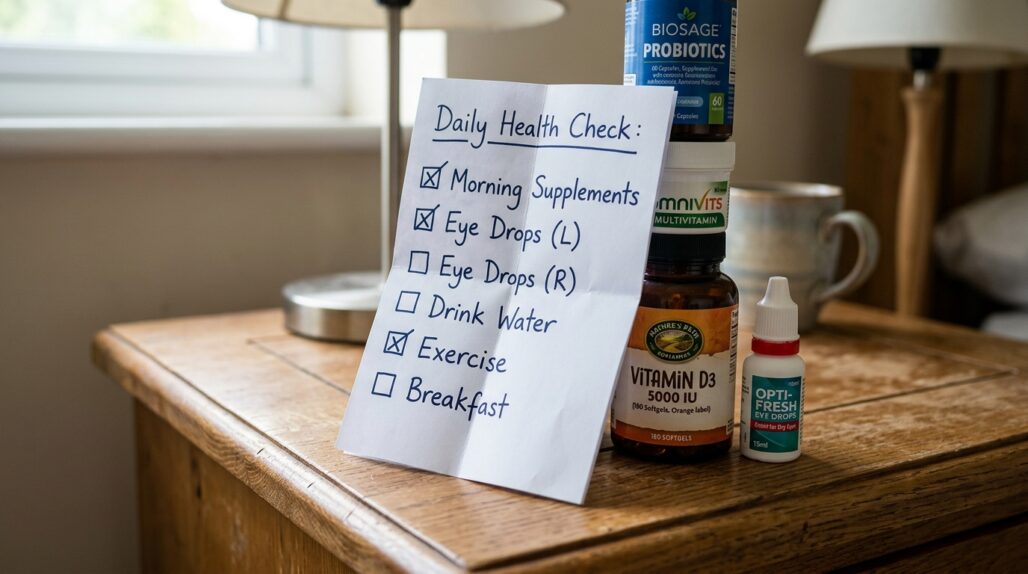
| Vitamins and supplements | Multivitamins, magnesium, fish oil, herbal products, probiotics | A gummy or powder you do not think of as a pill |
| Topicals and drops | Creams, ointments, eye drops, ear drops, nasal sprays | Eye drops, which people rarely count as medicine |
| Inhalers and devices | Rescue and daily inhalers, nebulizer solutions | A rescue inhaler you only grab now and then |
| Samples and extras | Free samples from a doctor, leftover bottles, pill organizers | A sample with no pharmacy label |
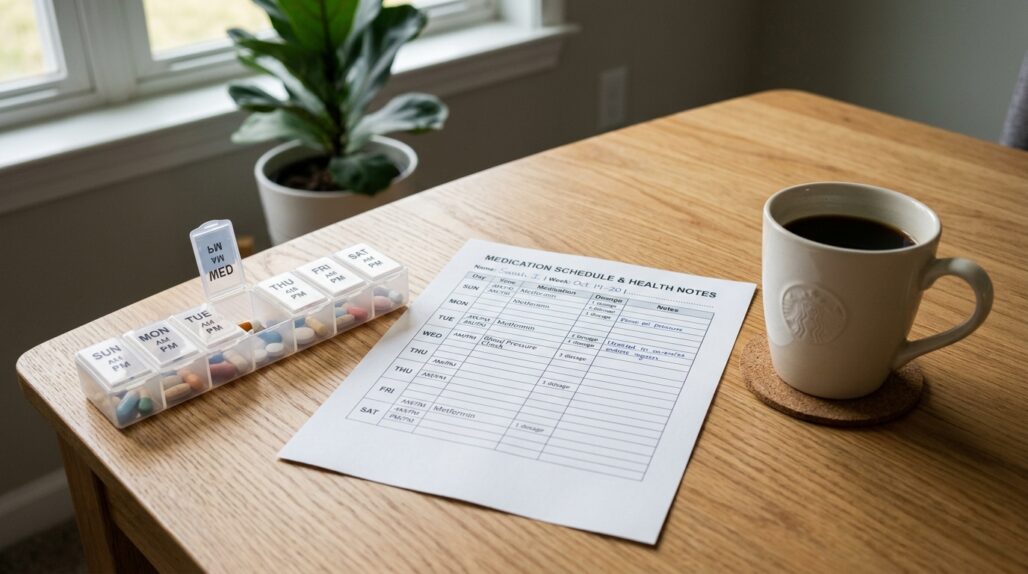
Bring each item in the bottle or box it came in. The label carries the strength, the prescriber, the pharmacy, and the date, and the pharmacist reads all of that. If you sort pills into a weekly organizer, bring that too, so they can match what is in the slots against what the labels say.

What the pharmacist actually checks
You are not just handing over a bag and waiting. The pharmacist works through a short mental list, and it helps to know what they are hunting for.
The first thing they look for is duplicates. Two products with the same active ingredient is more common than people expect, especially when one is a prescription and one is an OTC with a different brand name. A pharmacist-led medication-review study indexed by the National Library of Medicine found pharmacists identified about 3.6 medication problems per patient, most often a condition that was going untreated, along with drug-name and dose discrepancies, so a careful eye on duplicates and overlaps is well placed here.
Next come possible interactions. Some supplements change how a drug behaves. The NIH Office of Dietary Supplements notes that St. John's wort, for example, can speed the breakdown of several medicines and make them less effective. The pharmacist flags combinations like this to discuss, not to overhaul on the spot. If you want to read up before your visit, our plain-English guide to drug and supplement interactions walks through the combinations that come up most.
They also scan for wrong or expired doses. An old bottle with a strength you no longer take, or one that expired two years ago, gets pulled aside. And they check adherence, gently, by asking how you actually take each one, which often differs from the label.
The quiet, important part is the cross-doctor view. When a cardiologist, a primary care doctor, and an urgent care visit each add something, no single one of them sees the whole bag. The pharmacist often does, sometimes for the first time. That is where the most useful catches happen.
How to prepare so the visit pays off
A good brown bag review takes maybe fifteen minutes, and a little prep makes those minutes count.
- Gather the night before. Walk through the kitchen, the bathroom, the nightstand, your bag, and the car. Medicines hide in more than one place.
- Write a backup list. Note each product, its strength, and how often you take it. The FDA suggests a medication list include the name, the strength, what it is for, and your instructions for when and how much.
- Add the people and the practical stuff. Jot down who prescribes what, your allergies, and your insurance card if a Medicare review is the goal.
- Write your three questions. Maybe it is whether your new magnesium is fine with a heart medicine, or why two bottles look so similar. Questions get lost in the moment, so put them on paper. If a specific pairing is nagging at you, you can also run it through our drug and supplement interaction checker first, then bring the result as a question for the pharmacist.
You can build the whole backup list with nothing but a pen. Copy this template onto a sheet and fill one row per product.
| Product name | Strength | How often | Prescribed by | What it is for |
|---|---|---|---|---|
| Example, Lisinopril | 10 mg | Once a morning | Dr. Lee, primary care | Blood pressure |
| Example, Magnesium | 200 mg | Evening | Self, OTC | Sleep and cramps |
| _______________ | _______ | _______ | _______ | _______ |
Once you have done this once, the hard part is keeping it current as bottles change. A pill box, a sticky note on the cabinet, or a phone note all work for that. If carrying every bottle is awkward, bring a printed list as backup; StackMyMed (our own free app) can export a clean med-and-supplement list to hand the pharmacist alongside the bag. Whatever you use, the goal is the same: a list that matches your actual bottles on the day you walk in.
Who gets the most out of it
This helps almost anyone, but a few situations move it from nice-to-have to worth scheduling soon.
You are a strong candidate if you take four or more products, including supplements. The more bottles, the higher the odds that two overlap or quietly clash. You also benefit if you have more than one prescriber, since that is exactly the gap where a duplicate slips through.
Adding supplements is its own trigger. The moment you start a new vitamin or herbal product on top of a prescription, a quick check is reasonable, because that is when surprises tend to show up. It also helps to know how we weigh the evidence behind a supplement before you add it, which we lay out in how we review supplements.
One thing to hold onto: a pharmacist in a brown bag review flags issues for you and your doctor to discuss. They will not tell you to stop a prescription on your own, and you should not. The output is a clearer list and a short set of questions to take to the prescriber, not a same-day change to your regimen. For anything that feels urgent, that is a phone call to your pharmacy or doctor, not a guess.
FAQ
Is a brown bag medication review free? Often, yes. Many community pharmacies offer it at no charge, and Medicare Part D members who qualify can get a comprehensive medication review through a Medication Therapy Management program at no cost. Call your pharmacy and ask.
Do I really have to bring the bottles, not just a list? Bring both. The label on each bottle carries the strength, the prescriber, and the date, which a list alone can miss. A written list is a backup, not a replacement, and it helps if a bottle is missing.
Should I bring vitamins and supplements too? Yes, every one, including gummies, powders, and herbal products. NIH notes that supplements can interact with medicines, so the pharmacist needs the full picture, not only the prescriptions.
Will the pharmacist change my medications? No. They flag possible problems, like duplicates or interactions, for you to raise with the doctor who prescribed them. Decisions to start, stop, or adjust a prescription stay with your prescriber.
How often should I do one? A yearly review is reasonable for most people, and sooner any time your list changes a lot, you add a supplement, or a new doctor enters the picture.
The pharmacist mentioned spacing my doses, what does that mean? Some products work better taken hours apart from others, and a pharmacist may suggest a schedule. If that comes up, our guide to timing medications and supplements can help you picture a daily plan to confirm with them.
The bottom line
A brown bag review turns a vague worry about your pile of bottles into fifteen useful minutes with someone trained to read them. The single most important move is the easy one: put everything you take, in its original container, into one bag, and add a written list so nothing gets missed.
Then let the pharmacist do their job, which is to spot duplicates, flag possible interactions, and hand you a clear list and a few questions for your doctor. The decisions about what to change belong to your prescriber and pharmacist, so bring the questions and let them guide the answers.
This article is for general information and is not medical advice. It cannot account for your personal health, conditions, or medications. Talk to your pharmacist or doctor before changing anything you take, and never start or stop a prescription on your own.
StackMyMed is made by UsefulVitamins. It helps you organize your list and flag things to discuss with a pharmacist or doctor; it is not a diagnosis or treatment tool and does not replace professional medical advice.
Reviewed by the UsefulVitamins Editorial Team.
