
If you've been searching for whether lion's mane mushroom actually improves focus and memory, the honest answer is: it depends entirely on who you are and what you're expecting. For older adults with mild cognitive impairment, there's genuine double-blind RCT evidence. For healthy adults looking for a nootropic edge, the human data is nearly nonexistent. This guide breaks down the mechanism behind the hype (NGF stimulation and what that actually means), why the fruiting body versus mycelium-on-grain debate matters more than most buyers realize, and what dosing from the actual clinical trials looked like. You'll also get a clear picture of who benefits, who can skip it, and what interactions to check before adding it to your stack.
Affiliate disclosure: this article contains affiliate links. As an Amazon Associate, UsefulVitamins.com earns from qualifying purchases at no extra cost to you.
Summary / Quick Answer: does lion's mane improve cognitive function?
Lion's mane has RCT support for mild cognitive impairment in older adults, and limited evidence for mood in menopausal women, but no high-quality RCT evidence for focus or memory improvement in healthy adults.
- Best for: Adults aged 50+ with documented mild cognitive impairment; menopausal women with anxiety and low mood symptoms.
- Not ideal for: Healthy adults expecting short-term nootropic effects; anyone relying on cheap mycelium-on-grain products marketed as "lion's mane capsules."
- What to check before buying: Fruiting body (not mycelium-on-grain), beta-glucan content disclosed, third-party tested for potency.
- Decision shortcut: If the label says "lion's mane mycelium" without specifying extraction from actual mushroom tissue, or if polysaccharide content is not listed, move on.
What you'll find in this guide
- What lion's mane actually is and how it grows
- The NGF mechanism: what hericenones and erinacines do in vitro
- What the human RCT evidence actually shows
- Fruiting body vs mycelium-on-grain: the consumer quality problem
- Who benefits and who should skip it
- Dosing from clinical trials
- Side effects and drug interactions
- Product picks
- Frequently asked questions
- Related reading
What lion's mane actually is and how it grows {#what-lions-mane-is}
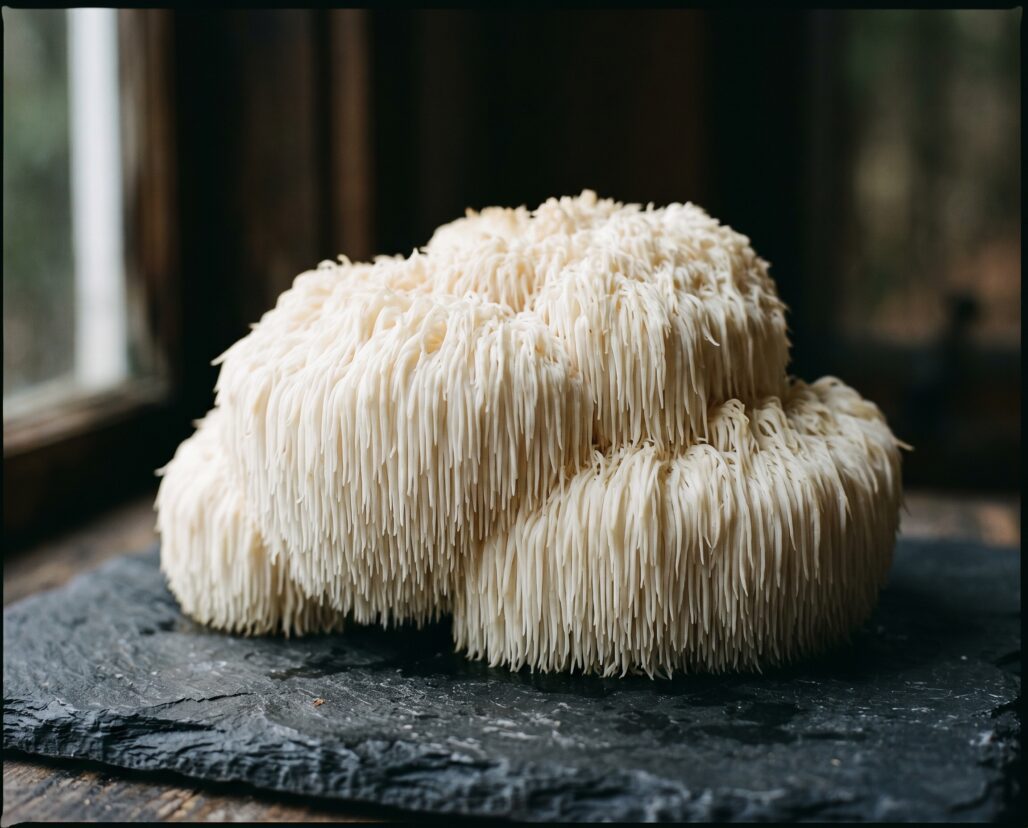
Lion's mane (Hericium erinaceus) is a wood-decay fungus native to North America, Europe, and Asia. Unlike typical capped mushrooms, it grows as a single cascading mass of white, icicle-like spines — sometimes up to 25 cm across — that hang from dead hardwood trees in late summer and autumn. The name comes from the resemblance to an actual lion's mane when fully mature.
In traditional East Asian herbalism, it appears in Chinese texts under the name Hericium ("monkey head mushroom") and has been used as a culinary ingredient and tonic for centuries, particularly valued for digestive health. Traditional use is historical context, not clinical evidence — but it explains why serious research interest developed in Japan and China before it reached Western markets.
The two active compound families most studied for cognitive effects are hericenones (found in the fruiting body) and erinacines (found primarily in the mycelium). Both families have shown the ability to stimulate nerve growth factor (NGF) synthesis in laboratory cell models. A 2013 in vitro study (Lai et al., PMID 24266378) using neuroblastoma-glioma cells found that H. erinaceus extract combined with exogenous NGF produced a 60.6% increase in neurite outgrowth, and that the extract alone prompted cells to secrete extracellular NGF. A 2011 animal study (Mori et al., PMID 21383512) confirmed hericenones C, D, and E drive NGF secretion both in cell cultures and in living mice.
Think of lion's mane's NGF effect like fertilizer for an existing plant rather than a transplant of a new one. NGF already exists in your brain; these compounds may increase its local availability. That does not automatically translate into measurable cognitive improvement in healthy adults — a point most supplement marketing carefully avoids.
Actionable takeaway: The NGF stimulation finding is real at the cellular level. The critical question is whether oral dosing in humans reaches the brain in concentrations sufficient to matter — and that question has not been adequately tested in healthy adults.
The NGF mechanism: what hericenones and erinacines do {#ngf-mechanism}
Nerve growth factor is a neurotrophic protein that supports the survival and maintenance of neurons, including cholinergic neurons involved in memory and learning. Low NGF signaling is implicated in Alzheimer's disease progression. This is the biological rationale for studying lion's mane in dementia-adjacent conditions.
Hericenones (compounds isolated from the fruiting body) and erinacines (diterpenoids from the mycelium) differ in molecular size. Erinacines are smaller and cross the blood-brain barrier more readily in animal models, which is one reason some researchers argue mycelium extracts may have advantages for neurological applications — a nuance almost entirely absent from consumer marketing, where "fruiting body only" has become the default quality signal.
The 2017 polysaccharide review (He et al., PMID 28087447) documented that H. erinaceus polysaccharides (beta-glucans) show immunomodulatory, neuroprotective, and anti-hyperglycemic activity in preclinical studies. These are in vitro and animal-model findings. Extrapolating them to human benefit requires clinical trial confirmation, which for most of these effects remains incomplete.
The real question isn't whether lion's mane does anything interesting in a cell culture dish — it clearly does. The real question is whether the human dose proves out in placebo-controlled trials.
What the human RCT evidence actually shows {#what-research-shows}
The honest summary of the human RCT database for lion's mane in 2026: two small but credible double-blind trials in specific populations, one additional RCT in older adults, and essentially no clean data for healthy adults.
Mori 2009: mild cognitive impairment in older adults
The most-cited human RCT for lion's mane is Mori et al. 2009 (PMID 18844328), published in Phytotherapy Research. The design was double-blind, placebo-controlled, with 30 Japanese adults aged 50-80 diagnosed with mild cognitive impairment (not healthy adults). Participants took four 250mg tablets of Yamabushitake (H. erinaceus) fruiting body powder three times daily — totaling 3 grams per day — for 16 weeks. The primary outcome was the Revised Hasegawa Dementia Scale (HDS-R).
The treatment group showed significantly elevated cognitive scores at weeks 8, 12, and 16 compared to placebo. Critically, those improvements declined four weeks after supplementation was discontinued. No adverse effects were reported.
This is genuine evidence — but it is evidence for a defined clinical population (MCI in older adults), using a specific dose (3g/day fruiting body), over a specific duration (16 weeks). Extrapolating it to a healthy 30-year-old wanting sharper focus is a category error.
Nagano 2010: anxiety and depression in menopausal women
A second double-blind RCT (Nagano et al. 2010, PMID 20834180), published in Biomedical Research, enrolled 30 menopausal women randomized to H. erinaceus cookies or placebo cookies over 4 weeks. The brief reported the dose as approximately 0.5g of lion's mane content per day (the full-text protocol was published in Japanese; the abstract does not specify gram amounts). Primary outcomes were the Center for Epidemiologic Studies Depression Scale (CES-D), the Indefinite Complaints Index (ICI), and measures of sleep quality.
The H. erinaceus group showed significantly lower depression and anxiety scores compared to placebo. Specific symptom improvements included reduced "insentive" (apathy) and "palpitatio" (palpitation) subscores.
Again, this is a specific population — menopausal women with anxiety and mood complaints — not the general population, and the effect appeared at a relatively low dose over only 4 weeks.
Saitsu 2019: cognitive function in older adults (additional data)
A further double-blind, placebo-controlled RCT (Saitsu et al. 2019, PMID 31413233) tested H. erinaceus fruiting body supplementation over 12 weeks in older adults. The Mini Mental State Examination (MMSE) showed significant improvement in the supplementation group, with authors concluding this represents "a safe and convenient method for dementia prevention." Sample size was not disclosed in the publicly available abstract. This study supports the Mori 2009 finding but again targeted adults at risk for cognitive decline, not healthy young adults.
The healthy adults gap
No published double-blind, placebo-controlled RCT with adequate sample size has demonstrated measurable cognitive improvement in healthy adults at standard supplement doses as of May 2026. The popular claim that lion's mane improves focus, concentration, or memory in healthy people rests on mechanism extrapolation from the MCI trials, in vitro NGF data, and anecdote — not direct evidence.
An adaptogen brand can have impressive marketing and still miss the critical point: the target population in the supporting RCTs was elderly people with diagnosed cognitive impairment, not healthy office workers.
Actionable takeaway: If you are an older adult with documented MCI, lion's mane at 3g/day fruiting body extract is backed by more clinical evidence than almost any other supplement in this category. If you are a healthy adult hoping for sharper daily focus, the evidence does not yet support the dose or the effect.
Fruiting body vs mycelium-on-grain: the consumer quality problem {#fruiting-body-vs-mycelium}
This is the most practically important section for anyone buying a lion's mane supplement.
Most commercial lion's mane products are not made from the fruiting body — the actual mushroom. They are made from mycelium grown on grain substrate (usually oats or rice), then dried and powdered. The problem is that the grain is never fully removed. Independent testing has repeatedly found that mycelium-on-grain products contain 40-80% starch, with minimal beta-glucan content and often undetectable or trace levels of hericenones.
Buying mushroom supplements without checking fruiting body content is like buying olive oil labeled "Mediterranean blend" — the label tells you everything except what's actually in it.
How to read a label
Fruiting body products should state "fruiting body" explicitly, ideally also listing polysaccharide (beta-glucan) content as a percentage. A respectable minimum is 20-25% beta-glucans. Dual-extract products (hot-water + alcohol extraction) maximize both beta-glucan and hericenone extraction from fruiting body material.
Mycelium-on-grain products are often labeled simply as "lion's mane mycelium" or "full-spectrum mushroom mycelium." Some companies use "full spectrum" as a marketing term for mycelium-on-grain to obscure the substrate issue. These products have not been used in any of the human RCTs.
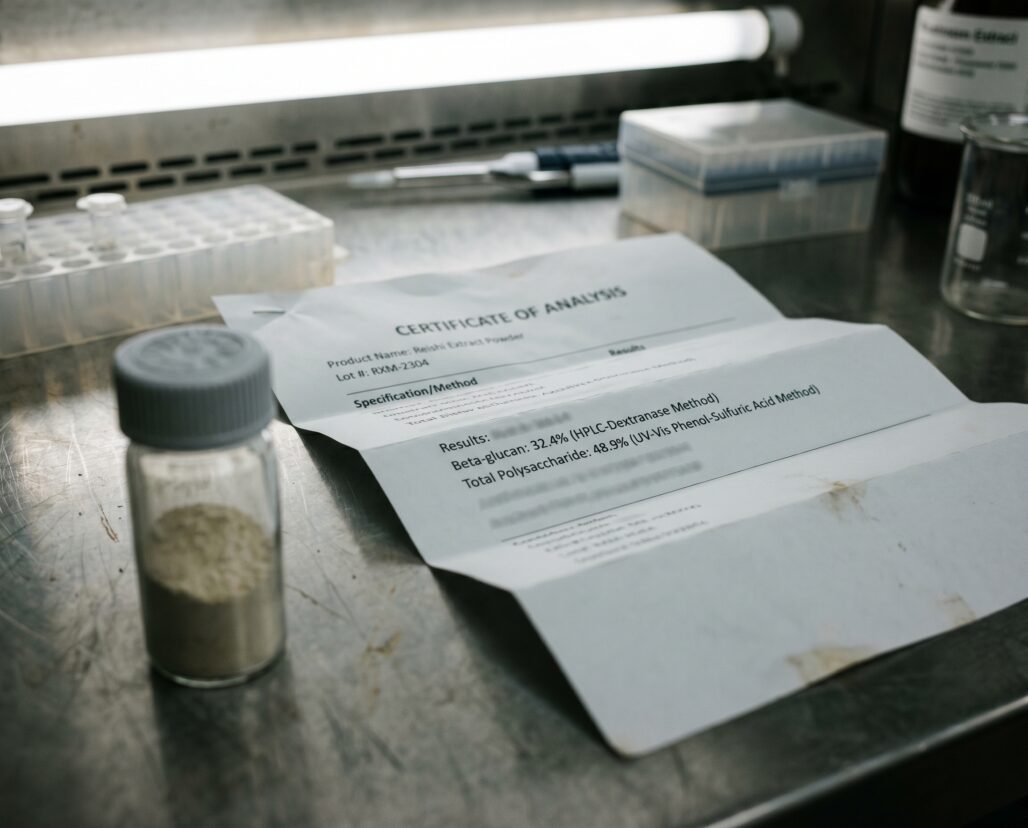
Testing shortcut: Products certified by NSF International, USP, or Informed Sport, or those that publish a certificate of analysis (COA) showing beta-glucan content, offer the most transparency. ConsumerLab has evaluated mushroom supplement quality in prior reports; checking their database for tested brands is a practical step before buying.
Actionable takeaway: Check for "fruiting body" on the label. Look for beta-glucan percentage in the COA. If neither is present, the product is likely mycelium-on-grain with mostly starch content and should be treated as unverified.
Who benefits and who should skip it {#who-its-for}
Strong fit
- Adults aged 50+ with documented mild cognitive impairment, working with a physician who has reviewed the Mori 2009 and Saitsu 2019 data.
- Perimenopausal or menopausal women experiencing anxiety, mood disruption, and sleep complaints, particularly those seeking non-pharmaceutical options to discuss with their provider.
- Anyone who wants a culinary mushroom with a solid safety record and plausible long-term brain health rationale.
Weaker fit
- Healthy adults under 50 seeking acute focus or memory improvement. The evidence does not support this use at standard supplement doses.
- Anyone expecting noticeable effects within days. The Mori 2009 RCT found effects at 8 weeks, building through 16 weeks — this is a slow-signal compound, not a stimulant.
Skip if
- You are on anticoagulant therapy (warfarin, apixaban, dabigatran) — lion's mane has shown platelet-aggregation inhibition in preclinical models, suggesting a possible additive bleeding risk; see Section 7 for detail.
- You are on immunosuppressant therapy (tacrolimus, cyclosporine, biologics) — the immunomodulatory polysaccharides may theoretically affect immune regulation, though direct clinical interaction data are sparse.
- You are pregnant or breastfeeding — no human safety data exist for these populations.
- You are currently managing a blood-sugar condition on medication — mild glucose-lowering effects have been observed in animal models; interaction with diabetes medications is a theoretical concern.
Dosing from clinical trials {#dosing}
Important framing: This section describes doses used in research, not a prescription. Do not interpret these ranges as personal dosing advice.
RCT-derived ranges
In Mori et al. 2009 (PMID 18844328), participants with MCI took 3 grams per day of H. erinaceus fruiting body powder (four 250mg tablets, three times daily) for 16 weeks. Effects were measurable at week 8 and continued building through week 16. Effects reversed within 4 weeks of stopping.
In Nagano et al. 2010 (PMID 20834180), the intervention used cookies containing approximately 0.5g of H. erinaceus per day over 4 weeks in menopausal women. The lower dose and different extraction matrix (food versus dry powder capsule) make direct dose comparison between these two studies difficult.
In Saitsu et al. 2019 (PMID 31413233), the study ran 12 weeks using fruiting body supplementation; the dose in the available abstract is not specified.
What this means practically
The best-supported dose for MCI populations is 3g/day of fruiting body extract, sustained for at least 16 weeks. Most commercial products are dosed at 500-1000mg per capsule and recommend 1-3 capsules daily (0.5-3g range). Products in the 1-3g range that use genuine fruiting body extract are at least consistent with the clinical dose used in the only positive elderly MCI trial.
Standardization markers worth looking for: products that specify beta-glucan content (20%+ preferred) and disclose extraction method (hot-water or dual extract) are closer to the form tested in trials than raw mycelium-on-grain powder.
Most clinical trials ran 8-16 weeks before meaningful effects appeared. Expecting results in 1-2 weeks at any dose is inconsistent with the trial timelines.
Side effects and drug interactions {#side-effects-interactions}
Reported side effects from trials
In the human RCTs reviewed here, lion's mane was well-tolerated. Mori 2009 reported no adverse effects across 16 weeks. The Memorial Sloan Kettering integrative medicine database (mskcc.org) notes the most commonly reported adverse effects as abdominal discomfort, nausea, and skin rash — consistent with the broader medicinal mushroom literature. These are generally mild and self-limiting.
A small number of case reports have described allergic reactions, including respiratory symptoms, in individuals with mushroom allergies. If you have a known mushroom or mold allergy, discuss lion's mane with a physician before use.
Drug interactions
Anticoagulants (warfarin, apixaban, rivaroxaban, dabigatran): Preclinical evidence from in vitro and animal studies suggests that H. erinaceus polysaccharides may inhibit platelet aggregation. This creates a theoretical additive bleeding risk when combined with anticoagulant or antiplatelet medications. No controlled human trial has quantified this interaction, but the preclinical signal is sufficient to warrant caution. Anyone on blood-thinning therapy should inform their prescriber before adding lion's mane.
Immunosuppressants (tacrolimus, cyclosporine, mycophenolate, biologics): The beta-glucan polysaccharides in H. erinaceus have documented immunomodulatory effects in vitro and animal models (He et al. 2017, PMID 28087447). For patients whose immune function is deliberately suppressed (post-transplant, autoimmune conditions), supplementing with an immune-modulating compound is a theoretical risk. Clinical data on this interaction are not available; discuss with a transplant physician or immunologist before use.
Diabetes medications (metformin, sulfonylureas, insulin): Anti-hyperglycemic effects have been observed in animal models of lion's mane polysaccharides. While no human interaction data exist, the possibility of additive glucose-lowering effects is a theoretical concern for people already on pharmacological glucose control. Monitoring blood sugar during initial use is prudent if you fall into this category.
Pregnancy and breastfeeding: No adequate human safety data exist for lion's mane during pregnancy or lactation. The default precautionary stance applies: avoid supplemental doses during pregnancy or breastfeeding unless a physician has specifically reviewed the evidence and made an individual recommendation.
Actionable takeaway: Lion's mane's interaction profile is not nearly as well-documented as that of ashwagandha or St. John's Wort, but the preclinical signals for anticoagulant and immunosuppressant interactions are real enough to require a conversation with your prescriber if you're in those categories.
Product picks {#product-picks}
The three products below represent the range of what's available across price points. All use fruiting body extracts with disclosed beta-glucan content, which is the minimum bar for meaningful lion's mane supplementation.
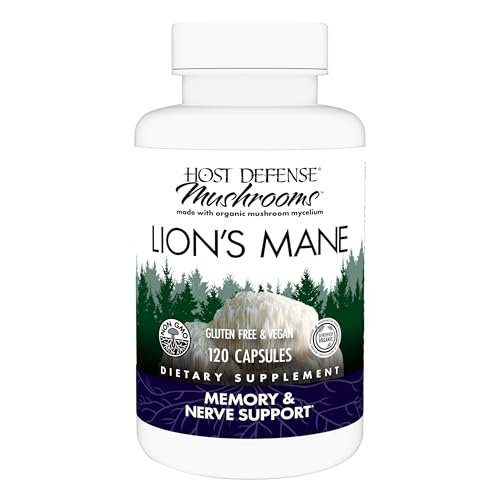
As an Amazon Associate, I earn from qualifying purchases. Product recommendations are based on real reviews and independent research.
Frequently asked questions {#faq}
Does lion's mane actually work for memory and focus?
For older adults with mild cognitive impairment, there is double-blind RCT evidence that 3g/day of fruiting body extract over 16 weeks improved cognitive scores (Mori et al. 2009, PMID 18844328). For healthy adults seeking sharper daily focus, no adequately powered human RCT has produced positive results as of 2026. The popular "nootropic" framing is built on mechanism extrapolation, not direct evidence in healthy populations.
How long does lion's mane take to work?
The Mori 2009 RCT found measurable improvement at 8 weeks, with effects building through 16 weeks and declining within 4 weeks of stopping. Expecting effects in days or 2 weeks is inconsistent with the trial data. If you are supplementing for MCI-adjacent reasons, plan for at least a 12-week trial at an adequate dose before evaluating effect.
What is the difference between fruiting body and mycelium products?
The fruiting body is the visible mushroom structure; it contains hericenones and beta-glucans. Most cheap commercial products use mycelium grown on grain substrate (oats or rice), then powdered without removing the grain. These products often contain 40-80% starch and minimal beta-glucans. The human RCTs used fruiting body preparations. A label that says "mycelium" without specifying extraction from mushroom tissue, or that does not list beta-glucan content, is likely a mycelium-on-grain product.
Can I take lion's mane with other supplements?
Most common supplement combinations (vitamin D, omega-3s, magnesium) have no documented interaction with lion's mane. The concern areas are anticoagulants, immunosuppressants, and diabetes medications — see the drug-interaction section above. If you are stacking with other nootropics that affect blood flow or platelet function, that combination deserves scrutiny.
Is lion's mane safe to take every day?
The 16-week Mori 2009 trial used daily dosing without reported adverse effects. The 4-week Nagano 2010 trial was also daily with no significant side effects. There are no long-term human safety studies (beyond 16 weeks). The culinary mushroom has a much longer safety record as food, but supplement-dose daily use beyond 6 months has not been formally evaluated. Most practitioners suggest re-evaluating continuing use at 4-6 months.
Does lion's mane help with anxiety and depression?
The Nagano 2010 trial (PMID 20834180) found reduced anxiety and depression scores in menopausal women over 4 weeks. This is a single small trial in a specific population. Extrapolating this to general anxiety or clinical depression as a primary treatment is not supported by the available evidence. If you are managing a depressive or anxiety disorder, this is a supplement-as-support conversation to have with your prescriber, not a substitute for evidence-based treatment.
Why did the cognitive benefits reverse after stopping lion's mane?
In Mori 2009, cognitive scores returned toward baseline within 4 weeks of stopping supplementation. This suggests the benefit depends on continued NGF stimulation from the active compounds, rather than any lasting structural change. It also implies that any benefit for MCI requires sustained supplementation, not a one-time course — a point that has obvious cost implications.
Related reading {#related-reading}
For the broader context of medicinal mushrooms and adaptogens:
- The Complete Guide to Adaptogens: What They Are, What the Science Shows, and How to Choose
- Medicinal Mushrooms: A Complete Guide to Reishi, Cordyceps, Chaga, and Lion's Mane
- Lion's Mane vs Cordyceps: Which Mushroom Supplement Is Worth It?
For more on specific lion's mane applications:
- Best Lion's Mane Supplement: What Third-Party Testing Shows
- Lion's Mane for Focus: What the Evidence Actually Says
- Lion's Mane for Anxiety: Reviewing the Nagano Data and What Comes Next
- Fruiting Body vs Mycelium: Why It Matters More Than Any Other Mushroom Supplement Label
Taking this alongside other products? StackMyMed (our companion app) logs your full stack, finds the optimal timing for each dose, and flags interactions, so you are not tracking it all by hand.
Conclusion: the bottom line on lion's mane and cognitive health
Lion's mane is one of the better-studied medicinal mushrooms for neurological endpoints, and the human RCT data for mild cognitive impairment in older adults is more credible than most supplement categories can claim. The Mori 2009 trial used a real fruiting body extract at a substantial dose over 16 weeks and showed genuine cognitive signal in a defined population. The Nagano 2010 mood data in menopausal women adds a second human data point in a specific population.
What lion's mane is not: a proven nootropic for healthy adults, a fast-acting focus supplement, or something that works regardless of product quality. The fruiting body versus mycelium-on-grain issue is a genuine consumer problem that most marketing ignores. Most cheap products on the shelf are grain with trace mushroom and will not replicate trial conditions.
Next steps:
- If you are an older adult with MCI or age-related cognitive concerns, discuss the Mori 2009 data with your physician, specify fruiting body extract at 1-3g/day, and plan a minimum 12-16 week trial.
- If you are a healthy adult interested in lion's mane for focus, read Lion's Mane for Focus: What the Evidence Actually Says before buying anything.
- If you want to understand the full medicinal mushroom landscape, start at Medicinal Mushrooms: A Complete Guide.
- Before buying, check for "fruiting body" on the label, beta-glucan percentage in the COA, and third-party testing documentation.
References
- Mori K, Inatomi S, Ouchi K, Azumi Y, Tuchida T. Improving effects of the mushroom Yamabushitake (Hericium erinaceus) on mild cognitive impairment: a double-blind placebo-controlled clinical trial. Phytother Res. 2009;23(3):367-372. PMID 18844328
- Nagano M, Shimizu K, Kondo R, Hayashi C, Sato D, Kitagawa K, Ohnuki K. Reduction of depression and anxiety by 4 weeks Hericium erinaceus intake. Biomed Res. 2010;31(4):231-237. PMID 20834180
- Saitsu Y, Nishide A, Kikushima K, Shimizu K, Ohnuki K. Improvement of cognitive functions by oral intake of Hericium erinaceus. Biomed Res. 2019;40(4):125-131. PMID 31413233
- Lai PL, Naidu M, Sabaratnam V, et al. Neurotrophic properties of the Lion's mane medicinal mushroom, Hericium erinaceus (Higher Basidiomycetes) from Malaysia. Int J Med Mushrooms. 2013;15(6):539-554. PMID 24266378
- Mori K, Obara Y, Moriya T, Inatomi S, Nakahata N. Effects of Hericium erinaceus on amyloid beta(25-35) peptide-induced learning and memory deficits in mice. Biomed Res. 2011;32(1):67-72. PMID 21383512
- He X, Wang X, Fang J, et al. Structures, biological activities, and industrial applications of the polysaccharides from Hericium erinaceus (Lion's Mane) mushroom: A review. Int J Biol Macromol. 2017;97:228-237. PMID 28087447
This article is for informational purposes and not medical advice. Herbal adaptogens — even traditional ones — can interact with thyroid medication, antidepressants, anticoagulants, immunosuppressants, blood-pressure drugs, and more. Consult a licensed physician before starting any adaptogen, particularly if you are pregnant, nursing, taking prescription medications, or managing a chronic condition.
As an Amazon Associate, I earn from qualifying purchases. Product recommendations are based on real reviews and independent research.
