
If you've been searching "lion's mane for anxiety," the short answer is: one small human RCT suggests it may help in menopausal women, but the evidence base is too thin to generalize. This article breaks down exactly what that trial found, what the proposed biological mechanism looks like, and how lion's mane compares to other options with stronger anxiety data. You'll also get a clear picture of who this mushroom may be worth trying, who should hold off, and what the drug-interaction profile looks like before you add it to a stack.
Affiliate disclosure: this article contains affiliate links. As an Amazon Associate, UsefulVitamins.com earns from qualifying purchases at no extra cost to you.

Summary: what the evidence actually says about lion's mane for anxiety
One 2010 double-blind RCT in menopausal women found reduced anxiety and depression scores after 4 weeks of lion's mane cookies. No larger, broader-population trials have replicated this finding as of 2026.
Best for: Women experiencing perimenopausal or menopausal mood changes who want a low-risk supplement alongside standard care, and who understand the evidence is preliminary.
Not ideal for: Adults with general anxiety disorder, social anxiety, or panic disorder expecting clinical-level relief. The Nagano 2010 trial cannot be extrapolated to those populations.
What to look at before buying: Fruiting body extract (not mycelium-on-grain filler), disclosed beta-glucan content, third-party potency testing. Dose in the trial was embedded in food — commercially relevant capsule equivalents are unclear.
Decision shortcut: If your anxiety is chronic and untreated, lion's mane is not a substitute for evaluation. If you're exploring adjunct options for perimenopausal mood changes, the evidence is at least not nothing — but it's also not settled.
What you'll find in this guide
- The one human RCT and what it actually showed
- The NGF-to-anxiety hypothesis: mechanism vs. proof
- How lion's mane compares to L-theanine, magnesium, and ashwagandha
- Who it may be worth trying, who should skip
- Dosing: what the trial used and what commercial products offer
- Side effects and drug interactions
- Frequently asked questions
What the Nagano 2010 trial actually showed
The most-cited human study on lion's mane and anxiety is a 2010 double-blind, placebo-controlled RCT (Nagano et al., n=30) published in Biomedical Research. Thirty menopausal women were randomized to receive either cookies containing 0.5 grams of Hericium erinaceus fruiting body powder (approximately 2 grams of mushroom per cookie, four cookies per day) or placebo cookies for four weeks.
The primary outcomes were scores on the Center for Epidemiologic Studies Depression Scale (CES-D), the Indefinite Complaints Index (ICI, which captures anxiety-related symptoms), and secondary measures including the Pittsburgh Sleep Quality Index and the Kupperman Menopausal Index.
At four weeks, CES-D scores and ICI scores were significantly lower in the lion's mane group compared to baseline and compared to placebo. Specific improvements included reductions in irritability, anxiety, and palpitations. The researchers attributed the effect to nerve growth factor (NGF)-stimulating activity of the mushroom's active compounds.
What the trial cannot tell us
The real question isn't whether lion's mane works in lab rats — it's whether the human dose proves out across a population that doesn't match the Nagano 2010 cohort.
This trial enrolled 30 women, all menopausal, all in a single geographic cohort. Four weeks is a short observation window. The intervention was a food product (cookies), not a standardized extract capsule — so the bioavailability and dose-equivalence to commercial supplements is genuinely unknown. No follow-up study of comparable design has since been published in a broader adult population.
Actionable takeaway: Nagano 2010 is real, peer-reviewed, and worth taking seriously as a signal. It is not a foundation for recommending lion's mane as an anxiety intervention for general adults.
The NGF-anxiety hypothesis: how plausible is it?
The proposed mechanism linking lion's mane to mood runs through nerve growth factor. Hericenones (from the fruiting body) and erinacines (from the mycelium) are the primary bioactive compounds. In cell culture studies, these compounds have been shown to stimulate NGF synthesis in neurons and supporting cells (Lai et al., 2013), with one preparation achieving a 60.6% increase in neurite outgrowth when combined with exogenous NGF in NG108-15 neuroblastoma cells.
The mechanistic chain proposed in the literature runs roughly like this: elevated NGF promotes neurogenesis in the hippocampus; NGF upregulation supports BDNF (brain-derived neurotrophic factor) expression; BDNF has downstream effects on HPA axis regulation (the cortisol stress-response axis) and on serotonergic transmission. Reduced hippocampal neurogenesis is associated with both chronic stress and depressive phenotypes in animal models.
A 2019 review by Chong et al. summarized this pathway and noted that H. erinaceus compounds "promote the expression of neurotrophic factors associated with cell proliferation such as nerve growth factors" — while explicitly acknowledging that "antidepressant effects of H. erinaceus have not been validated and compared to conventional antidepressants."
The critical gap
Every link in that mechanistic chain comes from in vitro data or animal studies. Lion's mane's nerve-growth-factor effect is more like adding fertilizer to soil than planting a new garden: it may support existing neurogenic processes, but whether that translates to measurable anxiety relief in healthy or clinically anxious adult humans is not established by the current evidence.
A 2021 mouse study (Li et al., PMID 34865649) found that H. erinaceus mycelium (150 mg/kg) reduced anxiety behaviors in sleep-deprived rodents. The anxiety-reduction was associated with reduced neuroinflammatory markers. But translating animal-model doses and mechanisms to human outcomes requires clinical trial confirmation — which hasn't arrived.
Actionable takeaway: The mechanism is biologically plausible and internally consistent. It is not proof of human anxiolytic efficacy. These are different things, and conflating them is where most supplement marketing goes wrong.
How lion's mane compares to other anxiety options
Context matters here. Lion's mane is not the only option for people researching non-prescription support for anxiety, and comparing the evidence tiers is useful.
| Supplement | Best human evidence | Evidence tier | Primary mechanism |
|---|---|---|---|
| L-theanine | Multiple small RCTs in healthy adults; acute anxiolytic effect at 200mg | Moderate | Alpha-wave promotion; GABAergic modulation |
| Magnesium glycinate | RCTs in generalized anxiety (mixed results); stronger data for magnesium-deficient populations | Moderate | NMDA receptor antagonism; HPA axis modulation |
| Ashwagandha (KSM-66) | Multiple RCTs (n=60-64) at 8-12 weeks; cortisol reduction replicated | Moderate-strong | HPA axis; withanolide-mediated cortisol suppression |
| Lion's mane | One RCT (n=30, menopausal women, 4 weeks) | Preliminary | NGF/BDNF stimulation; neurogenesis support |
The distinction matters for practical decision-making. L-theanine's anxiety data comes from healthy adults in stressful tasks, with effect onset within 30-60 minutes. Ashwagandha's data comes from adults with chronic stress, with effects at 60 days. Lion's mane's single human anxiety trial tested a narrow population at a short duration.
That may be appropriate for the specific subgroup matching the Nagano cohort. For general adult anxiety, the comparison is not favorable to lion's mane on the evidence currently available.
A 2025 systematic review (Menon et al., PMID 40959699) that included five RCTs noted that lion's mane "enhanced pro-BDNF and BDNF production" and improved "symptoms of depression, anxiety, binge eating, and sleep disorders." However, the review pooled heterogeneous trials across different populations and outcome measures, making it difficult to isolate the anxiety signal.
Who lion's mane may suit, and who should skip it
Strong fit
- Perimenopausal or menopausal women with mild anxiety or mood changes, who want a low-risk adjunct to discuss with their physician. The Nagano 2010 cohort matches this profile.
- Adults already using lion's mane for cognitive support (see the lion's mane complete guide for the full evidence picture) who want to know whether mood benefits are plausible. They may be, as a secondary effect.
- People with anxiety that is mild, situational, and tied to life transitions (perimenopause, burnout) rather than a diagnosable anxiety disorder.
Skip or defer
- Adults with a diagnosed anxiety disorder (GAD, social anxiety disorder, panic disorder): no RCT data supports lion's mane at the level of clinical care. It should not substitute for evaluated treatment.
- Anyone on prescription anxiolytics, antidepressants, or sedatives — see the drug-interaction section below.
- Those expecting rapid effect: the Nagano trial ran 4 weeks, and the cognitive improvement data from Mori 2009 (PMID 18844328) ran 16 weeks. Expecting anxiety relief within a week is not realistic based on the mechanism.
An adaptogen brand can have impressive marketing and still miss third-party testing for the active marker compound. That applies directly here: many lion's mane products on the market are mycelium grown on grain substrate, which delivers primarily starch filler rather than the fruiting-body hericenones studied in the trials.
Dosing: what we know and what remains unclear
The Nagano 2010 trial used cookies containing 0.5 grams of H. erinaceus fruiting body powder per cookie, consumed four times daily for four weeks. That gives a rough estimate of 2 grams of fruiting body powder per day — but the actual bioavailability of hericenones and beta-glucans from a baked food product versus a standardized extract capsule is not established.
Commercial lion's mane supplements typically range from 500 mg to 3,000 mg per serving, but without a standardized hericenone percentage on the label, these numbers are not directly comparable to the trial dose.
For reference, the Mori 2009 cognitive trial used four 250-mg tablets of 96% dried fruiting body powder taken three times daily (total: 3 grams/day), over 16 weeks. Cognitive improvements appeared at week 8 and diminished four weeks after cessation, suggesting the effect is not permanent and may require continued use.
What to look for on the label:
- "Fruiting body" stated explicitly (not just "Hericium erinaceus" which may include mycelium-on-grain)
- Disclosed beta-glucan percentage (a proxy for active compound density)
- Third-party certificate of analysis for heavy metals and microbial contamination
Actionable takeaway: Treat the Nagano dose (approximately 2 grams fruiting body/day) as a reference point, not a prescription. In clinical trials, that was the dose used. Whether your specific product delivers equivalent active compounds depends entirely on extraction method and standardization disclosure.
Side effects and drug interactions
Lion's mane has a generally favorable safety profile in the available human data. The 2024 LiverTox entry (PMID 38289992) notes the mushroom "has not been linked to serum enzyme elevations during therapy nor to episodes of clinically apparent liver injury." Clinical trials have reported mild and transient abdominal discomfort in some participants. A 2025 systematic review (Menon et al., PMID 40959699) documented stomach discomfort, headache, and allergic reactions as potential side effects, though these were "commonly unreported" across the trial literature.
Allergic reactions, including skin rash and respiratory symptoms, have been reported in individuals with mushroom sensitivities. People with mushroom allergies should not use lion's mane.
Drug interactions: theoretical but worth noting
The NCCIH mushrooms resource and the mushroom literature identify several interaction categories that are theoretically relevant, though direct human pharmacokinetic interaction studies for lion's mane are limited:
Anticoagulants (warfarin, heparin, aspirin): Lion's mane has demonstrated some platelet-aggregation-inhibiting activity in preclinical studies. Concurrent use with anticoagulants may theoretically increase bleeding risk. If you take warfarin or other blood thinners, discuss with your prescriber before adding lion's mane.
Immunosuppressants (tacrolimus, cyclosporine, biologics): Polysaccharides in medicinal mushrooms, including H. erinaceus, have immune-modulating properties. The theoretical concern is bidirectional immunomodulation that could interfere with immunosuppressant therapy. This applies primarily to transplant patients or those on biologics for autoimmune conditions.
Sedatives and CNS-active medications: The proposed GABAergic and serotonergic mechanisms of lion's mane create a theoretical interaction with sedatives, anxiolytics (benzodiazepines), antidepressants (SSRIs, SNRIs), and sleep medications. No human pharmacokinetic studies have quantified this interaction. The precautionary approach: inform your prescriber, as the direction and magnitude of any interaction is unknown.
Pregnancy and breastfeeding: No adequate safety data exist for lion's mane in pregnancy or lactation. Avoid use during pregnancy and while breastfeeding.
| Risk profile | Category |
|---|---|
| Anticoagulants (warfarin, aspirin) | Theoretical platelet interaction — discuss with prescriber |
| Immunosuppressants (tacrolimus, biologics) | Theoretical immune modulation — discuss with prescriber |
| Sedatives / anxiolytics / antidepressants | Theoretical CNS interaction — inform prescriber |
| Mushroom allergy | Avoid |
| Pregnancy / breastfeeding | Insufficient safety data — avoid |
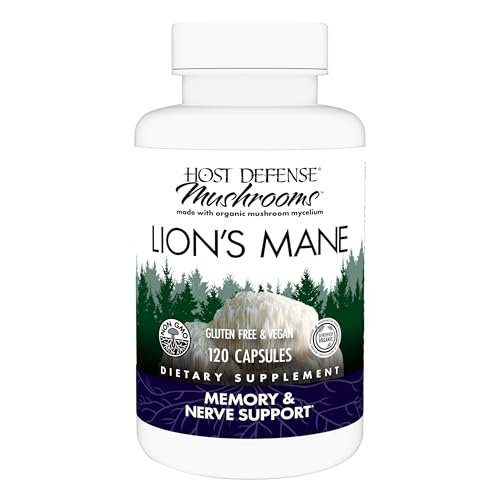

Frequently asked questions
does lion's mane actually reduce anxiety, or is this just one small study?
It is largely one small study. The Nagano 2010 RCT (PMID 20834180) enrolled 30 menopausal women and found statistically significant reductions in anxiety and depression scores at 4 weeks. That is legitimate evidence. But it is a single trial, narrow population, short duration. No comparable RCT has replicated this in a general adult population with anxiety as the primary outcome. Treat it as a preliminary signal, not a confirmed finding.
what is the connection between lion's mane and nerve growth factor?
Hericenones (in the fruiting body) and erinacines (in the mycelium) stimulate NGF synthesis in neuronal cells. In vitro studies have demonstrated this activity directly. The theoretical chain from NGF to BDNF to HPA axis modulation is biologically coherent. What is missing is a human clinical trial that measures NGF or BDNF levels alongside anxiety outcomes, which would confirm whether the in vitro mechanism actually plays out at supplemental doses in people.
how does lion's mane compare to ashwagandha for anxiety?
Ashwagandha has a substantially stronger human evidence base for anxiety-adjacent outcomes (chronic stress and cortisol reduction, primarily). The Chandrasekhar 2012 trial (n=64) found significant cortisol reduction at 60 days with KSM-66 at 300mg twice daily. Ashwagandha's mechanism is different — withanolides acting on HPA axis regulation rather than neurotrophin stimulation. For general anxiety, ashwagandha's evidence is considerably more robust. Lion's mane may add a distinct mechanism but should not be considered an equivalent substitute.
can I take lion's mane alongside an SSRI or SNRI?
No interaction studies exist for lion's mane combined with SSRIs or SNRIs in humans. The theoretical concern is additive CNS effects given lion's mane's proposed serotonergic mechanisms. This does not mean the combination is dangerous, but it does mean you should inform your prescriber before adding it. Do not adjust or stop your antidepressant to add lion's mane.
is fruiting body lion's mane better than mycelium products for anxiety?
The Nagano 2010 trial used fruiting body powder. The erinacines with the strongest NGF data are found primarily in the mycelium, while hericenones are fruiting-body-specific. From a practical supplement standpoint: mycelium-on-grain products deliver primarily starch, not meaningful amounts of either compound. Look for fruiting body extracts with disclosed beta-glucan content, or dual-extract products with documented extraction ratios. Standardized to specific hericenone percentage is more informative than "full spectrum" claims.
how long does lion's mane take to work for anxiety?
The Nagano 2010 trial found reduced scores at 4 weeks. The Mori 2009 cognitive trial found significant improvement at 8 weeks. Neither study included interim measurements that would tell us when the effect begins within the first week or two. Planning for a minimum 4-8 week trial is reasonable, based on these timeframes. If you see no change at 8 weeks of consistent use with a quality fruiting body product, the likelihood of a late response is low.
As an Amazon Associate, I earn from qualifying purchases. Product recommendations are based on real reviews and independent research.
Related reading
- Lion's Mane: The Complete Evidence Guide (What the Research Actually Shows)
- Best Lion's Mane Supplement: Fruiting Body vs. Mycelium, Tested Brands, and What to Actually Buy
- Lion's Mane for Focus: What the Cognitive Data Shows and Who Benefits
Conclusion: the bottom line on lion's mane for anxiety
The Nagano 2010 RCT is the honest starting point for any claim that lion's mane helps with anxiety. It is a real double-blind, placebo-controlled trial that found meaningful reductions in anxiety and depression scores in 30 menopausal women over 4 weeks. That is worth knowing. It is also worth knowing that the study is small, narrow, and unreplicated in a general anxiety population. The proposed mechanism — NGF stimulation leading to BDNF-mediated HPA axis modulation — is biologically plausible and supported by in vitro and animal data, but has not been confirmed through human pharmacokinetic trials that measure those intermediates directly.
For most adults with anxiety, the evidence ranking puts lion's mane well below L-theanine, magnesium glycinate, and ashwagandha — all of which have broader human trial data. Lion's mane occupies a niche best described as "plausible adjunct for perimenopausal mood changes, with a reasonable safety profile," not "evidence-based anxiolytic for general use."
Next steps:
- If you match the Nagano 2010 population (perimenopausal, mild anxiety or mood changes): lion's mane fruiting body is a reasonable, low-risk option to discuss with your physician.
- If you're researching the full lion's mane evidence base, start with the lion's mane complete guide, which covers cognition, immune support, and the mushroom biology in full.
- If you want the strongest anxiety-adjacent adaptogen evidence, read the lion's mane for focus comparison and the ashwagandha series for the cortisol angle.
- Before adding any supplement to a regimen that includes anticoagulants, immunosuppressants, or psychiatric medications, involve your prescriber — theoretical interactions exist even if head-to-head pharmacokinetic data do not.
This article is for informational purposes and not medical advice. Herbal adaptogens — even traditional ones — can interact with thyroid medication, antidepressants, anticoagulants, immunosuppressants, blood-pressure drugs, and more. Consult a licensed physician before starting any adaptogen, particularly if you are pregnant, nursing, taking prescription medications, or managing a chronic condition.
As an Amazon Associate, I earn from qualifying purchases. Product recommendations are based on real reviews and independent research.
