
WeightWatchers was supposed to be the brand that GLP-1 drugs destroyed. A company built entirely on behavioral change, on counting points and logging steps and meeting in church basements, suddenly competing against a weekly injection that produces three times the weight loss. Instead of retreating, WeightWatchers spent $132 million to acquire a GLP-1 prescribing platform called Sequence, rebranded it as WeightWatchers Clinic, and placed a bet that behavioral support and pharmacotherapy are better together than either is alone. That bet has not paid off cleanly. The company filed for Chapter 11 bankruptcy in May 2025, burdened by $1.15 billion in debt accumulated across decades. But WeightWatchers Clinic kept operating through the restructuring and the company emerged from bankruptcy by late June 2025. The question for anyone evaluating this service today is simpler: does combining a GLP-1 prescription with WW's behavioral infrastructure actually improve outcomes, and is the price fair relative to competitors like Found or Hims/Hers?
Summary
WeightWatchers Clinic is a telehealth platform that pairs GLP-1 prescription access through board-certified clinicians with the WW behavioral program, including the Points system, virtual workshops, and community features. The membership costs $74 per month on a 12-month commitment, with GLP-1 medications billed entirely separately. The strongest argument for it is the behavioral scaffolding that competitors mostly lack. The clearest risk is that the parent company only recently exited bankruptcy, and the customer review record shows consistent complaints about billing transparency and clinician availability.
- Acquisition: WW International acquired Sequence in 2023 for $132 million gross ($106 million net), adding telehealth prescribing to an existing behavioral weight-management platform.
- Rebrand: Sequence became WeightWatchers Clinic in 2024-2025, integrating the WW Points Program and workshop ecosystem directly into the membership.
- Bankruptcy context: WW International filed Chapter 11 in May 2025 to eliminate $1.15 billion in debt. WeightWatchers Clinic continued operating without interruption. The company confirmed there was no impact on member access. WW exited bankruptcy June 24, 2025.
- Pricing: $74 per month on a 12-month commitment, or $149 per month rolling. GLP-1 medications cost $350 to $1,300 per month additional, depending on insurance coverage.
- Behavioral integration: Members who combine GLP-1 medication with the WW Points Program lose up to 54% more weight than medication alone, according to WeightWatchers' published internal data. Independent peer-reviewed data on the combined approach is still maturing.
- GLP-1 medications available: Wegovy, Ozempic, Zepbound, Saxenda, plus non-GLP-1 options like metformin and bupropion. All are prescription-only.
- Review patterns: Trustpilot and BBB ratings are low, with recurring complaints around billing opacity, subscription lock-in, and inconsistent clinician follow-up. Positive reviews center on the community and for some patients, meaningful weight outcomes.
The Sequence Acquisition: How WeightWatchers Got Into Prescribing
WeightWatchers announced the acquisition of Sequence in March 2023 for $132 million gross ($106 million net). Sequence was a subscription telehealth platform launched in late 2021 that connected patients with providers specializing in chronic weight management, including GLP-1 receptor agonists. By early 2023 it was generating approximately $25 million in annual revenue and serving around 24,000 members across the United States.
The strategic logic was defensible. WW had decades of evidence that behavioral support improves long-term weight maintenance, but no pathway for members who needed pharmacological intervention. Sequence had the prescribing infrastructure but lacked the community and behavioral assets WW had spent five decades building. The deal closed in Q2 2023 — and it added debt that WW could not comfortably carry, contributing to the financial conditions that produced the 2025 bankruptcy filing.
For a deeper look at how GLP-1 drugs actually work, see the semaglutide complete guide.
The Rebrand to WeightWatchers Clinic
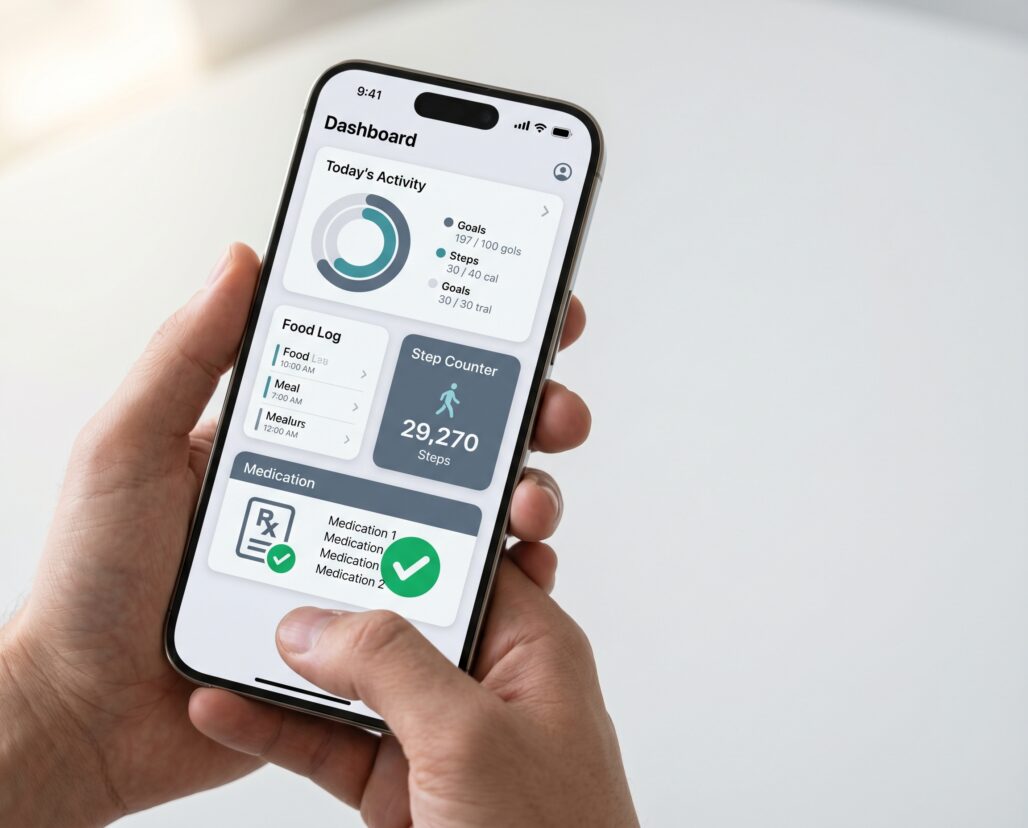
By 2024-2025, Sequence was operating publicly as WeightWatchers Clinic, with the Sequence branding retired and the WW name applied across marketing, the app interface, and clinical communications. The rebrand went beyond cosmetics. A WeightWatchers Clinic membership now automatically includes a full WW membership — the Points Program, expert-led virtual workshops, community features, and the broader WW app — alongside clinical care. That bundled structure is the clearest differentiator between WW Clinic and most GLP-1 telehealth competitors, which typically offer medication access and general dietary coaching without a mature behavioral infrastructure behind them.
The clinical pathway is standard telehealth: complete an online health-history intake, meet virtually with a board-certified clinician, and receive a prescription if medically appropriate. WW Clinic offers nine medication options, including Wegovy (semaglutide injection), Zepbound (tirzepatide), Saxenda (liraglutide), and Ozempic, plus non-GLP-1 options like metformin and bupropion. All are prescription-only. The Care Team includes insurance coordination staff who maximize coverage and, where possible, route non-GLP-1 prescriptions through Carepoint, a mail-order pharmacy partner where those medications are included in the membership cost.
The 2025 Bankruptcy: What Happened and What It Means for Subscribers
WW International filed for Chapter 11 bankruptcy protection on May 6, 2025 in the U.S. Bankruptcy Court for the District of Delaware. The stated goal was to eliminate $1.15 billion in debt that had accumulated through years of declining membership revenue, the debt-financed Sequence acquisition, and the broader collapse in WW's traditional weight-loss program business as GLP-1 drugs reshaped the landscape.
The company's messaging to subscribers was consistent and unambiguous: operations continued normally throughout the restructuring, and members retained full access to all plans, programs, and the WeightWatchers Clinic service. There was no forced cancellation of active memberships, no interruption to prescription access, and no change to the clinical team's ability to prescribe. WW confirmed that more than three million members worldwide experienced no service disruption.
The Plan of Reorganization became effective June 24, 2025 — WW exited bankruptcy in approximately 45 days, faster than many Chapter 11 cases at that scale. The post-bankruptcy entity is a significantly de-levered company focused on its telehealth transition. Whether that represents a structurally more stable platform is a question for individual members to assess based on their own risk tolerance. This is not financial advice. What is factually accurate: the service operated without interruption through a formal bankruptcy process and emerged as a legally reorganized entity.
How the Behavioral Integration Actually Works
The WW Points Program assigns numeric values to foods based on calories, saturated fat, sugar, and protein. Members track daily intake against a personalized Points budget — a system studied in peer-reviewed literature as a behavioral intervention tool independent of its current pharmacological framing. WW Clinic members access the same app and tracking infrastructure as standard WW members, plus workshop sessions led by certified coaches covering nutrition, habit formation, stress eating, sleep, and activity.
WeightWatchers states that members combining GLP-1 medication with the Points Program lose up to 54% more weight than those using medication alone. That figure comes from WW's own communications and should be read as such. A peer-reviewed 12-month real-world analysis (PMC, 2024) found meaningful outcomes from integrated telehealth plus behavioral support — though that study was not WW-specific. Behavioral coaching here is an adjunct to medically supervised pharmacotherapy, not a replacement for it. The Points Program does not substitute for clinical management of GLP-1 side effects, physician oversight of dosing, or the medical evaluation required before starting.
This is where WW Clinic has a structural advantage over most direct-to-consumer competitors. Found offers individualized coaching and a wellness community, but not a behavioral program with WW's depth of track record. Hims/Hers is built around medication access and asynchronous clinical communication, with limited structured behavioral support. The counterargument: the behavioral component has value only if members use it. A subscriber who wants clinical access and minimal lifestyle friction will find the bundled Points tracking more overhead than benefit — and they are paying for it regardless.
Pricing Tiers
WeightWatchers Clinic uses a tiered commitment pricing structure:
- 12-month commitment: $74 per month. This is the standard published rate for the Med+ plan. A promotional introductory rate of $25 per month for the first two months has been offered at various points, with the commitment price resuming thereafter.
- 6-month commitment: $84 per month.
- 3-month commitment: $99 per month.
- Monthly rolling: $149 per month.
These prices cover the WW Clinic membership, the bundled WW program access, telehealth consultations, and ongoing Care Team support including insurance coordination. They do not cover GLP-1 medications.
GLP-1 medications are billed separately. Without insurance, Wegovy and Zepbound list at over $1,300 per month; Saxenda runs somewhat lower. The coverage landscape for anti-obesity medications has been shifting, with more commercial plans adding GLP-1 benefits, so member costs can range from copay levels to near-full retail. WW's Care Team includes insurance specialists who help identify coverage pathways and handle prior authorization documentation. Non-GLP-1 medications (metformin, bupropion) are included in the membership cost when dispensed through Carepoint, the mail-order pharmacy partner — meaningful for candidates who start with lower-cost first-line options before advancing to GLP-1 therapy.
For a comprehensive look at the cost landscape across GLP-1 programs and insurance pathways, the peptide cost and insurance guide covers the current coverage environment in detail.
Customer Review Patterns
The public review record for WeightWatchers is mixed, and that is framed charitably. WW's Better Business Bureau rating sits at approximately 1.04 out of 5, reflecting a volume of complaints that is strikingly high even for a subscription health service. Trustpilot reviews number in the hundreds, with a similar skew toward critical experiences.
The complaints that recur most consistently across review platforms are not about clinical outcomes. They are about commercial and operational practices:
Billing and cancellation opacity. Multiple reviewers describe being enrolled in 12-month commitments without clearly understanding the lock-in terms, discovering cancellation restrictions only after attempting to leave, and being refused refunds after initiating service. The pattern is common enough across review platforms to treat it as a systemic issue rather than individual cases.
Inconsistent clinician communication. Reviewers report significant variability in clinician responsiveness, delayed follow-up after initial prescriptions, and in some cases clinicians not attending scheduled appointments. For a service whose value proposition partly rests on ongoing clinical oversight, this is a meaningful gap.
Lab requirements not disclosed upfront. Some members report completing enrollment and payment before learning that lab work — not included in the membership — is required before the clinician can prescribe. This creates a delay and an unexpected additional cost at the point where the member believed they were ready to start.
Positive reviews cluster around two themes: the community aspect of the WW behavioral program, where long-time WW members describe the workshop and tracking ecosystem as genuinely supportive, and outcomes for members who successfully obtained and tolerated GLP-1 medications, where weight-loss results are often significant.
The pattern is consistent with what a two-track service produces: the behavioral track serves members who are already aligned with WW's philosophy, while the clinical track is where operational execution needs to improve substantially.
Where WeightWatchers Clinic Earns a Recommendation
WW Clinic makes the most sense for someone who already values structured behavioral accountability, is a current or former WW member, and needs GLP-1 access layered onto that program preference. The behavioral scaffolding is real, the clinical access is functional, and the combined approach has meaningful supporting data. It is also a defensible option for someone who wants insurance coordination help: the Care Team's prior authorization support adds genuine value when commercial or employer insurance approvals for Wegovy or Zepbound are complicated to navigate alone.
Where It Falls Short
The commercial execution undermines the clinical premise. A service positioning itself as medically rigorous should not be generating consistent complaints about opaque subscription terms. The gap between the clinical story WW tells and the billing practices members encounter is a real problem.
The bankruptcy history requires honest acknowledgment. WW emerged from Chapter 11 in June 2025 as a reorganized entity with a cleaned-up balance sheet, but without the institutional continuity of a competitor who has never filed. A subscription health service with clinical records and ongoing prescriptions depends on organizational stability, and prospective members are right to factor that history into their evaluation.
Finally, the medication cost framing is a problem. Presenting $74 per month as the headline price for a GLP-1 program when the drug itself adds $350 to $1,300 per month does not serve prospective members well.

Frequently Asked Questions
Is WeightWatchers Clinic still operating after the bankruptcy?
Yes. WW International filed Chapter 11 in May 2025 and exited bankruptcy June 24, 2025. WeightWatchers Clinic operated without interruption throughout the restructuring, and active members reported no change to their access.
Does the membership include GLP-1 medications?
No. The $74 per month membership covers telehealth consultations, Care Team support, insurance coordination, and full access to the WW behavioral program. GLP-1 medications are billed separately and cost $350 to $1,300 per month without insurance.
Are GLP-1 medications prescription-only at WW Clinic?
Yes, without exception. Every medication prescribed through WeightWatchers Clinic requires evaluation and a prescription from a licensed clinician. There is no path to obtaining GLP-1 medications through this service without a medical determination that they are appropriate for you.
What happens to my prescriptions if I cancel my membership?
Canceling ends your access to the Care Team and clinician oversight. You would need to transition to a new prescriber to continue medication management.
Can I use WeightWatchers Clinic if I am pregnant or planning to become pregnant?
No. GLP-1 medications should be discontinued before attempting pregnancy. FDA labels for semaglutide and tirzepatide recommend stopping at least two months before a planned pregnancy. Discuss this with your prescriber before starting.
How does WW Clinic compare to Found or Hims/Hers?
WW Clinic's primary advantage is the bundled behavioral program — the Points system, workshops, and community — which competitors do not match in depth or longevity. Found offers more medication options and a less structured behavioral component. Hims/Hers is medication-access focused with asynchronous care. WW Clinic is the right fit if behavioral accountability is part of what you are paying for.
Conclusion
WeightWatchers Clinic is the most mature behavioral-plus-prescription platform in this telehealth category. The thesis that medication and structured behavioral support outperform medication alone is sound and has published data behind it. The bankruptcy has been resolved, and the reorganized entity carries less debt than the company that acquired Sequence in 2023.
The limitations are real. The billing complaint volume is too consistent to dismiss. The medication cost transparency is poor. Prospective subscribers need to go in knowing the $74 headline buys clinical oversight and behavioral programming — the drug is a separate line item entirely.
For someone who wants GLP-1 access wrapped in a structured behavioral program with Care Team insurance support, WW Clinic is a defensible choice. For someone who wants streamlined prescription access or is price-sensitive about total monthly spend, the comparison with Found and Hims/Hers deserves careful attention before committing.
This article is for informational purposes only and does not constitute medical advice. GLP-1 medications are prescription-only drugs that require evaluation and supervision by a licensed healthcare provider. Do not start, stop, or alter any medication regimen without consulting your physician. Individual results vary, and weight-loss outcomes depend on multiple factors including adherence, underlying health conditions, and concurrent behavioral changes. The 2025 bankruptcy information is factual and is not intended as financial advice or a recommendation regarding any company's financial products or securities.
