
If you're searching for adaptogens for burnout, the honest answer is: they are not a treatment for burnout, but two of them have RCT evidence for the exact physiological features burnout produces — chronic stress, elevated cortisol, and persistent fatigue. This article covers what WHO actually defines as burnout (and why that definition matters for how you use supplements), why adaptogens alone won't fix the problem, and where ashwagandha, rhodiola, and eleuthero sit alongside the foundational interventions. You'll also get clear drug-interaction guidance, because the supplements most relevant here all carry meaningful interaction profiles that don't show up in marketing copy.
Affiliate disclosure: this article contains affiliate links. As an Amazon Associate, UsefulVitamins.com earns from qualifying purchases at no extra cost to you.

Summary: quick answer on adaptogens for burnout
Adaptogens — particularly ashwagandha and rhodiola — have human RCT data for chronic stress and fatigue, which are core features of burnout, but no herb has been tested in a clinical trial specifically recruiting burnout patients by WHO ICD-11 criteria.
Best for: Adults in sustained occupational stress (three months or more), with fatigue and reduced output that persists even on weekends, who have already addressed workload, sleep, and caffeine load. Ashwagandha for cortisol-driven stress plus sleep disruption. Rhodiola for the cognitive-fatigue dimension. Eleuthero for general fatigue tolerance with the weakest evidence of the three.
Not ideal for: Anyone using adaptogens as a substitute for workload reduction or boundary-setting. Anyone with clinical depression emerging alongside burnout — adaptogens are not antidepressants, and if you're unsure whether you're burned out or depressed, that question belongs with a clinician. Anyone on thyroid medications, SSRIs, immunosuppressants, or anticoagulants without physician clearance.
Decision shortcut: Supplements are the fourth intervention, not the first. Fix sleep, reduce load where possible, and set recovery time before evaluating whether an adaptogen is adding anything measurable.
What WHO actually defines as burnout {#what-burnout-is}
The WHO ICD-11 classification is the reference standard, and its framing matters practically. Burnout is listed as an "occupational phenomenon," not a medical condition. The official definition: "a syndrome conceptualized as resulting from chronic workplace stress that has not been successfully managed."
The three dimensions are specific:
- Energy depletion or exhaustion — the physical and cognitive fatigue that doesn't resolve with a night of sleep
- Increased mental distance from one's job, or feelings of negativism or cynicism — the emotional detachment that makes previously meaningful work feel hollow
- Reduced professional efficacy — the concrete decline in output quality and cognitive performance
This framing matters because adaptogens have plausible mechanisms for dimension one (fatigue, cortisol, HPA-axis dysregulation) and potentially dimension three (cognitive performance under stress). Dimension two — cynicism and detachment — is primarily a psychological and structural phenomenon. No herb addresses that. Thinking a supplement will fix the meaning-and-motivation layer of burnout is misapplying the tool.
Burnout also differs meaningfully from clinical depression. Symptoms overlap — exhaustion, loss of motivation, reduced concentration — but burnout is work-context-specific and, in principle, resolves when the occupational stressor changes. Clinical depression is pervasive across contexts and has a different treatment pathway. If your exhaustion and low mood follow you into weekends, holidays, and domains outside work, that pattern warrants professional assessment. Adaptogens are not antidepressants.
Why supplements are the fourth intervention, not the first {#foundations-first}
Burnout is produced by a sustained mismatch between demand and recovery. Adaptogens don't fix the mismatch. They may help the HPA axis regulate itself more efficiently under continued load — but if the load doesn't change, you are trimming around the edges of an ongoing structural problem.
The foundational interventions, in order of evidence weight:
Sleep. Chronic sleep restriction is both a cause and consequence of burnout. HPA-axis function degrades with insufficient sleep, cortisol rhythms become dysregulated, and cognitive performance declines independent of fatigue perception. No supplement compensates for six hours of sleep when seven or eight are needed. Restoring sleep architecture is the highest-leverage single intervention.
Workload reduction or job crafting. The WHO definition is explicit: burnout results from "chronic workplace stress that has not been successfully managed." Managing it means changing the demand side, not just the coping side. This may mean boundary-setting, delegation, reduced hours, or role restructuring — none of which come in a capsule.
Psychosocial recovery. Regular psychological detachment from work — periods where you are not monitoring email, not thinking about projects, genuinely off — has the strongest evidence base in occupational health for burnout recovery. The adaptogens may modulate your cortisol curve. They cannot substitute for the absence of work as the stressor.
Once these foundations are in place (or actively being worked on), the question of whether an adaptogen provides additional measurable benefit becomes worth asking.

What the research actually shows: three adaptogens with human evidence {#what-research-shows}
The evidence base here is modest by pharmaceutical standards but meaningfully better than most of the supplement category. Each study below involves actual humans, placebo controls, and outcomes relevant to burnout physiology.
Ashwagandha: the strongest evidence for the stress-cortisol-sleep cluster
In a 2012 placebo-controlled RCT (Chandrasekhar et al., n=64), adults with a history of chronic stress were given 300mg of high-concentration full-spectrum ashwagandha root extract twice daily for 60 days. The treatment group showed significantly reduced perceived stress scores (PSS, p<0.0001) and substantially reduced serum cortisol (p=0.0006) versus placebo. No serious adverse effects were reported.
A 2019 RCT (Salve et al., n=60) extended this picture. Participants received either 250mg or 600mg per day of ashwagandha root extract for eight weeks. Both doses produced significant reductions in PSS scores and serum cortisol versus placebo (250mg dose: p<0.05; 600mg dose: p<0.001). Sleep quality also showed significant improvement in both ashwagandha groups. This sleep signal is directly relevant to burnout recovery, since restorative sleep is both foundational intervention and outcome measure.
Taken together: two human RCTs showing cortisol reduction, perceived-stress improvement, and sleep quality gains. The Chandrasekhar profile — chronic stress, adults, 60-day timeline — matches the burnout physiological context well. This is the strongest adaptogen evidence for burnout-adjacent applications.
The catch: neither trial specifically recruited burnout patients. Traditional use is contextual. Cortisol is one biomarker of HPA-axis dysregulation, not a complete picture of burnout.
Rhodiola: the fatigue-and-cognitive-performance angle
The most relevant rhodiola study for burnout is the 2009 Phase III RCT (Olsson et al., n=60). Participants with stress-related fatigue received SHR-5 standardized rhodiola extract at 576mg per day for 28 days. The treatment group showed statistically significant improvements on Pines' burnout scale, attention performance (Conners' Continuous Performance Test), and the cortisol awakening response versus placebo. The fact that Pines' burnout scale was used as the primary instrument here is notable — this is the only adaptogen RCT that used a burnout-specific outcome measure.
The real question isn't whether rhodiola works in a Phase III RCT; it's whether the specific human dose proves out for the kind of fatigue you're experiencing. Stress-related cognitive fatigue — the slowed thinking, reduced accuracy, attention failures of an overloaded professional — is precisely what the Olsson cohort targeted.
Rhodiola also has mechanistic data suggesting MAO inhibition, which contributes to the dopamine and serotonin picture relevant to motivation loss. This same mechanism is why the SSRi interaction is non-trivial (covered in Section 7).
Actionable takeaway: Ashwagandha addresses the cortisol-and-sleep cluster. Rhodiola addresses the cognitive-fatigue cluster. For burnout presentations, they target different but overlapping dimensions. They are not interchangeable and should not be stacked casually.
Eleuthero: the weakest of the three, with the narrowest result
A 2004 RCT (Hartz et al., n=96) tested Siberian ginseng (Eleutherococcus senticosus) versus placebo over two months in a chronic-fatigue population. Overall efficacy was not demonstrated across the full sample. A subgroup with moderate fatigue severity (n=45) showed a signal at p=0.04 (unadjusted), and a subgroup with fatigue lasting five or more years showed a trend at p=0.09 — but neither result survives strict multiple-comparison correction on a full-study null.
Eleuthero belongs in this article because it has the longest traditional use history for fatigue and stress tolerance in Russian adaptogen research, and the Hartz trial is the most rigorous human data available. But the result is "possible modest benefit in a moderate-fatigue subgroup," not "proven efficacy." A supplement brand claiming eleuthero is "clinically proven" for burnout is outrunning the evidence considerably.
L-theanine and magnesium glycinate: adjuncts, not adaptogens
Two non-adaptogen compounds are worth mentioning as rational adjuncts for the burnout-stress context, with the explicit caveat that neither is an adaptogen.
L-theanine, an amino acid found in green tea, has RCT evidence for reducing anxiety-related physiological responses (heart rate, salivary amylase) during acute stress tasks. It pairs plausibly with the chronic-stress picture, particularly for blunting the acute cortisol spikes that layer on top of baseline HPA-axis dysregulation. Evidence is shorter-duration than ashwagandha.
Magnesium glycinate addresses the well-documented magnesium depletion that accompanies chronic psychological stress. Magnesium is a cofactor in GABA receptor function and is excreted more rapidly under sustained cortisol load. This is not adaptogen territory — it is nutritional foundation work. But for burned-out adults whose diet has degraded under stress, it is often the higher-leverage starting point than any adaptogen.
Who the evidence applies to and who should skip it {#who-its-for}
Strong fit: Adults in sustained occupational stress (three-plus months), confirmed as work-context-specific (not pervasive across life domains), with energy depletion and cognitive fatigue as prominent features. Normal thyroid function, not on thyroid medication. Not currently on SSRIs, SNRIs, or MAOIs. Have addressed sleep and are actively working on workload.
Consider carefully: Adults with a complex medication profile. Any adaptogen here warrants physician review before adding to a medication stack. This is particularly non-negotiable for the interactions listed in the next section.
Skip entirely, seek professional assessment: If your exhaustion is pervasive (not work-specific), if you have persistent low mood or anhedonia outside work contexts, if you have lost interest in things that used to matter outside of your job. These patterns suggest clinical depression co-occurring with or mimicking burnout. Adaptogens are not a substitution for professional evaluation in that case. The NCCIH is direct: ashwagandha "[should not be used] with autoimmune or thyroid disorders" and its pregnancy status is clearly contraindicated.
Here is a quick decision screen:
| Question | Clarifies fit |
|---|---|
| Is stress clearly tied to work and improved on vacation? | Yes = burnout more likely; No = widen assessment |
| Has fatigue lasted more than 3 months without relief? | Yes = chronic pattern warranting physician input |
| Are you on thyroid, antidepressant, or immunosuppressant medication? | Yes = physician clearance required before any adaptogen |
| Have you genuinely optimized sleep for at least 4 weeks? | No = fix this first before adding any supplement |
How the adaptogens were dosed in the clinical trials {#dosing}
The framing here is clinical-trial-derived, not prescriptive. These are the doses used in the studies cited.
Ashwagandha: Chandrasekhar 2012 used 300mg twice daily (600mg total) of high-concentration full-spectrum root extract for 60 days. Salve 2019 tested 250mg and 600mg total daily doses for eight weeks. Look for products standardized to withanolides — "ashwagandha root powder" without disclosed standardization tells you nothing about active-compound content. KSM-66 and Sensoril are the two extract designations with their own clinical trial records. Most stress trials report effects emerging at four to eight weeks.
Rhodiola: Olsson 2009 used SHR-5 extract at 576mg per day (four tablets) for 28 days. Look for standardization to rosavins (typically 3%) and salidroside (typically 1%). Generic "rhodiola root" without these numbers is nutritionally undefined. Most evidence uses the SHR-5 extract specifically.
Eleuthero: Hartz 2004 does not specify dose in the abstract. Most commercial products use 300-400mg of dried root or root extract. Evidence for this one is thin enough that specific dose optimization is premature — the first question is whether it shows any signal for your context at all.
Cycling guidance: No RCT has tested on/off cycling protocols for these adaptogens. Some practitioners suggest cycling (several weeks on, one week off) to prevent receptor desensitization, but this is not evidence-based advice — it's precautionary. The Chandrasekhar 2012 and Olsson 2009 trials were continuous use for their full durations.
Actionable takeaway: Standardization labels matter more than pretty branding. Before worrying about dose fine-tuning, confirm the product discloses active-marker content (withanolides for ashwagandha, rosavins/salidroside for rhodiola). If it doesn't, the label is concealing more than it reveals.
Side effects and drug interactions {#drug-interactions}
This section is condensed and named, not comprehensive. It covers the interactions most relevant to a burned-out adult who may already be managing their health with prescription medications.
Ashwagandha
The NCCIH ashwagandha fact sheet documents interactions with thyroid hormone medications, immunosuppressants, sedatives, anticonvulsants, diabetes medications, and blood-pressure medications. The thyroid interaction is the most clinically significant for the burnout population: ashwagandha may stimulate thyroid hormone production, which can disrupt the calibration of levothyroxine or liothyronine. If you take any thyroid medication, do not add ashwagandha without discussing it with your prescribing physician.
For immunosuppressants (tacrolimus, cyclosporine, biologics for autoimmune conditions): withanolides have immune-modulating activity. This creates an unpredictable interaction with drugs designed to suppress immune function. The precaution is straightforward: do not combine.
Pregnancy is contraindicated. Ashwagandha has uterotonic activity in animal studies. Long-term human safety data beyond three months are limited.
Reported adverse effects from clinical trials are generally mild: gastrointestinal upset, drowsiness. Rare cases of liver injury have been documented in post-market reporting, though causality is difficult to establish in case reports.
Rhodiola
Rhodiola's MAO-inhibiting activity is the basis for the interaction concern with antidepressants. Combining rhodiola with SSRIs, SNRIs, or MAOIs can in principle elevate serotonin levels — the same mechanism behind serotonin syndrome risk with other MAO-influencing compounds. This is not a theoretical concern to dismiss. The NCCIH rhodiola page notes an interaction with losartan and acknowledges that the full interaction profile is incompletely characterized. Burned-out professionals who are also managing depression with an SSRI — a common co-occurrence — should not add rhodiola without prescriber involvement.
Biphasic dosing is a practical concern: higher doses do not produce proportionally higher effects, and some evidence suggests effect diminishes above a threshold. The 576mg/day used in Olsson 2009 is not a ceiling to push through.
Eleuthero
The primary documented concern is with immunosuppressant medications (same category as ashwagandha). Eleuthero also has theoretical interactions with digoxin (a cardiac drug) — some early reports suggested eleuthero preparations elevated serum digoxin levels, though this may have reflected product contamination rather than true pharmacological interaction. If you take digoxin or any cardiac medication, physician clearance is required.
Pregnancy data are insufficient. Avoid.
Product picks: what to look for at the pharmacy shelf {#product-picks}
Three adaptogens, three placeholder cards below. In all cases the evaluation criteria are: disclosed active-marker standardization, third-party testing for potency and purity, and clinical-trial extract alignment where possible.
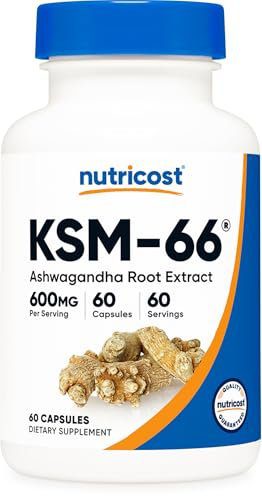
An adaptogen brand can have impressive packaging and still miss third-party testing for the active marker compound. Standardized to a specific withanolide percentage is meaningful. "Ashwagandha root powder" alone tells you nothing about the active-compound content you're actually purchasing.
Frequently asked questions {#faq}
Can adaptogens replace therapy or workload change for burnout?
No. The WHO definition of burnout describes an occupational phenomenon produced by unmanaged chronic stress. The interventions with the strongest evidence base for burnout recovery are structural: reducing load, restoring sleep, and creating genuine psychological detachment from work during recovery time. Adaptogens may support the physiological stress-response dimension of that recovery, but they cannot substitute for the structural changes.
How long before ashwagandha or rhodiola shows any effect?
In the Chandrasekhar 2012 RCT, measurable cortisol reduction appeared at the 60-day mark. In Olsson 2009 (rhodiola), improvements on fatigue and attention measures were statistically significant at 28 days. Subjective benefit may be reported earlier by some participants, but 4-8 weeks is a realistic expectation before evaluating whether a standardized extract is doing anything for you.
Is it safe to take ashwagandha and rhodiola together?
Neither RCT tested the combination. There is no documented dangerous interaction between the two. However, combining adaptogens increases the complexity of attributing any benefit or side effect to a specific compound, and both carry drug-interaction profiles that compound when stacked. If you are on any prescription medication, a physician or clinical pharmacist review before stacking is the right step.
Should I see a doctor before taking adaptogens for burnout?
If you are on any prescription medication — particularly thyroid medications, antidepressants, immunosuppressants, or anticoagulants — yes, physician clearance is required, not optional. If your burnout symptoms are severe or you're uncertain whether clinical depression is co-occurring, professional assessment is appropriate before reaching for any supplement.
What's the difference between burnout and clinical depression?
Burnout (ICD-11) is work-context-specific and tends to improve when occupational stressors are removed. Clinical depression is pervasive across life domains, persists in contexts free from work stress, and often includes anhedonia (loss of pleasure) and persistent low mood unrelated to job circumstances. Symptoms overlap significantly. If you are uncertain, the question belongs with a clinician. Adaptogens are not antidepressants.
Does magnesium glycinate help with burnout?
It is not an adaptogen, but the rationale is sound for burned-out adults: chronic psychological stress increases urinary magnesium excretion, and magnesium is a cofactor in GABA receptor function and HPA-axis regulation. If dietary intake has suffered during a period of high occupational stress, correcting a functional deficiency is often higher-leverage than adding an adaptogen.
As an Amazon Associate, I earn from qualifying purchases. Product recommendations are based on real reviews and independent research.
Related reading
- Best Adaptogens for Stress: A Practical 2026 Guide — the cluster hub, covers all seven top adaptogens for stress management with full evidence tables
- Ashwagandha vs Rhodiola for Stress: Which Adaptogen Wins? — direct comparison of the two strongest adaptogens for the chronic-stress and fatigue picture
- Adaptogens for Shift Workers: Managing Fatigue and Disrupted Cortisol Rhythms — overlapping use case with specific circadian-disruption framing
Conclusion: the bottom line on adaptogens for burnout
Burnout, as the WHO defines it, is an occupational phenomenon with three dimensions: exhaustion, cynicism, and reduced efficacy. Adaptogens have credible RCT evidence for the first dimension — chronic stress physiology, elevated cortisol, persistent fatigue. They have no evidence for the second and third, and no adaptogen has been tested in a trial specifically recruiting burnout patients.
Cortisol works like a thermostat. When it's stuck on high for months, you get the wired-and-depleted feeling that characterizes the exhaustion dimension of burnout. Ashwagandha, in two placebo-controlled trials, helped reset that setpoint over 60 days. Rhodiola, in one Phase III RCT, improved burnout-scale scores and cognitive performance over 28 days. Eleuthero showed a modest signal in a moderate-fatigue subgroup. These are real data points, not marketing claims — and they are also narrower in scope than the supplement category suggests.
The supplements come fourth, not first. Sleep, workload, and recovery time are the foundational interventions. If those are being addressed and you are looking for additional physiological support for the chronic-stress dimension, ashwagandha (for cortisol and sleep) and rhodiola (for cognitive fatigue) have the best evidence. Both have meaningful drug-interaction profiles — thyroid medications, antidepressants, immunosuppressants — that require physician input before adding them to an existing medication stack.
If your exhaustion is not work-specific, consult a clinician before reaching for any supplement.
Next steps:
- Compare ashwagandha and rhodiola head to head on dosing, evidence, and cost in Ashwagandha vs Rhodiola for Stress
- Review the full cluster evidence base at Best Adaptogens for Stress
- Check your medication list against the interaction table above before starting any adaptogen
This article is for informational purposes and not medical advice. Herbal adaptogens — even traditional ones — can interact with thyroid medication, antidepressants, anticoagulants, immunosuppressants, blood-pressure drugs, and more. Consult a licensed physician before starting any adaptogen, particularly if you are pregnant, nursing, taking prescription medications, or managing a chronic condition.
As an Amazon Associate, I earn from qualifying purchases. Product recommendations are based on real reviews and independent research.
