
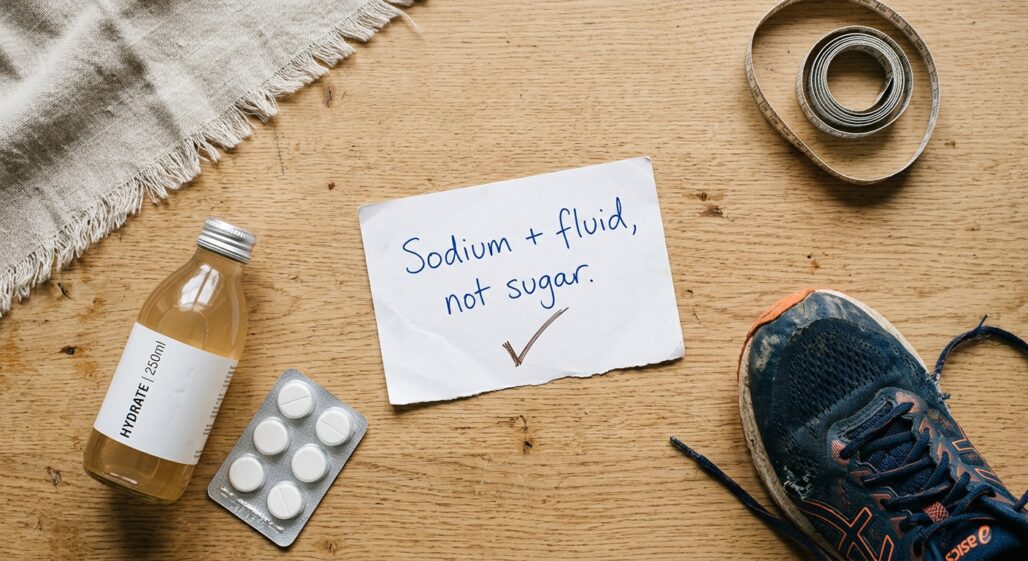
Most "electrolyte for athletes" roundups sell you a flavor and a sugar load and call it hydration. As a dietitian, I care about two numbers the label rarely shows: how much sodium your sweat loses per hour, and how much fluid you're actually replacing. Those picks at the bottom are the ones I'd hand my own training-obsessed brother before a long ride.
This guide separates hydration from fueling, because they are two different jobs that most products blur together.
Affiliate disclosure: this article contains affiliate links. As an Amazon Associate, UsefulVitamins.com earns from qualifying purchases at no extra cost to you.
Before you decide
A few situations call for a clinician before a supplement. If you have high blood pressure, kidney disease, heart failure, or take medication that affects sodium or potassium, the sodium load in a sports drink is something to clear with your doctor rather than guess at.
This guide is about healthy athletes losing electrolytes through sweat, not a treatment for any medical condition, and electrolytes do not cure cramps, fatigue, or illness.
There's also a real safety point that runs the opposite direction from what most marketing implies. You can drink too much, not just too little. Exercise-associated hyponatremia, dangerously low blood sodium, comes from overdrinking during long events, and no amount of salt tablets reliably prevents it if you flood your system with fluid.
So before you optimize a product, get honest about your event. A 45-minute gym session and a 4-hour marathon are not the same hydration problem, and the second one is where electrolytes start to matter. You can see how I weigh evidence and conflicts of interest on the how we review supplements page.
Sweat rate and sodium loss (why athletes differ so much)
Here's the number that reframes everything: athletes don't lose the same amount of sodium, and the spread is enormous. A review of sweat testing methods by Lindsay Baker in Sports Medicine found whole-body sweat sodium typically ranges from about 10 to 70 mmol per liter, which works out to roughly 230 to 1,600 mg of sodium in every liter of sweat.
That's a sevenfold difference between a low-sodium sweater and a salty one, before you even count how much you sweat.
And how much you sweat varies just as widely. The same review put whole-body sweating rates at roughly 0.5 to 2.0 liters per hour, with rare individuals above 3.0.
Stack those two together and the gap explodes. A 2019 normative-data study in the Journal of Sports Sciences compiled testing from over 1,300 athletes and found endurance athletes lost sodium at about 52 mmol per hour on average, roughly 1,200 mg of sodium an hour, while American-football players ran higher still.
Do the math over a long session and a salty, heavy sweater can lose several grams of sodium across a few hours. That is the central reason a generic label dose is so often wrong: it's built for an average athlete who may not exist.
This is also why I push athletes toward a rough self-assessment. If your skin and clothing crust white after training, you're likely a high-sodium sweater and a 200 mg "electrolyte" serving is decorative, not functional.
How to estimate your own sweat rate
You don't need a lab to get a usable number. The ACSM position stand recommends the simplest field method there is: weigh yourself nude before and after a representative training session, ideally one that mirrors your race conditions and intensity.
The arithmetic is forgiving. Each kilogram of body mass you lose during exercise is roughly one liter of sweat, so a 1 kg drop over an hour means you sweat about a liter an hour.
Two corrections make it honest. Add back any fluid you drank during the session, and subtract any bathroom trips, because both move the scale for reasons that aren't sweat. The leftover number is your hourly sweat rate, and it's specific to that weather and effort.
Run that test on a hot day and a cool day and you'll see how much the environment swings the result. A rate that looks moderate in spring can double in summer heat, which is exactly why a fixed bottle plan tends to drift off target across a season.
What the research shows on hydration
The evidence here is calmer than the marketing. The American College of Sports Medicine position stand on exercise and fluid replacement frames the goal simply: start exercise well hydrated, replace fluid losses during long efforts, and include sodium when sessions are prolonged or sweat losses are heavy.
The stand also puts a number on "well hydrated." Its working target is to keep body-mass loss during exercise under about 2 percent, the point at which dehydration starts to drag on aerobic performance and thermoregulation in hot or long efforts. That threshold is why the pre/post weigh-in matters: it tells you whether your drinking is keeping pace or falling behind.
Sodium in the drink isn't there to "boost" anything. It helps you retain the fluid you drink and helps drive thirst so you actually replace losses, and over long events it offsets what you're sweating out.
The flip side is the part most roundups skip. The 3rd International Exercise-Associated Hyponatremia Consensus concluded that overdrinking hypotonic fluid is the primary cause of dangerously low blood sodium, and that sodium supplementation cannot prevent it when fluid intake is excessive.
The StatPearls clinical review of exercise-associated hyponatremia reaches the same place: the safest default is drinking to thirst rather than forcing fluids on a fixed schedule. Salt tablets are not a license to over-drink.
So the research verdict is unglamorous but freeing. For everyday training, electrolytes are about replacing meaningful sweat losses, not micromanaging every bottle, and the bigger your sweat losses and the longer your event, the more the sodium matters.
What to look for when buying

Start with the only number that tracks your actual need: sodium per serving. Most general sports drinks land low, often a few hundred milligrams, which suits a short or moderate session for an average sweater. Dedicated endurance and "salty sweater" products climb to 1,000 mg or more per serving for a reason.
Match the dose to you. A high-sodium sweater doing long sessions wants a high-sodium product; a light sweater at the gym does not need one at all.
Now the differentiator most roundups bury: carbohydrate is a fueling decision, not a hydration one. The two get blended on the same label, but they answer different questions, and conflating them is how people end up drinking sugar they don't need or skipping fuel they do.
For hydration, carbs are largely beside the point, and a sugary drink for a one-hour workout is just calories. The job is sodium plus fluid.
For fueling, carbs genuinely matter, but only past a certain duration. The International Society of Sports Nutrition position stand on nutrient timing found a consistent performance benefit from carbohydrate at roughly 30 to 60 grams per hour once exercise runs past about 90 minutes, with little clear benefit in shorter bouts.
So read the label on two axes, not one. Use the table below to keep sodium and carbs in separate columns where they belong.
| Scenario | Sodium target per hour | Carbs needed? | What to reach for |
|---|---|---|---|
| Under 60 min, any sweater | Usually none needed | No | Plain water |
| 60 to 90 min, average sweater | ~300 to 500 mg | Optional | Low-sugar electrolyte mix |
| 90+ min endurance | ~500 to 700 mg+ | Yes, 30 to 60 g/h | Electrolytes plus a separate carb source |
| Heavy or salty sweater, long event | 700 to 1,000+ mg | Yes, fueling axis | High-sodium endurance product |
A couple of secondary checks. Potassium, magnesium, and calcium are lost in sweat too, but in far smaller amounts than sodium, so a sensible amount is fine and a huge dose isn't a selling point. And a third-party tested seal is a useful trust signal on any product you'll use in volume.
One format question comes up constantly: salt tablets or a powder you mix into your bottle? They deliver the same sodium, but a powder arrives pre-dissolved with its water, so it tends to sit easier on the stomach and starts emptying sooner. A salt tab is more concentrated and depends on you drinking enough alongside it.
That detail matters most on long, hot efforts when the gut is already stressed. A big slug of sodium with too little fluid can trigger bloating or sloshing, because water shifts into the gut to dilute it. If you use tablets, pair each one with a deliberate drink rather than treating the pill as the whole job.
My practical default: a measured powder in the bottle for steady hourly intake, with salt tabs as a backup for salty sweaters who need to top up beyond what the bottle carries. Either works; the discipline is matching sodium to fluid, not chasing a format.
For the wider mineral picture beyond sport, see my complete guide to electrolytes.
Recommended Products


As an Amazon Associate, UsefulVitamins.com earns from qualifying purchases at no extra cost to you. We only recommend products supported by published research or third-party testing.
FAQ
How much sodium do I actually need during exercise?
It depends on your sweat. An average sweater might need a few hundred milligrams an hour on long efforts, while a salty, heavy sweater can need over 1,000 mg. The ACSM position stand ties sodium to prolonged or heavy-sweat sessions, not short ones.
Do I need the sugar in sports drinks?
For hydration, no. Carbs are a fueling tool that earns its place past about 90 minutes, per the ISSN nutrient-timing stand. For a one-hour workout, a low-sugar or sugar-free electrolyte does the hydration job without the calories.
Can electrolytes prevent muscle cramps?
The evidence is mixed, and cramps have several causes. Replacing sodium on long, salty-sweat efforts may help some athletes, but electrolytes are not a guaranteed cramp cure and shouldn't be sold as one.
Is it possible to have too many electrolytes or too much fluid?
Yes. Overdrinking during long events can cause exercise-associated hyponatremia, dangerously low blood sodium, which the consensus statement links to excess fluid, not too little salt. Drink to thirst rather than forcing fluids.
Should I get my sweat tested?
For most recreational athletes it's optional. A simple tell is whether you crust white salt after training; if so, assume you're a high-sodium sweater and dose accordingly. Serious endurance athletes can consider formal sweat testing.
What about marathon training specifically?
Long-run fueling adds the carbohydrate axis on top of sodium and fluid. I cover that interaction in best supplements for marathon training.
Salt tablets or electrolyte powder, which is better?
Both deliver the same sodium. A powder comes pre-dissolved with its water, so it usually sits easier on the stomach and absorbs sooner; a salt tab is more concentrated and only works if you drink enough with it. A big sodium dose with too little fluid can cause bloating, so if you use tabs, pair each one with a real drink.
How do I work out my own sweat rate without a lab?
Weigh yourself before and after a typical session. Each kilogram lost is about a liter of sweat; add back what you drank and subtract any bathroom trips to get your hourly rate. The ACSM position stand endorses this simple pre/post weigh-in, and retesting in different weather shows how much heat swings the number.
The bottom line on athlete electrolytes
The right question isn't "which electrolyte is best." It's how much sodium your sweat loses per hour, how much fluid you're replacing, and whether your event is long enough to need fuel. Answer those and the product almost picks itself.
For hydration, the math is sodium plus fluid, not sugar. Most everyday training needs water or a modest-sodium mix; long or salty-sweat sessions need real sodium, often far more than a generic label suggests.
For fueling, carbohydrate is a separate axis that switches on past about 90 minutes, and blending it into your hydration plan by default just adds calories you may not need. Match the sodium to your sweat, drink to thirst rather than overdrinking, and treat fuel as its own decision.
Reviewed by Sarah Thompson, Registered Dietitian, focused on vitamin and mineral nutrition. See more from Sarah Thompson. This article is educational and is not a substitute for individualized medical advice; talk to your doctor before changing your sodium intake, especially if you have high blood pressure, kidney disease, or a heart condition.
