
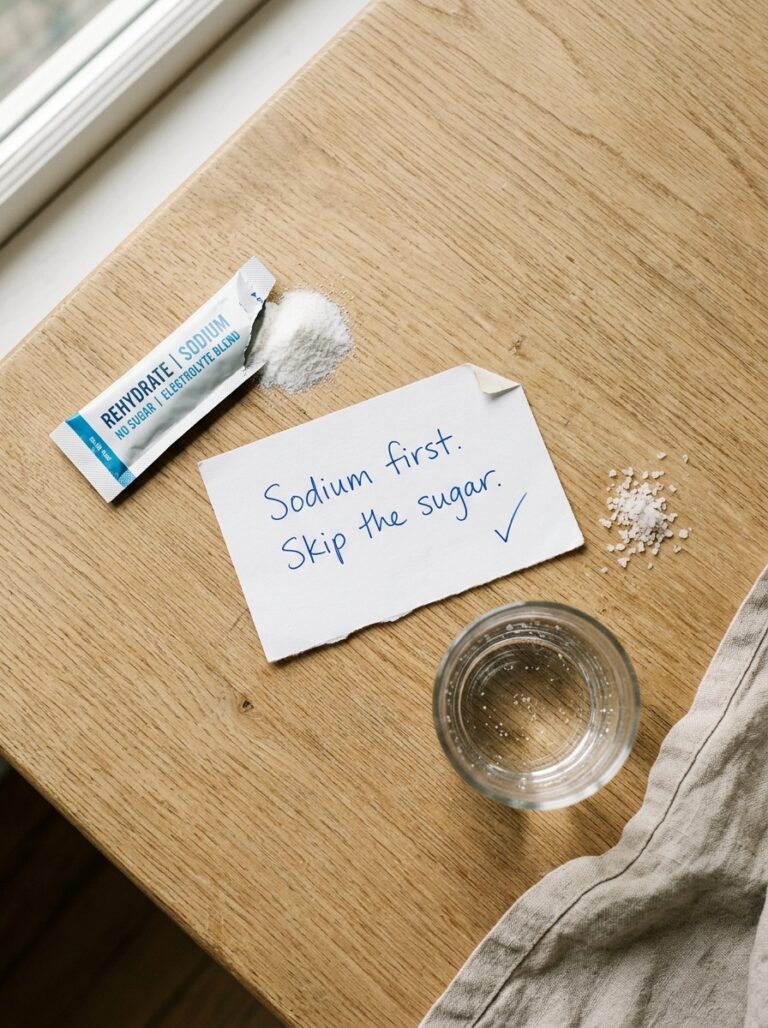
Walk into any gym or scroll any wellness feed and electrolytes look like something everyone urgently needs, sold in pastel sachets that promise hydration on a cellular level. For most people, on most days, that's marketing. Food and water already cover the requirement.
This guide separates the few situations where an electrolyte product genuinely earns its place from the everyday hydration hype, so you can spend on the formula that fits the moment instead of the one with the prettiest pouch.
Before you decide

A few people should not load up on electrolytes on their own. If you have kidney disease, heart failure, high blood pressure on a sodium-restricted plan, or take a potassium-sparing diuretic, ACE inhibitor, or ARB, talk to your physician before adding sodium or potassium.
Those conditions change the math entirely. The same supplement that helps a marathoner can push a person with poor kidney clearance toward dangerous potassium levels, so this is a clinician conversation, not a self-prescribed pour.
If none of that applies, the first step is honest about why you're reaching for the sachet. "Staying hydrated" is not, by itself, a reason to buy electrolytes. A specific trigger is: you sweat through your shirt at the gym, you're three days into keto, you started a GLP-1 and feel dizzy, or you have a stomach bug.
Each of those points to a real need. Vague daily wellness usually points back to plain water and the salt already on your plate. Before you assume you're "depleted," it's worth asking your doctor whether persistent fatigue, cramps, or lightheadedness warrants a basic metabolic panel.
Cramps and tiredness have causes no sachet addresses, and a blood test that shows your sodium and potassium are normal is the cheapest way to stop guessing. You can see how I weigh evidence and conflicts of interest on the how we review supplements page.
What electrolytes actually do

Electrolytes are minerals that carry an electrical charge once dissolved in body fluid. As the StatPearls electrolytes overview lays out, the major ones are sodium, potassium, magnesium, chloride, calcium, phosphate, and bicarbonate, and they keep your nerves firing, your muscles contracting, and the water in your body in the right compartments.
That last job is the one people mean when they say "hydration." Water follows sodium. Where sodium goes, fluid goes, which is why sodium, not water volume alone, governs how much fluid your body holds onto.
Potassium does the inside-the-cell counterpart. The sodium-potassium pump trades the two ions across every cell membrane, and that gradient is what lets a nerve fire and a muscle squeeze. Magnesium is the quiet cofactor behind hundreds of enzyme reactions, including the ones that run that pump.
Chloride mostly travels with sodium and rounds out fluid and acid-base balance. As a dietitian I'd flag the part the marketing skips: your kidneys are exquisitely good at holding onto these minerals when you're low and dumping them when you're high. A healthy body is not constantly leaking electrolytes that a drink must top off.
The key four
Four electrolytes do the heavy lifting in any supplement conversation. The table below is a shortlist of what each one does, where you get it from food, and when a deficit actually becomes plausible. Treat it as orientation, not a daily checklist, because a varied diet covers most of these without thought.
| Electrolyte | Main job | Top food sources | When a real deficit shows up |
|---|---|---|---|
| Sodium | Holds fluid in the body, drives blood volume and nerve signaling | Salt, bread, processed foods, broth, olives | Heavy sweating, keto, vomiting/diarrhea, over-drinking plain water |
| Potassium | Inside-cell partner to sodium; muscle and heart rhythm | Bananas, potatoes, beans, leafy greens, yogurt | Diuretics, prolonged vomiting/diarrhea, some refeeding states |
| Magnesium | Cofactor for 300+ enzymes, muscle relaxation, the sodium-potassium pump | Nuts, seeds, whole grains, legumes, dark chocolate | Chronically thin diet, heavy alcohol use, certain meds |
| Chloride | Travels with sodium; fluid balance and stomach acid | Table salt (sodium chloride), most of the same foods as sodium | Almost always alongside sodium loss, rarely on its own |
Notice the pattern: three of the four ride along with ordinary food, and chloride essentially never drops on its own. Magnesium is the one most Americans run a little short on, but that's a slow dietary gap, not an acute hydration emergency. I cover it fully in the complete guide to magnesium.
Who actually needs to supplement (and who doesn't)
Here is the differentiation the pastel-pouch ads bury: most people reaching for electrolytes are replacing something they never lost. A sedentary office day, a normal workout, a glass of water with lunch, none of that empties your electrolyte stores in a way food can't refill.
The groups that genuinely benefit share one feature: an abnormal loss or an abnormal intake that diet alone struggles to keep pace with.
The clearest case is heavy, prolonged sweating in heat. Per the 2022 review of sodium intake in endurance sport, sweat sodium varies hugely between people but runs roughly 15 to 65 mEq/L at sweat rates that can exceed two liters an hour, so a long, hot session can shed sodium faster than a normal meal replaces it.
Ketogenic dieters are the second clear case. A 2025 scoping review of keto-adaptation symptoms describes how cutting carbs drops insulin, the kidneys dump sodium and water (natriuresis), and the resulting dizziness, fatigue, and headache, the so-called "keto flu," respond to added sodium, potassium, and magnesium. I keep a dedicated guide to electrolytes for keto.
GLP-1 users and anyone with an illness involving vomiting or diarrhea round out the list. Reduced food and fluid intake on a GLP-1, or active gastrointestinal losses, can outpace diet, and oral rehydration with sodium and potassium is the standard support.
Who probably doesn't need a product: a healthy adult drinking water and eating meals, even one who works out an hour a day in air conditioning. For that person, the honest answer is that an electrolyte sachet is a flavored convenience, not a fix.
How much (sodium-led, sugar-free)
When you do need electrolytes, lead with sodium, because it's what you lose most and what holds your fluid. The NASEM sodium reference intake report sets an Adequate Intake of about 1,500 mg of sodium a day for adults from ordinary diet, which is the baseline before any sweat or keto losses are added on top.
For a hard, hot, hour-plus effort, a practical target is roughly 300 to 700 mg of sodium per liter of fluid, scaled to how salty and heavy your sweat is. Tellingly, the endurance review above notes that typical sports drinks deliver only about 460 to 575 mg of sodium per liter, often less than a heavy sweater loses, so the sodium, not the sugar, is the part that's usually underdosed.
Potassium and magnesium come along in smaller supporting amounts. You're not trying to mega-dose them; you're nudging them back toward normal, which a modest few hundred milligrams of potassium and a small magnesium addition will do.
Now the "skip the sugar" half. A standard sports drink can carry 30 grams or more of added sugar per bottle, which is there for taste and quick carbohydrate, not for electrolyte replacement. Unless you're fueling a genuinely long endurance event where the carbs matter, that sugar is empty calories riding on a hydration claim. A sugar-free or low-sugar formula gives you the salts without the sweetener load.
How to choose a product
Once you've decided you're in a group that benefits, the label sorts the serious products from the marketing in about ten seconds. The first number to find is sodium per serving, and it should be the headline ingredient, not a trace.
A formula built for sweat or keto typically lands somewhere around 300 to 1,000 mg of sodium per serving. If sodium is buried below the flavoring and the serving has 5 grams of sugar instead, you're holding a soft drink with a wellness label.
Check that potassium and magnesium are present in real, listed amounts, not as a "proprietary electrolyte blend" you can't quantify. A named milligram count means you can match it to your situation; a blend means you're trusting the front of the pouch.
Sugar is the third checkpoint. Look for low or zero added sugar unless you specifically want the carbohydrate for a long endurance session. Third-party testing seals are a useful bonus for an otherwise unregulated category.
Format is mostly preference. Powders, tablets, and ready-to-drink all work; the one that matters is the one you'll actually use during the trigger event. When you're ready to compare actual products, I keep current roundups for electrolyte supplements, electrolyte powders, and electrolytes for athletes.
Risks: too much sodium, and hyponatremia
Electrolytes are not free of downside, and the risks run in both directions. On one side, chronically high sodium intake is linked to elevated blood pressure, which is why the sodium reference report also flags a reduction target for people consuming well above need. If your diet is already salt-heavy, layering sachets on top isn't helping.
The opposite risk is the one that actually sends athletes to the medical tent: hyponatremia, dangerously low blood sodium, and it's caused mainly by drinking too much water, not by skipping electrolytes. The 2017 exercise-associated hyponatremia consensus update concluded that overconsumption of fluid beyond what you lose is the primary driver.
Read that carefully, because it reframes the whole category. The consensus found that sodium ingestion during a race may blunt the sodium drop but cannot prevent hyponatremia if you're over-drinking plain fluid, and that drinking to thirst is the safest individual strategy.
So the marketing message "drink constantly and replace electrolytes" gets it half wrong. The bigger danger for a typical exerciser is over-drinking water, not under-dosing salt, and an electrolyte product is a complement to sensible fluid intake, never a license to flood. People with kidney or heart conditions, as noted up top, need a clinician's input before adding either sodium or potassium.
Averages only get you so far. Weigh in before and after one session and run your own numbers through our sweat rate calculator.
FAQ
Do I need electrolytes every day?
For most healthy adults, no. A normal diet plus plain water replaces what an ordinary day uses. Daily electrolyte products make sense mainly for ongoing high sweat loss, sustained keto, or a clinical situation your doctor is guiding.
Are electrolyte drinks better than water for hydration?
Not for everyday hydration. Plain water is fine when your losses are normal, and added sodium only helps when you've sweated heavily, are on keto, or are replacing illness losses. The StatPearls overview underscores that the body regulates these minerals tightly on its own.
Why is sodium first instead of potassium?
Sodium is the electrolyte you lose most in sweat and the one that holds your body's fluid. Potassium and magnesium matter, but in smaller supporting amounts. A formula that leads with potassium and skimps on sodium has the priority backwards for sweat and keto use.
Is the sugar in sports drinks doing anything useful?
Only during genuinely long endurance efforts where you need quick carbohydrate. For a normal workout or daily use, the 30-plus grams of sugar is empty calories, not electrolyte replacement, which is why a sugar-free formula is usually the better pick.
Can magnesium from an electrolyte mix cover my daily magnesium needs?
Usually not on its own. The NIH Office of Dietary Supplements puts the RDA at 400 to 420 mg for men and 310 to 320 mg for women, while supplemental magnesium has a tolerable upper limit of 350 mg. Most electrolyte mixes contribute a small fraction of that, so food remains the main source.
The bottom line on electrolytes
Electrolytes are not a daily wellness essential for most people, and "am I getting enough electrolytes?" is usually the wrong question. The right question is whether you're in a situation, heavy sweat, heat, keto, a GLP-1, or illness, that pushes losses or limits intake beyond what food and water cover.
When you are, the evidence is consistent: lead with sodium, keep potassium and magnesium in supporting amounts, and skip the bolted-on sugar unless you're fueling a long endurance event. And remember that the headline athletic risk is over-drinking water, not under-salting.
For everyone else, a few next steps:
- If you're symptom-free and eating a varied diet, stick with water and the salt already on your plate.
- If you're chasing a specific trigger, match the product to it. Start with the best electrolyte supplements roundup.
- If your interest is really the magnesium gap most Americans carry, that's a diet question first, covered in the complete guide to magnesium.
Reviewed by Sarah Thompson, Registered Dietitian, focused on vitamin and mineral nutrition. See more from Sarah Thompson. This article is educational and is not a substitute for individualized medical advice; talk to your doctor before adding sodium or potassium, especially if you have kidney disease, heart failure, high blood pressure, or take a diuretic, ACE inhibitor, or ARB.
