
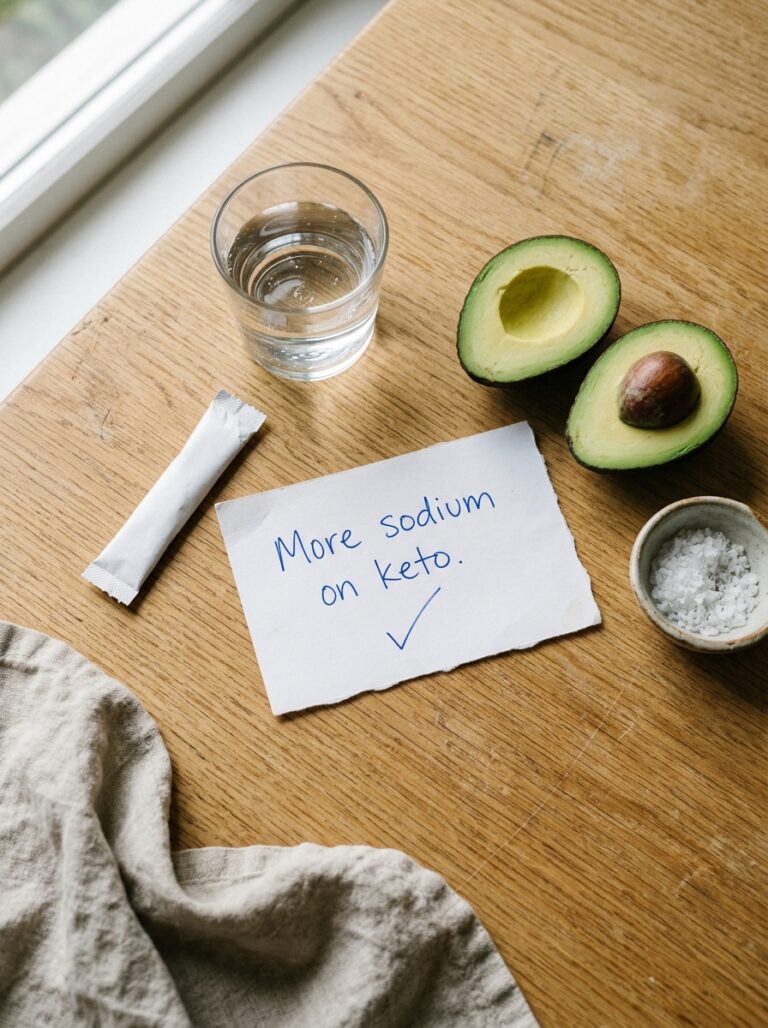
If you cut carbs hard and three days later feel like you have the flu, you probably don't have a metabolism problem. You have a salt problem. The headache, the fatigue, the lightheaded feeling when you stand up too fast, that cluster has a name, and it traces back to one mineral you're now flushing out faster than you replace it.
The market wants to sell you a bottle that says "keto" on the front. What your body is actually asking for is sodium, with some magnesium and potassium behind it, and no hidden carbs riding along. The picks at the bottom are the ones I'd hand my own family before a hard week of low-carb eating, so it's worth reading to the verdict.
Affiliate disclosure: this article contains affiliate links. As an Amazon Associate, UsefulVitamins.com earns from qualifying purchases at no extra cost to you.
Before you decide
A few people should not load up on sodium on their own. If you have high blood pressure, heart failure, chronic kidney disease, or take medication for any of those, the "more salt" advice on keto can be exactly wrong for you. Talk to your doctor before adding grams of sodium a day.
The same caution applies if you take diuretics, blood pressure drugs, or lithium, because shifting your sodium and fluid intake can change how those medications behave. This is a conversation for your prescriber, not a guess off a supplement label.
If none of that applies and you're a healthy adult starting keto, the honest first question is whether you even need a product. Most keto flu can be handled with table salt, broth, and a few high-mineral foods. A supplement earns its place when you won't reliably get there with food, or when you're active and sweating on top of the diet.
Before you assume electrolytes are the whole story, it's also worth ruling out the obvious: are you drinking enough water, and eating enough overall? You can see how I weigh evidence and conflicts of interest on the how we review supplements page.
Why keto burns through electrolytes
Here's the part most "keto electrolyte" marketing skips. When you cut carbs, your insulin drops, and insulin is what normally tells your kidneys to hold on to sodium. Lower insulin means your kidneys let more sodium go, and water follows the sodium out.
This is a real, measured effect, not a wellness theory. A 2020 review in Cardiorenal Medicine on fasting-induced natriuresis lays out the mechanism: less glucose moving through the kidney's proximal tubule means less sodium reabsorbed alongside it, and insulin normally amplifies that sodium-holding step. Take away the carbs and the insulin, and you take away the brake on sodium loss.
If you want the molecular version, it's worth knowing why this is so tightly linked to insulin. Insulin directly turns up the sodium pumps in your kidney tubules, acting through signaling proteins like SGK1 and the Na/K-ATPase to drive sodium back into the bloodstream. Reviews of the antinatriuretic effect of insulin describe insulin and glucose working in concert to hold sodium, which is exactly the partnership that collapses the moment you stop eating carbs.
There's a second loss that the sodium story sets in motion. As your blood volume falls, your body raises aldosterone to defend it, and aldosterone conserves sodium by dumping potassium instead. So the very hormone trying to save you from low sodium quietly costs you potassium, which is part of why cramps and weakness show up even in people who think they're eating enough.
That "whoosh" of weight you lose in the first week of keto? Most of it is water leaving with that sodium, not fat. Each gram of stored glycogen holds roughly three to four grams of water, so as you burn through your glycogen the bound water pours out too. It feels like progress, but it's also why you can feel wrung out.
The losses peak early. According to a scoping review on keto-diet initiation symptoms, sodium and potassium excretion is greatest in the first one to four days, which lines up exactly with when keto flu tends to hit, around day two or three. Drop your blood volume and your electrolytes at the same time, and you get headaches, fatigue, dizziness on standing, and muscle cramps.
As a dietitian, the reframe I want you to take is this: keto flu is largely a self-inflicted electrolyte deficit, and a deficit is something you fix by replacing what's leaving, not by buying a special metabolic formula.
What the research shows
The mechanism above is well documented, and so is the fix. The same review of induction symptoms points to replacing electrolytes, especially sodium, plus fluids, as the first-line approach to keto flu, ahead of any exotic intervention.
For sodium specifically, the narrative review on nutritional supplements during keto-induction and clinical implementation guidance in StatPearls converge on a simple, food-first move: an extra gram or two of sodium a day, often delivered as a cup or two of broth or bouillon, is usually enough to blunt the weakness, fatigue, and lightheadedness. That's a teaspoon-ish of salt across the day, not a megadose.
It helps to put real numbers on each mineral, because "more electrolytes" is too vague to act on. The clinical target for a well-formulated keto diet is roughly 4 to 5 grams of sodium a day total, about 3 to 4 grams of potassium, and enough magnesium to meet the RDA. The sodium figure includes the extra gram or two on top of what most people already eat, which is why the move is to add salt deliberately rather than just hope your food covers it.
A timeline makes the plan concrete. Symptoms usually start around day two or three, peak through the first four days when sodium and potassium losses are highest, then ease as your kidneys recalibrate, with most people clear within two to four weeks. That early window is exactly when you want your sodium and fluids most deliberate; front-load the salt in the first week and taper as you feel steadier.
It's worth being clear about what the evidence does and doesn't say. These are strategies to relieve the transient symptoms of starting keto, not claims that electrolytes cure anything or make the diet work better. Honestly, the precise dose is more clinical experience than hard trial data, since quantified salt-supplementation studies for keto induction barely exist; the mechanism is solid, the exact grams are a reasonable starting estimate.
Notice what's absent from the literature: there's no trial showing a product needs a "keto" label to help. Sodium chloride is sodium chloride. The research supports the mineral, not the marketing.
What to look for when buying

Once you've decided a product makes sense, the label tells you almost everything. The non-negotiable is zero sugar and zero usable carbs, because sugar or maltodextrin can nudge your blood glucose and insulin, which works directly against why you're doing keto in the first place. Read the nutrition panel, not the front.
This matters more on keto than on any other diet, and it's worth understanding why. A standard sports drink is built around sugar precisely to spike insulin and shuttle glucose into muscle, the opposite of what you want. Even a small carb load can blunt ketosis and, by raising insulin again, switch your kidneys back toward holding sodium and water, leaving you puffy and stalled instead of fixed. The same dextrose that helps a marathoner is friction for a keto dieter, so "zero carb" is not a nice-to-have here, it's the whole reason a generic electrolyte won't do.
Sodium is the number that actually matters, and it's where products differ most. A serving that delivers something in the ballpark of 500 to 1,000 mg of sodium does real work; one with 50 to 60 mg is mostly flavor. If a "keto" product is low in sodium, it's solving the wrong problem.
Magnesium is the second thing I look for, because it's the mineral most of us are short on before keto even starts. The NIH Office of Dietary Supplements sets the RDA at 400 to 420 mg for men and 310 to 320 mg for women, and US adults average only about 80 to 85% of that. A glycinate or citrate form is gentler on the gut than oxide, and magnesium is the one most tied to the cramps and poor sleep people blame on keto.
Potassium is harder to lean on a supplement for, because US law caps potassium per serving in most products. The realistic target sits between the older 4,700 mg Adequate Intake and the 2019 Dietary Reference Intakes figure of about 3,400 mg for men and 2,600 mg for women, and you reach it mainly through food. Use a powder for the headroom it offers, then fill the gap with avocado, leafy greens, and nuts.
| Label feature | What it tells you | Worth paying for? |
|---|---|---|
| Sodium 500 to 1,000 mg per serving | Replaces what keto is flushing out, the main lever | Yes, the whole point |
| Zero sugar, zero usable carbs | Won’t spike insulin and undo your low-carb state | Yes, essential on keto |
| Magnesium (glycinate or citrate) | Targets cramps and sleep, gentler form on the gut | Yes, most people are low |
| Potassium (any amount) | Helpful headroom, but capped by law, food does the rest | Nice to have, not sufficient alone |
| “Keto” badge with low sodium | Marketing label, missing the mineral that matters | No, skip it |
A cheaper truth sits underneath all of this. For a lot of people, a pinch of quality salt in water plus a magnesium capsule does the same job as a branded packet, and I'd never tell you to buy a product if salt and broth cover it. A good powder mainly buys convenience and a measured dose.
If you'd rather build your own, the recipe is genuinely simple. A scant half-teaspoon of table or sea salt across the day delivers roughly your extra gram of sodium, a 200 to 400 mg magnesium glycinate or citrate capsule covers the mineral most of us are short on, and food handles potassium. Split the salt between a couple of glasses of water or a mug of broth so it goes down easily, take the magnesium in the evening since it can help sleep, and lean on avocado, leafy greens, and nuts for potassium. That costs a few cents a day and matches what most "keto electrolyte" packets actually contain.
If you want the broader landscape beyond keto, I cover it in the complete guide to electrolytes and compare specific formulas in best electrolyte powder.
Recommended Products

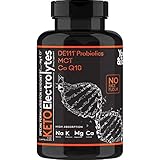
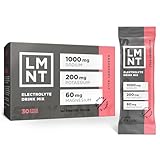
As an Amazon Associate, UsefulVitamins.com earns from qualifying purchases at no extra cost to you. We only recommend products supported by published research or third-party testing.
FAQ
Why do I feel so bad a few days into keto?
Because you're losing sodium and water faster than you're replacing them. Dropping carbs lowers insulin, your kidneys release more sodium, and the dip in blood volume produces the headache, fatigue, and dizziness people call keto flu. It usually eases within a couple of weeks.
Do I really need a "keto" electrolyte product?
Not necessarily. The label doesn't add anything; the sodium and magnesium inside do. What you need is enough sodium with no sugar or carbs attached, which you can get from a plain stick pack, or from salt, broth, and food.
How much extra sodium should I add?
Research on keto induction points to roughly 1 to 2 extra grams of sodium a day in the first weeks, often as a cup or two of broth. If you have high blood pressure, heart, or kidney conditions, clear this with your doctor first rather than adding salt on your own.
What about potassium and magnesium?
Both help, but they're supporting players. Magnesium targets cramps and sleep, and most adults run low even before keto; potassium is best reached through avocado, greens, and nuts since supplements are capped per serving by law.
Will electrolytes kick me out of ketosis?
A zero-carb electrolyte won't. The risk is the sugar or maltodextrin some sports drinks hide, which can nudge insulin and glucose. Read the carb line on the panel and choose products with zero usable carbohydrate.
Can I just make my own keto electrolyte drink?
Yes, and for most healthy adults it's all you need. Stir about half a teaspoon of salt into your water across the day for the extra sodium, take a 200 to 400 mg magnesium glycinate or citrate capsule, and get potassium from avocado, greens, and nuts. It costs pennies and mirrors what most packets deliver, minus the branding.
How long should I keep taking extra sodium on keto?
Mostly through the first couple of weeks, when losses are highest. Front-load sodium and fluids in the first week, then taper toward a normal-for-keto intake as you stop feeling lightheaded and the flu lifts. If you're very active or sweating a lot, you may need to keep a little extra going beyond that window.
The bottom line on keto electrolytes
Keto flu isn't your metabolism rebelling. It's a predictable salt-and-water deficit created when falling insulin tells your kidneys to let sodium go, and the fix is to put that sodium back, with magnesium and potassium in support.
So ignore the badge on the front. The product that helps is the one with real sodium, a gentle magnesium form, and zero sugar or carbs, and for many people a pinch of salt plus a magnesium capsule does the same job for less money.
If you have any blood pressure, heart, or kidney condition, make the sodium question a conversation with your doctor before you start loading up. For everyone else: replace what you're losing, give your body two to four weeks to adapt, and the flu usually passes.
Reviewed by Sarah Thompson, Registered Dietitian, focused on vitamin and mineral nutrition. See more from Sarah Thompson. This article is educational and is not a substitute for individualized medical advice; talk to your doctor before changing your sodium intake or starting a supplement, especially if you have high blood pressure, heart failure, or kidney disease.
