

If you searched for chamomile for sleep evidence because a tea-tin promise or a wellness blog said it would knock you out, you deserve a straight read on what the actual trials show.
Before you decide
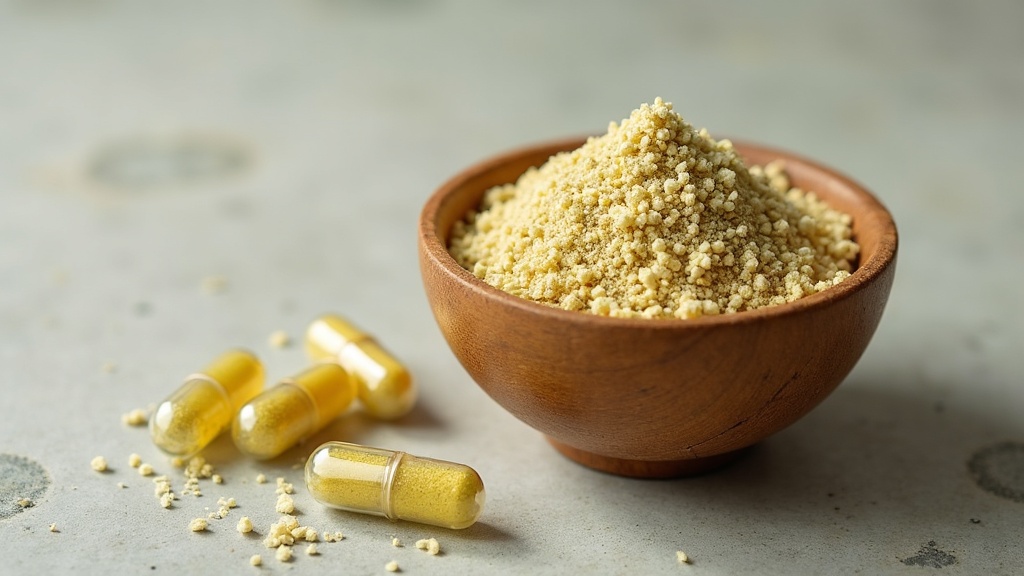
Who should NOT take chamomile: anyone with a known allergy to ragweed, daisies, marigolds, or other Asteraceae-family plants (cross-reactivity is the most common chamomile adverse event), anyone who is pregnant or trying to conceive (chamomile is a pregnancy-caution herb), anyone on a benzodiazepine, Z-drug, or other GABAergic prescription, and anyone on warfarin without a clinician's review.
Do this FIRST: walk through the evening basics that move sleep more than any botanical, which is caffeine cutoff at least 8 hours before bed, screen and light hygiene in the last hour, alcohol off the menu after dinner, and a consistent sleep window seven days a week. If a sleep complaint has lasted more than 3 months and is interfering with daytime function, the door is CBT-I, not a tea bag.
What chamomile actually is
Two plants travel under the chamomile label. German chamomile (Matricaria chamomilla, sometimes listed as Matricaria recutita) is the dominant trial species and the one in most teas and extracts sold in the United States. Roman chamomile (Chamaemelum nobile) is the older European apothecary species, more common in essential oils and traditional tinctures, with a sweeter flavor and an overlapping chemical profile. When a study says "chamomile" without a Latin name, it almost always means German chamomile.
The active fraction most often studied is the flavonoid pool, and the flavone the trials standardize on is apigenin (4',5,7-trihydroxyflavone). A standardized extract sold for sleep or anxiety will usually list "1.2 percent apigenin" on the label. Bisabolol, chamazulene, and the volatile-oil terpene fraction carry anti-inflammatory and mild antispasmodic activity, and the polysaccharide fraction in the whole flower may contribute to the warming, gut-soothing properties traditional users describe.
The molecule that drives the sleep marketing is apigenin. Avallone and colleagues showed in 1996 that apigenin binds the benzodiazepine site of the GABA-A receptor in rat brain membranes and produces mild anxiolytic and weak sedative effects in rodents. The binding is real, the affinity is in the micromolar range, the in vivo effect at oral doses is far weaker than a clinical benzodiazepine, and plasma concentrations after a normal oral dose live in the low nanomolar range. The blood-level math is the honest reason a cup of chamomile tea feels gently calming rather than knockout sedating.
The chamomile sleep RCTs, read straight

The cleanest sleep-specific study is the Adib-Hajbaghery and Mousavi 2017 trial, which randomized 77 elderly nursing-home residents to 400 mg of chamomile extract twice daily versus placebo for 28 days. The chamomile arm showed a statistically significant improvement in sleep quality on the Pittsburgh Sleep Quality Index (PSQI). The trial is modest in size and in a specific population (mean age 77), but it is the most direct positive sleep-outcome RCT in the chamomile literature.
The Chang and Chen 2016 trial randomized 80 Taiwanese postnatal women with poor sleep to drinking chamomile tea daily for 2 weeks versus usual postpartum care. The tea arm showed improvement in sleep quality and reduced depression symptoms. The effect did not persist at the 4-week follow-up after the tea was discontinued, which is honest and useful information.
The Zick 2011 pilot gave 270 mg of chamomile extract twice daily for 4 weeks to 34 adults with chronic primary insomnia, versus placebo. It found modest, non-significant trends toward improved daytime functioning and sleep diary outcomes, but no statistically clean sleep effect. The author's honest takeaway was that the dose, duration, or sample size may have been inadequate, and that a larger trial was needed. That larger trial has not been published.
Two large anxiety RCTs sit beside the sleep trials and matter for any reader whose sleep complaint is anxiety-driven. The Amsterdam 2009 RCT gave 57 adults with mild-to-moderate generalized anxiety disorder 8 weeks of standardized chamomile extract titrated from 220 mg to 1,100 mg daily, with a clinically meaningful Hamilton Anxiety reduction versus placebo. The Mao 2016 long-term RCT extended the work to 179 adults with GAD over 38 weeks of 1,500 mg per day, with a favorable safety profile. For someone whose evening sleep struggle is really anxious arousal in disguise, the anxiety effect is the more defensible piece of the chamomile case.
The real question isn't whether chamomile "works," it's whether the mild signal at 800 to 1,500 mg per day for 2 to 4 weeks shifts your specific sleep complaint in a way that matters.
Tea, capsule, tincture: which form for what goal
Tea is the form with the longest traditional use and the lowest apigenin dose. A well-brewed cup of dried chamomile (1 to 2 grams of flower, steeped covered for 5 to 10 minutes) delivers roughly 1 to 2 mg of apigenin in the whole-flower matrix. The traditional evening preparation is 1 to 2 cups in the hour before bed, and the Chang 2016 postpartum data is the trial that maps closest to this form. Traditional Medicinals and similar organic-tea brands are reasonable.
Standardized extract capsules are the form the modern RCTs use. The trial doses cluster at 400 mg twice daily (Adib-Hajbaghery 2017) for sleep, and 1,100 to 1,500 mg per day in divided doses (Amsterdam 2009, Mao 2016) for anxiety. A reputable extract will be standardized to 1.2 percent apigenin, with a clear milligram dose per capsule. Pure Encapsulations Chamomile, Gaia Herbs Chamomile Flower Capsules, and NOW Foods Chamomile are reasonable practitioner- and retail-channel options, none with a published independent ConsumerLab assay as of this writing.
Tinctures are alcohol-water extracts, traditionally 30 to 60 drops in water 30 minutes before bed. They have faster onset than capsules because of sublingual absorption. The dosing is empirical rather than RCT-anchored, so treat tincture protocols as traditional rather than trial-tested.
Topical chamomile (creams, salves, essential oil) is used for skin irritation, not for sleep. Skip it for any sleep question.
Traditional European and Ayurvedic dosing uses 1 to 4 grams of dried flower per cup, 2 to 4 cups per day. Modern RCTs use 800 to 1,500 mg of a 1.2 percent-apigenin standardized extract. These are not the same intervention, and reading them as interchangeable is the most common mistake I see in tea-only protocols dressed up as evidence.
Bioavailability and the matrix question
Apigenin is poorly water-soluble, and most absorbed apigenin is rapidly conjugated to glucuronide and sulfate metabolites in the gut wall and liver. Plasma concentrations after a normal oral dose live in the low nanomolar range, which is well below the micromolar levels needed to engage the GABA-A binding in the Avallone work. This bioavailability gap explains the gentle, additive nature of the chamomile sleep effect.
The matrix of the whole chamomile extract (other flavonoids, sesquiterpenes such as bisabolol) may help the broader compound profile reach more meaningful exposure than isolated apigenin alone. This is a hypothesis, not a settled finding, but it is consistent with why the chamomile-extract trials show signal where isolated-flavonoid literature does not.
Actionable takeaway: for a 4-week experiment, choose either a tea ritual at 1 to 2 cups per evening or a standardized extract at 400 mg twice daily, and run one variable at a time. Stacking chamomile with melatonin, magnesium, theanine, and apigenin in the same week makes it impossible to know what is doing anything.
When chamomile is the wrong tool
If sleep is short, restless, or anxious for more than 3 months, occurs at least 3 nights a week, and interferes with daytime function, that is chronic insomnia disorder, and the AASM 2021 guideline names cognitive behavioral therapy for insomnia (CBT-I) as first-line treatment. CBT-I outperforms every supplement currently on the US market for chronic insomnia outcomes at 6 and 12 months. Chamomile is not in that category.
Other refer-out signals worth naming. New-onset anxious arousal at bedtime with palpitations, weight loss, and heat intolerance is a thyroid workup. Loud snoring with witnessed pauses in breathing is a sleep study, not a chamomile capsule. Persistent low mood, loss of interest, and early morning waking for more than 2 weeks is a depression screen. Severe distressing anxiety that limits work or relationships is a conversation with a clinician about combined therapy and, if indicated, a guideline-recommended medication, with botanicals as a possible adjunct second.
For the population that has tried the basics, knows their sleep complaint is mild and stress-flavored, and wants to add one botanical for a defined window, chamomile is a reasonable experiment.
Safety and interactions
The most common chamomile adverse event is not sedation, it is allergic cross-reactivity. Chamomile is in the Asteraceae family alongside ragweed, daisies, marigolds, and chrysanthemums, and anyone with a known sensitivity to those plants should treat chamomile with caution. The Memorial Sloan Kettering About Herbs chamomile entry catalogues case reports of contact dermatitis, conjunctivitis, and, rarely, anaphylaxis. If you are a known ragweed responder, do a small daytime tea trial before any nightly habit.
The pregnancy issue is the one most readers do not see flagged. Chamomile has a theoretical uterine-stimulant effect and contains compounds with mild estrogenic and antiestrogenic activity, and the Drugs.com chamomile monograph flags it as a pregnancy-caution herb with case reports of uterine contractions. Anyone who is pregnant, trying to conceive, nursing, or living with an estrogen-sensitive condition should consult their OBGYN before regular chamomile use.
Drug interactions worth knowing. Chamomile may potentiate benzodiazepines, Z-drugs, and other GABAergic medications through additive activity at the GABA-A receptor, per Memorial Sloan Kettering. Chamomile contains coumarins, and the Drugs.com monograph documents anticoagulant interactions with warfarin in case reports, including an INR-shifting case. Apigenin and other chamomile flavonoids are documented in vitro inhibitors of CYP3A4 and CYP1A2, a theoretical concern for any reader on a CYP3A4-metabolized medication such as certain statins, calcium channel blockers, or immunosuppressants.
If you are on a prescription medication and want to add chamomile beyond an occasional cup of tea, that decision belongs with the clinician who prescribes the medication.
FAQ
Does chamomile actually help you sleep?
The cleanest sleep-specific data is the Adib-Hajbaghery 2017 elderly RCT (n=77) at 800 mg per day of extract for 28 days, which showed a statistically significant PSQI improvement, and the Chang 2016 postpartum tea trial (n=80) at 2 weeks, which showed a short-lived improvement. The Zick 2011 insomnia pilot at 540 mg per day did not reach statistical significance. The honest framing is mild adjunct for stress-flavored sleep complaints, not a treatment for clinical insomnia.
Chamomile tea vs capsule, which is better for sleep?
They are different interventions at different doses. A cup of tea delivers roughly 1 to 2 mg of apigenin in a traditional whole-flower matrix and maps onto the Chang 2016 postpartum signal. A 400 mg twice-daily standardized extract delivers about 9 mg of apigenin per dose and maps onto the Adib-Hajbaghery 2017 elderly sleep data. Tea is the lower-commitment ritual; extract is the higher-dose, RCT-anchored option.
Is chamomile safe to drink every night?
For most adults without the contraindications listed above, nightly tea or short trials of standardized extract have not produced serious safety signals in the published data. Multi-year daily extract use has not been well studied. A defined 4-week trial with a clear stop-decision is a more honest pattern than indefinite indiscriminate use.
Can I take chamomile with melatonin or magnesium?
Pharmacologically the three are not contraindicated for short trials in healthy adults, and many sleep-stack products combine them. The practical problem is that a stack obscures which ingredient is doing anything. Run chamomile alone for 4 weeks before adding others.
Does chamomile interact with antidepressants?
Memorial Sloan Kettering notes theoretical additive sedation with sedating antidepressants and possible CYP-mediated interactions with antidepressants metabolized by CYP3A4 or CYP1A2. If you are on a prescription antidepressant, do not add daily chamomile extract without your prescribing clinician's review.
Conclusion: the bottom line on chamomile for sleep
Chamomile is a real botanical with a coherent GABA-A mechanism, a small but credible RCT base, and a centuries-long traditional record as an evening tea across Greek, Roman, and European herbalism. The strongest sleep-specific signal is the Adib-Hajbaghery 2017 elderly extract trial at 800 mg per day, and the strongest spillover signal is the long-term anxiety effect documented at 1,100 to 1,500 mg per day in the Amsterdam 2009 and Mao 2016 trials. For a reader with mild, stress-flavored, pre-sleep arousal who has already handled the evening basics, a 4-week trial of either a 1 to 2 cup evening tea ritual or a standardized extract at 400 mg twice daily is a defensible experiment. It is not a treatment for diagnosed insomnia, it is not safe in pregnancy without clinician review, and it should not be stacked with prescription GABAergic medication, warfarin, or CYP3A4-metabolized drugs without one.
Food and tea first: a well-brewed cup or two of chamomile in the evening is the lowest-cost, longest-history version of this intervention, even if the apigenin dose is small.
Next steps:
- If you choose to trial chamomile extract, run a 4-week single-variable experiment at 400 mg twice daily, no other new supplements introduced, and decide at week 4 whether to continue.
- For the methodology behind how we rank botanical supplements, see how we review supplements.
- If your interest is the isolated active flavonoid rather than the whole-extract matrix, the molecule-level evidence is dissected in apigenin deep dive: the chamomile flavonoid behind the sleep hype, and the broader European-herb sleep landscape is compared in valerian vs passionflower for sleep.
For more on the botanical-and-naturopathic side of UV's coverage, see the Jonathan Reynolds author page.
This article is for informational purposes and not medical advice. Chamomile may interact with benzodiazepines, Z-drugs, anticoagulants such as warfarin, and CYP3A4-metabolized medications, and it is a pregnancy-caution herb with case reports of uterine activity and Asteraceae-family allergic cross-reactivity. Consult a licensed clinician before starting any supplement, particularly if you are pregnant, nursing, trying to conceive, taking prescription medications, or managing a chronic condition.
Reviewed by Jonathan Reynolds, ND, focused on botanical and naturopathic protocols.
