
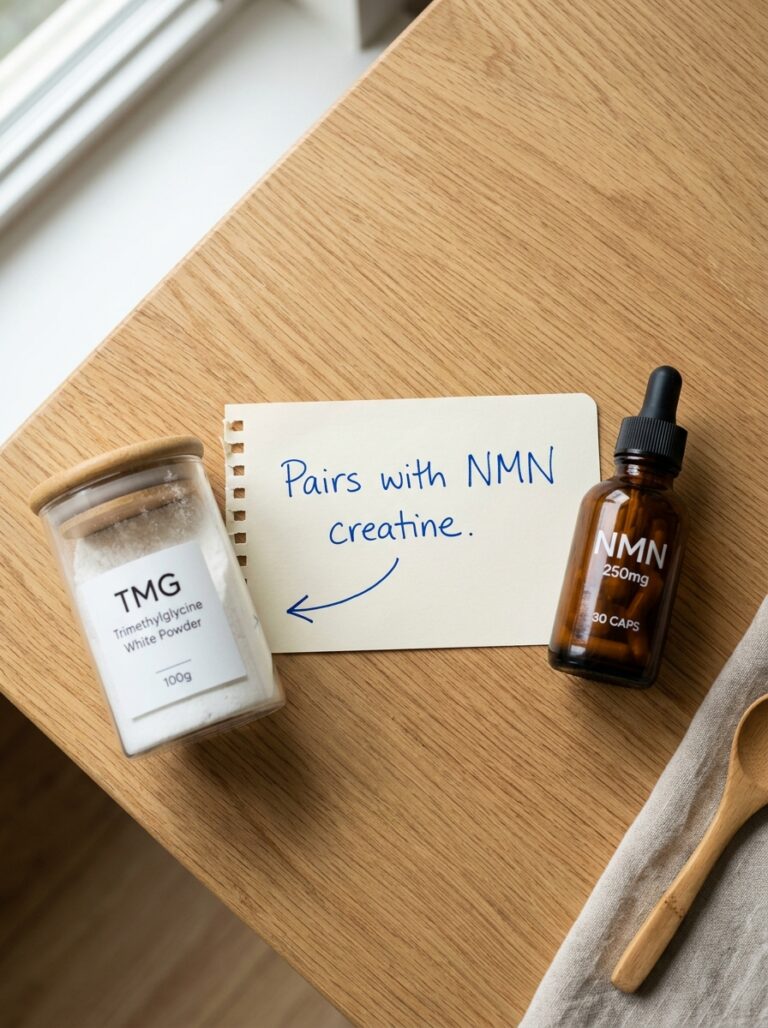
If you landed here, you almost certainly already take NMN, creatine, or both, and a forum thread or a bottle label told you to add TMG to "support methylation." That advice is half-right, and the half it gets wrong is the part that decides whether TMG is worth your money. The short version: TMG is a cheap, well-tolerated methyl donor that makes the most sense as an add-on to those stacks, not as a standalone longevity hero the way most roundups frame it. The three picks at the bottom are the ones I'd actually keep in my own family's cabinet next to the NMN and the creatine tub, so it's worth reading to the end.
This guide walks through what TMG (trimethylglycine, the same molecule as betaine) does biochemically, what the human trials actually show, and where the popular NMN-pairing claim sits between solid science and reasonable theory.
Affiliate disclosure: this article contains affiliate links. As an Amazon Associate, UsefulVitamins.com earns from qualifying purchases at no extra cost to you.
Before you decide
A few people should clear TMG with a clinician before starting. If you have a diagnosed methylation disorder, kidney disease, take homocysteine-lowering medication, or are pregnant, this is a "ask first" supplement, not a casual self-trial.
There's also a lipid wrinkle. At higher doses (around 6 g/day) some trials have seen total cholesterol, LDL, and triglycerides creep up, particularly in people who already carry metabolic risk. If you go to the high end of the dose range, it's reasonable to check a lipid panel after a couple of months.
Before you buy, get honest about why you want it. "For methylation" is not a goal the evidence can act on by itself. A real goal looks like: you take 500 mg or more of NMN daily and want to cover the methyl demand, you supplement creatine and want to support the methionine cycle, or you have a documented elevated homocysteine your doctor is tracking.
If none of those apply, TMG is likely solving a problem you don't have. You can see how I weigh mechanism against human-trial reality on the how we review supplements page, and where TMG fits the broader stack in the complete guide to longevity supplements.
What TMG actually does
TMG stands for trimethylglycine: a glycine molecule carrying three methyl groups. The other name you'll see on labels, betaine, is the exact same compound (it was first isolated from sugar beets, hence the name). If a product says "betaine anhydrous," that is TMG.
Its one job that matters here is donating a methyl group. TMG hands one of its three methyl groups to homocysteine via an enzyme called betaine-homocysteine methyltransferase (BHMT), regenerating methionine and leaving behind dimethylglycine.
That methionine then gets converted to S-adenosylmethionine (SAMe), the cell's universal methyl donor for hundreds of reactions, from DNA methylation to neurotransmitter synthesis. So TMG's real function is keeping the methylation cycle topped up by recycling homocysteine instead of letting it accumulate.
In plain language: think of SAMe as the spending account your body draws on every time it needs to "tag" a molecule with a methyl group. TMG is one of the ways the body refills that account, working in parallel with the folate-and-B12 pathway. When methyl demand is high, having a second refill route matters more.
What the research shows
Two parts of the TMG story rest on real human data; one rests on solid biochemistry but thin human evidence. It's worth keeping them separate.
The homocysteine effect is the most established. A meta-analysis of five randomized controlled trials found that betaine at 4 to 6 g/day lowered plasma homocysteine in healthy adults by about 1.23 μmol/L, roughly 11.8% of baseline.
A more recent 12-week trial pairing 1 g of betaine with low-dose B vitamins cut homocysteine about 10% in adults who started with elevated levels. Lower doses still move homocysteine when the starting point is high.
The dose-response is worth understanding rather than guessing at. A controlled study gave healthy adults single doses of 1, 3, and 6 g and tracked the response within hours. The 3 g and 6 g doses both lowered homocysteine, the 1 g dose did not, and the size of the drop tracked linearly with the dose. That is the cleanest evidence we have that TMG's homocysteine effect is genuinely dose-driven, and it explains why the meta-analysis sits at the 4 to 6 g end while a 500 mg "methylation support" dose is doing something much gentler.
The athletic performance data is real but modest. In a controlled trial, two weeks of betaine at 2.5 g/day raised bench-throw power and isometric force, with effects most apparent in smaller upper-body muscle groups. A separate trial found improved lower-body squat endurance but no gain in anaerobic power.
The proposed mechanism for the performance signal is not the methylation cycle at all but betaine's role as an osmolyte: it helps cells hold water and may protect them under the mechanical and metabolic stress of training. That is a different job from methyl donation, which is why the performance dose and the homocysteine dose were arrived at independently and happen to overlap.
The pattern is a consistent signal on specific power and endurance measures, not a transformation. This is meaningful for trained lifters, not a reason for a sedentary person to start.
Now the part most roundups overstate: the NMN pairing. The biochemical logic is sound. When NMN raises NAD+, the body clears the byproduct nicotinamide by methylating it through an enzyme called nicotinamide N-methyltransferase (NNMT), which uses SAMe as the methyl source and produces methylnicotinamide. Every molecule of nicotinamide disposed of this way spends one methyl group, so the theory is that sustained NMN dosing slowly draws down the methyl pool.
It is worth being precise about the status of that claim. The NNMT-spends-SAMe mechanism is well established at the enzyme level, but the leap to "therefore NMN users develop a methyl deficit that TMG fixes" is a theory built on that mechanism, not a measured outcome. The depletion concern is inferred from biochemistry, not demonstrated in a trial.
Notice what's missing: there is no human RCT showing that adding TMG to NMN prevents a measurable methyl-depletion problem or improves any outcome. A methyl donor like TMG plausibly offsets the demand, which is why the pairing is recommended, but it is prudent insurance dosed at a cheap downside, not a proven necessity. Stating the theory honestly is the difference between an informed stack and marketing copy.
The creatine connection is on firmer ground mechanistically. Synthesizing creatine in the body consumes more methyl groups than all other methylation reactions combined, so it's a major draw on the same SAMe pool. In animal work, supplemental creatine actually lowered homocysteine by suppressing the body's own creatine synthesis and its methyl demand. That makes TMG and creatine logical methylation-cycle companions, even though the direct human-stack trials are limited. If creatine is the reason you're here, it's worth reading how the base supplement itself earns its place in the best creatine supplements guide before layering TMG on top.
What to look for when buying

The buying decision for TMG is unusually simple, because the molecule is the molecule (betaine anhydrous is betaine anhydrous) and there is no meaningful bioavailability debate between brands the way there is with, say, magnesium forms.
That means the dose-trial-vs-supplement gap runs the other direction here. With most nootropics, consumer bottles are dosed below what the trials used. With TMG, branded capsules are often dosed fine but priced absurdly per gram.
| Format | What it gets you | Cost picture | Worth it? |
|---|---|---|---|
| Bulk betaine anhydrous powder | Same molecule, flexible dose, mixes in water | Cheapest per gram by far | Yes, the default for most people |
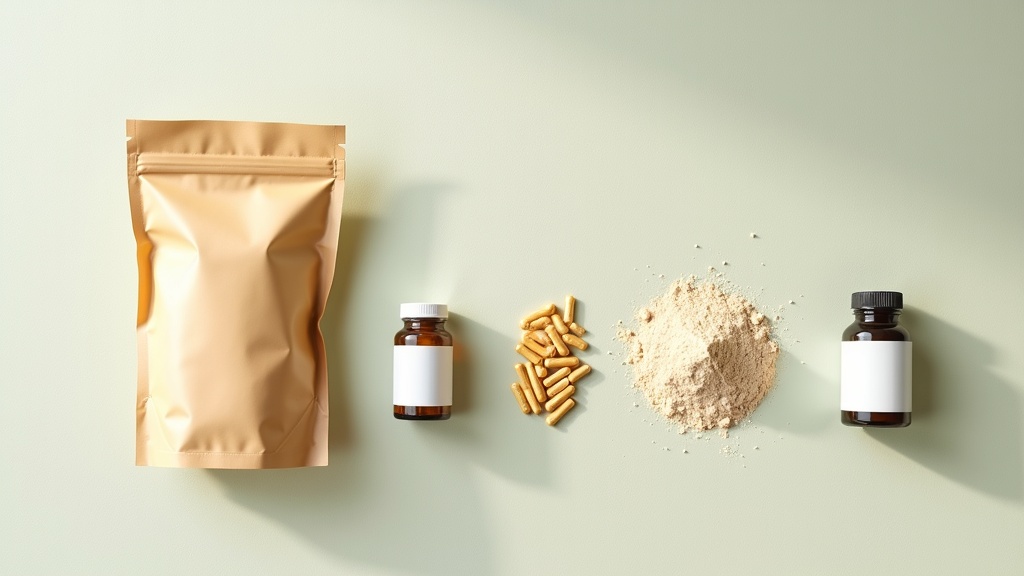
| TMG capsules (500 mg to 1 g) | Convenience, fixed dose, no taste | Several times the powder cost per gram | Only if you won’t use powder |
| TMG bundled inside an NMN product | One bottle, but usually a small TMG dose | Premium; TMG portion often underdosed | Check the TMG mg before paying up |
| “Proprietary methylation blend” | Unknown TMG amount | Premium, unverifiable | No, skip it |
A few label checks worth making. Look for a clearly stated TMG or betaine anhydrous dose in milligrams or grams (not buried in a blend), a third-party testing seal if you want identity assurance, and nothing else you don't need riding along in the formula.
The cost gap between formats is larger than most categories. A bag of bulk betaine anhydrous powder often works out to single-digit cents per gram, while branded TMG capsules can run several times that for the identical molecule, because you are paying for encapsulation, a smaller per-serving dose, and a longevity-adjacent label. Since betaine has no bioavailability problem to solve, that premium buys you nothing chemical, only convenience.
One label trap deserves a direct callout. "Betaine anhydrous" and "TMG" are the same ingredient, but "betaine HCl" is a different product sold as a digestive acid aid and is not interchangeable. If a powder is cheap and labeled betaine HCl, it is the wrong one for methylation support. Confirm the anhydrous form before you buy on price alone.
For dosing, the trials cluster between roughly 1 and 6 g/day. For NMN or creatine support, 500 mg to 2 g/day is a sensible, well-tolerated range; the higher 4 to 6 g end is where the homocysteine meta-analysis effect sits, and also where the lipid caution applies. With bulk powder, a level scoop calibration matters: weigh the first few doses on a cheap milligram scale so your "scoop" is anchored to an actual gram figure rather than a guess. Splitting larger doses and taking with food reduces the mild GI upset some people notice.
Recommended Products


As an Amazon Associate, UsefulVitamins.com earns from qualifying purchases at no extra cost to you. We only recommend products supported by published research or third-party testing.
FAQ
Is TMG the same thing as betaine?
Yes. Trimethylglycine and betaine anhydrous are the same molecule; the names are used interchangeably on labels. Note that "betaine HCl," a different digestive product, is not the same as betaine anhydrous.
Do I actually need TMG if I take NMN?
It's reasonable insurance, not a proven requirement. The methyl-depletion rationale is sound biochemistry, but no human trial has shown that adding TMG to NMN changes an outcome. Given how cheap and well-tolerated it is, many NMN users add it anyway, especially at NMN doses of 500 mg or more.
Should I take TMG if I supplement creatine?
The mechanism is supportive: creatine synthesis is the single largest consumer of the body's methyl groups, so the pathways overlap. TMG is a logical companion, though the direct human-stack evidence is thin.
Will TMG improve my workouts?
Maybe modestly, if you train. Trials show small gains in specific power and endurance measures at about 2.5 g/day, most apparent in trained lifters, not sedentary beginners.
Can I take TMG with NMN and creatine at the same time?
Yes, and that combination is the most common reason people run TMG at all. There is no known interaction; if anything the three share the same rationale, since both NMN and creatine draw on the methyl pool that TMG helps refill. Keep the TMG modest (around 1 g/day) when it is purely there to support the stack, and you avoid the lipid concern entirely.
Will TMG raise my cholesterol?
It can, but mainly at the high end. In a set of placebo-controlled trials, 6 g/day of betaine raised LDL by about 11% and triglycerides by about 13%, with no change in HDL. Lower doses showed smaller, non-significant shifts. If you stay in the 500 mg to 2 g range, this is a minor concern; if you go to 6 g for homocysteine reasons, check a lipid panel after a couple of months.
Is TMG safe to take long term?
For most healthy adults it's well tolerated, with mild GI upset the main complaint. The one thing to watch is lipids at high doses (around 6 g/day), where some trials saw LDL and triglycerides rise. Lower doses generally don't show this.
The bottom line on TMG
TMG is one of the few supplements where the honest verdict is also the cheap one. It is a legitimate methyl donor with solid homocysteine data and modest performance data, and its best practical use is as an inexpensive add-on for people already running NMN or creatine, not as a standalone longevity centerpiece the way it's often marketed.
If that's you, the smart move is plain bulk betaine anhydrous powder at 500 mg to 1 g/day, scaling up only with a reason. If you don't take NMN or creatine and have a normal homocysteine, TMG is probably solving a problem you don't have. Compare where it fits against your NAD+ strategy in the best NMN supplements guide before you commit to a stack.
Match the dose to the goal, buy on price per gram rather than branding, and check homocysteine and lipids if you go high-dose. That's the whole decision.
Reviewed by Maria Rodriguez, MS Nutrition Science, focused on cognitive and mood biochemistry. See more from Maria Rodriguez. This article is educational and is not a substitute for individualized medical advice; talk to your doctor before starting a supplement, especially if you are pregnant, have kidney disease, or take medication that affects homocysteine.
As an Amazon Associate we earn from qualifying purchases.
