

Affiliate disclosure: this article contains affiliate links. As an Amazon Associate, UsefulVitamins.com earns from qualifying purchases at no extra cost to you.
If you are searching for the best natural supplements for anxiety, you are probably either skeptical of starting an SSRI, intolerant of one you already tried, or looking for adjunctive support alongside therapy.
Quick Answer: which natural anxiety supplements would I actually start with?
For mild to moderate everyday anxiety, the two I would start with are a standardized ashwagandha extract (KSM-66 or Sensoril, 300 to 600 mg/day) and Silexan lavender oil (80 mg/day, the Kasper trials material). Magnesium glycinate (200 to 400 mg/day) is a sensible foundation if your diet is short on it, and L-theanine (200 mg) takes the edge off acute situational anxiety without sedating you.
- Best for: mild to moderate generalized anxiety, situational anxiety, stress-driven sleep disruption, people already in therapy who want adjunctive support.
- Not ideal for: acute panic disorder, severe GAD with functional impairment, anxiety with active suicidal ideation, or anyone currently on an SSRI/SNRI without first checking with their prescriber.
- What to do first: rule out thyroid (TSH, free T4), B12, and ferritin via your primary care doctor. Anxiety is the surface reading. A hyperthyroid or iron-deficient nervous system will not respond to ashwagandha the way a stress-overloaded one will.
What anxiety actually is, briefly
Anxiety as a clinical category covers generalized anxiety disorder (GAD), panic disorder, social anxiety disorder, and a few others. Mechanistically, what most over-the-counter anxiety supplements target is the same physiology underneath all of them: an overactive hypothalamic-pituitary-adrenal (HPA) axis, blunted GABAergic tone, and a sympathetic nervous system that fires too easily and recovers too slowly. Cortisol runs high, GABA-A receptor signaling is inadequate to brake the system, and the locus coeruleus keeps pushing noradrenaline. That is the loop the herbs in this article try to interrupt.
Severity matters. Mild "I get nervous before meetings" anxiety, moderate "I have a constant background hum of worry" anxiety, and severe "I cannot leave the house" anxiety are not the same problem. The American Psychiatric Association and most national guidelines (NICE in the UK, the Anxiety and Depression Association of America) list cognitive behavioral therapy and SSRIs/SNRIs as first-line for moderate to severe GAD and panic. Botanicals are adjunctive at that severity, not a replacement. For mild anxiety and the broad "stressed and wired" presentation that does not meet diagnostic criteria, the supplement evidence is more relevant and the conventional system has less to offer anyway.
The supplements with the strongest evidence
Ashwagandha (Withania somnifera)
Ashwagandha is the most-studied adaptogen for anxiety, and unusually for the supplement aisle, the RCT base actually replicates. Mechanistically, withanolides appear to modulate HPA-axis output, reduce serum cortisol, and have GABA-mimetic activity at GABA-A receptors. In animal models the GABAergic effect is well-characterized. In humans the clearest endpoint is cortisol reduction and self-reported stress.
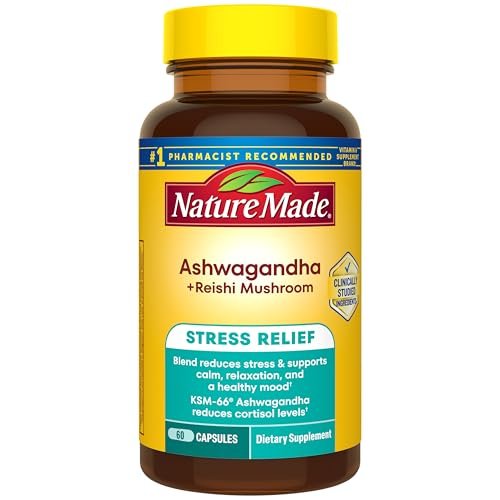
In a 2019 RCT (Salve et al., n=60, PubMed 31991110), 8 weeks of KSM-66 ashwagandha at 250 mg and 600 mg per day produced statistically significant reductions in Perceived Stress Scale scores and morning serum cortisol versus placebo, with the higher dose performing better. A separate 2019 trial of Sensoril extract (Lopresti et al., PubMed 31517876) at 240 mg showed HAM-A reductions in a stressed adult population.
- Dose used in trials: 300 to 600 mg/day of a standardized extract (KSM-66, root only; Sensoril, root and leaf), once daily with food, for at least 6 to 8 weeks.
- Form to look for: A named standardized extract (KSM-66 or Sensoril) with withanolide content stated on the label. Generic "ashwagandha root powder" capsules at the same milligram count are not the same intervention.
- Traditional vs RCT dose: Classical Ayurvedic preparations use 3 to 6 grams of whole root powder daily, often in warm milk. Modern RCTs use 300 to 600 mg of a concentrated extract standardized to roughly 5 percent withanolides. These deliver similar active-compound exposure through very different vehicles. The number on the bottle is meaningless without the extract ratio.
- Skip if: you have hyperthyroidism (ashwagandha can raise T4), are pregnant (insufficient safety data), or take immunosuppressants or sedatives without checking with your clinician.
Actionable takeaway: if you try one supplement from this article, start with KSM-66 at 300 mg with breakfast for 4 weeks, then assess.
Silexan lavender oil (Lavandula angustifolia)
Lavender essential oil sounds like aromatherapy marketing. The clinical-grade preparation Silexan, an oral softgel of standardized 80 mg lavender oil, has the strongest non-prescription evidence base for GAD of any botanical. Mechanism is incompletely understood but likely involves modulation of voltage-dependent calcium channels and serotonergic activity.
In a 2014 RCT (Kasper et al., n=539, PubMed 24456909), Silexan 80 mg/day was compared head-to-head against paroxetine 20 mg/day and placebo in patients with diagnosed GAD. Both Silexan doses (80 and 160 mg) showed HAM-A reductions comparable to paroxetine over 10 weeks, with better tolerability. Multiple replications in lorazepam-comparator trials show a similar pattern.
- Dose used in trials: 80 mg/day Silexan, once daily, for 6 to 10 weeks.
- Form to look for: specifically Silexan (sold under brand names CalmAid in the US and Lasea in Europe). Generic "lavender oil capsules" are not interchangeable. The standardization is the intervention.
- Skip if: you cannot tolerate the burp-back ("lavender breath") that some users get; otherwise side effects in trials are minimal.
Magnesium glycinate
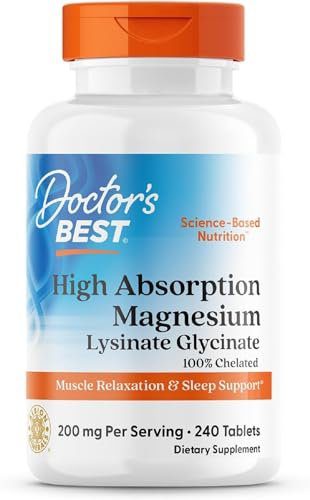
Magnesium will not transform severe anxiety, but population-level data and several modest RCTs suggest mild anxiolytic and sleep-supporting effects, particularly in people whose intake is below the RDA (about 320 mg/day for women, 420 mg for men). Mechanism is NMDA receptor antagonism, GABA-A receptor potentiation, and HPA-axis dampening.
A 2017 systematic review (Boyle et al., PubMed 28445426) found that magnesium supplementation had a small positive effect on subjective anxiety in 8 of 18 included studies. The signal is real but modest. The NIH ODS magnesium fact sheet is the honest broker reference here.
- Dose used in trials: 200 to 400 mg elemental magnesium per day, ideally split with meals.
- Form to look for: glycinate or threonate for anxiety. Avoid magnesium oxide (poorly absorbed) and citrate at high doses (laxative). Glycinate is the most gut-friendly form and the one I default to in clinical practice.
- Skip if: you have kidney disease (magnesium clears renally) without checking with your nephrologist.
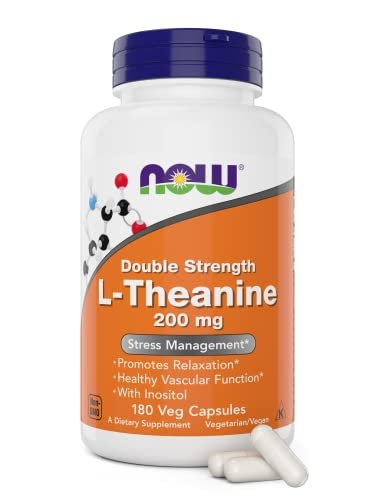
L-theanine
L-theanine is an amino acid from green tea with a clean acute-anxiolytic signal. Mechanism: it crosses the blood-brain barrier and increases alpha brainwave activity within 30 to 40 minutes, modulates GABA, dopamine, and serotonin tone, and dampens the cortisol response to stressors.
In a 2019 RCT (Hidese et al., n=30, PubMed 31412272), 200 mg/day L-theanine for 4 weeks reduced stress-related symptoms and improved sleep quality in healthy adults with high stress.
- Dose used in trials: 100 to 200 mg, single dose for acute anxiety, or 200 mg daily for cumulative effect.
- Form to look for: Suntheanine is the most-studied branded form. Plain L-theanine 200 mg capsules from a third-party-tested brand are equivalent.
- Skip if: you are on antihypertensives (mild blood-pressure-lowering effect at higher doses).
Supplements with moderate evidence (consider with caveats)
Chamomile (Matricaria chamomilla)
The active anxiolytic constituent is apigenin, a GABA-A receptor ligand. The strongest data come from Mao et al. 2016 (PubMed 27912875), a 38-week pharmaceutical-grade chamomile extract trial (1500 mg/day standardized to 1.2 percent apigenin) in patients with moderate-to-severe GAD. Continued chamomile showed a non-significant trend toward relapse prevention versus placebo. The signal is real but the effect size is modest, and the trials use a far higher dose than a cup of tea.
- Dose: 1100 to 1500 mg/day of standardized extract. A standard tea bag is roughly 1 to 3 grams of dried flower, which contains a small fraction of the active dose.
- Skip if: you have ragweed allergies (cross-reactivity).
Passionflower (Passiflora incarnata)
Mechanism plausible, evidence thin but suggestive. A small 2001 trial in GAD found passionflower extract roughly comparable to oxazepam over 4 weeks, with less daytime sedation. Subsequent replications are smaller and mixed.
- Dose: 250 to 500 mg of a standardized extract, two to three times daily.
- Skip if: you take CNS depressants or are scheduled for surgery within 2 weeks (anesthesia interaction signal).
Inositol (myo-inositol)
Inositol has older but interesting RCT data in panic disorder specifically. Palatnik et al. 2001 found high-dose inositol (12 to 18 g/day) comparable to fluvoxamine in reducing weekly panic attacks. Dose is high and GI side effects are common. It is a niche pick for panic disorder, not generalized anxiety.
Popular but evidence-thin
Kava (Piper methysticum)
Kava has the strongest RCT signal of any herb in this section for GAD, and the most serious safety problem. Multiple meta-analyses show kavalactone extracts outperform placebo on HAM-A scores. But the FDA issued a consumer advisory in 2002 about hepatotoxicity associated with kava-containing dietary supplements, and several European countries (Germany, UK, France, Switzerland) restricted or banned kava products in the same period. The mechanism of liver injury is debated (solvent extraction, adulteration with aerial parts, individual variation in CYP metabolism), and water-extracted noble-cultivar kava as traditionally consumed in the Pacific has a better safety record. I do not recommend kava as a first-line over-the-counter anxiolytic in the US market because the average consumer cannot verify cultivar or extraction method from a bottle label. If you are determined to try it, work with a naturopathic doctor or herbalist who can source verifiably water-extracted noble-cultivar product and monitor liver enzymes.
CBD (cannabidiol)
CBD is widely marketed for anxiety. The honest evidence: one well-known single-dose study used 600 mg before a simulated public speaking task and showed reduced anxiety, but that is acute, situational, and a very high dose. Chronic-dosing trials in GAD are small and mixed. Legality varies by jurisdiction (hemp-derived under 0.3 percent THC is federally legal in the US, but state laws and product quality vary widely). Quality control in the OTC CBD market is poor. ConsumerLab and FDA testing repeatedly find products that contain a fraction of the labeled CBD or undisclosed THC. If you want to try CBD, buy from a brand with a current Certificate of Analysis from a third-party lab, start at 25 mg/day, and do not expect miracles.
What to look for when buying
The supplement aisle is built to confuse you. A clean shopping rubric:
- Standardized extracts beat raw powders for the herbs above. KSM-66 or Sensoril for ashwagandha, Silexan for lavender, named apigenin-standardized for chamomile. If the label does not name the standardization, you cannot match the trials.
- Third-party verification: USP Verified, NSF Certified for Sport, or ConsumerLab Approved are the cleanest marks. They are not common on the niche herbal side but worth looking for on magnesium and L-theanine.
- Avoid proprietary blends that list a "calm formula" total weight without per-ingredient mg. You cannot dose-match the trials if you do not know what is in each capsule.
- Skip megadose combinations that stack ashwagandha, rhodiola, kava, and 5-HTP in one capsule. More ingredients are not more useful, and you cannot tell which one is working or which one is causing a side effect.
When supplements are not enough
Supplements are an adjunct for mild to moderate anxiety, not a treatment for severe anxiety. Stop self-treating and book a clinician visit if any of the following are true:
- Anxiety is interfering with your ability to work, sleep, or maintain relationships
- Panic attacks are happening weekly or more
- You are using alcohol or other substances to manage symptoms
- Symptoms have persisted at high intensity for more than 4 to 6 weeks despite lifestyle changes
- You are having any thoughts of self-harm or suicide
If you are in crisis in the United States, call or text 988 to reach the 988 Suicide & Crisis Lifeline at any time. Outside the US, contact your local emergency line or a national crisis service. Severe anxiety responds well to CBT and to first-line SSRIs and SNRIs in the hands of a psychiatrist or primary care doctor. The right move at that severity is conventional care first, supplement support second. I tell my own patients this directly: if you are functionally impaired by anxiety, we are not having a conversation about which adaptogen to try, we are having a conversation about why you do not have a therapist or prescriber yet.
FAQ
Can I take ashwagandha with an SSRI? Probably yes, but check with your prescriber first. There is no clean contraindication in the literature, but ashwagandha has mild serotonergic and GABAergic activity, and combining serotonergic agents always deserves a clinician's eyes. Same caution applies to L-theanine and 5-HTP (which I did not include in the main list because the SSRI-interaction risk is meaningful).
How long until I notice an effect? L-theanine acts within 30 to 60 minutes for acute calm. Ashwagandha and Silexan lavender both build over 4 to 8 weeks; do not judge them on day 5. Magnesium repletion takes a few weeks if you started deficient.
Is melatonin good for anxiety? Melatonin is a sleep signal, not an anxiolytic. If your anxiety is driving insomnia, treating the anxiety upstream (and possibly using magnesium glycinate at night) makes more sense than chronic melatonin. For more on sleep-specific magnesium forms, see our guide on the best magnesium for sleep.
What about anxiety with depression? Anxiety and depression overlap heavily, and the supplement evidence partly overlaps too. If your symptom mix leans depressive, the evidence base shifts. See our companion roundup on the best supplements for depression for what that looks like.
Is a "stress complex" multi-herb formula better than single herbs? Usually no. The trial data are on single herbs at specific doses. A blend that gives you 100 mg of ashwagandha, 50 mg of rhodiola, and a sprinkle of holy basil will probably underdose all three relative to the studies.
If you are stacking a few supplements for this, StackMyMed (our companion app) tracks what you actually take, schedules the best time for each one, and flags any combinations worth a second look.
Conclusion: the bottom line on best supplements for anxiety
The 2 to 3 supplements with the strongest evidence for mild to moderate anxiety are standardized ashwagandha extract (KSM-66 or Sensoril at 300 to 600 mg/day), Silexan lavender oil (80 mg/day), and magnesium glycinate as a foundation if your intake is low. L-theanine 200 mg is a clean acute add-on. Realistic effect size is "noticeably calmer baseline over 4 to 8 weeks", not "anxiety gone". Treat all of this as adjunctive to therapy and, where indicated, conventional medication.
Next steps:
- Get baseline labs (TSH, free T4, B12, ferritin) before assuming anxiety is purely psychogenic.
- Start with KSM-66 ashwagandha 300 mg with breakfast for 4 weeks and reassess. If you want a deeper look at the herb itself, see our ashwagandha complete guide.
- If anxiety is functionally impairing, book a clinician visit before adding any supplements. Read how we review supplements and more about Jonathan Reynolds.
This article is for informational purposes and not medical advice. Botanical supplements can interact with medications and health conditions. Consult a licensed physician before starting any supplement, particularly if you are pregnant, nursing, taking prescription medications including SSRIs or SNRIs, or managing a chronic condition.
Reviewed by Jonathan Reynolds, ND, focused on botanical and naturopathic protocols.
Top picks on Amazon
As an Amazon Associate, I earn from qualifying purchases. Product recommendations are based on real reviews and independent research.
