
Affiliate disclosure: this article contains affiliate links. As an Amazon Associate, UsefulVitamins.com earns from qualifying purchases at no extra cost to you.
Golf doesn't feel like exercise until hole 14, when your grip pressure creeps up, your tempo shortens, and a three-footer suddenly requires negotiation. The reason is rarely mystical. A walked summer round is four-plus hours of continuous low-grade work in direct sun, and almost nobody drinks for it the way they would for a long run. We've spent months testing electrolyte products for this site, and the picks below are the ones we'd hand to our own parents before a July tee time.
Before you decide
Most golfers reading this do not need an electrolyte product for most rounds. If you play 9 holes in cool weather, ride a cart, and eat normal meals, plain water is genuinely enough, and buying a $45 box of salt sticks will not fix your slice. Save your money for lessons.
The people this comparison is actually for: golfers who walk 18 in real heat, play 27 or 36 in a day, sweat heavily (white crust on a dark hat is the giveaway), or notice headaches and late-round fatigue that water alone doesn't touch. Golf also skews older than almost any other sport, and many regular players take blood pressure medications or diuretics that change how their bodies handle salt and heat. That group needs a doctor's input before adding sodium on purpose; we cover the specifics in the FAQ below.
None of this is medical advice. If you have kidney disease, heart failure, or you've been told to restrict sodium, the entire category below is a conversation with your physician first, not a checkout page. And if your training extends well beyond the course, our broader guide to the best electrolytes for athletes covers higher sweat-rate scenarios than a golf round produces.
What 18 holes actually takes out of you
Start with the workload, because golfers chronically underrate it. In a 2026 study in the European Journal of Sport Science, sixteen competitive golfers played two tournament rounds on a championship course, once walking and once in a cart. Walking meant roughly 17,000 steps and about 880 calories burned per round, and core temperature climbed as the round went on, running significantly higher than cart rounds by holes 6, 12, and 18. The cart cut the work to about 6,300 steps and 456 calories. Neither version is a marathon, but the walked round is a long hike with a bag on your back.
Now put that workload in the sun for four to five hours. Sweat rates vary enormously between people, but a 2017 review in Sports Medicine that pooled data from hundreds of athletes found typical whole-body sweat rates of roughly 0.5 to 2.0 liters per hour, with whole-body sweat sodium usually landing between 10 and 70 mmol/L (roughly 230 to 1,600 mg of sodium per liter). Even at the conservative end, a walked 4.5-hour round in heat can cost you over two liters of fluid and somewhere between a few hundred milligrams and a few grams of sodium. A hard gym hour rarely takes that much, which is the point the complete guide to electrolytes keeps hammering: duration multiplies small hourly losses into real deficits.
Does any of this show up on the scorecard? The best data we found says yes. In a study in the International Journal of Sport Nutrition and Exercise Metabolism, golfers who began a competitive 18-hole round already dehydrated averaged 79.5 strokes against 75.7 for their properly hydrated counterparts. Nearly four strokes is the difference between a decent round and a lost bet, and over 40% of the golfers tested showed up to the course dehydrated before hitting a single ball.
The safety side is not theoretical either. A 2025 case-control study of amateur golfers in Japan compared 194 players who developed heat-exhaustion symptoms mid-round with 252 who didn't. Feeling dehydrated during play carried a 4.65-fold adjusted odds ratio for heat-exhaustion symptoms, alongside sleep deprivation and accumulated fatigue. By the time you feel it on the course, you're already in the risk group.
When water alone is enough
Here's the honest gate, because most electrolyte marketing pretends it doesn't exist. Cool-weather golf, cart golf, and 9-hole golf are water situations, not product situations. If the forecast is under about 70°F, you're riding, and you salted your eggs at breakfast, your body's sodium reserves will not notice a two-hour outing. The ACSM position stand on fluid replacement frames the whole goal of drinking during exercise as preventing excessive dehydration rather than chasing maximum intake, and for short mild rounds that goal is met with a water bottle.
A reasonable self-test: weigh yourself before and after a typical round. If you're down less than about 1% of body weight and you felt fine, your current routine works and you can stop reading. If you're down 2% or more, or you consistently finish rounds with a headache, salt-crusted clothing, or that hollow late-round shakiness, you're the target audience for the products below. Our electrolyte replacement calculator turns that weigh-in into an actual per-hour fluid and sodium number, which beats guessing.
One more honest note: the turn-house sports drink is not nothing, but mainstream sports drinks are dosed for palatability, and their sodium per bottle generally sits far below the dedicated products in our table. They're mostly sugar water with a pinch of salt. Fine for a mild day, undersized for a heat wave.
How to choose for golf
Four criteria separate these products for golf specifically, and they're not the same criteria we'd use for a marathoner.
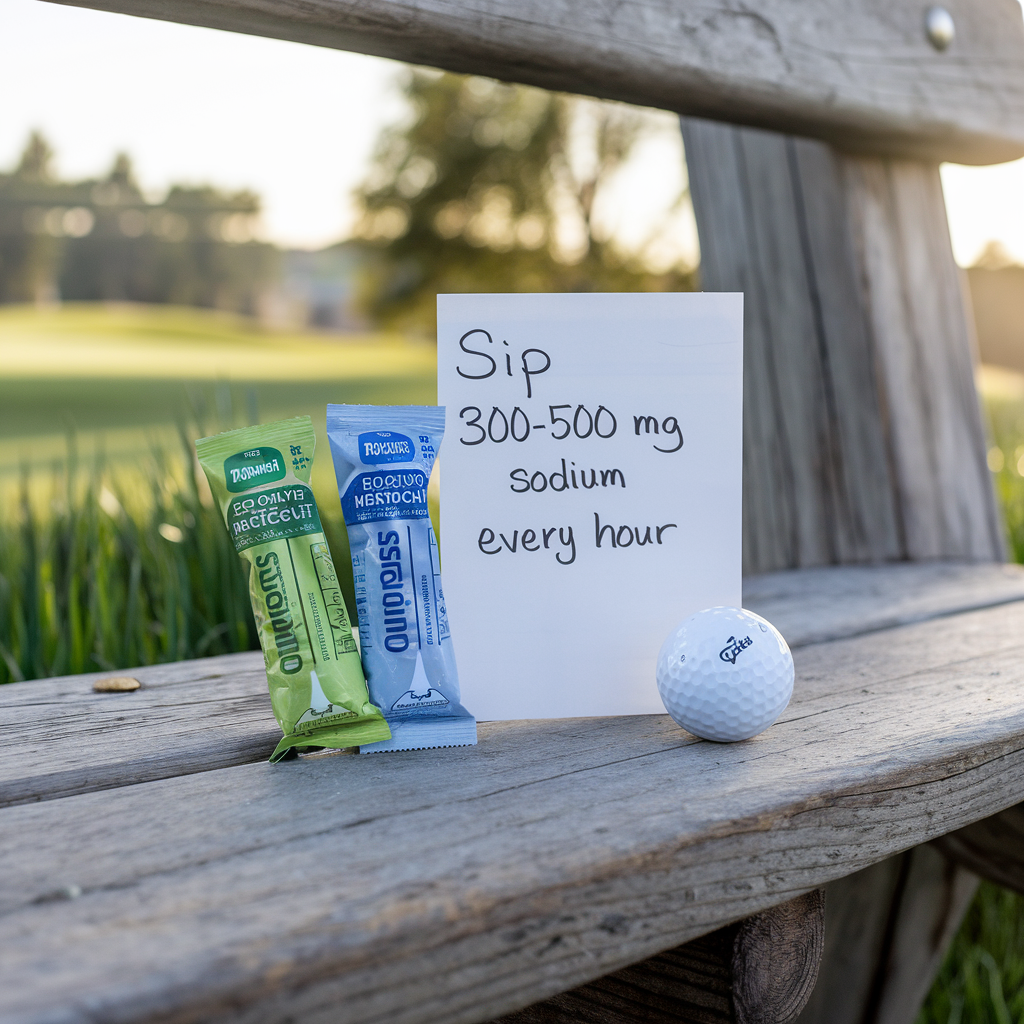
Sodium per serving is the headline number. Working from the sweat-science ranges above, a heavy-sweating walker in heat plausibly loses 400 to 900+ mg of sodium per hour, while a lighter sweater in a cart loses a fraction of that. Our practical target for a hot walked round: 300 to 500 mg of sodium per hour starting at the turn, more if you're a visibly salty sweater. Front-loading everything on the first tee just makes you thirsty by hole 5.
Format matters more in golf than in any gym sport. You're away from a faucet for five hours with limited bottle capacity. Powder sticks need to be mixed before the round or at the turn; tablets dissolve slowly but travel in a pocket. One caution on tablets: they're often dosed lighter than powders, a pattern we measured in detail in our tablets vs powder underdosing analysis. For golf that lighter dose can actually be appropriate, but know what you're buying.
Caffeine deserves real suspicion here. Both Nuun and Skratch sell caffeinated versions of their sport lines (50 mg per serving in Skratch's case, per their product page). Caffeine is fine for a gym session. Golf is a fine-motor sport played over five hours, and if your putting stroke already gets twitchy under pressure, adding a stimulant mid-round is a strange bet. Every pick in our table below is the non-caffeinated version, on purpose.
Sugar is a fork in the road, not a flaw. Products like Skratch (19 g carbs) and Liquid I.V. (11 g sugar) double as fuel, which is genuinely useful on 36-hole days. Zero-sugar options like LMNT suit golfers watching glucose, which in this demographic is a lot of people.
The numbers side by side
Every number below comes from the current label or brand page as of August 2026. Where a brand doesn't publish a figure in text, we say so rather than guess.
| Product | Format | Sodium | Potassium | Sugar / carbs | Price per serving |
|---|---|---|---|---|---|
| LMNT | Powder stick | 1,000 mg | 200 mg | 0 g | about $1.50 ($45 for 30) |
| Liquid I.V. Hydration Multiplier | Powder stick | 500 mg | 370 mg | 11 g sugar | about $1.56 one-time ($24.99 for 16; $1.09 on subscription) |
| Skratch Labs Sport Hydration | Powder (bag or stick) | 400 mg | not published on current product page | 19 g carbs | about $1.20 ($23.95 for 20) |
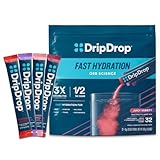
| DripDrop | Powder stick (8 oz) | 330 mg | 185 mg | 9 g carbs | about $1.12 ($35.99 for 32) |
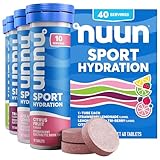
| Nuun Sport | Effervescent tablet | 300 mg | 150 mg | 1 g sugar | about $0.75 ($7.49 for 10) |
Top picks for golfers
LMNT is our pick for hot walked rounds, used differently than the label suggests. One stick carries 1,000 mg of sodium, 200 mg of potassium, and 60 mg of magnesium with zero sugar, which is two to three hours of heavy-sweat golf losses in a single packet. Mix one stick into a large bottle at the turn and sip it across the back nine rather than slamming it. The salty taste is polarizing and the price is premium; our full LMNT review digs into whether that 1,000 mg dose is a feature or overkill for your situation. For a golfer walking 18 in 90°F, it's a feature.
Nuun Sport is the value play and the easiest habit to keep. At about $0.75 a tablet, dropping one into each 16 oz bottle gives you a steady 300 mg of sodium per bottle with only 1 g of sugar. Tablets live happily in a golf bag pocket for months, which matters for a sport where preparation happens in the parking lot. The dose per tablet is modest, so heavy sweaters should run two bottles across a hot round rather than one.
DripDrop suits the older golfer and the medication-adjacent crowd best. It's built on oral rehydration solution logic, pairing 330 mg of sodium with a small amount of glucose (9 g carbs) that assists fluid absorption. The moderate per-stick dose makes it the easiest product on this list to titrate conservatively, which is exactly what someone easing in after a doctor conversation wants. Whether the ORS framing justifies the price against cheaper competitors is the question we work through in our DripDrop review.
Skratch Sport Hydration is the 36-hole and skipped-lunch pick. Its current formula pairs 400 mg of sodium with 19 g of carbs per serving, so it quietly handles the fuel problem that ruins second rounds. Buy the plain flavors; several Skratch flavors ship with 50 mg of caffeine, which is the wrong direction for reasons covered above.
Liquid I.V. is the one you can buy at almost any big-box store on the way to the course, and its 500 mg of sodium with 370 mg of potassium is a legitimately well-rounded dose. The 11 g of sugar per stick is the trade; golfers managing blood sugar should reach for LMNT or Nuun instead.
What to look for when buying
Check the caffeine line before the flavor. This is the golf-specific trap: Nuun, Skratch, and several other sport lines sell caffeinated and non-caffeinated versions in near-identical packaging. Read the tube.
Do the price math on sodium, not on sticks. A $1.50 LMNT stick delivers 1,000 mg of sodium; a $0.75 Nuun tablet delivers 300 mg. Per 100 mg of sodium, LMNT works out to about $0.15 and Nuun to about $0.25, so the premium-priced stick is actually the cheaper sodium source; choose between them on dosing pattern and stomach comfort, not sticker price.
Favor labels that publish everything. We had to mark Skratch's potassium "not published" in the table because the current product page doesn't state it in text. Brands that print full electrolyte panels make your life easier, especially if a doctor asked you to track intake. For broader hot-weather strategy beyond the course, our summer hydration guide covers the supporting cast.
Buy small first. Every brand here sells single sticks or small counts through some channel. Taste rejection is the number one reason these products end up abandoned in a garage, and golf gives you no mid-round plan B if your stomach disagrees on hole 7.

As an Amazon Associate, UsefulVitamins.com earns from qualifying purchases at no extra cost to you. We only recommend products supported by published research or third-party testing.
Averages only get you so far. Weigh in before and after one session and run your own numbers through our sweat rate calculator.
FAQ
I take a diuretic or blood pressure medication. Should I use electrolyte drinks on the course?
Ask your prescriber before you buy anything, and take that seriously rather than as boilerplate. Diuretics deliberately change how your kidneys handle sodium and water, and a 2016 Australian study of heat-related hospitalizations found that people taking an ACE inhibitor together with a diuretic had the highest medication-related risk, with hospital admissions for dehydration or heat-related illness occurring 2.79 times more often after starting the combination, in a cohort of older Australian veterans. That cuts both ways: your heat risk on the course is genuinely elevated, and self-prescribing extra sodium against a drug designed to shed it can also backfire. The productive move is a specific question to your doctor or pharmacist: "I walk 18 holes in summer heat; how should I handle fluids and salt?" Bring the label of whatever product you're considering.
How much should I actually drink during 18 holes?
Start from thirst plus a schedule, not thirst alone, because golf's stop-start rhythm suppresses drinking cues. A practical pattern: 16 oz in the hour before your tee time, then roughly one 16-20 oz bottle per nine in mild weather, moving toward one bottle per six holes in heat. Confirm against your own before-and-after weigh-in with our electrolyte replacement calculator, and cap your enthusiasm: finishing a round heavier than you started means you overdid fluids. Drinking well beyond thirst across a slow five-hour round can dilute blood sodium (hyponatremia), which is more dangerous than mild dehydration — the schedule above is a ceiling, not a quota.
Do I need less if I ride a cart?
Meaningfully less, though not zero in real heat. The tournament study above measured cart rounds at roughly half the energy expenditure of walked rounds with lower core temperatures throughout. In mild weather, a cart round is a water-only situation for almost everyone. In 95°F sun, you're still baking for four hours, and one moderate-sodium serving (a Nuun tablet or DripDrop stick) across the round is a reasonable middle path.
Will caffeine in an electrolyte mix hurt my putting?
We won't overclaim here, because caffeine-and-golf research is thin. What's established is that caffeine is a stimulant with individually variable effects on fine motor steadiness, and putting is among the finest motor tasks in sport. If you already drink coffee daily and putt fine, a caffeinated mix probably changes little. If you're caffeine-sensitive or your stroke gets twitchy under pressure, choosing the non-caffeinated version costs you nothing.
Is the sports drink from the turn house good enough?
On a mild day, sure, and it's better than nothing on any day. But mainstream sports drinks prioritize taste, and their sodium content per bottle generally sits well below every product in our table. If you've read this far because hot rounds wreck you, the turn-house cooler is a top-up, not a plan.
The bottom line
Golf hides its physical cost inside a leisurely pace, and the numbers say the cost is real: a walked summer 18 can burn nearly 900 calories, push core temperature upward for five straight hours, and cost strokes when hydration slips. For hot walked rounds, sip 300 to 500 mg of sodium per hour from the turn onward: LMNT if you want one stick to cover the back nine, Nuun Sport if you want cheap steady dosing, DripDrop if you're starting cautiously alongside a doctor conversation. And keep the honesty that most brands won't offer you: a cool-morning 9 with a cart needs nothing but water, and no powder sold on the internet has ever fixed a three-putt. These are the packets we toss in our own family's bags before a heat-wave tee time, which is the only endorsement standard worth using.
