

Affiliate disclosure: this article contains affiliate links. As an Amazon Associate, UsefulVitamins.com earns from qualifying purchases at no extra cost to you.
If you have been staring at the collagen aisle wondering whether "collagen peptides" and "collagen protein" are the same thing in different packaging, the short answer is: they are the same raw material processed differently, and the only difference that actually changes your routine is molecular weight. Collagen peptides are hydrolyzed to small fragments that dissolve in cold drinks and absorb fast. Collagen protein is usually gelatin or minimally processed collagen that gels when cool and is built for cooking, not daily stir-ins. You will also get a plain-English look at what the research shows about absorption, when each form is actually the better pick, and why the price difference is not really a quality signal.
Before you decide: peptides vs protein in 90 seconds
Best for collagen peptides
- Daily stir-in users who want collagen in coffee, smoothies, or cold drinks
- Travelers who need a powder that dissolves anywhere
- Anyone who wants the form used in most skin and joint RCTs
- Buyers prioritizing convenience over cost per gram
Best for collagen protein (gelatin)
- Home cooks making bone broth, homemade gummies, or panna cotta
- Buyers focused on cost per gram of amino acids
- People who enjoy the cooking ritual and want the traditional form
Skip if
- You expect either to replace a complete-protein shake (neither is complete)
- You expect overnight skin changes (neither delivers that)
- You want one product that does both cooking and cold-drink use equally well (you really want two)
Decision shortcut
- Daily supplement goal: buy peptides
- Cooking ingredient goal: buy gelatin
- Both interest you: buy both, they are two tools for two jobs
What is the actual difference between collagen peptides and collagen protein?
The conversational version: both start with collagen from animal connective tissue, usually bovine hide or bone. The manufacturer decides how far to break that raw collagen down. Stop early and you get gelatin. Keep going with enzymatic hydrolysis and you get hydrolyzed collagen, which most brands sell as "collagen peptides."
The useful version has three real differences.
Molecular weight. Gelatin typically sits in the 30 to 50 kilodalton range. Hydrolyzed collagen peptides sit in the 2 to 5 kilodalton range, with the smallest di-peptides and tri-peptides much lighter than that. This is the difference that drives almost everything else.
Solubility. Because gelatin molecules are large enough to form an entangled protein network, gelatin gels at cool temperatures and dissolves only when warmed. Peptides are small enough that no network forms, so they stay liquid at every temperature. If you have ever tried to stir gelatin into iced coffee, you have seen what happens.
How your gut handles them. Both eventually deliver the same amino acids, but the absorption path looks different. Gelatin goes through enzymatic digestion in the stomach and small intestine, where it is broken into peptides and amino acids before absorption. Hydrolyzed peptides skip most of that step because they are already small. Some di-peptides and tri-peptides appear intact in the bloodstream, which we will get to in the research section.
Actionable takeaway: Do not pick based on "which one is collagen" (both are). Pick based on how you want to use it. Daily drink-stir means peptides. Cooking means gelatin. The raw amino acids are the same in either case.
Why molecular weight matters (and when it does not)
The peptide-marketing narrative leans hard on "small molecules absorb better." That is true in a narrow technical sense and somewhat misleading in the broader nutritional sense.
In Iwai et al. 2005 (PMID 16076145), researchers identified specific food-derived collagen peptides, particularly the di-peptide Pro-Hyp (proline-hydroxyproline), in the blood of healthy volunteers after oral ingestion of gelatin hydrolysates. Those peptides reached circulation intact, meaning they were not fully broken down to free amino acids before absorption. That is the mechanistic foundation for the bioavailability claim on every peptide product label.
The caveat is two layers deep.
First, gelatin also gets digested and absorbed. Your gut has been breaking down proteins for as long as you have been alive. The difference is speed and, for a small fraction of peptides, intact absorption of bioactive fragments. The total amino-acid delivery at equivalent doses ends up very similar.
Second, whether intact di-peptides and tri-peptides do something special beyond being amino-acid building blocks is still an open research question. Some in vitro evidence suggests specific peptide fragments signal fibroblasts to produce more collagen. Clinical evidence that this mechanism outperforms an equivalent dose of gelatin has not been firmly established.
The real question is not "are peptides better absorbed" but "does the form difference meaningfully change outcomes at the same daily dose." Right now the honest answer is: probably a little, maybe not enough to matter for most users. The form difference matters more for usability than for biochemistry.
Actionable takeaway: The molecular-weight advantage for peptides is real but modest. If cost per gram of amino acids is your primary filter, gelatin delivers the same nutritional content for less. If convenience is your filter, peptides win on usability, not on some dramatic absorption gap.
What the research shows about clinical outcomes
Most of the well-designed collagen trials for visible outcomes used hydrolyzed peptides, not gelatin. That bias alone tells you something about what the research community considers the daily-supplement form. A 2019 systematic review of 11 randomized controlled trials (PMID 30681787) found that oral collagen supplements can improve skin elasticity, hydration, and dermal collagen density with no reported adverse events, while noting that optimal dosing regimens are still not settled.
In Proksch et al. 2014 (PMID 24401291), 114 women aged 45 to 65 took 2.5g of VERISOL bovine collagen peptides daily for 8 weeks. Eye wrinkle volume dropped by roughly 20 percent versus placebo, with significant increases in procollagen type I (65 percent) and elastin (18 percent) in measured skin biopsies. This is the single most-cited peptide skin trial.
In a second 2014 RCT by Proksch et al. (PMID 23949208), 69 women aged 35 to 55 took 2.5g or 5g specific bovine collagen hydrolysate daily for 8 weeks. Skin elasticity improved significantly versus placebo at both doses, with a maximum increase of up to 30 percent observed in some women after 8 weeks and no significant difference between the 2.5g and 5g doses. Both trials were placebo-controlled and double-blind.
No head-to-head trial has given one group the same dose in gelatin form and the other in peptide form and measured clinical outcomes. That study does not exist in the published literature at meaningful sample size. So when someone claims "peptides beat gelatin clinically," they are extrapolating from a mechanism story, not citing head-to-head data.
Actionable takeaway: If you want your routine to match the protocols in positive skin trials, hydrolyzed peptides are the closer match because that is what the trials used. Gelatin is not "inferior," it is just under-studied for the same skin endpoints.
Cooking use cases: where gelatin is obviously the right pick
This is the section where gelatin beats peptides cleanly. Gelatin gels. Peptides do not. If you are cooking anything that needs to set or thicken when cool, you want gelatin, every time.
Use gelatin for bone broth that gels in the fridge as a quality cue. Use gelatin for homemade gummies with real fruit juice. Use gelatin for panna cotta, marshmallows, aspic, and pâtés. Use gelatin if you want a traditional protein-rich broth component that actually changes texture as it cools.
Gelatin is legitimate here, but the tradeoff is you cannot easily use it as a daily drinkable supplement. Mix gelatin into cold iced coffee and you get a stringy, clumping mess. Mix gelatin into hot coffee and it dissolves, but it still does not have the neutral texture of a hydrolyzed peptide powder.
Actionable takeaway: If you cook with animal-derived protein at all, a jar of gelatin is a useful kitchen staple. If you do not cook and just want a daily scoop in coffee, gelatin is the wrong tool for that job.
Cost and the everyday-decision math
Per-gram cost heavily favors gelatin. Quality gelatin typically runs 10 to 18 cents per gram at retail. Hydrolyzed collagen peptides typically run 25 to 45 cents per gram. At a 10g daily dose, that is a meaningful monthly difference, $30 to $54 for gelatin versus $75 to $135 for peptides over a 30-day supply.
You are paying the peptide premium for three things: the hydrolysis processing step, the cold-solubility convenience, and the modestly better match to the bioavailability data. Whether that premium is worth it depends on how often you actually use the product.
A daily peptide user burns through a tub monthly and benefits from the convenience every single time. A sporadic user might be better served by a jar of gelatin that costs half as much and lasts twice as long, even if the daily routine is slightly less frictionless.
Actionable takeaway: If you actually use collagen daily, the peptide premium is usually worth it on convenience grounds alone. If your use is occasional or cooking-driven, gelatin is a smarter value.
Our picks: a peptide for daily and a gelatin for cooking
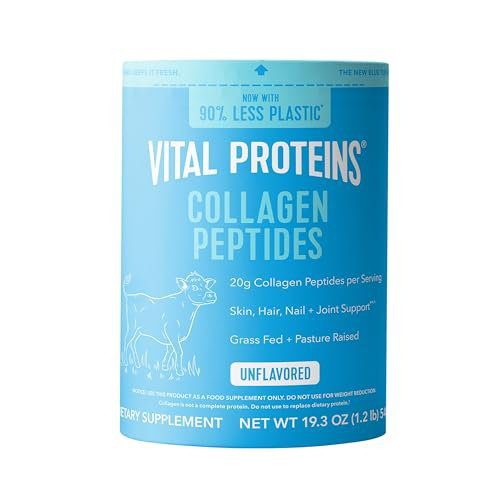
Vital Proteins Collagen Peptides Powder – Grass Fed Collagen Peptides for Hair, Nail, Skin, Bone & Joint Health, Unflavored, 27 Servings
Daily stir-in default with 20g per two-scoop serving, grass-fed bovine hydrolysate that dissolves cleanly in hot or cold liquids without clumping or gelling.
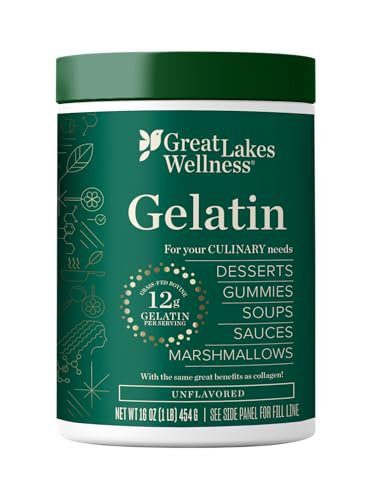
Great Lakes Wellness Beef Gelatin Powder for Culinary Needs – Perfect for Gummies, Marshmallows, Desserts and more – Unflavored – Grass-Fed, Kosher, Keto, Non-GMO 16 oz
Best cooking pick with traditional unflavored bovine gelatin that gels at cold temperatures, ideal for homemade gummies, panna cotta, and bone broth thickening.
FAQ
Can I replace my protein shake with either? No, not effectively. Both collagen peptides and gelatin are incomplete proteins, missing tryptophan and low in several other essential amino acids. They are a supplement, not a meal-replacement protein source. Pair them with a complete-protein source if muscle synthesis is your goal.
Is gelatin less bioavailable than peptides? Slightly, based on absorption-speed and intact-peptide data. The total amino-acid delivery at equivalent doses ends up similar because your gut digests both forms effectively. The bioavailability gap is narrower than peptide marketing suggests.
Can I use gelatin like I use peptides (in coffee)? Not well. Gelatin clumps in cold drinks and needs warming to dissolve, and even in hot drinks the texture tends to be stringier than a peptide powder. You can force it to work, but it will not feel like a neutral add-in.
Do either cause digestive issues? Uncommon for both at typical doses. Some users report mild bloating in the first week, usually settling within a few days. If you are sensitive, start at half dose and build up over a week.
Which one builds more collagen in my body? At equivalent amino-acid doses, probably similar. The clinical-outcome data favors peptides partly because peptides are what researchers used, and partly because the absorption of intact di-peptides and tri-peptides may have modest added signaling effects. For practical purposes, the more important variable is whether you actually take it consistently.
If you are managing a protocol like this, StackMyMed (our companion app) keeps your doses, timing, and interaction checks in one place. It does not replace medical advice – bring the log to your clinician.
Conclusion: the bottom line on collagen peptides vs collagen protein
Collagen peptides and collagen protein (usually gelatin) are the same raw material at different molecular sizes. Peptides are built for daily use in drinks, match the form used in most skin RCTs, and cost more per gram. Gelatin is built for cooking, delivers the same amino acids for less money, and is the right pick for anything that needs to gel.
More features are not always more useful. A daily drinker needs peptides. A home cook needs gelatin. A person who does both needs both, and that is fine, they serve different jobs.
Next steps
- Start here for the foundation: Peptides Explained: The Honest 2026 Guide to What Works, What's Hype, and What's Risky
- See our full roundup of specific products: Best Collagen Peptides in 2026: 8 We'd Actually Buy (and 3 to Skip)
As an Amazon Associate, I earn from qualifying purchases. Product recommendations are based on real reviews and independent research.
