
If you have spent any time in recovery forums, you have seen the TB-500 thread: a lifter with a torn Achilles or a partial rotator cuff tear, weeks into a frustrating rehab, asking whether a vial of TB-500 might speed things along. The replies usually split between people who swear it worked and people citing rat studies like they are peer-reviewed proof. The honest answer sits somewhere more complicated. TB-500 is a synthetic fragment of a real, well-studied protein — but the human trial data for the fragment itself is essentially nonexistent, the regulatory and anti-doping risks are concrete, and the grey market supplying it is not clean.
Summary: What You Actually Need to Know About TB-500
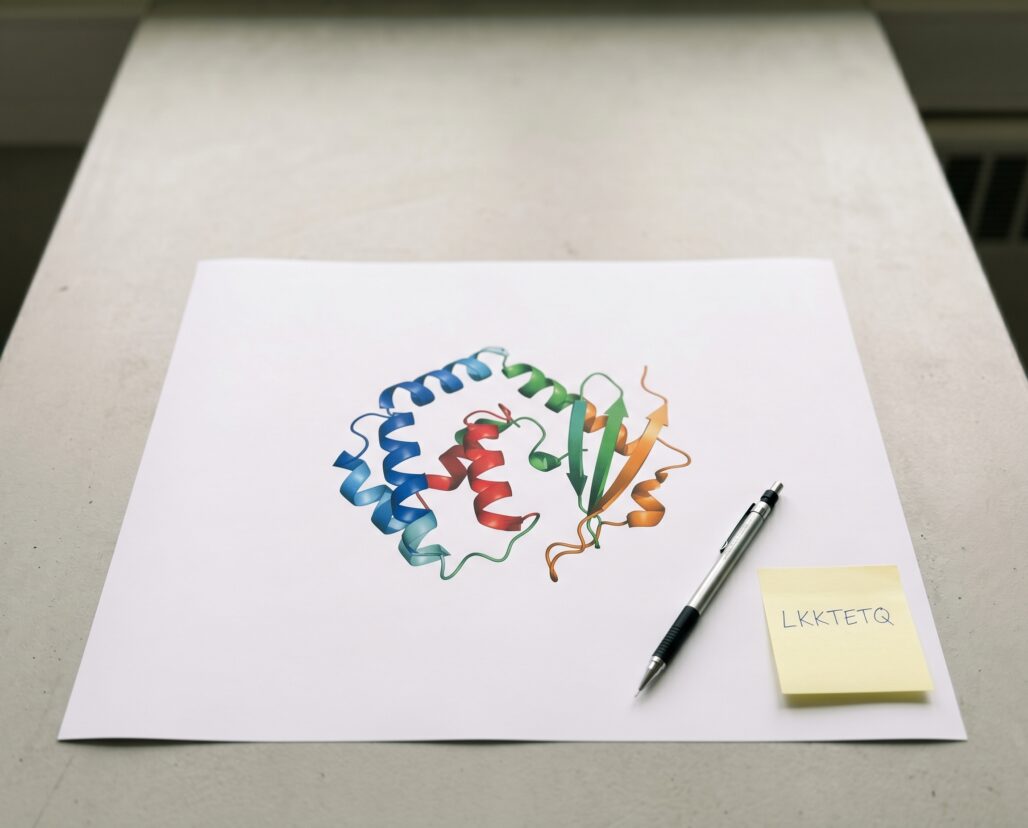
TB-500 is the synthetic 17-amino-acid fragment Ac-LKKTETQ, derived from positions 17-23 of native thymosin beta-4. It is NOT FDA-approved as a drug or dietary supplement and is sold as a research chemical not for human use. Animal studies suggest tissue-repair signaling activity, but no peer-reviewed randomized controlled trial in humans tests TB-500 directly.
- What it is: A lab-synthesized peptide fragment, not a vitamin or dietary supplement
- What the research base covers: Rat and rabbit injury models, equine anti-doping analysis, cell-culture experiments — not randomized human trials
- Regulatory status: Prohibited by the World Anti-Doping Agency (WADA) under Section S2.3, named explicitly; classified as not approvable for compounding by FDA
- Drug pipeline confusion: RegeneRx's RGN-259 and RGN-352 use full-length native thymosin beta-4, not TB-500 — sellers who cite those trials to vouch for TB-500 vials are conflating two different products
- Decision shortcut: If you are an athlete subject to testing, TB-500 will get you banned. If you are not an athlete, it remains an unapproved research chemical with no established human dose, no manufacturing oversight, and a contaminated grey market
What TB-500 Actually Is: The 17-Amino-Acid Fragment
Native thymosin beta-4 (Tβ4) is a 43-amino-acid water-soluble protein present in virtually every cell in the human body. It was first isolated from calf thymus tissue in the 1960s and spent decades being studied as an immune modulator before researchers recognized its role in actin sequestration — binding to the structural protein G-actin and regulating how cells move and reorganize during repair processes. When a tissue is injured, cells need to migrate toward the wound, lay down new matrix, and coordinate with blood-vessel-forming cells, and Tβ4 appears to be involved in all three of those processes.
TB-500 is not the same thing. It is a synthetic 17-amino-acid fragment (positions 17 to 23 of the native 43-aa sequence), acetylated at the N-terminus to give the specific sequence Ac-LKKTETQ. Doping researchers first characterized it precisely because TB-500 began appearing as a veterinary product in horse racing circles with claims that it accelerated wound healing and soft-tissue recovery. A 2012 study published in Drug Testing and Analysis (Esposito et al., PMID 22962027) formally synthesized and characterized Ac-LKKTETQ, developing high-performance liquid chromatography and mass spectrometry methods to detect it in plasma and urine. The same year, Hong Kong researchers published the first identification of TB-500 and its metabolites in post-administration equine samples (Ho et al., PMID 23084823), detecting the compound at concentrations as low as 0.01 ng/mL in urine after a single 10 mg dose.
That fragment is claimed to carry the actin-binding and cell-migration activity of the full 43-aa protein. Whether that claim holds in human tissue, at the doses people inject, is a question the published literature does not yet answer.
Native Thymosin Beta-4 vs. the TB-500 Fragment: Why the Distinction Matters
This is where most forum discussions go wrong, and where grey-market sellers do their most misleading work. The same naming confusion extends to thymosin alpha-1, an unrelated immune peptide — the thymosin alpha-1 vs beta-4 comparison untangles which claims belong to which molecule.
Native thymosin beta-4 has an extensive research record spanning several decades. A 2020 review in Current Medicinal Chemistry (Bjorklund et al., PMID 31333080) describes Tβ4 as "a major pleiotropic actin-sequestering protein" involved in cardiac repair, wound healing, angiogenesis, and inflammatory modulation. In mouse models, Tβ4 activates epicardial progenitor cells following myocardial infarction, improves cardiomyocyte survival, and promotes new vessel formation in ischemic tissue. A 2023 paper in International Immunopharmacology (Bock-Marquette et al., PMID 36709593) showed that postnatal Tβ4 administration in mouse cardiac models altered the adult epicardium to resemble embryonic characteristics, increasing cardiac vessel density and activating developmental gene programs. This is genuine science.
The drug pipeline built on full-length Tβ4 belongs to RegeneRx Biopharmaceuticals. Their RGN-259 product is a sterile ophthalmic solution of full-length thymosin beta-4 designed for corneal and ocular surface diseases. A 2016 review in Vitamins and Hormones (Sosne et al., PMID 27450739) describes the dual mechanism: RGN-259 enables corneal re-epithelialization and simultaneously reduces corneal inflammation, addressing the root wound process rather than just lubricating the surface. RegeneRx ran at least two Phase 2 trials of RGN-259 for dry eye disease. A Phase 2 randomized trial published in Cornea (Sosne, Dunn, Kim, PMID 25826322) found statistically significant improvements in signs and symptoms of severe dry eye, including cases associated with graft-versus-host disease. A second Phase 2 trial using the controlled adverse environment chamber model (Sosne and Ousler, PMID 26056426) confirmed the safety profile and efficacy signal for moderate-to-severe dry eye.
RegeneRx also developed RGN-352 (intravenous thymosin beta-4) for cardiac applications following the encouraging cardiac animal data. Neither RGN-259 for ophthalmology nor RGN-352 for cardiac indications has received FDA approval. Both programs remain in clinical development.
None of these trials test the synthetic Ac-LKKTETQ fragment sold as TB-500 online. When sellers point to RegeneRx's Phase 2 ophthalmic results as validation for what is in those vials, they are pointing at research conducted on a different molecule, by a pharmaceutical company, under controlled conditions, administered to the eye — not injected subcutaneously at unvalidated doses. The fragment and the full protein share a sequence region, but pharmacokinetics, tissue distribution, and bioactivity may differ substantially.
The Animal Evidence Base: What Rat and Rabbit Data Actually Show
The biological plausibility of Tβ4 fragment activity is real. The LKKTETQ sequence sits within the actin-binding domain of the native protein, and in cell-culture experiments, peptides containing this sequence do promote cell migration and wound-closure. The question is how far animal model data travels toward human injury contexts.
In rat Achilles tendon injury models, thymosin beta-4 (full-length) accelerated the structural and biomechanical recovery of the tendon — higher load-to-failure scores, better histological organization, faster return of tissue stiffness. In rabbit corneal wound models, TB4 reduced epithelial healing time and suppressed inflammatory infiltration. A 2024 study in International Immunopharmacology (Bako et al., PMID 38706788) demonstrated TB4 promoted tympanic membrane repair in adult mammals — another tissue type with poor regenerative capacity under normal conditions.
These are meaningful biological signals. But animal models carry a built-in optimism bias that often fails translation. Rats heal everything faster than humans. Their tendons have different collagen architecture, different cellular turnover rates, and different vascular density. Interventions that reliably improve outcomes in rodents have a poor track record in Phase 3 human trials across many therapeutic areas — the lab-to-clinic translation rate for regenerative agents historically sits below 10 percent.
For TB-500 specifically, no rat or rabbit study uses the exact formulation sold on grey-market websites. The animal studies use full-length recombinant Tβ4 administered under controlled conditions, not the Ac-LKKTETQ fragment at the doses and via the routes that online sellers recommend. That gap is not a technicality — it is the entire evidentiary problem.
Real Human Trials: What RegeneRx's Clinical Work Actually Proves
The RegeneRx clinical program is the closest the scientific record gets to human evidence for thymosin beta-4 as a therapeutic. To be clear about what it does and does not prove:
What it proves: Full-length thymosin beta-4, formulated as a sterile ophthalmic solution by a pharmaceutical company operating under FDA oversight, applied topically to the eye, improved objective and subjective markers of dry eye disease in two Phase 2 randomized controlled trials. Sosne et al. (2015, PMID 25826322) reported statistically significant improvements in corneal staining (a measure of surface damage), ocular discomfort scores, and symptom severity. The safety profile across both trials was consistent with placebo — no serious adverse events attributed to the drug.
What it does not prove: That subcutaneously injected Ac-LKKTETQ improves tendon healing in athletes. That any dose of injectable TB-500 is safe in humans. That the bioactivity of the 17-aa fragment equals that of the 43-aa drug. That grey-market vials contain what they claim.
The RGN-352 cardiac program (intravenous Tβ4 after acute myocardial infarction) has completed at least one Phase 2 pilot safety study, motivated by the consistent cardiac animal data. No large Phase 3 efficacy trial for cardiac indications has been published. RegeneRx's clinical work represents a legitimate pharmaceutical development path — slow, expensive, and properly controlled — that TB-500 marketers have not followed at all.
If the native Tβ4 molecule cannot yet get through Phase 3 for systemic human indications, the jump to "therefore inject this grey-market fragment into your shoulder" is not a small logical step. It is a leap across a chasm.
Regulatory Status: WADA S2.3, FDA Classification, and Grey-Market Reality
WADA Prohibition
TB-500 is named explicitly on the World Anti-Doping Agency Prohibited List. The 2024-2025 WADA list places it under Section S2.3, Growth Factors and Growth Factor Modulators, with the exact wording: "Thymosin-beta4 and its derivatives, e.g. TB-500." The prohibition applies both in-competition and out-of-competition — meaning an athlete cannot use it during the off-season and test clean at the start of the season. TB-500 is classified as a Non-Specified Substance under WADA's framework, which means there is no provision for a reduced sanction if an athlete tests positive. A standard two-year ban applies. Athletes in any sport operating under WADA code — which includes the Olympics, most professional leagues, and virtually all national federations — face real career consequences.
FDA Status
TB-500 is NOT FDA-approved as a drug or dietary supplement and is sold as a research chemical not for human use. The FDA's position on bulk thymosin beta-4 for compounding purposes is restrictive. In 2023 guidance, the agency classified thymosin beta-4 as a substance that cannot be compounded due to insufficient evidence of safety and efficacy in humans and lack of an approved drug application. This means a compounding pharmacy cannot legally produce Tβ4 preparations for human use in the United States. Grey-market TB-500 sold online does not come from regulated pharmaceutical manufacturers — it is produced in peptide synthesis labs operating without FDA oversight.
Grey-Market Reality: The Contamination Problem
Independent third-party analysis of peptides sold as TB-500 online has repeatedly found problems. Analytical studies — including the equine anti-doping work that drove WADA's interest — have identified contamination with related peptide fragments, under-dosing relative to label claims, and in some cases unlabeled additional compounds. The Ac-LKKTETQ sequence is straightforward to synthesize in bulk, but peptide purity is not guaranteed without validated manufacturing and testing protocols. When a grey-market kit contains 95 percent of the stated peptide with 5 percent unknown byproducts, there is no clinical trial data telling you what those byproducts do at injection concentrations.
Sellers frequently market TB-500 alongside BPC-157 in "stack" kits. For a grounded look at the evidence and regulatory picture for BPC-157, see the BPC-157 deep dive.
Actionable takeaway: If you are an athlete under any anti-doping authority, TB-500 is a career risk. If you are not an athlete, it remains an unapproved research chemical with no human dose-finding data and a supply chain you cannot verify.
What You Can Actually Do for Tissue Recovery
The conversation about TB-500 tends to crowd out interventions that have genuine human evidence behind them. If connective tissue repair is the goal, the evidence base points in a different direction.
Collagen peptides with vitamin C have the strongest human trial data for tendon and joint support. The mechanism is well-characterized: hydrolyzed collagen consumed roughly 60 minutes before a loading exercise session elevates circulating amino acids during the period of mechanical stimulus, increasing collagen synthesis markers and — in at least one engineering study — actual collagen content in tendon-like tissue. Multiple randomized controlled trials in injured populations have confirmed meaningful pain and function improvements. This is legal, inexpensive, and has no anti-doping implications.
Structured eccentric loading protocols remain the most evidence-backed intervention for Achilles and patellar tendinopathy. The tissue-level adaptations from progressive tendon loading outperform most pharmaceutical candidates tested to date.
For a broader look at what the peptide evidence landscape looks like across injury types, the guide to peptides for injury recovery covers the full spectrum — including where the legal options land versus the research-chemical ones.
Actionable takeaway: Before weighing a grey-market injectable, confirm whether you have applied the fundamentals — eccentric loading, collagen peptides timed to exercise, adequate protein intake, and consistent sleep — with the same rigor you would apply to a pharmaceutical.
Frequently Asked Questions
Is TB-500 the same as thymosin beta-4? No. Native thymosin beta-4 (Tβ4) is a 43-amino-acid protein naturally produced by your body. TB-500 is a synthetically produced 17-amino-acid fragment (Ac-LKKTETQ) from one region of that protein. They share a peptide sequence but are different compounds with different molecular weights, different pharmacokinetics, and — critically — different research profiles.
Does TB-500 have human trial data? No published randomized controlled trial has tested the synthetic Ac-LKKTETQ fragment (TB-500) in human subjects for any indication. Human trial data exists only for full-length thymosin beta-4 (RGN-259, RGN-352), formulated by a pharmaceutical company under FDA oversight, for dry eye disease and cardiac applications — not for TB-500 vials sold online.
Will TB-500 show up on a drug test? Yes. Analytical methods capable of detecting Ac-LKKTETQ and its metabolites in urine and plasma at sub-nanogram concentrations have been validated and are used by WADA-accredited anti-doping laboratories. Detection windows vary but the compound is detectable. WADA prohibits it explicitly under S2.3 year-round.
Is TB-500 legal to buy? In the United States, TB-500 occupies a regulatory grey zone when labeled "research chemical — not for human use." Purchasing it is not currently a scheduled-substance offense, but administering it to humans without an IND (Investigational New Drug) application is not legal under FDA regulations. The legal framing of "research only" is a labeling convention, not a safe harbor for personal injection.
Can pregnant or nursing women use TB-500? No. TB-500 has not been tested in pregnant or nursing populations. Given its uncharacterized safety profile in humans generally, pregnant and nursing individuals should avoid it entirely.
Why do recovery forums talk about TB-500 so much? Anecdote spreads faster than clinical trials. The underlying biology of thymosin beta-4 is genuinely interesting, and the 17-aa fragment does show activity in cell-culture assays. Sellers have used legitimate RegeneRx ophthalmic trial results to imply validation for a different product. Forums tend to amplify positive personal reports and undercount adverse experiences, since people who injected an unknown compound and felt nothing noteworthy rarely post about it.
If you are managing a protocol like this, StackMyMed (our companion app) keeps your doses, timing, and interaction checks in one place. It does not replace medical advice — bring the log to your clinician.
Conclusion
TB-500 occupies a specific and uncomfortable position in the peptide landscape. The native protein it derives from — thymosin beta-4 — is the subject of real pharmaceutical development and credible biology. The 17-amino-acid synthetic fragment sold in grey-market kits is a different compound, produced outside pharmaceutical controls, tested only in doping-detection contexts, and injected by people relying on rat studies and forum testimony.
The gap between "the parent protein has interesting ophthalmic Phase 2 data" and "therefore inject this uncharacterized fragment into your tendon" is not a gap that enthusiasm closes. It requires human trials, dose-finding studies, safety monitoring, and manufacturing validation — none of which exist for TB-500.
If you are subject to anti-doping testing, the WADA S2.3 prohibition on TB-500 is non-negotiable and non-discretionary. If you are not an athlete, the absence of human trial data and the verified problems with grey-market purity are not theoretical concerns — they are concrete reasons to look elsewhere. To understand the broader safety considerations around unapproved peptides, the article on whether peptides are safe provides the framework for thinking through these trade-offs before acting.
Actionable takeaway: The most reliable path to connective tissue recovery right now runs through validated rehab protocols and evidence-backed supplements, not through a grey-market vial referencing research it was never part of.
This article is for informational purposes and not medical advice. Peptides, especially those marketed for therapeutic use, can interact with medications and health conditions. Consult a licensed physician before starting any supplement, particularly if you are pregnant, nursing, taking prescription medications, or managing a chronic condition.
