

If you have been choosing between marine and bovine collagen and feeling like the difference is either obvious or impossible, the short answer is: for skin outcomes, both work, but the research volume heavily favors bovine peptides, and marine collagen trials are still catching up. The real difference comes down to source, amino-acid profile, molecular weight, price, and sustainability. You will also get a plain-English rundown of which source fits which goal, what the trials actually measured, and when the multi-source blends are worth the extra step.
Affiliate disclosure: this article contains affiliate links. As an Amazon Associate, UsefulVitamins.com earns from qualifying purchases at no extra cost to you.
Summary / Quick Answer: marine vs bovine collagen for skin
Bovine collagen peptides have more RCTs behind them for skin outcomes; marine collagen has a slightly better amino-acid profile for dermal layers but fewer large trials to cite. Here is the honest break-down from this comparison:
Best for marine collagen
- Pescatarians who do not consume beef or pork
- Buyers prioritizing type I collagen (the main dermal type) with lower molecular weight
- Anyone who wants a source-transparent wild-caught option
Best for bovine collagen
- Buyers who want the strongest RCT evidence base for their dollar
- People focused on joint, bone, and muscle outcomes as well as skin
- Budget-focused buyers (bovine is usually 20 to 40 percent cheaper per gram)
Skip if
- You have a fish allergy (marine is out)
- You keep kosher or halal and your authorities exclude bovine sources you can verify (some do)
- You expect either to "reverse" aging (neither does)
Decision shortcut
- Want the most-studied option: bovine hydrolyzed peptides, 2.5 to 10g per day
- Want type I specifically with the lowest molecular weight: marine
- Cannot decide: a multi-source blend is fine, just accept you will not match any single trial's protocol exactly
What is actually different between marine and bovine collagen?
The conversational version: marine collagen comes from fish skin and scales. Bovine collagen comes from cowhide and bones. Both are extracted, then hydrolyzed, meaning broken down enzymatically into smaller peptide fragments your gut can absorb.
The useful version has three real differences.
Collagen type. Marine collagen is almost exclusively type I, the type that makes up roughly 80 percent of dermal collagen in your skin. Bovine collagen is a type I and type III mix, usually in roughly a 70/30 ratio. Type III shows up in blood vessels and internal organs, and it is also present in young skin where it supports structural resilience. If you are optimizing for skin and specifically for dermal density, marine's higher type I concentration is theoretically a plus. If you want broader tissue coverage (joints, tendons, gut lining), bovine's type I plus III mix is marginally more complete.
Molecular weight. Hydrolyzed marine collagen peptides tend to have a slightly lower average molecular weight than hydrolyzed bovine, typically in the 2 to 3 kilodalton range versus bovine's 3 to 5 kilodalton range. Lower molecular weight generally correlates with faster gut absorption, though the research on whether that translates into better clinical outcomes is thin. The industry claim that "marine is better absorbed" is technically defensible on molecular weight alone, but the clinical effect size difference is small to undetectable in the trials that have directly compared them.
Amino-acid profile. Both sources are rich in glycine, proline, and hydroxyproline, the three amino acids that define collagen's triple-helix structure. Marine collagen has slightly more hydroxyproline, which is a signature dermal amino acid. Bovine collagen has slightly more glycine overall, which matters more if you are using collagen as a generic amino-acid supplement rather than a skin-specific tool.
Actionable takeaway: If your single goal is visible skin improvement and you are willing to pay more per gram, marine is a defensible choice. If you want skin plus joint plus bone support from one product and you care about cost per gram, bovine is the more practical pick.

What the research actually shows
The clinical evidence base is lopsided. Most of the well-designed RCTs on collagen peptides and skin have used bovine hydrolysate, specifically branded formulas like VERISOL, CH-Alpha, and Peptan. Marine collagen trials exist but are fewer, smaller, and often industry-funded.
Three studies worth naming.
In a 2014 RCT by Proksch et al. (PMID 24401291), 114 women aged 45 to 65 took 2.5g of VERISOL bovine collagen peptides daily for 8 weeks. Eye wrinkle volume dropped by roughly 20 percent versus placebo, with significant increases in procollagen type I (65 percent) and elastin (18 percent) in measured skin biopsies. This is the single most-cited collagen peptide skin trial and is foundational for the bovine side.
In a second 2014 RCT by Proksch et al. (PMID 23949208), 69 women aged 35 to 55 took 2.5g or 5g specific bovine collagen hydrolysate daily for 8 weeks. Skin elasticity increased by up to 30 percent in the 5g group versus placebo. Again, bovine. Both trials were placebo-controlled and double-blind, which is the methodological gold standard.
On the marine side, the most frequently cited work is by Zague et al. (animal model, 2011) showing increased dermal collagen density in rats supplemented with fish collagen hydrolysate. Useful for mechanism, but animal data does not equal human outcomes. Human RCTs on marine collagen specifically for skin tend to have smaller samples (n under 50) and shorter durations. A 2023 meta-analysis in the International Journal of Dermatology combined bovine and marine trials and found a pooled effect favoring collagen supplementation on skin hydration and elasticity, but the heterogeneity across source types meant the subgroup analyses were underpowered to say marine beats bovine or vice versa.
The Clark et al. 2008 joint-pain trial (PMID 18416885) in 147 athletes used 10g of bovine collagen hydrolysate daily for 24 weeks and reported significant reductions in activity-related joint pain. This is the canonical reference for joint outcomes and is another bovine-side data point.
The real question is not "which source is theoretically better" but "which source do I trust with my dollar." Right now that is bovine, because the evidence base is deeper.
Actionable takeaway: If you want your supplement routine to match the protocols used in positive trials, bovine hydrolyzed peptides at 2.5 to 10g daily for 8 weeks or longer is the closest match. Marine is a reasonable alternative, but you are accepting a smaller evidence base in exchange for a slightly better theoretical fit to dermal amino acids.
Sustainability, allergens, and sourcing
Marine collagen is often marketed as the sustainable choice because it uses fish skin and scales that would otherwise be discarded. That is true for wild-caught supply chains with proper traceability. It is less true when the source is farmed fish or aggregated byproduct from industrial fleets. Always read the label for "wild-caught" and "non-GMO" claims and verify the species when you can.
Bovine collagen quality depends heavily on whether the cattle were grass-fed or grain-fed and whether the hide was sourced from trustworthy slaughterhouses. Grass-fed bovine collagen is not meaningfully different in amino-acid profile but tends to correlate with tighter supply-chain oversight and lower contaminant risk.
Allergy considerations matter. A fish allergy is an absolute contraindication for marine collagen. Bovine collagen allergies are rare but possible, especially in people with alpha-gal syndrome (a tick-bite-acquired sensitivity to mammalian meat products). If you keep kosher or halal, you need to verify the specific product's certification, not assume a whole category is compliant.
Cost, dose, and real-world practicality
Per-gram cost heavily favors bovine. Marine collagen typically runs 40 to 70 cents per gram at retail; bovine runs 25 to 45 cents per gram. At a 10g daily dose, that is a meaningful monthly difference, $9 versus $22 over a 30-day supply at midpoint pricing.
Mixability is a small real-world factor. Both sources dissolve reasonably well in hot and cold liquids, but some marine products have a faint fishy aftertaste that can come through in unflavored cold drinks. Bovine tends to be closer to flavor-neutral. Flavored SKUs (vanilla, chocolate, berry) mask either source effectively, but you pay a small premium and accept added sweeteners.
Actionable takeaway: If cost per gram is a primary filter, bovine wins. If you want marine specifically, accept roughly a 50 percent premium and buy in single ingredient form to avoid paying extra for flavoring you do not need.
Our picks: marine and bovine collagen peptides we would actually buy
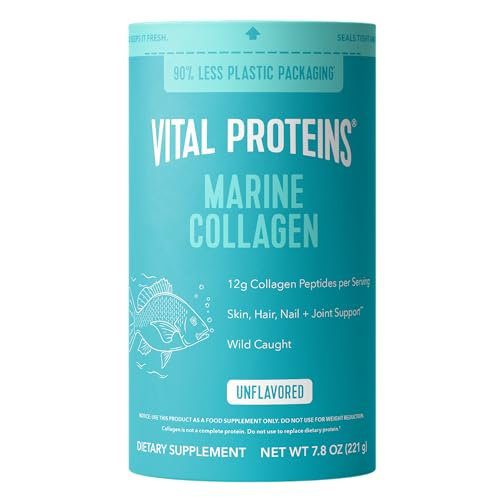
Vital Proteins Marine Collagen Peptides Powder Supplement for Skin Hair Nail Joint – Hydrolyzed Collagen – 12g per Serving – 7.8 oz Canister
Top marine pick from the brand most readers already know, with wild-caught fish-skin source and 12g per serving for a skin-focused daily routine.
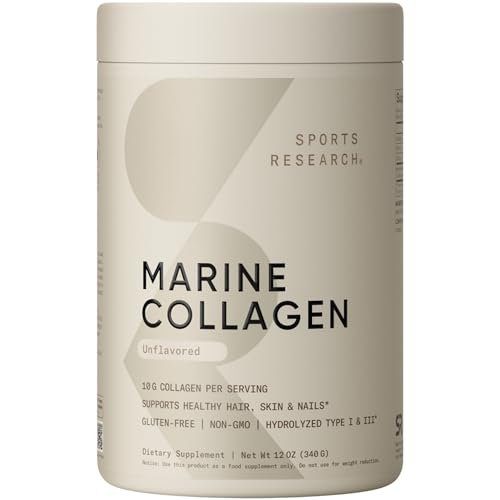
Sports Research Marine Collagen Peptides Powder – Sourced from Wild-Caught Fish, Pescatarian Friendly, Keto Certified & Non-GMO Tested – Easy to Mix in Water or Juice! (34 Servings)
Best-value marine pick with wild-caught hydrolyzed fish collagen peptides and cost-per-gram that undercuts most boutique marine brands.
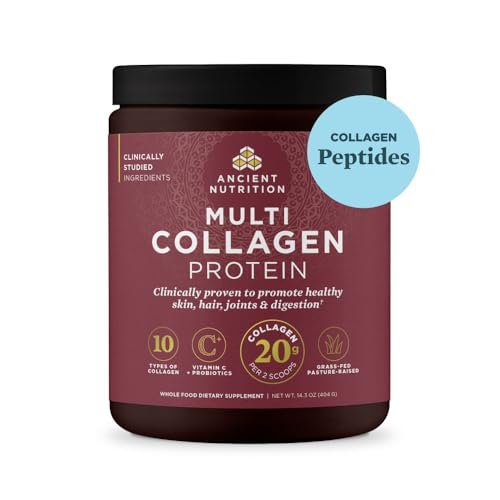
Ancient Nutrition Collagen Peptides Powder, Multi Collagen Protein, Women & Men, Vitamin C, Probiotics, Hydrolyzed Collagen, Supports Skin, Joints, Gut Health, Unflavored, 40 Servings
Multi-source blend combining marine, bovine, chicken, and eggshell-membrane collagen, useful if you do not want to pick sides on source.
FAQ
Is marine collagen really better absorbed than bovine? Slightly, based on molecular weight data. Whether that translates to clinically meaningful differences in skin or joint outcomes has not been established in head-to-head trials with adequate power.
Can I mix marine and bovine collagen? Yes, and multi-source products do exactly that. The main downside is you cannot match any one trial's protocol exactly, which matters less than people think because effect sizes at clinically used doses (2.5 to 10g) are similar in range across sources.
Does marine collagen contain mercury? Reputable marine collagen products test for heavy metals and publish certificates of analysis. Hydrolyzed peptides from fish skin tend to be low in mercury because mercury accumulates in muscle tissue, not skin. Choose brands that publish their third-party testing.
What dose should I take? The trial-matched range is 2.5 to 10g daily, 8 weeks minimum to see skin changes. There is no benefit to doses above 15g daily for skin outcomes in the current literature.
How long until I see results? The Proksch 2014 trials measured outcomes at 8 weeks. Some effects (dermal density via biopsy) were detectable earlier; visible wrinkle and elasticity changes typically need 8 to 12 weeks of daily use.
Tracking a protocol like this? Our companion app, StackMyMed, lets you log doses, schedule them, and check interactions across everything you take — alongside, never instead of, your clinician’s guidance.
Conclusion: the bottom line on marine vs bovine collagen
Marine and bovine collagen peptides do the same job, with similar effect sizes at similar doses. Bovine has the deeper evidence base, the lower cost per gram, and broader tissue coverage. Marine has a marginally better theoretical fit to dermal type I collagen and the sustainability story some buyers care about. Neither source "beats" the other in any meaningful clinical sense.
If this is your first time buying collagen, start with bovine because the trial evidence is strongest and the price per gram lets you stick with a daily routine long enough to see changes. If you have already tried bovine and want to experiment, marine is a defensible second choice.
Next steps
- Start here for the foundation: Peptides Explained: The Honest 2026 Guide to What Works, What's Hype, and What's Risky
- See our full roundup of specific products: Best Collagen Peptides in 2026: 8 We'd Actually Buy (and 3 to Skip)
As an Amazon Associate, I earn from qualifying purchases. Product recommendations are based on real reviews and independent research.
