
CJC-1295 has a lot going for it on paper — a long half-life, a plausible mechanism, and two small clinical trials from a legitimate pharmaceutical company. So you might expect a tidy story about a compound that nearly became a drug and is now sold in grey-market vials. The actual story is messier. CJC-1295 has demonstrated real GH and IGF-1 elevation in short human pharmacokinetic studies, but it has never been tested for clinical efficacy in healthy adults, has no FDA approval as a drug or dietary supplement, and is explicitly named on the WADA prohibited list — which means the gap between what the science shows and what the marketing implies is wider than most vendor pages admit.
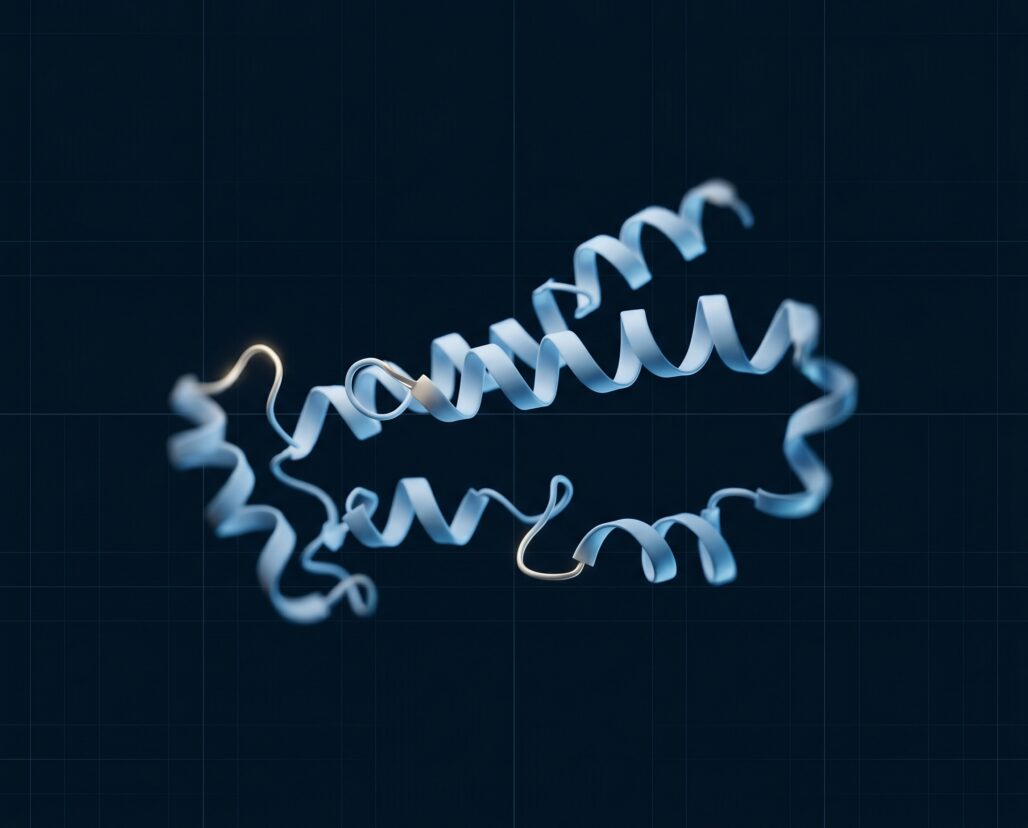
Summary: What Is CJC-1295 and What Does the Evidence Actually Show?
CJC-1295 is a synthetic 30-amino-acid analog of growth hormone-releasing hormone (GHRH) engineered to dramatically extend the half-life of native GHRH from minutes to roughly six to eight days. Two human pharmacokinetic trials conducted by the Canadian pharmaceutical company ConjuChem between 2004 and 2006 showed dose-dependent GH and IGF-1 elevation with no serious adverse events reported. Those trials were not efficacy trials — they did not test whether those hormonal changes produced measurable improvements in muscle mass, body composition, recovery, or any other outcome marketed by grey-market vendors.
Best for: Understanding what the clinical literature actually measured before forming an opinion.
Not ideal for: Anyone expecting a proven, legally obtainable therapeutic for muscle growth or recovery. The evidence base covers pharmacokinetics, not outcomes.
What to look for: If a website cites "clinical studies proving muscle gains from CJC-1295," ask for the specific trial registration number and the endpoint measured. The published human trials measured GH and IGF-1 levels, not body composition, performance, or recovery outcomes.
Decision shortcut: If you are a tested athlete, CJC-1295 is prohibited under WADA Section S2.2.4 regardless of the "research peptide" label on the vial. If you are not a tested athlete, the core question remains: would you use a compound whose human evidence ends at phase 1 pharmacokinetics? That is the actual evidence floor here.
You can get a broader grounding on what peptides are as a class in the site's general peptide overview, and a fuller picture of how to think about peptide safety questions overall before reading compound-specific pages like this one.
What CJC-1295 Actually Is: A Synthetic GHRH Analog
GHRH — growth hormone-releasing hormone — is a 44-amino-acid peptide produced by the hypothalamus. Its job is to travel to the pituitary gland and trigger pulses of growth hormone (GH) release. Native GHRH does this reliably, but it is broken down by enzymes called dipeptidyl peptidases within minutes of entering the bloodstream. A single pulse of GHRH stimulates one GH pulse, and then the compound is gone.
CJC-1295 is a re-engineered 30-amino-acid fragment of GHRH, sometimes called a truncated analog. The ConjuChem research team modified the amino acid sequence at the 2nd position (replacing alanine with alpha-aminoisobutyric acid) and at the 8th position (replacing asparagine with glutamine) to block the dipeptidyl peptidase cleavage sites that normally degrade native GHRH. That modification alone would extend the half-life somewhat. The more dramatic extension comes from a separate technology.
CJC-1295 with DAC — the version studied in the ConjuChem trials — includes a Drug Affinity Complex linker molecule attached to the C-terminus of the peptide chain. That linker reacts covalently with a lysine residue on circulating serum albumin, the most abundant protein in human blood. Once bound to albumin, CJC-1295 is effectively shielded from renal clearance and enzymatic degradation, extending its measurable half-life to approximately 5.8 to 8.1 days in humans, compared to minutes for native GHRH (Teichman et al., 2006, PMID 16352683).
"CJC-1295 without DAC" is a separate product sold by many grey-market vendors under the same name. It lacks the albumin-binding linker, has a substantially shorter half-life (roughly 30 minutes), and has not been studied in any published human clinical trial. The two CJC-1295 versions are pharmacologically distinct compounds, and conflating them — as vendor pages frequently do — is one of the most common sources of confusion in forum discussions.
The DAC Distinction: Why It Matters for Interpreting Claims
The DAC version (with the albumin-binding linker) is what ConjuChem studied clinically. The no-DAC version circulates in grey-market channels primarily because it is cheaper to synthesize and can be pitched at users who want more frequent, "pulsatile" dosing rather than a long-acting depot effect. Neither version is FDA-approved as a drug or dietary supplement. Neither version is approved for human use under any regulatory framework.
From a practical perspective, the DAC version's long half-life means GH stimulation continues for days from a single subcutaneous injection — a property that sounds appealing for recovery or anabolism, but also means that any side effects would persist for days after dosing, with no simple way to accelerate clearance. The no-DAC version's short half-life makes it behave more like native GHRH, requiring more frequent administration, and — because the albumin-binding step is absent — it is detectable by standard anti-doping mass spectrometry methods, whereas the DAC version requires specialized immunoassay techniques (Timms et al., 2019, PMID 30489688).
Mechanism: How CJC-1295 Signals the Pituitary
CJC-1295 binds the GHRH receptor on somatotroph cells in the anterior pituitary. The receptor is G-protein-coupled; binding triggers an intracellular cascade — adenylyl cyclase activation, cyclic AMP rise, protein kinase A activation, voltage-gated calcium channel opening — that triggers GH granule exocytosis and a pulse of GH into the bloodstream.
What the DAC-extended half-life does is maintain continuous receptor stimulation for days rather than minutes. Crucially, research by Ionescu and Frohman (2006, PMID 17018654) found that pulsatile GH secretion is preserved during CJC-1295 treatment. What changes is trough GH — the baseline level between pulses — which rose 7.5-fold in their study. That elevated trough GH then drives the liver to produce insulin-like growth factor 1 (IGF-1), the downstream mediator for most anabolic and tissue-repair effects attributed to the GH axis.
This mechanism is biologically coherent. But coherent mechanism does not establish clinical efficacy in healthy adults, and the human trial record for CJC-1295 stopped at pharmacokinetics before any outcome was measured.
Limited Human Data: What the ConjuChem Trials Actually Measured
The foundational human evidence for CJC-1295 consists of two randomized, placebo-controlled, double-blind studies conducted by ConjuChem and published in the Journal of Clinical Endocrinology and Metabolism.
Teichman et al. (2006), PMID 16352683. This study enrolled healthy subjects aged 21 to 61 years and administered single and multiple subcutaneous injections across two study phases lasting 28 and 49 days. The primary findings: a single injection produced dose-dependent GH increases of 2-fold to 10-fold above baseline for six or more days, and IGF-1 increases of 1.5-fold to 3-fold lasting 9 to 11 days. After multiple doses, mean IGF-1 levels remained above baseline for up to 28 days. The most favorable doses were 30 and 60 micrograms per kilogram of body weight. No serious adverse reactions were reported. The most common adverse event was injection-site reactions. The authors described the compound as "safe and relatively well tolerated" in this sample.
Ionescu and Frohman (2006), PMID 17018654. This trial examined 20 healthy men aged 20 to 40 years using 12-hour overnight blood sampling at 20-minute intervals — the kind of dense sampling protocol needed to characterize GH pulsatility patterns. After a single injection of 60 or 90 mcg/kg, mean GH was elevated 46% overall, trough (basal) GH rose 7.5-fold, and IGF-1 rose 45% — all with preserved natural GH pulse frequency and amplitude. Notably, the IGF-1 increases did not correlate with pulsatile GH parameters, suggesting it was the elevated trough GH, not the pulse pattern, that drove IGF-1 production.
These are pharmacokinetic and pharmacodynamic studies. They establish that CJC-1295 binds albumin, enters circulation, and elevates GH and IGF-1 in healthy people for days. They do not establish that this hormonal elevation produces improvements in lean mass, strength, fat loss, injury recovery, or any other clinical outcome. ConjuChem did not advance CJC-1295 to phase 2 efficacy trials in healthy adults. A related ConjuChem compound, tesamorelin (a distinct GHRH analog without the albumin-binding technology), did complete phase 3 trials and received FDA approval in 2010 — but for HIV-associated lipodystrophy specifically, not general fitness.
Sackmann-Sala et al. (2009, PMID 19386527) confirmed that CJC-1295 treatment shifts serum protein profiles, including apolipoprotein and transthyretin levels — measurable downstream effects of GH/IGF-1 axis activation. This remains mechanistic characterization, not clinical outcome data.
Regulatory Status: FDA and WADA
FDA. CJC-1295 is not FDA-approved as a drug or dietary supplement and is not approved for human use in any context. It is sold online as a "research peptide" — a label that permits laboratory use on cell cultures and animal models, not administration to humans. The FDA has issued warning letters to vendors marketing research peptides directly to consumers, citing unapproved drug promotion and failure to meet manufacturing and labeling standards required for human-use products. Tesamorelin's FDA approval for HIV-associated lipodystrophy does not extend to CJC-1295 and does not validate GHRH analogs for general wellness in healthy adults.
WADA. CJC-1295 is explicitly named on the World Anti-Doping Agency's Prohibited List under Section S2.2.4: "Growth hormone-releasing hormone (GHRH) and its analogues (e.g. CJC-1293, CJC-1295, sermorelin and tesamorelin)." This category is prohibited at all times — in-competition and out-of-competition. The "research peptide" designation printed on a vendor's label provides zero protection for an athlete subject to testing. Detection methods exist for both the DAC and no-DAC variants, with anti-doping laboratories achieving lower limits of detection at or below 1 ng/mL (Memdouh et al., 2021, PMID 34665524; Knoop et al., 2016, PMID 26879649).
Any tested-pool athlete considering CJC-1295 — in any form, from any source — should treat WADA Section S2.2.4 as a hard stop.
Side Effects, Unknowns, and Grey-Market Quality Issues
Known adverse effects from clinical trials. The ConjuChem trials reported injection-site reactions as the most common side effect. Flushing, headache, and mild hypoglycemia were noted in some subjects receiving higher doses. These are consistent with the known pharmacology of GH stimulation, which can lower blood glucose in the short term. No serious adverse events were reported in the combined trial populations — but those populations were healthy adults in supervised settings with single or limited-duration dosing over weeks, not months or years.
What is unknown. Long-term effects of sustained GH and IGF-1 elevation in healthy adults are not established from CJC-1295 data. Chronic GH excess from other causes (acromegaly, GH-secreting tumors) is associated with insulin resistance, joint swelling, carpal tunnel syndrome, and increased cancer risk via IGF-1-mediated cell proliferation. Whether the magnitude of GH elevation produced by CJC-1295 reaches thresholds relevant to these risks over extended use is unknown. No study has measured this, and the absence of evidence is not the same as evidence of absence.
Grey-market quality issues. Products sold as research peptides are not manufactured under FDA Good Manufacturing Practice standards. Independent third-party testing of grey-market peptide vials has routinely found mislabeling (the stated compound is not present or is present at the wrong dose), contamination (bacterial endotoxins, residual solvents, particulate matter), and degradation products from improper storage. A vial labelled "CJC-1295" purchased from an online vendor has no guarantee of containing what it claims at the stated concentration. This is not a theoretical concern — it is a documented, recurring finding in peptide quality audits.
Pregnancy and nursing. CJC-1295 has not been studied in pregnant or nursing individuals. Any use during pregnancy or while nursing should be considered absolutely contraindicated given the total absence of safety data and the potential for GH-axis manipulation to affect fetal development.

Frequently Asked Questions
Is CJC-1295 the same as ipamorelin? No. Ipamorelin is a growth hormone secretagogue that works by mimicking ghrelin and binding the GHS-R1a receptor — a completely different receptor from the GHRH-R that CJC-1295 targets. The two compounds stimulate GH release through distinct pathways and are sometimes combined by grey-market users in what they call a "GHRH + GHRP" stack. That combination is the subject of a separate CJC-1295 vs. ipamorelin comparison on this site.
Is CJC-1295 legal to buy? In the United States, purchasing CJC-1295 labelled as a research peptide for personal use occupies a legal grey zone. It is not a controlled substance under the Controlled Substances Act, but marketing or selling it for human use constitutes unapproved drug promotion under the Federal Food, Drug, and Cosmetic Act. The legality of purchasing or importing it varies by jurisdiction. "Not a controlled substance" does not mean "legal to use in humans" — these are two different legal questions.
Does CJC-1295 with DAC differ from CJC-1295 without DAC? Significantly. The DAC version binds albumin covalently and has a half-life of 5.8 to 8.1 days. The no-DAC version lacks the linker, has a half-life of roughly 30 minutes, and has no published human pharmacokinetic data. Claims about one version often circulate alongside data from the other.
Can CJC-1295 increase muscle mass? The published human studies measured GH and IGF-1 levels, not muscle mass or strength outcomes. The mechanistic argument — that GH and IGF-1 elevation promotes anabolism — is biologically plausible, but plausibility is not proof of outcome in healthy adults. No randomized controlled trial has measured body composition endpoints in humans taking CJC-1295.
Is the grey-market product reliable? No third-party quality data supports the reliability of grey-market CJC-1295. Contamination, mislabeling, and under-dosing are documented problems across the research peptide market broadly, and there is no regulatory requirement for vendors to verify product quality before sale.
If you are managing a protocol like this, StackMyMed (our companion app) keeps your doses, timing, and interaction checks in one place. It does not replace medical advice — bring the log to your clinician.
The Bottom Line
CJC-1295 is one of the better-documented grey-market peptides because actual human pharmacokinetic data exists from legitimate ConjuChem trials. The Teichman and Ionescu-Frohman studies are real, peer-reviewed, and conducted in people — which already puts CJC-1295 ahead of many compounds in the same market. The DAC variant reliably elevates GH and IGF-1 for days from a single subcutaneous injection.
That is where the evidence ends. No efficacy trial has measured whether those hormonal shifts translate to improved muscle mass, body composition, or recovery speed. The compound is not FDA-approved for any use. It is explicitly prohibited by WADA. Grey-market vials carry documented quality risks. Long-term safety in healthy adults is unknown.
A useful test: before taking any compound, ask what evidence exists that it produces the outcome you want, in people like you, at what dose, over what time frame, with what safety profile. For CJC-1295, those honest answers are narrow. If you are working with a physician who monitors your labs and follows the GH-axis literature, that is a different clinical context from ordering vials based on forum posts — but the evidence base alone cannot bridge that gap.
This article is for informational purposes and not medical advice. Peptides, especially those marketed for therapeutic use, can interact with medications and health conditions. Consult a licensed physician before starting any supplement, particularly if you are pregnant, nursing, taking prescription medications, or managing a chronic condition.
