
Affiliate disclosure: this article contains affiliate links. As an Amazon Associate, UsefulVitamins.com earns from qualifying purchases at no extra cost to you.
If you are searching for the best supplements for leaky gut, you are probably either trying to explain bloating, fatigue, and food sensitivities that your GP has waved off, or you are following an integrative practitioner's protocol and want to know which products are doing real work.
Quick Answer: which leaky gut supplements would I actually start with?
If the goal is barrier support and the basics are already in place, the two I would start with are L-glutamine (5 g/day) and a specific probiotic strain matched to the symptom (Saccharomyces boulardii for post-antibiotic or IBS-D presentations, Lactobacillus rhamnosus GG for general barrier support). Zinc carnosine (75 mg twice daily) is the strongest add-on if there is concurrent upper-GI irritation or NSAID exposure. Bone broth and collagen are fine as food. They are not a treatment.
- Best for: mild to moderate gut symptoms after a clear trigger (antibiotic course, food poisoning, period of high NSAID use), IBS-D presentations alongside conventional care, integrative protocols where the practitioner is already triaging the root cause.
- Not ideal for: anyone with bloody stool, unintentional weight loss, persistent diarrhea over 4 weeks, family history of IBD or celiac without a workup, or systemic symptoms being attributed to gut permeability without diagnostic evidence.
- What to do first: get a celiac panel (tTG-IgA with total IgA), a fecal calprotectin, and a basic CBC and ferritin from your primary care doctor or gastroenterologist. "Leaky gut" is the surface reading. Undiagnosed celiac, IBD, or H. pylori will not respond to L-glutamine the way a transient post-antibiotic dysbiosis will.
What "leaky gut" actually is, briefly
Here is where I have to split the term in two. The mainstream GI view and the consumer view are not the same thing.
The underlying mechanism, increased intestinal permeability, is a real and measurable phenomenon. The single-cell epithelial layer that lines the small intestine is held together by tight-junction proteins (occludin, claudins, ZO-1). When those junctions loosen, molecules that should stay inside the lumen can pass into the lamina propria and trigger immune activation. This is well-documented in active celiac disease (where the protein zonulin is elevated and gliadin physically opens the tight junctions), in inflammatory bowel disease, in NSAID enteropathy (chronic ibuprofen and naproxen users develop measurable permeability changes), and after severe infectious gastroenteritis. The American Gastroenterological Association and the ESPEN consensus paper (Bischoff et al., 2014) both acknowledge increased permeability as a finding in these conditions.
"Leaky gut syndrome" as a consumer diagnosis is a different claim. It posits that low-grade tight-junction loosening drives systemic problems like fatigue, brain fog, eczema, joint pain, and food sensitivities in otherwise healthy people, and that you can treat it with a stack of supplements. That mapping is not in the mainstream gastroenterology literature. Mechanistically plausible, clinically unproven at the scale the marketing implies. The honest framing: you can have real increased permeability without a "leaky gut syndrome" diagnosis being the right label, and the supplements that help one situation are not magic for the other.
Conventional first-line care for the conditions where permeability is documented is condition-specific: a strict gluten-free diet for celiac, biologics or 5-ASAs for IBD, removing the offending NSAID for NSAID enteropathy. The supplement question is adjunctive.
The supplements with the strongest evidence

L-glutamine
L-glutamine is the most-studied amino acid for intestinal barrier function, and unusually for this category, the trials use realistic doses you can actually take. Mechanistically, glutamine is the preferred fuel of enterocytes (the absorptive cells lining the small intestine) and a substrate for tight-junction protein synthesis. In animal models of stress, burn injury, and chemotherapy, glutamine consistently preserves barrier integrity. In humans the evidence is more selective.
In a 2019 RCT in patients with diarrhea-predominant IBS following infectious gastroenteritis (Zhou et al., n=106, PubMed 28332115), 8 weeks of oral L-glutamine at 5 g three times daily reduced IBS Severity Scoring System scores and normalized intestinal permeability (measured by lactulose/mannitol urinary excretion) compared with placebo. That is one of the cleaner trials with a hard barrier endpoint.
- Why it helps: primary metabolic fuel for enterocytes, supports tight-junction protein expression.
- Dose used in trials: 5 g once or twice daily is the practical starting point. The Zhou trial used 15 g/day split into three doses, but that dose is at the upper end of clinical use.
- Form to look for: plain L-glutamine powder is fine. There is no advantage to expensive "fermented" or proprietary blends. Mix in cool water on an empty stomach.
- Traditional vs RCT dose: older naturopathic protocols often called for 10 to 30 g/day. Modern RCTs cluster at 5 to 15 g/day. The lower end is enough for most barrier-support indications and has fewer GI side effects.
- Skip if: you have cirrhosis, Reye's syndrome, or a history of MSG sensitivity (glutamate-related); pregnancy data are limited.
Actionable takeaway: if you try one supplement from this article, start with 5 g L-glutamine in water on an empty stomach for 4 weeks, then assess.
Zinc carnosine (polaprezinc)
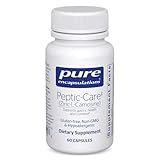
Zinc carnosine, a 1:1 chelate of zinc and L-carnosine, is the supplement I default to in clinical practice when there is upper-GI irritation alongside lower-GI symptoms, especially after a stretch of NSAID use. It is licensed as a prescription gastric ulcer treatment in Japan (polaprezinc) and sold over the counter in the US under brand names like PepZin GI.
In a placebo-controlled crossover study (Mahmood et al., n=10, PubMed 25168749), zinc carnosine at 37.5 mg twice daily prevented the threefold rise in small-intestinal permeability that indomethacin reliably produces. Multiple Japanese trials show parallel benefit in H. pylori-associated gastritis and gastric ulcer healing when added to triple therapy.
- Why it helps: stabilizes mucosal membranes, supports tight-junction integrity under irritant exposure, mild antioxidant activity at the mucosa.
- Dose used in trials: 37.5 to 75 mg twice daily of the carnosine-zinc complex. The 75 mg twice-daily dose is what most US OTC products provide.
- Form to look for: specifically zinc carnosine (also labeled polaprezinc or PepZin GI). Regular zinc gluconate or picolinate is not the same intervention. The complex matters.
- Skip if: you are already taking high-dose elemental zinc elsewhere (total over 40 mg/day risks copper depletion per the NIH ODS zinc fact sheet); stop two weeks before any planned tetracycline or quinolone antibiotic course.
Targeted probiotics (Saccharomyces boulardii, Lactobacillus rhamnosus GG)
"Probiotics for leaky gut" is the part of the aisle where most consumers waste the most money, because a generic 50-billion-CFU "broad spectrum" capsule is not the same intervention as a strain-specific dose. Strain matters more than count.
A 2018 systematic review (Kim et al., PubMed 30262901) on Saccharomyces boulardii in functional GI conditions found consistent benefit for antibiotic-associated diarrhea and a positive signal in IBS-D, with mechanistic data showing improved tight-junction expression and reduced TNF-alpha at the mucosa. For Lactobacillus rhamnosus GG (LGG), barrier-protective effects are best documented in pediatric gastroenteritis and in antibiotic-associated diarrhea prevention.
- Why it helps: specific strains produce short-chain fatty acids (butyrate fuels colonocytes), compete with pathobionts, and upregulate tight-junction proteins in mucosal cell models.
- Dose used in trials: S. boulardii 250 to 500 mg twice daily (5 to 10 billion CFU); LGG 10 to 20 billion CFU per day.
- Form to look for: named strain on the label (S. boulardii CNCM I-745, L. rhamnosus GG ATCC 53103). "Proprietary blend" without strain identifiers is a red flag.
- Traditional vs RCT dose: traditional fermented-food intake (yogurt, kefir, sauerkraut) delivers mixed strains at uncertain CFU. Useful as part of the diet. Not interchangeable with a strain-matched capsule for a specific indication.
- Skip if: you are immunocompromised, have a central venous catheter, or are critically ill (case reports of fungemia with S. boulardii in those populations).
Supplements with moderate evidence (consider with caveats)
Quercetin
Quercetin is a polyphenol with in vitro evidence for tight-junction stabilization (it upregulates ZO-1 and claudin-1 in cell models) and some human data for allergic rhinitis and mast-cell-related symptoms. The human barrier evidence is mostly mechanistic and indirect.
If you want to try it, 500 to 1000 mg/day with food is the common naturopathic dose, ideally as the more bioavailable phytosome form. Skip if you take warfarin, cyclosporine, or other CYP3A4 substrates without checking with your clinician; the Drugs.com interaction database flags meaningful interactions.
Curcumin
Curcumin is anti-inflammatory and has decent RCT evidence in ulcerative colitis as an adjunct to mesalamine, where mucosal healing is a downstream proxy for barrier integrity. As a freestanding "leaky gut" supplement in healthy adults the evidence is thin. The mechanism is real (NF-kB inhibition, COX-2 modulation), the indication match for vague permeability is what is uncertain. Use a high-bioavailability form (Meriva, BCM-95, or Theracurmin) at 500 to 1000 mg/day.
Vitamin D
Vitamin D receptor signaling supports tight-junction protein expression and antimicrobial peptide production at the gut mucosa. If you are deficient (25-OH D below 30 ng/mL), correcting it is reasonable. If you are replete, more vitamin D will not buy you barrier function. Test first. Do not blanket-dose.
Popular but evidence-thin
Bone broth and collagen peptides
Bone broth and hydrolyzed collagen are the social-media face of "gut healing." The mechanism story is that the glycine, proline, and glutamine in collagen support enterocyte repair. The actual human RCT evidence for collagen peptides on intestinal permeability is essentially absent. There is one small open-label pilot. That is it.
If you enjoy bone broth and tolerate it, drink it as food. It is not harmful and the amino-acid spectrum is fine. But framing it as a treatment for permeability misrepresents the evidence base. If barrier support is the actual goal, L-glutamine at trial-tested doses is the cleaner intervention.
Slippery elm and DGL
Slippery elm and deglycyrrhizinated licorice (DGL) are widely recommended for "gut healing." They have symptomatic relief evidence in functional dyspepsia and reflux (mucilage soothes irritated mucosa). They do not have meaningful tight-junction or permeability evidence. Useful as adjunctive comfort agents in heartburn-adjacent presentations. Not a leaky-gut treatment in the way the marketing implies.
What to look for when buying
- Form specifics: named extracts and strains, not "proprietary blends." For probiotics, the strain identifier (LGG ATCC 53103, S. boulardii CNCM I-745) should be on the label. For zinc, specifically carnosine-bound. For curcumin, a phytosome or bioenhanced form.
- Third-party testing: look for ConsumerLab, USP Verified, or NSF Certified for Sport marks. The probiotic category in particular has a long history of CFU counts that do not match the label at expiry.
- Red flags: "rebuilds your gut in 10 days," "removes toxins," "eliminates food sensitivities." Any product making global cure claims for "leaky gut" is selling certainty the literature does not support.
- Dosing strategy: L-glutamine on an empty stomach with water. Zinc carnosine with or just before meals. Probiotics typically with food, ideally consistent timing. Curcumin and quercetin with a fat-containing meal for absorption.
When supplements are not enough
Some symptoms mean stop self-treating with the gut-health aisle and see a clinician. If you have persistent diarrhea lasting more than four weeks, bloody stool, unintentional weight loss, fevers, nighttime symptoms that wake you from sleep, or new symptoms after age 50, see a gastroenterologist for endoscopy, colonoscopy, and biopsy. Supplements come after diagnostic workup, not before.
The same goes if your family history includes celiac disease, inflammatory bowel disease, or colorectal cancer, or if a celiac panel and fecal calprotectin have not been done. "Leaky gut" is a soft frame. Celiac, Crohn's, ulcerative colitis, microscopic colitis, and H. pylori are diagnoses with treatment standards, and missing one of them while taking L-glutamine for six months is the version of this story I see go badly.
If your symptoms are severe enough that you are functionally impaired, the conversation is conventional GI workup first, supplement support second.
FAQ
Is leaky gut a real diagnosis?
Increased intestinal permeability is a real, measurable phenomenon documented in celiac, inflammatory bowel disease, NSAID enteropathy, and severe gastroenteritis. "Leaky gut syndrome" as a standalone consumer diagnosis driving systemic symptoms in otherwise healthy people is not recognized by mainstream gastroenterology. The biology is real; the catch-all label is contested.
How long until leaky gut supplements work?
For supplements with reasonable barrier evidence (L-glutamine, zinc carnosine, strain-matched probiotics), give the intervention 4 to 8 weeks at trial-tested doses before judging. Permeability changes measurably over weeks in trials, not days. If you have seen no benefit at 8 weeks, stop and reassess rather than escalating the stack.
Can I just eat bone broth instead of taking supplements?
Bone broth is fine as food. It is not a substitute for a trial-tested barrier-support intervention if that is your goal. The amino-acid spectrum in broth is real but variable and far below the doses used in glutamine RCTs.
Do I need to avoid gluten if I do not have celiac?
If a celiac panel (tTG-IgA with total IgA) is negative and you do not have biopsy-confirmed celiac or wheat allergy, blanket gluten avoidance is not required for barrier health. Some people with non-celiac wheat sensitivity feel better off gluten; that is a separate question and worth a structured trial with a dietitian, not a permanent unmonitored exclusion.
Should I get a "leaky gut" test from a functional medicine clinic?
The lactulose/mannitol urinary excretion test is the validated permeability measure used in research. Zonulin testing offered by some functional labs has methodological controversy and rarely changes treatment in practice. Spend the money on a celiac panel and fecal calprotectin first; those are the tests that actually triage what to do next.
Building a supplement routine for this? Our companion app, StackMyMed, lets you scan each product, track your real daily intake, and get timing reminders plus interaction checks across your whole stack.
Conclusion: the bottom line on best supplements for leaky gut
The honest version of this story is that the underlying biology is real but specific, the consumer label is broader than the literature supports, and only a small handful of supplements have barrier-relevant evidence: L-glutamine, zinc carnosine, and a few specific probiotic strains. The realistic effect size is modest, the timeline is weeks not days, and the most important supplement decision is often not adding another one but ruling out a real GI diagnosis first.
Next steps:
- Get the workup before the stack: celiac panel, fecal calprotectin, ferritin, CBC. The cleanest version of this protocol is doing the diagnostic step first.
- Start narrow: 5 g L-glutamine daily for 4 weeks before layering in a second product. If it helps, you know what helped.
- For a broader view of evidence-based gut support, see UV's gut health supplements hub, and if your symptoms include histamine-related skin or sinus presentations, our best supplements for histamine intolerance roundup covers DAO, quercetin, and vitamin C in more depth. Our how we review supplements page explains the source hierarchy I use.
This article is for informational purposes and not medical advice. Supplements can interact with medications and health conditions. Consult a licensed physician before starting any supplement, particularly if you are pregnant, nursing, taking prescription medications, or managing a chronic condition.
Reviewed by Jonathan Reynolds, ND, focused on botanical and naturopathic protocols.
Recommended Products


As an Amazon Associate, UsefulVitamins.com earns from qualifying purchases at no extra cost to you. We only recommend products supported by published research or third-party testing.
