
Affiliate disclosure: this article contains affiliate links. As an Amazon Associate, UsefulVitamins.com earns from qualifying purchases at no extra cost to you.
If you're searching for the best supplements for histamine intolerance, you've probably already tried a low-histamine diet, found mixed relief, and want to know which pills (if any) actually move the needle on flushing, hives, headaches, or post-meal GI symptoms.
Quick Answer: which supplements are worth starting with for histamine intolerance
The two we'd actually start with: DAO enzyme (4,200 HDU per capsule, taken 15 minutes before meals) for the most direct mechanism, and vitamin C 500 to 1,000 mg/day in divided doses as the cofactor with the most plausible antihistamine signal. Vitamin B6 in its P5P form and a copper-checked diet round out the cofactor picture.
- Best for: people who have already trialed a 2 to 4 week low-histamine diet, identified a clear food-symptom pattern, and want a targeted adjunctive layer at high-risk meals
- Not ideal for: anyone with hives plus blood pressure drops, anaphylaxis-like symptoms, or persistent flushing without obvious dietary triggers, who needs an allergist workup before self-supplementing
- What to look at before buying: a 2-week food and symptom diary, a CBC, ferritin, serum tryptase if mast cell activation is suspected, and a check of any current antihistamine or SSRI medication
- Decision shortcut: food sources cover most cofactor requirements for a person who eats broadly. The supplement that earns its place is the one that closes a documented gap or sits directly on the DAO pathway.
What histamine intolerance actually is, briefly
Histamine intolerance (HIT) is a non-IgE-mediated condition in which the body's capacity to break down histamine from food, drinks, and gut microbes is exceeded by the histamine load. The main enzyme involved is diamine oxidase (DAO), secreted by the small intestinal mucosa, with histamine N-methyltransferase (HNMT) handling intracellular histamine elsewhere. When DAO activity is low, dietary histamine and histamine-releasing foods can produce symptoms that mimic allergy: flushing, headaches, urticaria, GI upset, palpitations, congestion, and sometimes mood symptoms.
This is a contested diagnosis. The mechanism is supported by Maintz and Novak's 2007 review in the American Journal of Clinical Nutrition, which is treated as foundational in European allergy and gastroenterology literature. However, many U.S. allergists remain skeptical because the Komericki 2011 double-blind challenge study and similar work failed to reproduce single-symptom reactions on oral histamine provocation, and there is no validated single biomarker. The honest framing: the DAO-deficiency mechanism is real, the syndrome label is plausible for a subset of patients, and dietary triggers should be tested with a structured elimination-rechallenge rather than a label.
Conventional first-line management is a low-histamine diet for 2 to 4 weeks with a structured reintroduction, antihistamines (H1 and H2 blockers) for symptomatic relief, and a serum tryptase plus total IgE if mast cell activation syndrome (MCAS) or mastocytosis is on the differential.
The supplements with the strongest evidence
Diamine oxidase (DAO) enzyme
Why it helps. Supplemental DAO acts inside the gut lumen, breaking down histamine from the meal before it crosses the intestinal barrier. It is the only supplement that targets the mechanism directly rather than supporting it via cofactors.
What the trials show. The Schnedl 2019 double-blind RCT (n=28) tested a DAO capsule (DAOSiN, 4,200 HDU per capsule) taken before meals over 4 weeks and reported a statistically significant reduction in HIT symptom scores compared with placebo, with the biggest signal on GI symptoms and headache. Open-label observational data from Austrian and German clinics describe a similar pattern. The trials are small, mostly from a few research groups, and the evidence is sparse compared with mainstream micronutrient research.
Dose used in trials. One DAOSiN-equivalent capsule (4,200 HDU of porcine kidney-derived DAO) taken 15 minutes before a histamine-suspect meal, usually two to three doses per day during the test period.
Form to look for. Porcine-kidney DAO with a stated HDU (histamine degrading unit) value per capsule. Enteric-coated to survive gastric acid is preferred but not all brands disclose this. Reputable HDU-stated brands are still expensive (often more than $1 per capsule).
Skip if. You are vegetarian or vegan (current commercial DAO is animal-derived), pregnant or nursing (no safety data), or have a known sensitivity to porcine protein.
Actionable takeaway: DAO is the supplement closest to the mechanism, but the cost-per-meal is real. It is a tool for high-risk meals (restaurant, travel, social events), not a daily lifelong commitment.
Vitamin C (500 to 1,000 mg/day in divided doses)
Why it helps. Ascorbic acid is a cofactor for DAO activity and has been shown to lower histamine in serum. A typical Western diet provides 75 to 120 mg/day of vitamin C, which covers the RDA of 75 to 90 mg but sits well below the doses studied in histamine reduction.
What the trials show. Johnston 1992 (n=20) reported that 2 g/day of supplemental ascorbic acid for one week lowered whole-blood histamine in adults with elevated baseline levels. Later observational data link low plasma ascorbate to elevated histamine in allergic populations. Trial size is small, the endpoint is biochemical rather than symptomatic, and direct HIT trials are limited. The mechanism plus the surrogate-marker signal is the basis for the recommendation, not a clean symptom RCT.
Dose used in trials. 500 mg to 2,000 mg/day in divided doses with meals. Most clinical protocols for HIT use 500 to 1,000 mg/day.
Form to look for. Plain ascorbic acid or buffered (sodium ascorbate) for people who get GI upset from acidic forms. The food-first version: a kiwi, an orange, and a half red bell pepper across the day delivers roughly 300 mg of vitamin C before you open a capsule.
Skip if. You are on estrogen-containing oral contraceptives (vitamin C can raise circulating estrogen levels at doses above 1 g/day per Drugs.com interaction data), have a history of kidney stones, or are taking high-dose anticoagulants.
Actionable takeaway: the average US diet covers about 100 percent of the vitamin C RDA, so a 500 mg supplement is a therapeutic dose layered on top of an adequate diet, not deficiency correction.
Vitamin B6 (pyridoxal-5-phosphate, P5P, 25 to 50 mg/day)
Why it helps. DAO is a pyridoxal-5-phosphate-dependent enzyme. Without adequate B6 in its active P5P form, DAO activity is impaired regardless of how much enzyme is present.
What the trials show. Direct HIT RCT evidence on B6 alone is limited. The strongest data are mechanistic, with B6-deficient animal models showing reduced DAO activity that rises when B6 is restored. Clinical protocols include B6 as part of the DAO-cofactor package without isolating its specific contribution.
Dose used in trials. 25 to 50 mg/day as P5P. The RDA is 1.3 to 1.7 mg/day and the tolerable upper limit is 100 mg/day. Going above 100 mg/day chronically is associated with peripheral neuropathy and is unjustified for HIT.
Form to look for. Pyridoxal-5-phosphate (the active coenzyme form) over pyridoxine HCl for people with suspected methylation or absorption issues. Food-first sources: chickpeas, tuna, salmon, chicken breast, potatoes with skin, and bananas all carry meaningful B6.
Skip if. You already take a B-complex providing 25 mg or more of B6. Stacking is how people end up at 150 to 200 mg/day without realizing.
Actionable takeaway: if your B-complex already has 25 mg of B6, you do not need a separate P5P bottle. Read your labels and add what closes a real gap.
Supplements with moderate evidence (consider with caveats)
Copper (RDA 900 mcg, food-first)
DAO is a copper-containing enzyme. Copper deficiency drops DAO activity directly. The catch is that frank copper deficiency is uncommon in adults eating broadly, and high-dose zinc supplementation is by far the most common driver of secondary copper deficiency. Most adults who eat shellfish, organ meat, nuts, or cocoa weekly cover the 900 mcg/day RDA without supplementing. If you are vegan, on long-term high-dose zinc, or have a low serum copper or ceruloplasmin, food-first copper repletion (oysters, beef liver, dark chocolate, cashews) makes more sense than a 2 mg copper capsule. The upper limit is 10 mg/day, and chronic copper excess has its own toxicity profile.
Quercetin (250 to 500 mg twice daily, with caveats)
Quercetin is a flavonoid with in-vitro evidence for mast cell stabilization and antihistamine effects. The Mlcek 2016 review summarizes the mechanism: quercetin inhibits histamine release from basophils and mast cells in cell culture and animal models. Human RCT evidence specifically in HIT is thin. Pilot trials in allergic rhinitis and exercise-induced asthma show modest signal. Doses studied are 250 to 500 mg twice daily with meals, often as quercetin dihydrate combined with bromelain for absorption.
The interaction caveat matters. Quercetin has a minor interaction with warfarin and may potentiate other anticoagulants. If you are on a blood thinner, talk to your prescribing clinician before adding quercetin.
Probiotics (strain-selected only)
Gut bacteria produce histamine. Sanchez-Perez 2021 documented intestinal dysbiosis with elevated histamine-producing strains in HIT patients. The clinical translation is uncomfortable: not all probiotics are safe for histamine intolerance. Lactobacillus casei, Lactobacillus bulgaricus, Lactobacillus reuteri, and several Lactobacillus helveticus strains actively produce histamine and can worsen symptoms. Strains generally considered HIT-safer include Lactobacillus rhamnosus GG, Bifidobacterium infantis, Bifidobacterium longum BB536, and Saccharomyces boulardii. Read the strain code on the label, not just the genus name. If a product lists "Lactobacillus blend" without strain identifiers, skip it.
Popular but evidence-thin
Stinging nettle and bromelain
Stinging nettle (Urtica dioica) and bromelain are widely recommended for histamine intolerance in supplement-brand marketing and social media. The actual evidence is thin. Nettle has a folk-medicine tradition for allergic rhinitis and one small freeze-dried-leaf trial from the 1990s. Bromelain has anti-inflammatory data in surgical recovery and sinus indications, with a weak indirect histamine signal. If you want to try either, a 2 to 4 week trial at standardized doses is reasonable, but the expected effect is modest and easily confounded by simultaneous dietary changes. They are not the first call.
What to look for when buying
- Form matters. P5P over pyridoxine for B6 if you are layering on top of a complex. Selenomethionine is irrelevant here, but pay attention to the actual chemical form on every label.
- Third-party testing. USP Verified, NSF Certified for Sport, or ConsumerLab approved is the bar. For obscure DAO enzyme brands, look for a stated HDU value and a manufacturing audit, not just a slogan.
- Proprietary blends are a red flag. If a HIT-stack product lists "Histamine Support Blend 1,200 mg" without the per-ingredient breakdown, you cannot dose-match to anything in the literature.
- Watch for additives. Some HIT-marketed products contain histamine-liberating fillers (citric acid in high amounts, certain natural flavorings). Read the inactive ingredients list.
For a deeper look at how we evaluate quality across categories, see how we review supplements.
When supplements are not enough
If your symptoms include hives plus a drop in blood pressure, throat tightness, or fainting, you are past the histamine-intolerance frame. See an allergist immediately and ask about ruling out mast cell activation syndrome and systemic mastocytosis with a serum tryptase and 24-hour urinary N-methylhistamine. Ask your doctor about a blood test for serum tryptase before assuming you are simply low in DAO. Persistent GI symptoms without dietary triggers warrant a gastroenterology workup, not a third bottle of capsules. If you take prescription antihistamines, SSRIs, or anticoagulants, run any new supplement past your prescribing clinician first.
FAQ
Does DAO supplementation work for everyone with histamine intolerance? No. The Schnedl 2019 trial showed a real average effect, but individual responses vary. Some people get clear improvement on high-risk meals, others see no difference. A 4-week structured trial is the honest test.
Can I just take vitamin C from food? For most people, yes, the RDA is easy to cover with citrus and capsicum. The HIT-symptom dose (500 to 1,000 mg) is therapeutic and exceeds what diet usually provides.
Are antihistamines like cetirizine safe to combine with supplements? Generally yes, but cetirizine plus high-dose quercetin or any new supplement should be discussed with your prescriber. The supplement question and the antihistamine question are separate decisions.
Is leaky gut the same as histamine intolerance? No, but the two often overlap because intestinal barrier dysfunction can both reduce DAO and increase histamine absorption. For more on the gut-barrier picture, see our best supplements for leaky gut roundup.
Should I buy a high-dose vitamin C supplement for daily use? For HIT symptom management, 500 to 1,000 mg in divided doses is the working range. For general antioxidant and immune support, see our best vitamin C supplements review.
If you are stacking a few supplements for this, StackMyMed (our companion app) tracks what you actually take, schedules the best time for each one, and flags any combinations worth a second look.
Conclusion: the bottom line on best supplements for histamine intolerance
The two supplements with the most direct support are DAO enzyme at meals (one clean small RCT, mechanism-aligned, expensive) and vitamin C at 500 to 1,000 mg/day (cofactor role, biochemical evidence, cheap). B6 in P5P form and adequate dietary copper round out the DAO-cofactor picture. Probiotic selection is a strain-by-strain decision, not a blanket recommendation, and stinging nettle, bromelain, and most "HIT blends" are at the margins. Supplements are adjuncts to a structured low-histamine diet and, when symptoms are severe or atypical, a proper allergist workup.
Next steps:
- Run a 2 to 4 week low-histamine elimination with a structured rechallenge before adding supplements
- Layer DAO at high-risk meals and vitamin C 500 mg twice daily, holding all other variables steady for 4 weeks
- If symptoms escalate or include cardiovascular signs, see an allergist and ask about serum tryptase
Reviewed by Sarah Thompson, Registered Dietitian, focused on vitamin and mineral nutrition.
This article is for informational purposes and not medical advice. Supplements can interact with medications and health conditions. Consult a licensed physician before starting any supplement, particularly if you are pregnant, nursing, taking prescription medications, or managing a chronic condition.
Recommended Products

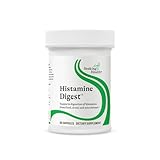

As an Amazon Associate, UsefulVitamins.com earns from qualifying purchases at no extra cost to you. We only recommend products supported by published research or third-party testing.
