
If you’re managing hypothyroidism and follow a vegan diet, you’re likely wondering: Do vegan supplements interfere with thyroid meds? The short answer is yes, but the how and when matter most. Plant-based supplements can disrupt levothyroxine absorption, especially if mistimed, leading to fatigue and unstable thyroid levels.
This article explains which vegan supplements cause problems, how they compare to conventional forms, and the best timing strategies to avoid absorption issues. Whether you’re supplementing with iron, iodine, or vitamin D, here’s what research and endocrinologists recommend.
How Vegan Supplements Affect Thyroid Medication Absorption
Plant-based vitamins and minerals share the same basic interaction mechanisms with levothyroxine as conventional supplements, but their lower bioavailability can complicate things. This often leads to higher doses, increasing the risk of absorption issues.
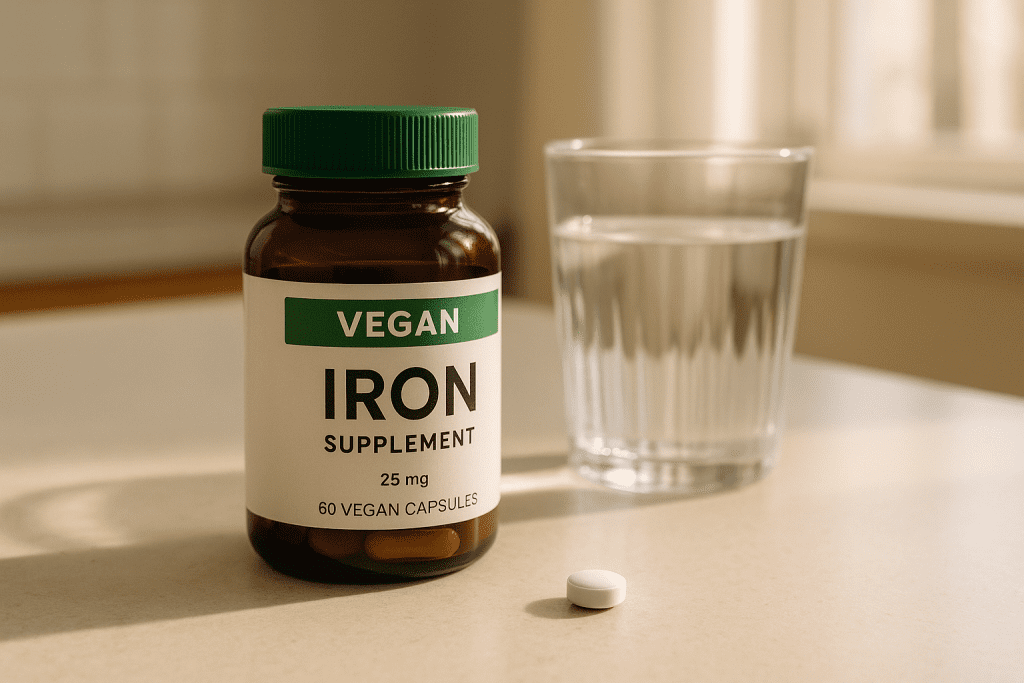
Iron Supplements: Plant vs. Animal-Derived Forms
Vegan iron supplements contain non-heme iron, which is harder to absorb than heme iron from animal sources. Vegans often compensate by taking higher doses, but this comes at a cost.
- Non-heme iron forms insoluble complexes with levothyroxine, reducing bioavailability
- A controlled clinical trial in 14 hypothyroid patients found that taking ferrous sulfate at the same time as levothyroxine raised mean TSH from 1.6 to 5.4 mU/L over 12 weeks, signalling reduced thyroxine efficacy in some patients
- Because plant-based (non-heme) iron is absorbed less efficiently, vegans often need higher intakes, which can compound the timing problem
Table: Iron Supplement Interaction Comparison
| Iron Type | Source | Bioavailability | Impact on Levothyroxine |
|---|---|---|---|
| Ferrous Sulfate | Common form | Moderate | High interaction |
| Heme Iron | Animal | High | High interaction |
| Non-Heme Iron | Plant-based | Low | High (often higher dose) |
Learn more about fatigue from iron supplements and thyroid meds, and why timing matters.
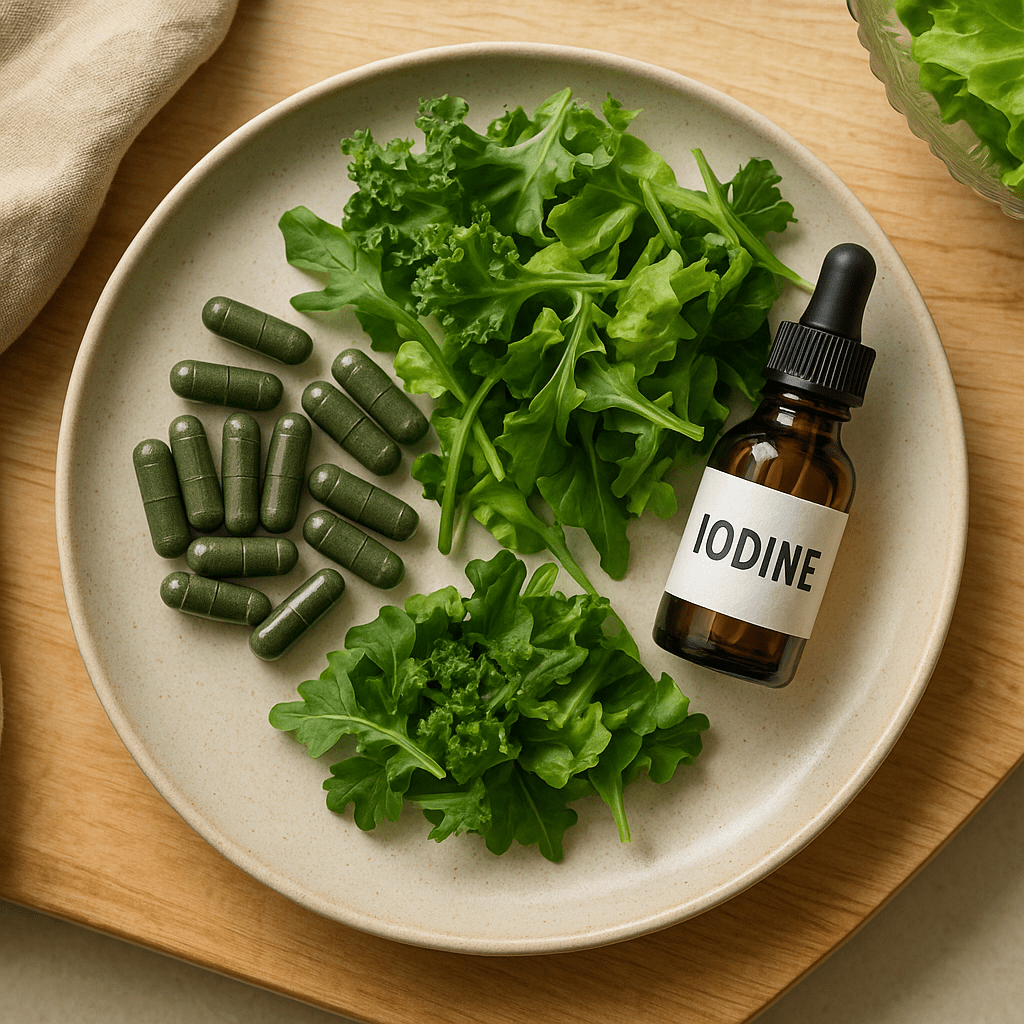
Iodine from Seaweed and Algae-Based Products
Seaweed is a natural, plant-based iodine source, but too much can disrupt thyroid balance.
- A 2020 study found that regular seaweed consumers had a median urinary iodine concentration of about 1,200 µg/L — roughly four times the tolerable upper intake level.
- While most stayed within the normal TSH range, subtle shifts pointed to possible subclinical effects.
- Supplements with spirulina or kelp can elevate iodine intake well beyond safe levels, especially without medical oversight.
Moderation is key. For vegans using seaweed supplements, routine thyroid monitoring is critical.
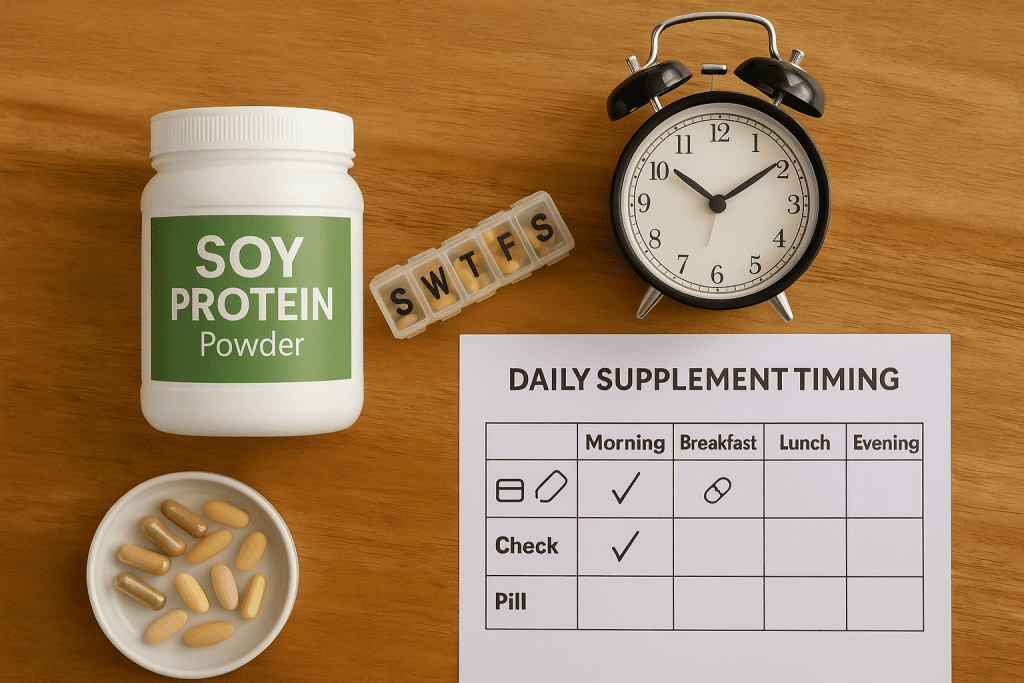
Soy-Based Protein & Menopause Supplements
Soy isoflavones and proteins – often found in vegan protein powders and menopause support blends – can impair levothyroxine absorption.
- Mechanism: Soy may interfere with the intestinal uptake of T4
- Evidence is mixed: a randomized crossover trial in post-menopausal women found that 60 mg of soy isoflavones did not significantly change levothyroxine absorption when the two were taken together
- Even so, the American Thyroid Association lists soy (along with iron and calcium) among substances that can block thyroid-hormone absorption, so a 4-hour separation is a sensible precaution
For vegan diets rich in soy, keep your supplement timing consistent to avoid a cumulative impact. For a deeper look at this specific interaction, see our guide on soy and levothyroxine.
Best Timing for Thyroid Meds & Vegan Supplements
Timing is everything when balancing vegan supplements and thyroid medication. Even small timing mistakes can lead to inconsistent hormone levels.
Levothyroxine Timing Recommendations
- Take it first thing in the morning, 60 minutes before food, or at bedtime, 3+ hours after the last meal.
- Consistency is more important than the time of day
- The American Thyroid Association advises taking levothyroxine on an empty stomach and, above all, being consistent — the same way, every day
How Long to Wait Between Supplements
| Supplement Type | Minimum Wait After Levothyroxine |
|---|---|
| Iron (all forms) | 4 hours |
| Calcium | 4 hours |
| Magnesium | 2-4 hours |
| Soy | 4 hours (suggested) |
| Multivitamins | 2-4 hours depending on content |
Tip: Log your doses using a symptom logger for drug-nutrient side effects to identify patterns.
Liquid and Soft-Gel Levothyroxine: A Smart Option?
Liquid and soft-gel formulations may bypass some absorption issues. A systematic review of levothyroxine interactions notes that these newer formulations can be less affected when calcium or iron is taken alongside them.
These newer forms may be worth discussing with your doctor if you’re juggling multiple supplements.
Plant-Based Nutrient Deficiencies That Impact Thyroid Function
Vegan diets can be thyroid-supportive when well planned, but common nutrient gaps increase the risk of dysfunction.
Key Deficiencies to Monitor
- Iodine: Limited without seaweed or iodized salt; excess can also be harmful
- Iron: Non-heme sources are less effective; deficiency worsens hypothyroidism symptoms
- Vitamin B12: Absent in plant foods; deficiency linked to fatigue and nerve issues
- Omega-3s (EPA/DHA): Important for overall health; often lower in vegan diets without algae-based sources
Vegans and vegetarians should have regular bloodwork and consider fortified foods or lab-tested supplements to cover gaps. If you take thyroid medication, it also helps to know which supplements are safer for levothyroxine users before adding anything new. Popular plant-based adaptogens deserve the same caution, so it is worth knowing whether you can take ashwagandha with thyroid medication before adding it to your routine.
Can Vitamin D Help Support Thyroid Health?
Vitamin D may play a protective role in autoimmune thyroid conditions like Hashimoto’s.
- A clinical trial in levothyroxine-treated women with Hashimoto’s thyroiditis reported a reduction in thyroid antibodies with vitamin D supplementation.
- Plant-based vitamin D (usually D2 or lichen-derived D3) appears to have no additional absorption issues when properly timed
- Safe timing: Take after your thyroid med, 4+ hours apart, with food for better absorption
While D3 from lichen is preferred for vegans, the source appears less relevant than timing and consistency.
If you take several supplements with prescription medications, StackMyMed (our companion app) scans each label and checks your full stack for conflicts, so a risky combination is easier to catch before you take it. Always confirm anything it flags with your doctor or pharmacist.
Frequently Asked Questions
Do vegan supplements interfere with thyroid medication?
Yes. Iron, soy, and iodine-rich vegan supplements can interfere with levothyroxine absorption. Timing them 4 hours apart is key.
Which plant-based nutrients are most important for thyroid health?
Vegans should focus on iodine, iron, vitamin B12, vitamin D, and omega-3s to support thyroid function.
Conclusion
If you’re taking vegan supplements and thyroid medication, careful planning can prevent absorption issues and protect thyroid function.
The main takeaway? Iron, soy, and iodine-rich supplements are the biggest risks – and timing is everything. Use consistent routines, separate interfering supplements by 4 hours, and talk to your provider about alternative levothyroxine forms. Plant-based diets can absolutely support thyroid health when combined with smart supplementation.
For more, explore:

