
Affiliate disclosure: this article contains affiliate links. As an Amazon Associate, UsefulVitamins.com earns from qualifying purchases at no extra cost to you.
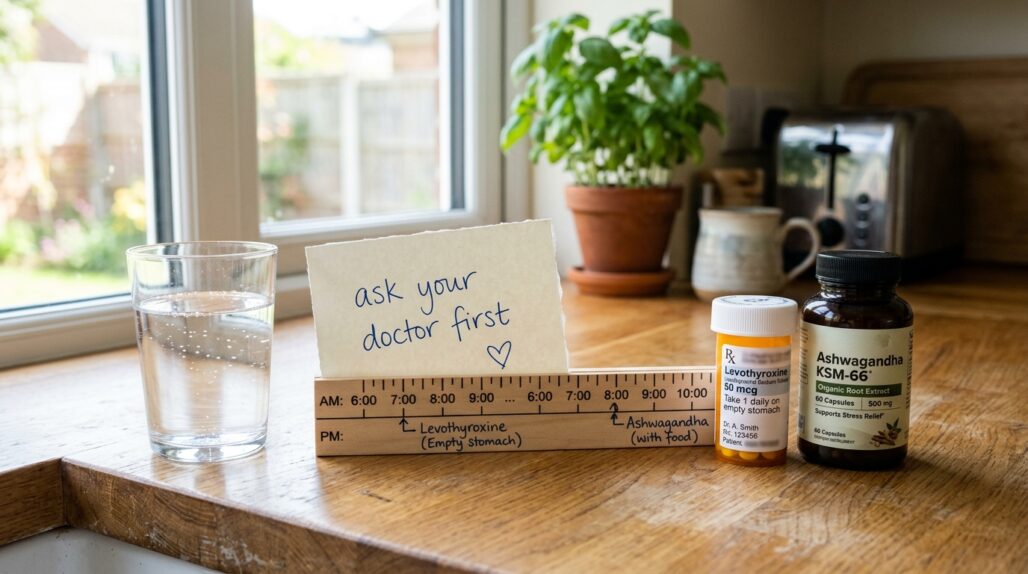
If you take levothyroxine (Synthroid, Levoxyl, Euthyrox) or an antithyroid drug like methimazole, and you have a bottle of ashwagandha in your other hand, the honest answer is: not without a conversation first. Ashwagandha is one of the few popular supplements with a real, hormone-level effect on the thyroid. That is not a reason to panic, and it is not a reason to skip a dose of your medication. It is a reason to slow down and ask before you start.
Do ashwagandha and thyroid medication actually interact?
Yes, and the interaction is unusual for a supplement because it works on the same hormone your prescription is controlling.
Most supplement-drug timing problems are about absorption. A mineral binds the drug in your gut, you take them apart, problem solved. This one is different. Ashwagandha appears to make your thyroid gland produce more hormone on its own. So when you are already on levothyroxine, a dose your doctor calibrated to hit a target TSH, the extra hormone your gland makes adds on top. Spacing the pills by hours does nothing, because nothing is being blocked in your stomach.
The clearest human evidence is a small double-blind, placebo-controlled randomized trial by Sharma and colleagues (2018) in people with subclinical hypothyroidism. Over eight weeks, 600 mg per day of ashwagandha root extract raised T3 by about 41.5 percent and significantly raised T4, while lowering TSH compared with placebo. In that study the shift was treated as helpful, because the participants were under-active and not on medication. The trouble starts when you layer that same push onto a replacement dose that is already doing the job.
The federal supplement authority agrees this is a real signal. The NIH Office of Dietary Supplements states plainly that ashwagandha might interact with thyroid hormone therapy and antithyroid agents, and that clinical and laboratory monitoring of thyroid function may be necessary when the supplement is started, stopped, or changed. The interaction checker at Drugs.com grades ashwagandha plus levothyroxine a moderate interaction and extends the same caution to antithyroid drugs.
So this is not a theoretical worry pulled from a test tube. It is one short but well-run trial plus a regulatory caution, backed by case reports of people who actually got hurt.
The mechanism: why one bottle can move your labs
Ashwagandha (Withania somnifera) seems to stimulate the thyroid. Animal work has shown it raises circulating T4, and the Sharma trial confirmed the same direction in humans. The exact pathway is not fully mapped, and the NIH fact sheet is careful to say the mechanism of interaction is not established. What is established is the direction: hormone up, TSH down.
The case reports are where it stops being abstract.
One paper in Cureus describes a 73-year-old woman with primary hypothyroidism who stopped her levothyroxine and used ashwagandha root extract instead for about two years. She arrived in the emergency department in supraventricular tachycardia at 173 beats per minute, with a TSH below 0.01. After she stopped the ashwagandha, her labs returned to normal within two weeks and she drifted back to her baseline hypothyroid state, which told the doctors the supplement was the cause.
A second 2024 Cureus report describes a healthy 47-year-old who took ashwagandha for sleep and developed thyrotoxicosis with a 4 kg weight loss and a low-grade fever over two weeks. His thyroid markers normalized roughly 50 days after he stopped. These were not people who overdosed on something obscure. They took a supplement sold in every pharmacy.
A quick word on the other half of the question. If you take an antithyroid drug such as methimazole or propylthiouracil (PTU), the concern flips. Those drugs are meant to bring an over-active thyroid down. A supplement that pushes hormone production up works against the drug, which can blunt the effect your prescriber is counting on. Same warning, opposite direction.
Evidence grade, honestly: the hormone-raising direction is supported by one small short RCT, consistent animal data, the NIH caution, and several independent human case reports. That is moderate, not airtight, but the harm signal is real enough that this is not a gamble worth taking alone.
The practical rule: how to handle it without getting hurt
This is the part to actually do something with.
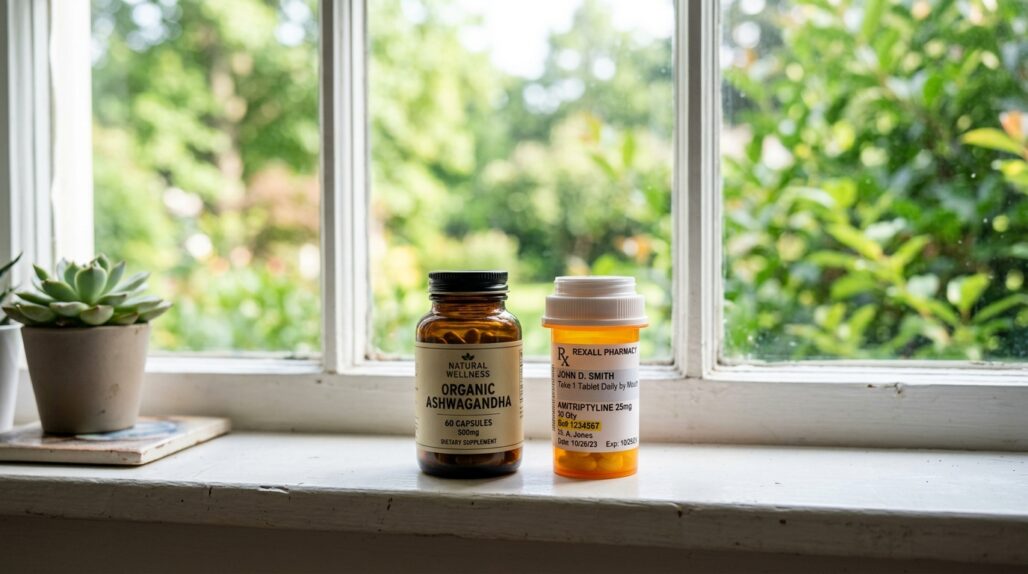
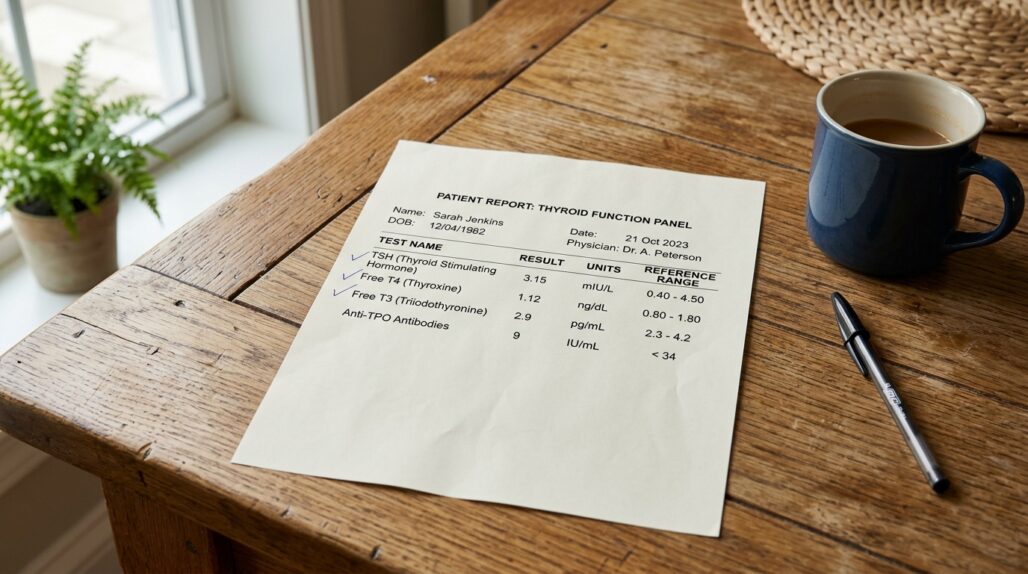
Do not add ashwagandha to your thyroid regimen on your own. Bring the exact bottle to your prescriber or pharmacist first. If they agree to a monitored trial, the plan should include a TSH and free T4 recheck about 6 to 8 weeks after you start, because your levothyroxine dose may need to come down. That recheck is the whole safety net. Without it you are flying blind on a moving target.
A few more rules:
- There is no spacing fix. This is a hormonal, additive effect, not an absorption problem, so taking the supplement hours away from your morning levothyroxine does not reduce the risk. (Separately, levothyroxine still has its own timing rule: take it on an empty stomach, 30 to 60 minutes before breakfast and away from coffee, calcium, and iron. Keep that habit no matter what.)
- Never use ashwagandha as a stand-in for your prescription. It is not a natural version of levothyroxine, and the woman who tried exactly that ended up at 173 beats per minute. Do not skip, lower, or pause your medication to make room for it.
- Keep the dose modest and the product labeled. If your prescriber clears a trial, a standardized root extract at a defined dose is easier to monitor than a vague blend. Our ashwagandha extract converter can help you translate between root powder and concentrated extract figures so you and your prescriber are talking about the same number.
Who is most at risk? Anyone with hyperthyroidism or Graves disease should treat this as avoid, since an over-active thyroid does not need a stimulant. People on antithyroid drugs are next, because ashwagandha can work against the medicine. And anyone already at the top end of their levothyroxine dose has the least room to absorb an extra push.
What to actually do: the safe way to handle ashwagandha here
If your goal is stress, sleep, or general calm and you happen to take thyroid medication, you have two clean paths. One is a prescriber-supervised ashwagandha trial with scheduled labs. The other is reaching for a stress aid that does not touch your thyroid hormone at all.
The simplest safeguard is to keep your full list in one place and have overlaps flagged before you add anything. You can log your levothyroxine and any new ashwagandha bottle in StackMyMed (our own free app), which flags the thyroid interaction so you know to ask your pharmacist about it, then lets you export a tidy med-and-supplement list for your next appointment. It does not diagnose anything; it just surfaces what to raise with a professional. If you would rather skip apps entirely, the low-tech version works just as well: write down every prescription and supplement you take, doses included, and hand the list to your pharmacist. Either way, the decision belongs to your prescriber, not to a checker.


As an Amazon Associate, UsefulVitamins.com earns from qualifying purchases at no extra cost to you.
Some links below are affiliate links; if you buy through them we may earn a small commission at no extra cost to you. We only point to safe options, and none of these is a substitute for talking to your prescriber.
A note on the cards: the ashwagandha pick is here only for a reader whose prescriber has cleared a monitored trial, never as a green light to self-combine. The organizer protects your levothyroxine schedule, and L-theanine is a thyroid-neutral option if you want stress support without touching your hormone levels.
Related pairs and the wider picture
Ashwagandha rarely interacts with just one thing, so it helps to know what else it touches. It is sedative, which is why it can stack with sleep and anxiety medications, and it can lower blood pressure and blood sugar, so it matters if you are on drugs for either. If you take an SSRI, see our companion guide on ashwagandha and sertraline for that pairing.
On the thyroid side, the more common timing question is about minerals, not adaptogens. Calcium, iron, and magnesium genuinely bind levothyroxine in the gut and cut its absorption, and that one is a real spacing problem you can solve with the clock. We cover the spacing rule in detail in magnesium and levothyroxine. The contrast is the whole point: minerals are a timing fix, ashwagandha is a hormone fix, and only one of them can be managed by separating doses.
If you decide ashwagandha is worth a supervised try, our guide to the best ashwagandha supplements walks through standardized root extracts and what the label should actually say. Read it as a buyer's reference, not as permission to start while you are on thyroid medication.
This is education, not a prescription change. Nothing here should move you to start, stop, or adjust a thyroid drug on your own.
At a glance
| Question | Answer |
|---|---|
| Do they interact? | Yes. Ashwagandha can raise your own T3 and T4 and lower TSH, adding to levothyroxine and working against antithyroid drugs. Moderate-graded, hormonal interaction. |
| How do I take them? | Do not combine on your own. If a prescriber clears it, recheck TSH and free T4 at 6 to 8 weeks. Spacing the doses apart does not help, because it is not an absorption issue. |
| Who should be careful? | Avoid if you have hyperthyroidism or Graves. High caution on antithyroid drugs (methimazole, PTU) and if you are near the top of your levothyroxine dose. |
| When do I call a doctor? | Racing or irregular heartbeat, hand tremor, unexplained weight loss, feeling hot or sweaty, new anxiety or insomnia. Stop the ashwagandha and call. A very fast pulse, chest pain, or severe breathlessness is an emergency. |
FAQ
Can ashwagandha replace my levothyroxine? No. It is not a natural version of your medication, the dose is not standardized to your needs, and at least one documented case of someone who tried this ended with a heart rate of 173 beats per minute. Keep taking your prescription exactly as directed.
If I take them at different times of day, is it safe? Separating the doses does not solve this one. The interaction is hormonal and additive, not an absorption clash in the gut, so the extra thyroid hormone stacks regardless of when you swallow each pill.
I have Hashimoto’s. Does that change anything? It raises the stakes. People with autoimmune thyroid disease on levothyroxine are exactly the group seen in the worrying case reports. Do not add ashwagandha without your endocrinologist and a plan to recheck your labs.
What about ashwagandha with methimazole or PTU? The concern flips direction. Those antithyroid drugs are lowering an over-active thyroid, and ashwagandha pushes hormone production up, which can work against the medicine. The NIH fact sheet flags antithyroid agents specifically. Clear it with your prescriber.
How soon would a problem show up? The trial ran eight weeks, and the case reports developed over weeks to a couple of years of use. That is why a recheck of TSH and free T4 at 6 to 8 weeks is the standard safety step if a prescriber approves a trial.
Are there liver concerns too? Separate from the thyroid issue, the NCCIH notes rare reports of liver injury with ashwagandha. Dark urine, yellowing of the skin or eyes, or persistent nausea are reasons to stop and seek care, regardless of your thyroid status.
The bottom line
Ashwagandha and thyroid medication can interact, and not in a way you can engineer around with timing. The supplement can raise your own thyroid hormone and lower TSH, which adds to levothyroxine and risks over-replacement, and it can work against antithyroid drugs like methimazole. The verdict is caution, only with your prescriber, with a TSH and free T4 recheck about 6 to 8 weeks after starting. Avoid it entirely if your thyroid is over-active. Watch for a racing or irregular heartbeat, hand tremor, unexplained weight loss, feeling hot or sweaty, or new jitteriness, and stop the supplement and call your doctor if any of those show up. Never use ashwagandha in place of your prescription, and never change your medication to make room for it.
This article is for education and is not a substitute for advice from your doctor or pharmacist. Do not start, stop, or change any medication based on what you read here.
Reviewed by the UsefulVitamins Editorial Team.
